Where Safety Meets Expert Tree Service.

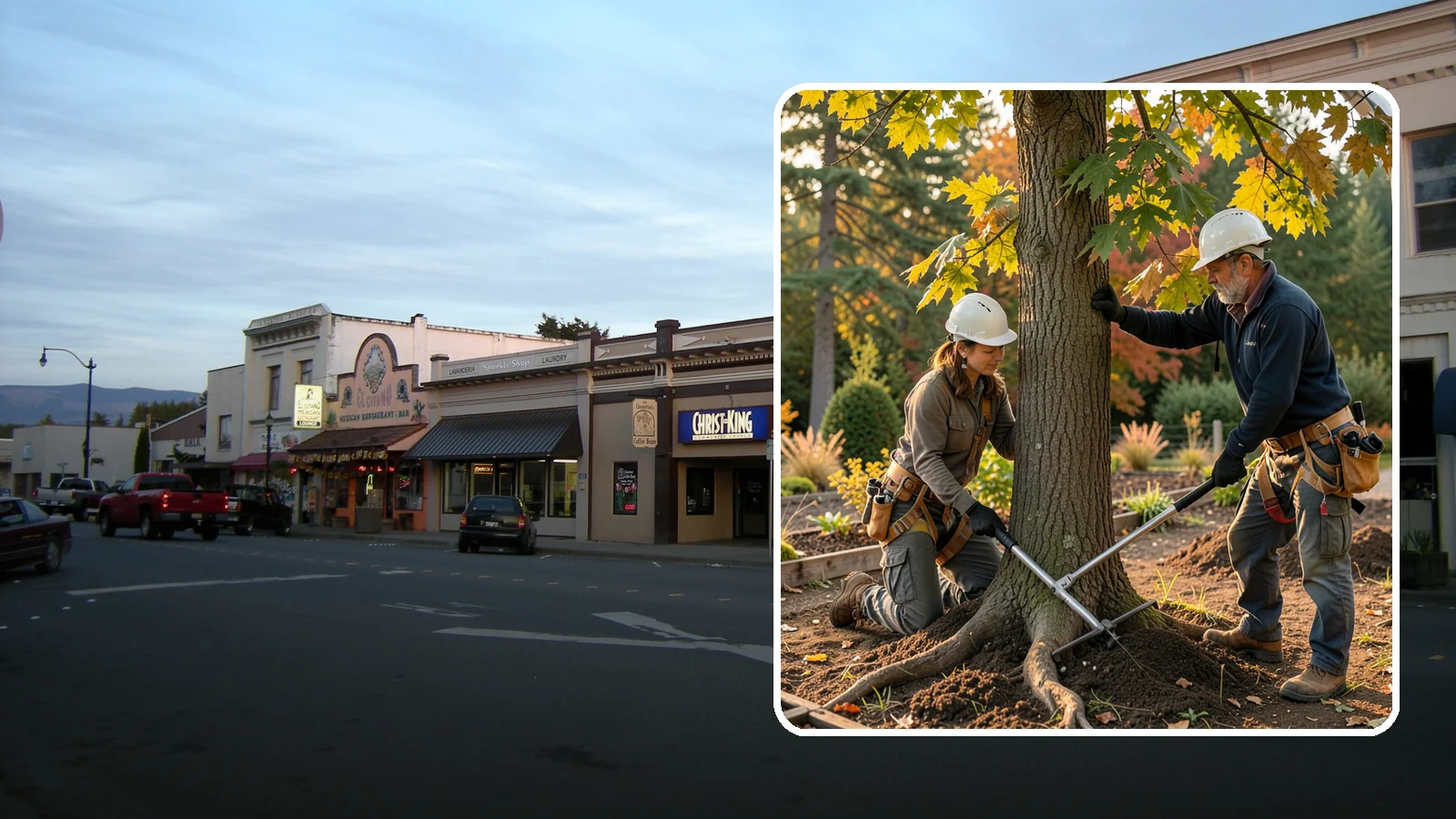
Burlington Root Zone Aeration
The loosening and aerating of compacted soil in the root zone.
Root zone aeration makes the most sense when the soil is workable but not saturated, which in Burlington usually means fall or spring. Trees take up water and nutrients as the ground warms or before it goes dormant, so loosened soil can be put to use quickly. Avoid waterlogged ground, since working it can smear and compact it further.
The aim is simple: open channels in compacted soil so air, water and fine roots can move through it. Here is how to plan the work, what changes the scope, and what the day looks like.
About Root Zone Aeration in Burlington
Root zone aeration is a thoughtful tree health care option designed to help your valued trees thrive in compacted soil conditions. This service supports long-term stability by ensuring roots receive the air and water they need for strong growth. It is ideal for homeowners who want to catch potential issues before they escalate into larger problems.
What Burlington Root Zone Aeration Includes
Root zone aeration involves loosening and aerating the dense earth within your tree’s root system to improve movement underground. Our trained crews match their methods specifically to your unique species, site conditions, and access requirements following recognized arboricultural standards. This approach directly improves soil and root conditions while extending the useful life of your trees.
Burlington Root Zone Aeration Process
The work typically begins with a thorough inspection of the tree and its surrounding environment to identify contributing factors like pests or disease. We then recommend and apply appropriate treatments based on our findings, documenting everything for clear follow-up care plans. This systematic process ensures that every step addresses the specific needs identified during the initial assessment.
Equipment We Use for Burlington Root Zone Aeration
Professionals use diagnostic tools and soil probes to gather accurate information about your tree’s underground environment before any work begins. Specialized injection or application equipment is utilized to deliver treatments effectively, with air excavation tools reserved for cases requiring specialized access. All crews wear necessary personal protective equipment while operating these various pieces of machinery on-site.
Burlington Root Zone Aeration Safety & Best Practices
We strictly follow label and application guidelines for all products used during the aeration process to protect both your soil and nearby plantings. Our team takes great care to avoid damaging roots or trunks, ensuring that our work does not harm the very trees we are trying to help. Accurate documentation of site conditions is also maintained throughout the job to ensure safety standards are met at every stage.
Signs You Need Root Zone Aeration in Burlington
You may need this service if your soil appears compacted or poor, which can hinder a tree’s ability to access essential resources. Other indicators include girdling roots that restrict growth or signs of decline caused by past construction and grade changes near the trunk. If pests or disease are suspected alongside these physical issues, root zone aeration helps create better conditions for recovery.
What Affects the Cost of Root Zone Aeration in Burlington
The investment for this service is influenced by factors such as the size of your trees and how severe the soil compaction has become. Site access constraints can also play a role in pricing, particularly if invasive girdling roots require specialized excavation tools to remove safely. These variables ensure that every project plan reflects the specific complexity of your individual tree care needs.
Best Time of Year for Burlington Root Zone Aeration
While this service works year-round within our local climate, it often yields best results during dormant seasons or mild weather periods. Scheduling work outside of active growth helps avoid stressing trees when they are most vulnerable to environmental changes. Choosing these times allows for more effective treatment without adding unnecessary pressure to your landscape’s natural cycle.
Planning root zone aeration for Burlington properties
Start by looking at why the soil is tight. Foot traffic, vehicles parked near a trunk, construction and turf that has been mowed for years all compact the ground. Water pooling after rain, thin canopy, or small leaves can point to root stress, though they can also have other causes. We look at the whole tree before recommending aeration.
What affects the scope
The NRCS soil survey for Burlington lists the Field series as the most common soil. It also shows that only about 4% of the land has a hard or restrictive layer, such as glacial hardpan, within 40 inches of the surface. That is a survey of the area, not a reading of your yard. It does mean that a restrictive layer is not the usual problem, so surface compaction is often the first thing to check. If digging turns up a hard layer on your lot, aeration will not fix it, and we will tell you that.
Other things that change the scope are the number of trees, how much of the root zone is under pavement or lawn, and whether you need to keep people and vehicles off the area afterward. Single-family detached houses make up about 50% of Burlington's housing, according to the Census ACS for 2020 to 2024. Many yards are therefore modest in size, and roots often share space with driveways, patios and lawn. Those hard surfaces limit where we can work.
What to expect on the day
We mark the area under and just beyond the canopy, then loosen the soil in a pattern that avoids large structural roots. Afterward, we usually spread a layer of wood chip mulch, kept back from the trunk. Chips from diseased trees used as surface mulch do not infect healthy trees, according to WSU Extension's publication on arborist wood chips. So chips from removed trees are not a concern for mulching.
Practical tip: after aeration, keep vehicles and heavy equipment off the root zone. Otherwise, the soil compacts again.
Burlington tree conditions at a glance
| USDA hardiness zone | 8b |
|---|---|
| Soils | 4% of land has hardpan or another restrictive layer within 40 in; most common series Field |
| Rain and snow falling October to April | 78% of the year’s total |
| Days with 0.1 in or more of rain | 107 a year |
| Days that freeze at night and thaw by day | 35 a year |
Tree health near Burlington
- Decline, cause not identified3,555 ac
- Western tent caterpillar433 ac
- Bears244 ac
Forest damage mapped from the air within 10 km of Burlington, 2021-2025 (USDA Forest Service and WA DNR). This covers forest land, not street or yard trees. “Decline, cause not identified” is dieback with no single cause found.
Sources: Daymet daily weather (NASA/ORNL), NOAA Storm Events, USDA plant hardiness map 2023, NRCS soil survey, USGS elevation, WA DNR landslide inventory, USDA Forest Service aerial survey, WSDA, city tree assessments and street-tree inventories, SILVIS Lab, Arbor Day Foundation, and official city and utility pages.
Root Zone Aeration Serving Burlington
Burlington
Root zone aeration in nearby areas
Also serving Burlington
- Boxwood Trimming in Burlingtonat Washington Landscaping
- Seasonal Flower Planting in Burlingtonat Washington City Services