Where Safety Meets Expert Tree Service.


Burlington Emergency Tree Removal
The urgent removal of trees that present an immediate danger.
Is a fallen or split tree an emergency? It is if it is on a house, a vehicle, or a driveway you need, or if it is leaning with the roots lifting. Stay clear of it, keep people and pets away, and call before you try to cut anything. Tension in a downed trunk can make it move without warning.
If a tree is only down in an open part of the yard, it can usually wait for daylight and a proper assessment. Photos from a safe distance help. Take wide shots that show the tree, the structure and any wires nearby.
About Emergency Tree Removal in Burlington
When a tree suddenly fails or begins falling toward your home, you need immediate help from our emergency removal team. We are here to act quickly for homeowners facing dangerous situations that require urgent attention regardless of the season. Our goal is to secure your property and restore peace of mind as fast as safely possible.
What Burlington Emergency Tree Removal Includes
This service involves the rapid extraction of trees or large limbs that pose an immediate threat to safety. Work follows recognized arboricultural standards, with specific methods chosen based on the tree species and current site conditions. We focus entirely on removing hazards without delay while protecting your structures and landscaping from further damage.
Burlington Emergency Tree Removal Process
Our crews begin by assessing the hazard and establishing a clear drop zone along with a safe perimeter around the work area. Limbs are rigged for lowering or the stem is felled in a controlled sequence to manage unpredictable lean or load distribution. Once the tree is down, we process the wood, haul away debris, and complete final site cleanup to leave your property secure.
Equipment We Use for Burlington Emergency Tree Removal
We utilize chainsaws and climbing gear alongside rigging equipment to handle complex removals safely. Depending on access needs, an aerial lift or crane may be brought in to assist with lowering heavy limbs or stems. Ground protection measures are also used during the process to safeguard your lawn and hardscapes from damage caused by machinery movement.
Burlington Emergency Tree Removal Safety & Best Practices
Safety is our priority as we maintain clear drop zones and carefully plan controlled fall paths away from overhead utility lines. Every crew member inspects for hidden decay and structural defects before climbing, using proper fall protection at all times. Coordinated ground communication ensures that everyone stays safe while managing the risks associated with unstable trees near power sources or buildings.
Signs You Need Emergency Tree Removal in Burlington
You likely need this urgent service if a tree has already fallen or is actively leaning in an unsafe direction toward your house. Signs of hidden internal decay, such as cracks or hollows, combined with limited access for standard equipment often indicate that immediate action is required. If you notice unpredictable shifts in the tree’s position near structures or power lines, do not wait to address these potential dangers.
What Affects the Cost of Emergency Tree Removal in Burlington
The final cost depends on factors like how much hidden internal decay exists within the trunk and branches. Proximity to active utility lines and nearby buildings can significantly influence the complexity of the job required for a safe removal. Additionally, limited access for heavy equipment or the need for specialized rigging due to an unpredictable lean will affect the overall pricing.
Best Time of Year for Burlington Emergency Tree Removal
This critical service must be performed immediately whenever a tree fails, regardless of whether it is summer or winter in our region. While crews are ready to work year-round, wetter conditions during the Puget Sound winters may complicate site safety and require extra caution. There is no ideal season for emergency removal; if a hazard exists today, we must address it without delay to protect your family.
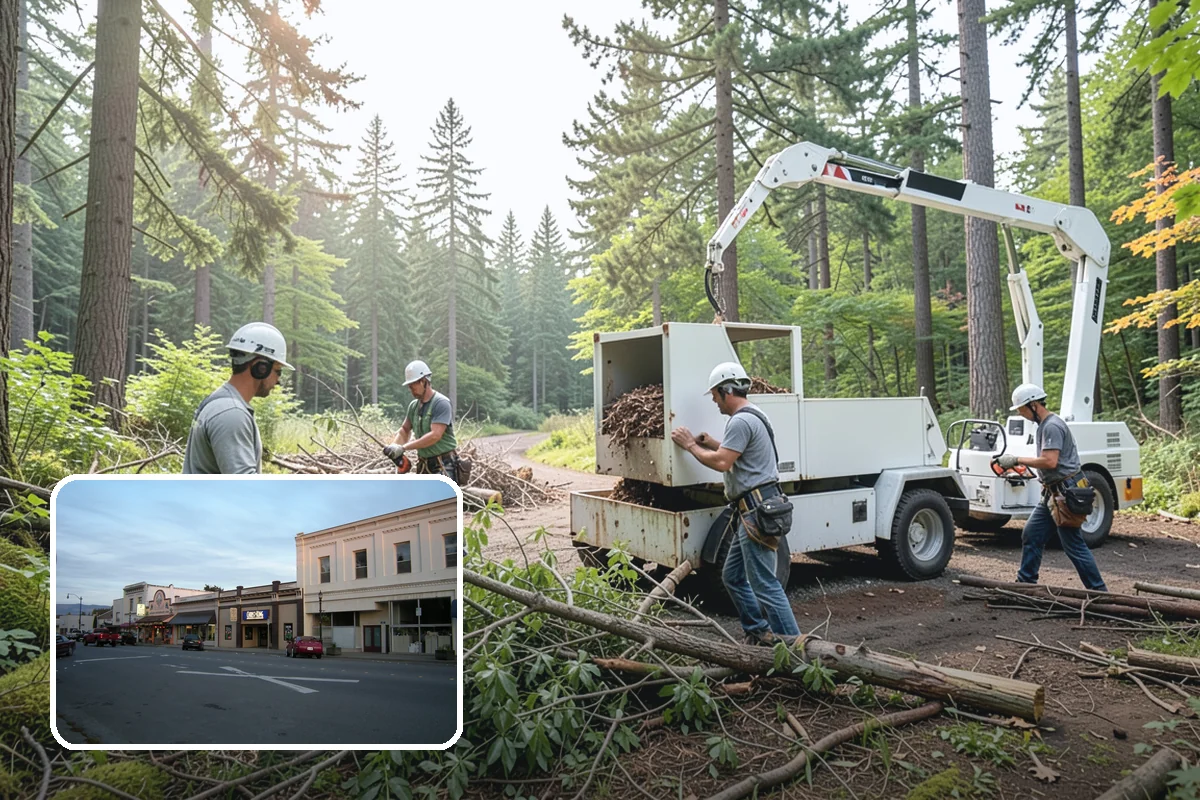
Emergency tree removal in Burlington: what to do and expect
Wind in the Burlington forecast zone
The National Weather Service counted 33 high and strong wind episodes between 2005 and 2025 in the forecast zone that includes Burlington. The strongest gust recorded in that zone since 2005 was 85 mph on December 14, 2006. These are zone-wide figures, not readings for your property. They do mean that a damaging windstorm is a realistic event here, so it is worth knowing who you would call before one hits.
The city rule on hazard trees
Burlington's tree code says hazard and nuisance trees may be removed with City authorization, and an arborist report may be required. In an emergency with an immediate threat to life or property, a hazard tree may be removed without authorization, as long as the department is notified the next business day. That covers removal of a hazard tree. It does not tell you anything about pruning or other work. If your situation is unclear, we check with the city before work starts. Take photos before anything is cut, because they document the condition of the tree for the city and for your insurer.
Wires and what happens after
If a tree is touching or near power lines, treat the lines as live and call the utility first. We could not find a published storm-debris policy from Puget Sound Energy, so do not assume the utility will clear wood from your property. Routine work leaves cut wood on site in manageable pieces, and hauling can be discussed when you call.
- Keep everyone away from the tree and any lines.
- Photograph the damage from a safe distance.
- Call or text 425-484-4442 with the photos and a description.
Burlington tree conditions at a glance
| High and strong wind episodes, 2005-2025 | 33 in the forecast zone |
|---|---|
| Average snowfall | 8.6 in a season |
| Soils | 4% of land has hardpan or another restrictive layer within 40 in; most common series Field |
| Rain and snow falling October to April | 78% of the year’s total |
| Electric utility | Puget Sound Energy (PSE) |
Tree removal rules in Burlington
Significant trees may not be removed without prior authorization from the department, BUT the significant-tree rules do not apply to trees within the boundaries of an existing landscaped yard associated with an individual dwelling (except redevelopment projects), nor to construction of a single detached dwelling, duplex or small multiunit building or land divisions of four lots or less. So ordinary removal in an existing single-family yard needs no tree approval outside critical areas.
Regulated size: 6 inches DBH (multi-stem: any stem at least 4 in. measured 6 in. from the trunk joint).
Official city source. Rules change; we confirm with the city before work starts.
Trees near the power line to your house
Puget Sound Energy (PSE): Service line (wire from PSE pole to home or meter pole): PSE does not trim it; homeowner/private arborist trims.
PSE performs a safety disconnection so the homeowner or private tree trimmer/arborist can work; Call at least 5 business days ahead to check crew availability and potential charges.
Safety disconnect: 1-888-321-7779 (5+ business days ahead). Utility page.
Any fee for a disconnect is set by the utility.
Strongest wind events near Burlington
- Dec 14, 2006: gusts to 85 mph
- Feb 3, 2006: gusts to 78 mph
- Nov 15, 2006: gusts to 74 mph
NOAA Storm Events, forecast zone that includes Burlington, 2005-2025.
Sources: Daymet daily weather (NASA/ORNL), NOAA Storm Events, USDA plant hardiness map 2023, NRCS soil survey, USGS elevation, WA DNR landslide inventory, USDA Forest Service aerial survey, WSDA, city tree assessments and street-tree inventories, SILVIS Lab, Arbor Day Foundation, and official city and utility pages.
Emergency Tree Removal Serving Burlington
Burlington
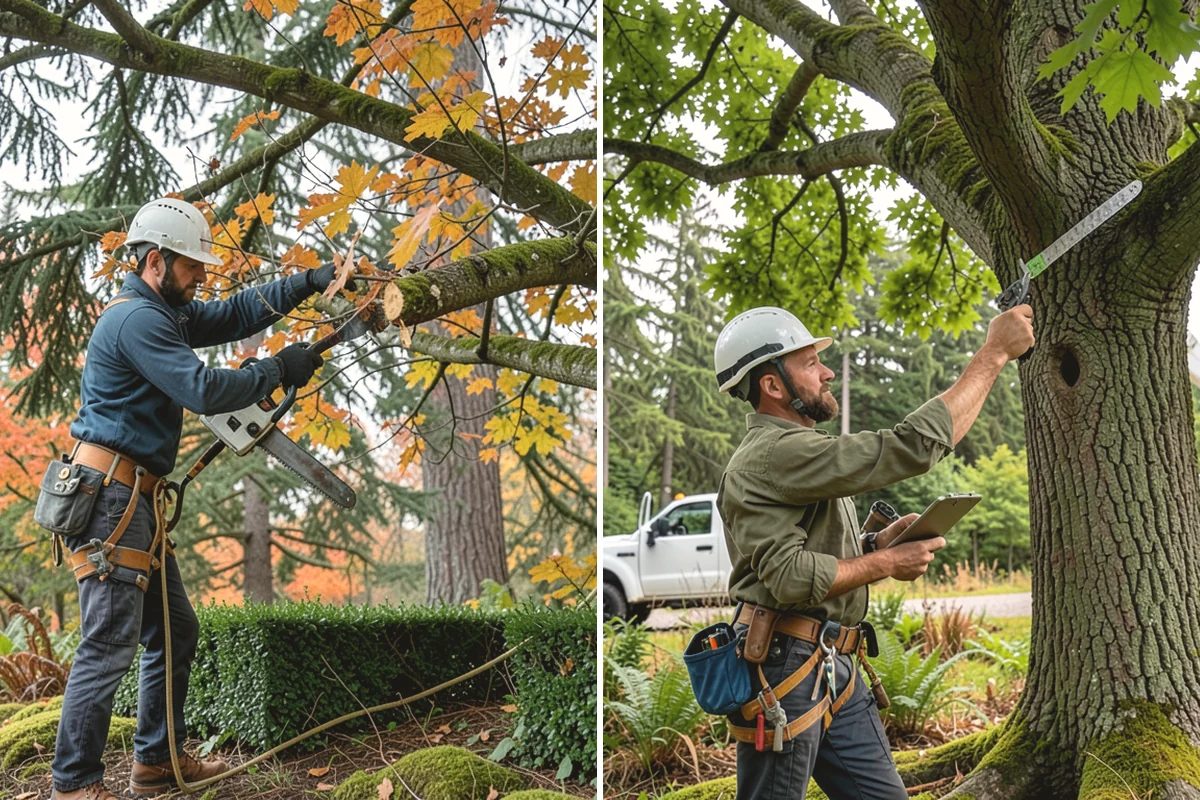
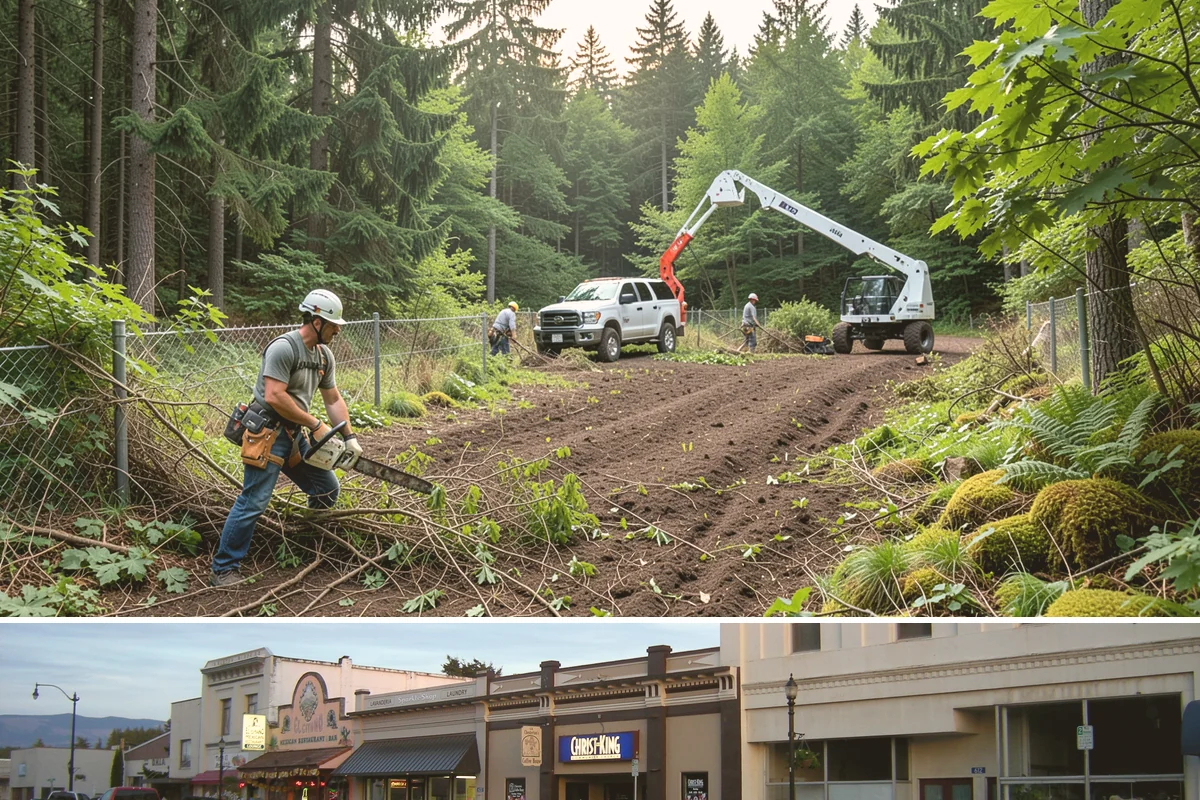
Emergency tree removal in nearby areas
Also serving Burlington
- Tree Planting in Burlingtonat Washington Landscaping
- Park Tree Maintenance in Burlingtonat Washington City Services
- Firewood Recycling in Burlingtonat Washington Firewood