Where Safety Meets Expert Tree Service.

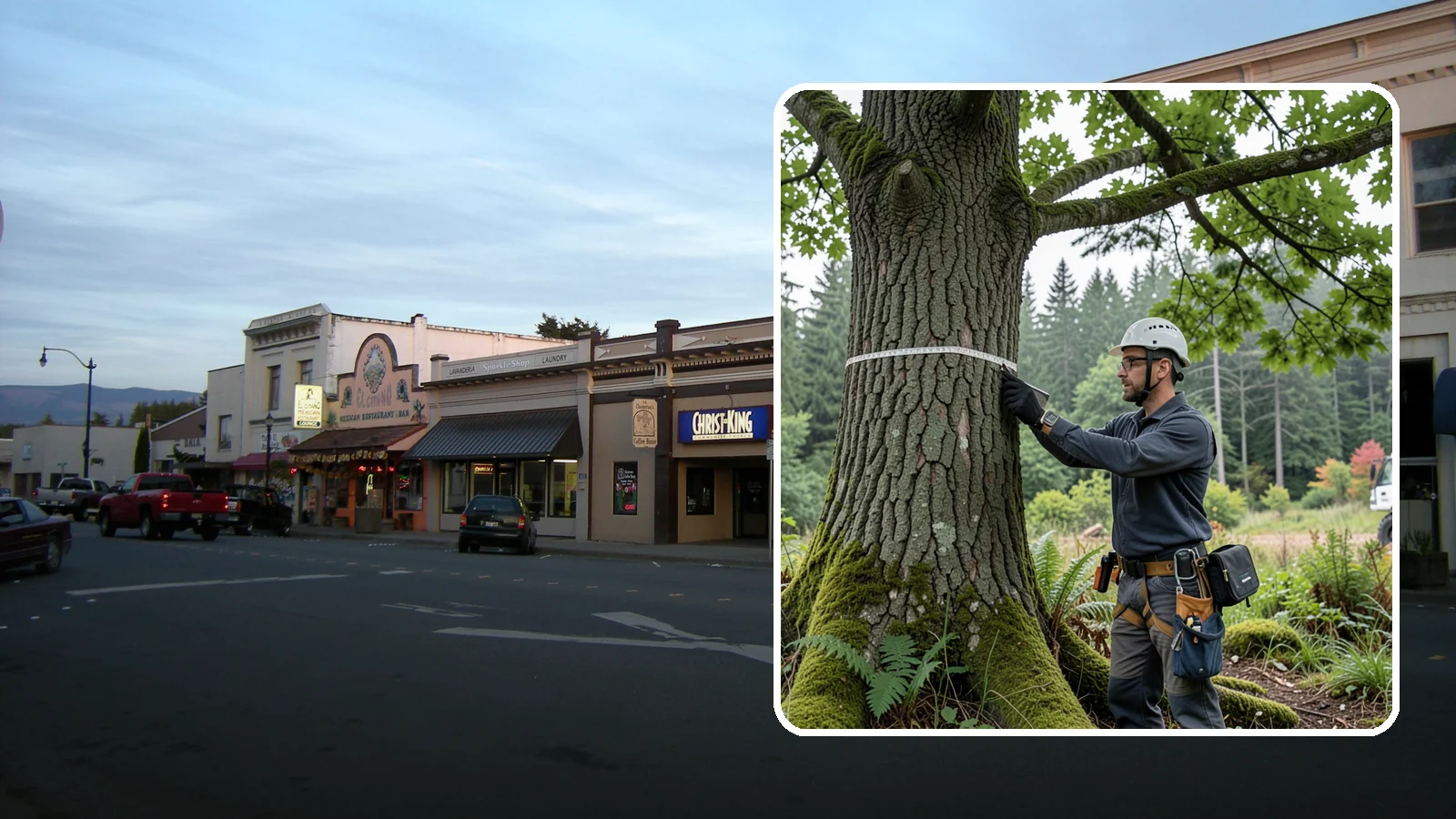
Burlington Arborist Consultations
A professional consultation with a qualified arborist.
You may be looking at a tree that leans a little more than it used to, a limb that hangs over the roof, or a cluster of mushrooms at the base. Or you may be planning a project and wonder what the trees on the lot can handle. In each case, a walk-through with someone who can read the tree is a sensible first step.
An arborist consultation answers a few plain questions. What is wrong, if anything? How likely is it to matter? What are the options, and what order should they come in? You can then decide with clear information in hand.
About Arborist Consultations in Burlington
Our arborist consultations offer a professional evaluation of your trees to help you plan appropriate care for your property. This service is designed for homeowners who need expert guidance on tree health or those preparing documentation for permits and insurance claims. We provide objective insights that support informed decisions about the future of your landscape.
What Burlington Arborist Consultations Includes
An arborist consultation involves a qualified professional inspecting specific trees to assess their current condition and needs. The work follows recognized standards, with methods tailored to match each tree species, site conditions, and access points on your property. You will receive clear recommendations or reports that help prioritize care plans and manage budgets effectively.
Burlington Arborist Consultations Process
We begin by gathering detailed information about your site and the trees in question before moving to an inspection phase. The arborist analyzes these findings against established objectives and standards to develop a tailored approach for each situation. Finally, we review our clear recommendations or reports with you to ensure everyone understands the proposed care plan.
Equipment We Use for Burlington Arborist Consultations
Our team utilizes diagnostic and measurement tools to gather accurate data during your consultation. Depending on what is needed, we may also employ mapping and imaging tools to get a better view of complex structures. We use specialized documentation software to create precise records while ensuring all crew members wear necessary personal protective equipment.
Burlington Arborist Consultations Safety & Best Practices
All findings are based strictly on observed evidence and recognized industry standards to ensure reliability for your project. If there is any uncertainty regarding an assessment, we will clearly disclose those limitations rather than guessing the outcome. We also recommend follow-up steps where conditions cannot be fully determined during a single visit.
Signs You Need Arborist Consultations in Burlington
You may need this service if you notice hidden defects or lack complete information about your site history that could affect tree safety. Competing objectives for care plans, such as balancing aesthetics with structural stability, often require professional analysis to resolve. Additionally, varying regulatory requirements in different jurisdictions can make a consultation essential before starting any work on your trees.
What Affects the Cost of Arborist Consultations in Burlington
The cost of this service is influenced by the complexity of the site and tree information provided during our initial gathering phase. Hidden defects that require advanced diagnostic tools or competing objectives within your care plan will also impact pricing. Furthermore, differing regulatory requirements across various jurisdictions can add factors to consider when budgeting for a consultation.
Best Time of Year for Burlington Arborist Consultations
Consultations can be performed year-round in our local climate, offering flexibility whenever you need an assessment. However, many homeowners find it beneficial to schedule these visits during the dormant seasons. This timing allows us to better assess structural integrity without leaf cover obscuring branches and providing a clearer view of your trees.
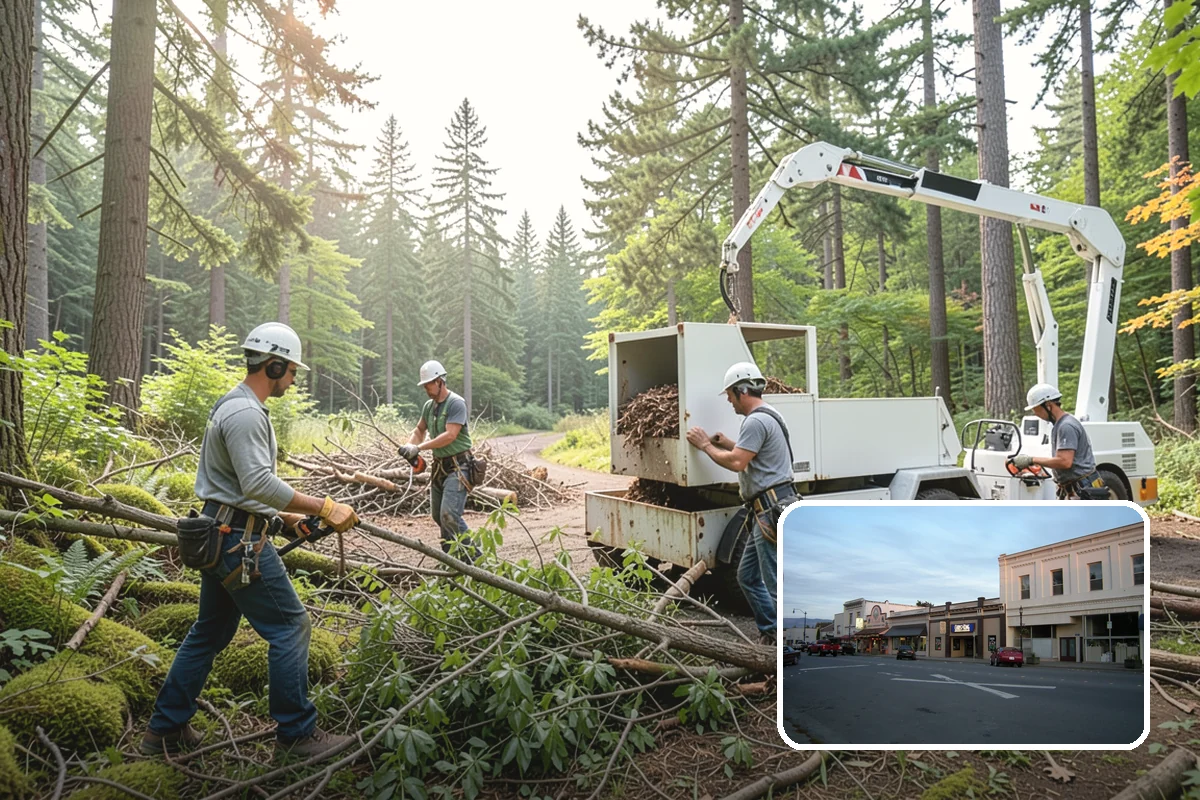
How arborist consultations work in Burlington, Skagit County
Most tree worries trace back to a few causes: decay in the trunk or roots, poor structure from how the tree grew, damage from construction or soil changes, or stress from site conditions. Some of these show up on the surface. Others do not. A consultation looks at the whole tree, its roots and soil, and what stands beneath it, such as a house, a driveway or a play area.
During the visit, the arborist walks the property and examines the canopy, trunk, root flare and ground around the base. The arborist may probe for decay or look for cracks and weak unions. You get an explanation of what was found and what the choices are, which might include pruning to ANSI A300 standards, monitoring, cabling, or removal. None of that is guaranteed to fix a problem, but it gives you a reasoned basis for the decision.
Local conditions play a part. Burlington sits in USDA plant hardiness zone 8b, according to the 2023 USDA map. That tells you which species are likely to be hardy here, which matters if you are weighing replacement planting after a removal.
The city's rules also affect when a consultation is useful. Burlington's tree code says significant trees may not be removed without prior authorization from the department. The regulated size is 6 inches DBH, or for multi-stem trees, any stem at least 4 inches measured 6 inches from the trunk joint. The same code says those rules do not apply to trees within an existing landscaped yard associated with an individual dwelling, except in redevelopment projects. Whether your tree falls under that exception depends on your site, so we check with the city before work starts rather than assume.
The code also says an arborist report may be required, such as hazard or nuisance documentation, a tree protection plan or a replacement planting plan. For hazard trees in riparian buffers, it calls for a certified arborist's determination. A written consultation can supply that kind of documentation if the city asks for it.
Washington Tree Services has an ISA Certified Arborist on staff, and estimates are free. Call or text 425-484-4442.
Burlington tree conditions at a glance
| Slopes | Some steep slopes |
|---|---|
| Soils | 4% of land has hardpan or another restrictive layer within 40 in; most common series Field |
| High and strong wind episodes, 2005-2025 | 33 in the forecast zone |
| USDA hardiness zone | 8b |
Tree removal rules in Burlington
Significant trees may not be removed without prior authorization from the department, BUT the significant-tree rules do not apply to trees within the boundaries of an existing landscaped yard associated with an individual dwelling (except redevelopment projects), nor to construction of a single detached dwelling, duplex or small multiunit building or land divisions of four lots or less. So ordinary removal in an existing single-family yard needs no tree approval outside critical areas.
Regulated size: 6 inches DBH (multi-stem: any stem at least 4 in. measured 6 in. from the trunk joint).
Official city source. Rules change; we confirm with the city before work starts.
Sources: Daymet daily weather (NASA/ORNL), NOAA Storm Events, USDA plant hardiness map 2023, NRCS soil survey, USGS elevation, WA DNR landslide inventory, USDA Forest Service aerial survey, WSDA, city tree assessments and street-tree inventories, SILVIS Lab, Arbor Day Foundation, and official city and utility pages.
Arborist Consultations Serving Burlington
Burlington
Arborist consultations in nearby areas
Also serving Burlington
- Erosion Control in Burlingtonat Washington Landscaping