Where Safety Meets Expert Tree Service.

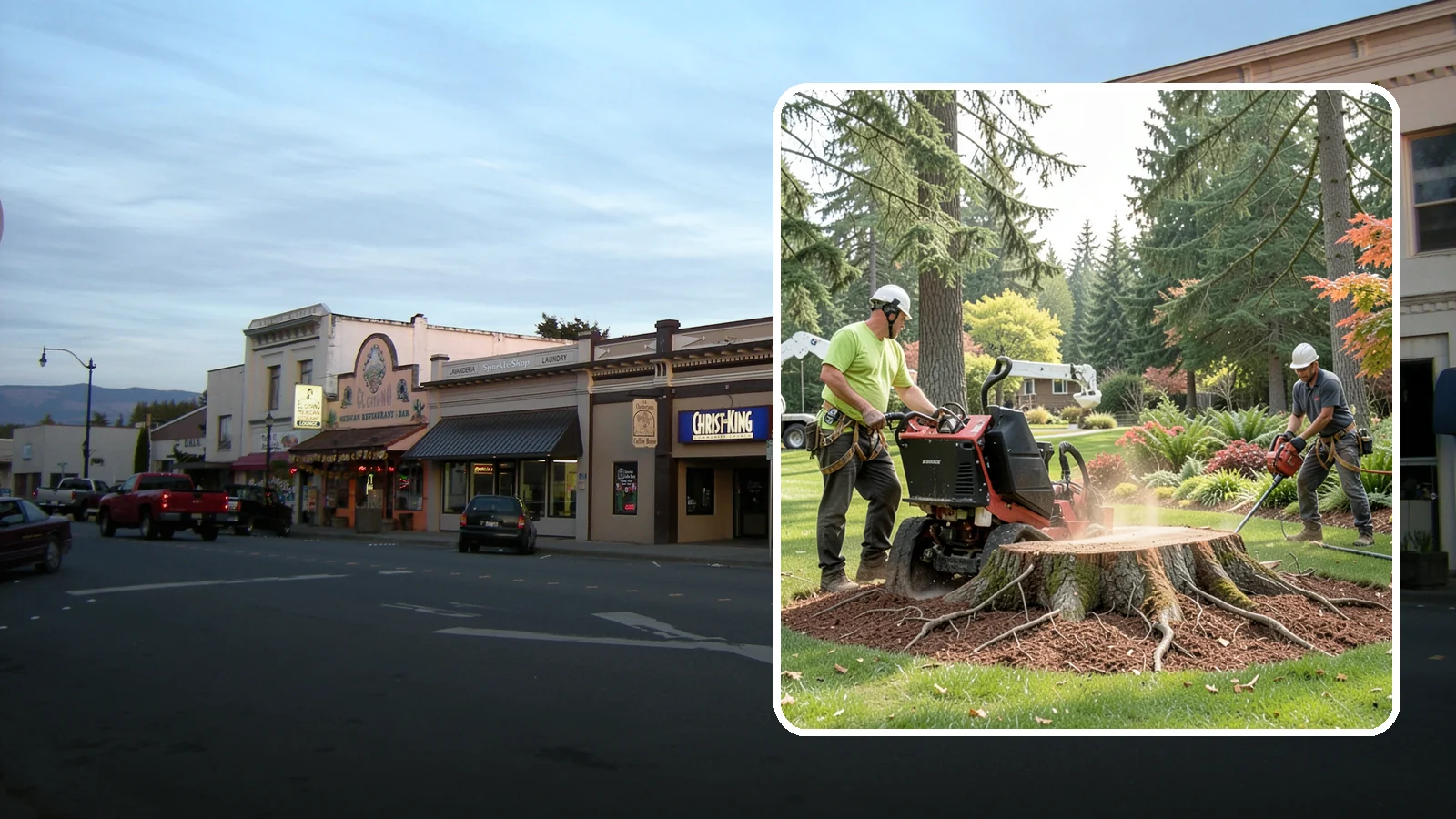
Burlington Stump Grinding
The mechanical grinding of a stump below grade.
Before you book a stump grinder, check whether the tree that left the stump was one the city expects you to replace. Burlington's tree code sets replacement counts for removed trees, and that can shape what goes in the ground where the stump sits now.
Grinding turns the stump into wood chips below the soil line. It clears the way for lawn, a new planting, or a path. Here is how the work goes and what to plan for in Burlington.
About Stump Grinding in Burlington
Stump grinding is a helpful way to clear out old tree stumps that might trip you or block your yard from being used again. This service restores the ground so you can replant new trees or simply enjoy open space without obstructions. It works well for homeowners who want their property looking neat and safe after removing a large tree.
What Burlington Stump Grinding Includes
Our crews use mechanical grinding to remove stumps below grade, leaving only small surface roots behind. This process matches the specific needs of your site conditions and helps prevent pests or unwanted regrowth from taking hold in that spot. Once finished, the area is ready for replanting or other surface projects you have planned.
Burlington Stump Grinding Process
We start by locating underground utilities to keep everyone safe before we begin any digging work. After clearing debris around the stump, our trained team grinds it down and processes the material into mulch or chips. Finally, we backfill and grade the soil as needed so your yard looks smooth and level again.
Equipment We Use for Burlington Stump Grinding
The job relies on a powerful stump grinder to cut through wood efficiently while excavation tools handle any remaining roots. We also use wheelbarrows and rakes to manage the grindings and ensure the site is clean after work is done. All crew members wear necessary personal protective equipment, including eye and hearing protection, throughout the project.
Burlington Stump Grinding Safety & Best Practices
Safety starts with confirming that all underground utilities are marked before we lower our machinery near your home or garden. We keep bystanders away from the area to avoid flying debris while grinding and stay alert for hidden rocks in the soil. Our team also takes extra care when working around buried obstructions to prevent accidental damage during excavation.
Signs You Need Stump Grinding in Burlington
You may need this service if you notice a stump acting as a tripping hazard or stopping people from using part of your yard freely. If pests are attracted to old roots or new shoots keep growing where the tree used to stand, grinding can stop that cycle. It is also useful when you want to prepare an area for planting something new but cannot get rid of the visible stump first.
What Affects the Cost of Stump Grinding in Burlington
The price will change based on how big the stump is and whether your soil contains rocks or other hard debris. Sites with limited access, such as narrow spaces where large equipment cannot fit easily, may also affect the final cost. These factors help us determine a fair rate that fits the specific challenges of your property without guessing at numbers you haven’t asked for yet.
Best Time of Year for Burlington Stump Grinding
You can schedule this work anytime during the year since Washington State weather usually allows it to proceed smoothly. However, we take special precautions when heavy rain is forecasted because muddy sites make excavation more difficult and slower. Planning ahead helps us manage these conditions so your project stays on track regardless of seasonal changes.
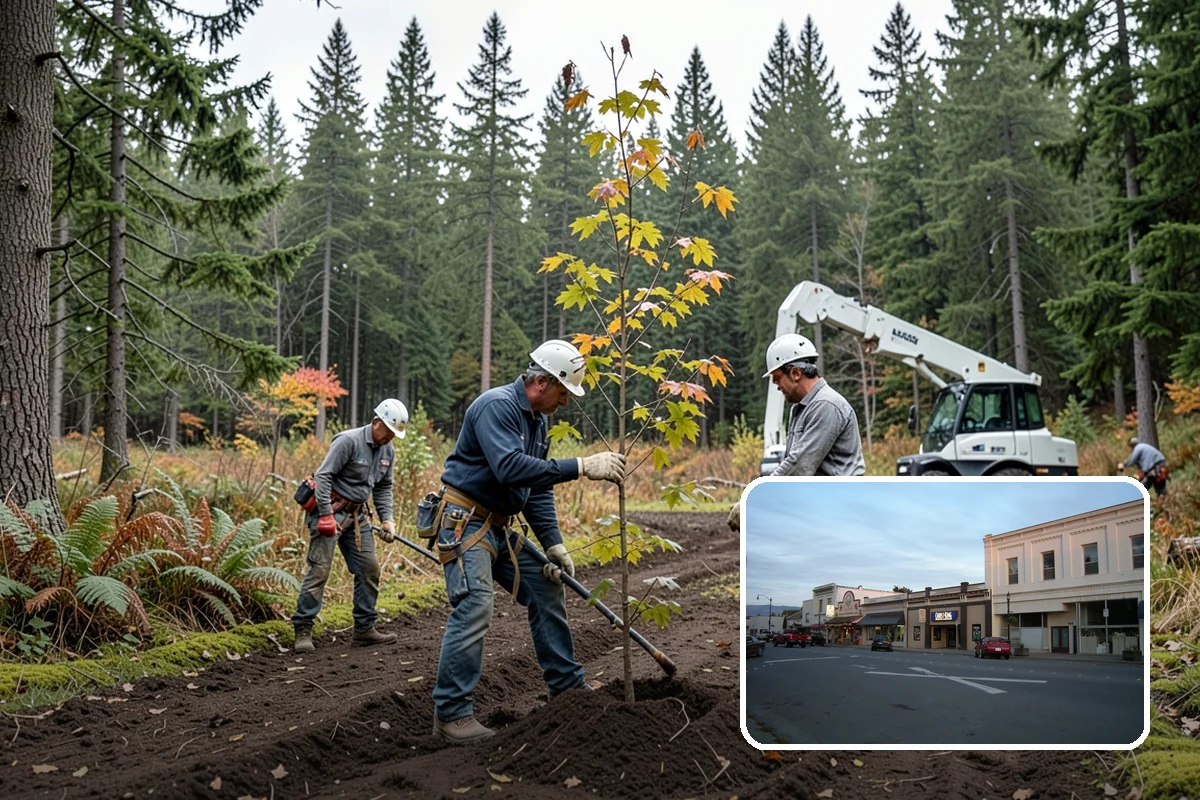
How stump grinding works for Burlington yards
Stump grinding removes the stump and the upper roots with a rotating cutting wheel. It does not pull the root system out of the ground. Most of the roots stay and decay over time.
The basic steps
- Mark or flag anything buried near the stump, such as irrigation lines, cables, and drain pipes. Call before digging or grinding if you are unsure where utilities run.
- The operator clears rocks and debris from around the stump.
- The wheel sweeps across the stump and cuts down several inches below grade, working side to side.
- The chips and soil mix fill the hole. You can leave them to settle, spread them as mulch, or have them hauled off.
Replacement trees and the city code
Burlington's tree code, per the official city source, lists replacement requirements where its rules apply: 2 replacement trees for each removed tree 6 to 18 inches in diameter at breast height, and 4 for each tree over 18 inches. Deciduous trees have a minimum size. The code speaks to removal, not to grinding a stump. If the tree came out recently, or is still standing and you plan to take it down first, we check with the city before work starts so you know what replanting may be expected.
Soil and what you plant next
The NRCS soil survey shows that about 4% of Burlington's land has a hard or restrictive layer, such as glacial hardpan, within 40 inches of the surface. The most common soil series is Field. For you, that means a grinding hole is usually fine to backfill, but it is worth checking drainage before planting a large tree in the same spot. Burlington is in USDA hardiness zone 8b (2023 USDA map), which is useful when choosing a replacement.
Call or text 425-484-4442 for a free estimate.
Burlington tree conditions at a glance
| Soils | 4% of land has hardpan or another restrictive layer within 40 in; most common series Field |
|---|---|
| Rain and snow falling October to April | 78% of the year’s total |
| Days that freeze at night and thaw by day | 35 a year |
Tree removal rules in Burlington
Significant trees may not be removed without prior authorization from the department, BUT the significant-tree rules do not apply to trees within the boundaries of an existing landscaped yard associated with an individual dwelling (except redevelopment projects), nor to construction of a single detached dwelling, duplex or small multiunit building or land divisions of four lots or less. So ordinary removal in an existing single-family yard needs no tree approval outside critical areas.
Regulated size: 6 inches DBH (multi-stem: any stem at least 4 in. measured 6 in. from the trunk joint).
Official city source. Rules change; we confirm with the city before work starts.
Sources: Daymet daily weather (NASA/ORNL), NOAA Storm Events, USDA plant hardiness map 2023, NRCS soil survey, USGS elevation, WA DNR landslide inventory, USDA Forest Service aerial survey, WSDA, city tree assessments and street-tree inventories, SILVIS Lab, Arbor Day Foundation, and official city and utility pages.
Stump Grinding Serving Burlington
Burlington
Stump grinding in nearby areas
Also serving Burlington
- Sod Removal in Burlingtonat Washington Landscaping
- Root Pruning in Burlingtonat Washington City Services