Where Safety Meets Expert Tree Service.


Burlington Preventive Tree Care Plans
Proactive plans that address issues before they escalate.
A federal and state aerial survey of forest within 10 km of Burlington, covering 2021 to 2025, mapped 3,555 acres of decline where no single cause was found. Bigleaf maple and western redcedar were among the trees listed. That is forest land, not yard trees, but it shows how often slow dieback goes unexplained.
A preventive plan is a way to catch problems early on your own property. Regular checks of structure, soil and canopy can show small changes before they become costly or dangerous ones.
About Preventive Tree Care Plans in Burlington
Preventive tree care plans offer a proactive way to keep your trees healthy before small issues become big problems. These maintenance programs are designed for homeowners who want predictable care that reduces long-term risk and costs. By addressing concerns early through routine attention, you can enjoy safer landscapes year after year.
What Burlington Preventive Tree Care Plans Includes
This service includes recurring inspections and necessary treatments tailored to the specific needs of your trees. Our trained crews follow recognized arboricultural standards while matching their methods to each tree species and site condition. The goal is to reduce potential failures by spreading care costs over time through a consistent schedule.
Burlington Preventive Tree Care Plans Process
We begin by assessing your existing trees and setting clear goals for what you want to achieve with the landscape. Once we build a recurring schedule of inspections, our team performs the scheduled work according to that plan. Over time, we review the results together and adjust the program as needed to keep it effective for changing conditions.
Equipment We Use for Burlington Preventive Tree Care Plans
Our crews use specialized pruning and inspection tools along with documentation equipment to track changes in your trees. When necessary, an aerial lift is brought on-site to safely reach higher branches or difficult areas. We also utilize chipper and hauling equipment to manage debris while ensuring all work meets safety standards.
Burlington Preventive Tree Care Plans Safety & Best Practices
Every visit follows recognized industry standards that prioritize the protection of both people and property. Conditions are documented carefully over time so we can flag emerging hazards promptly before they escalate. If your trees change or new risks appear, we adjust the plan immediately to maintain a safe environment.
Signs You Need Preventive Tree Care Plans in Burlington
You might need this service if you notice changing tree conditions that require more frequent attention than occasional visits allow. Missed appointments in past schedules often reduce effectiveness, making a structured recurring program essential for consistent results. Additionally, balancing your budget with the scope of care needed across many trees is easier when using a planned approach.
What Affects the Cost of Preventive Tree Care Plans in Burlington
The total investment depends on factors like tree species and how difficult it is to access certain parts of your property. We also consider the complexity of balancing the overall program scope with any existing budget constraints you may have. This transparent approach ensures that costs are managed predictably without surprise fees or hidden charges.
Best Time of Year for Burlington Preventive Tree Care Plans
In our local climate, these plans work best when performed year-round to address how tree conditions shift throughout the seasons. While specific tasks like pruning might be timed around dormancy periods or storm seasons for optimal results, regular checks remain valuable all season long. This flexibility allows us to respond quickly whenever weather patterns change and affect your landscape health.
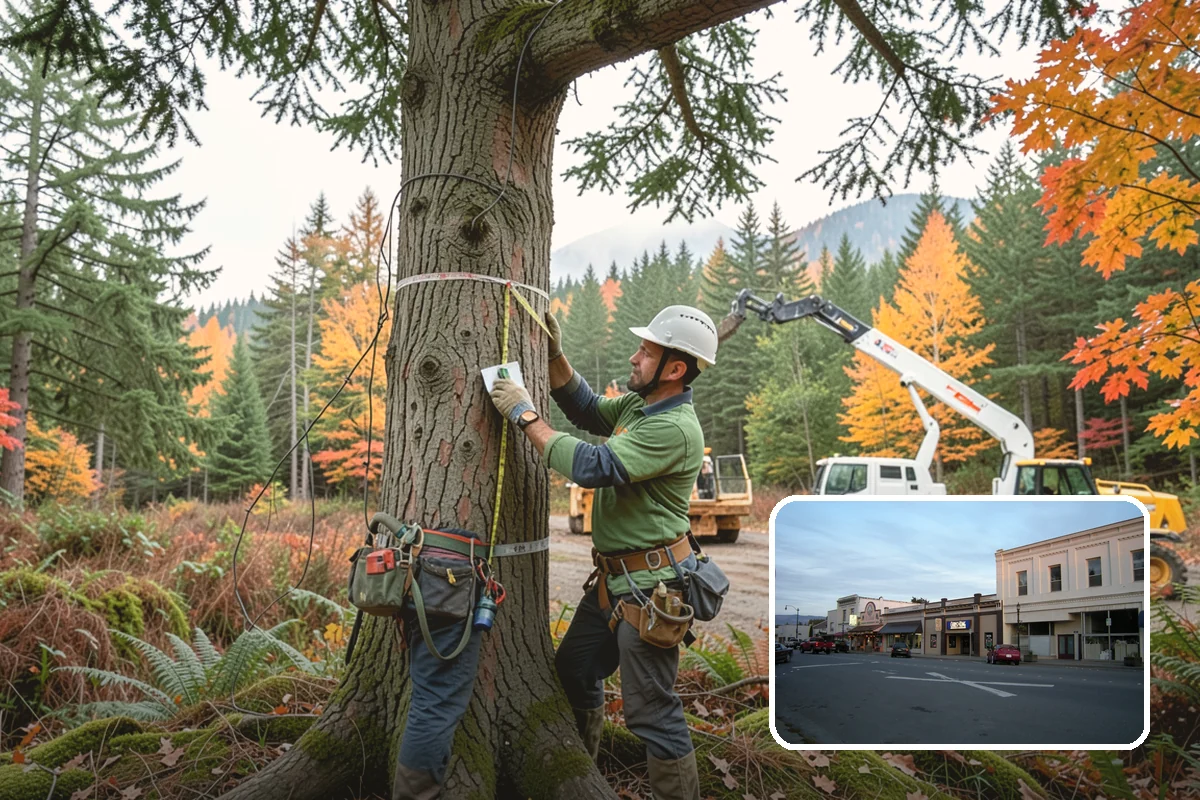
How a preventive tree care plan works in Burlington
A plan replaces one-off emergency calls with scheduled, documented visits. Each visit follows the same basic steps.
1. Inspect each tree
We look at the crown, trunk, root flare and soil. We note dead wood, cracks, fungal growth, leaning, and thinning leaves. The survey above counted decline with no identified cause, so we record what we see year to year. A slow change is easier to spot when notes and photos exist from earlier visits.
2. Plan pruning against wind
The forecast zone that includes Burlington had 33 high and strong wind episodes from 2005 to 2025. That figure covers the whole zone, not your street. Still, it is a good reason to look for weak unions, crossed limbs and heavy, overextended branches. Pruning follows ISA and ANSI A300 practice: small cuts at the right spot, no topping, and no removing more live crown than needed.
3. Match watering to the tree
Maples can scorch in dry spells. WSU HortSense advises irrigating during dry periods, wetting the entire root zone without overwatering. We tell you which trees on your lot are most likely to need this, and when to start.
4. Choose species that fit the zone
Burlington is USDA hardiness zone 8b (USDA map, 2023). If you plan new plantings, that tells us which species are likely to handle winter lows here. It does not replace a check of soil, drainage and available space.
What a visit may produce
- A written condition note for each tree
- A list of pruning or cabling work, ranked by urgency
- Watering guidance for the dry months
- A recommendation to remove a tree only when its condition calls for it
If a tree needs removal, we check the city's rules with Burlington before any work starts. For an estimate, call or text 425-484-4442. Estimates are free, and an ISA Certified Arborist handles the assessment.
Burlington tree conditions at a glance
| USDA hardiness zone | 8b |
|---|---|
| Soils | 4% of land has hardpan or another restrictive layer within 40 in; most common series Field |
| Rain and snow falling October to April | 78% of the year’s total |
| Days with 0.1 in or more of rain | 107 a year |
| Days that freeze at night and thaw by day | 35 a year |
Tree health near Burlington
- Decline, cause not identified3,555 ac
- Western tent caterpillar433 ac
- Bears244 ac
Forest damage mapped from the air within 10 km of Burlington, 2021-2025 (USDA Forest Service and WA DNR). This covers forest land, not street or yard trees. “Decline, cause not identified” is dieback with no single cause found.
Sources: Daymet daily weather (NASA/ORNL), NOAA Storm Events, USDA plant hardiness map 2023, NRCS soil survey, USGS elevation, WA DNR landslide inventory, USDA Forest Service aerial survey, WSDA, city tree assessments and street-tree inventories, SILVIS Lab, Arbor Day Foundation, and official city and utility pages.
Preventive Tree Care Plans Serving Burlington
Burlington

Preventive tree care plans in nearby areas
Also serving Burlington
- Organic Lawn Care in Burlingtonat Washington Landscaping