Where Safety Meets Expert Tree Service.

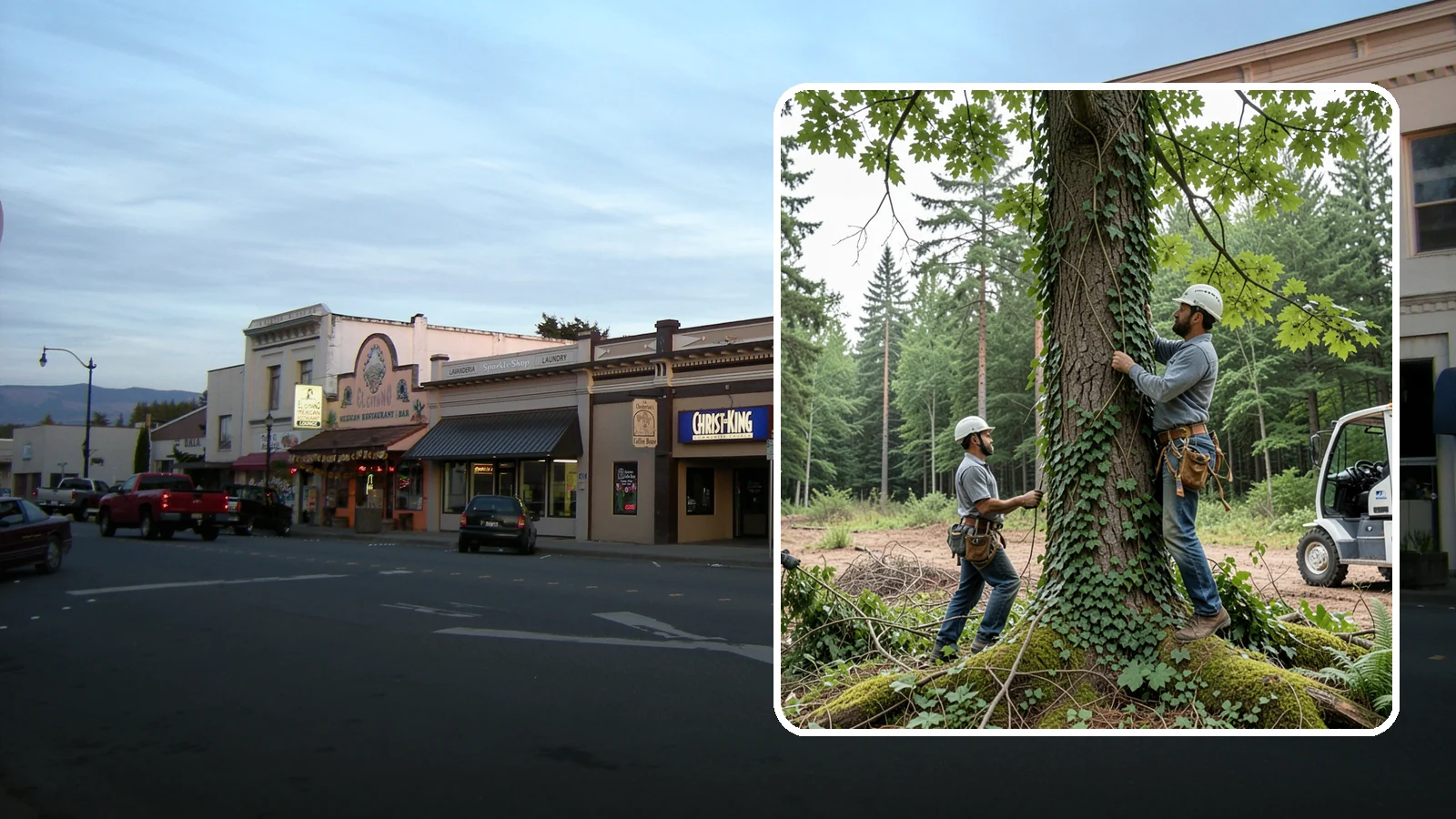
Burlington Ivy Removal From Trees
The removal of ivy and climbing vines from trees.
Is the ivy on your tree hurting it? Often, yes, over time. Ivy that climbs the trunk and reaches into the crown competes for light and hides the bark, so problems such as decay, cracks and dead wood are harder to spot. The usual fix is to cut the ivy at the base and let the upper vines die back.
You can start by checking how far the ivy has climbed and how thick the stems are. Thin stems on a low trunk are a small job. Heavy stems that reach the branches call for a more careful plan.
About Ivy Removal From Trees in Burlington
Removing ivy from trees is a vital part of keeping your landscape healthy and stable. This care helps protect long-term tree health while allowing for proper inspection of the trunk and branches. It supports the stability of valued specimens by addressing issues before they escalate into larger problems.
What Burlington Ivy Removal From Trees Includes
Our crews specialize in removing climbing vines like ivy to restore natural conditions around the root system. The work is tailored to match specific tree species, site conditions, and access constraints for a safe outcome. This process also improves soil and root conditions that may have been compromised by heavy vine growth.
Burlington Ivy Removal From Trees Process
We begin with a thorough inspection of the tree and its surrounding area to identify contributing factors such as pests or disease. Based on these findings, we recommend and apply appropriate treatments while documenting all observations for follow-up care. Our methods are designed to avoid damage to roots and trunks during removal operations.
Equipment We Use for Burlington Ivy Removal From Trees
Trained crews use diagnostic tools and soil probes to assess the health of your trees before starting work. We utilize injection or application equipment as needed, along with air excavation tools when specific conditions require them. All personnel wear necessary personal protective equipment to ensure safety throughout every step of the job.
Burlington Ivy Removal From Trees Safety & Best Practices
Safety is a priority, so we strictly follow label and application guidelines for any products used during removal. Our team takes care to protect nearby soil and surrounding plantings while avoiding damage to roots or trunks. We also document conditions accurately to maintain clear records of our work and recommendations.
Signs You Need Ivy Removal From Trees in Burlington
You may need this service if you notice signs of decline from past construction, grade changes, or compacted soils. Girdling roots caused by vines are another indicator that ivy removal could benefit your tree’s stability. Catching these problems early allows us to improve soil conditions before they lead to serious health issues.
What Affects the Cost of Ivy Removal From Trees in Burlington
The cost is influenced by the height and spread of each individual tree being treated. Access constraints for equipment can also impact pricing, as well as the volume of ivy debris that requires removal. These factors ensure we provide a fair estimate based on the specific needs of your property.
Best Time of Year for Burlington Ivy Removal From Trees
This work can be performed year-round in our local climate to address issues whenever they arise. However, extra caution is required during wet seasons to prevent soil erosion or slipping hazards while working near trees. Planning around these weather patterns helps ensure the safety of both workers and your landscape.

Removing ivy from trees in Burlington: what to plan for
Cut at the base first
The standard method is to cut each stem near the ground and remove a section about a foot or two wide, so the upper vines lose their connection to the roots. Then pull the ivy off the ground around the trunk. Leave the vines high on the tree to die and loosen for a few weeks. Pulling them off live can tear bark. Ivy stems grip with small rootlets, so we peel by hand where the bark is sound and leave stubborn pieces in place rather than scrape the trunk.
Wet weather helps and hurts
Burlington gets about 107 days a year with 0.1 inch or more of rain, based on Daymet data for 2005 to 2025. Damp soil makes it easier to pull ground runners and roots. It also means wet bark and slick footing when someone has to work up a trunk or ladder. Dry spells are better for the high work, and the ground-level cutting can go ahead in most conditions.
Burlington is in USDA hardiness zone 8b (USDA map, 2023). Ivy is evergreen and can keep growing through much of the year, so a cut that is left alone can regrow from missed roots. Check the base each season and clip any new shoots.
What the tree looks like afterward
Once the ivy is off, the bark and the lower limbs are visible. That is when it makes sense to look for cavities, loose bark, fungus and dead limbs. A federal aerial survey of forest within 10 km of Burlington (USDA Forest Service and WA DNR, 2021 to 2025) mapped 3,555 acres of decline with no single cause found. That survey covers forest land, not yard trees, so it says nothing about your tree. It does show that dieback is worth watching for, and a clear trunk makes that easier.
If your tree is large, leaning or heavily covered, we can look at it together. Call or text 425-484-4442 for a free estimate.
Burlington tree conditions at a glance
| Homes in the wildland-urban interface | 0% |
|---|---|
| Land under dense tree cover (50%+ canopy) | 5% |
| Slopes | Some steep slopes |
| Rain and snow falling October to April | 78% of the year’s total |
Tree removal rules in Burlington
Significant trees may not be removed without prior authorization from the department, BUT the significant-tree rules do not apply to trees within the boundaries of an existing landscaped yard associated with an individual dwelling (except redevelopment projects), nor to construction of a single detached dwelling, duplex or small multiunit building or land divisions of four lots or less. So ordinary removal in an existing single-family yard needs no tree approval outside critical areas.
Regulated size: 6 inches DBH (multi-stem: any stem at least 4 in. measured 6 in. from the trunk joint).
Official city source. Rules change; we confirm with the city before work starts.
Tree health near Burlington
- Decline, cause not identified3,555 ac
- Western tent caterpillar433 ac
- Bears244 ac
Forest damage mapped from the air within 10 km of Burlington, 2021-2025 (USDA Forest Service and WA DNR). This covers forest land, not street or yard trees. “Decline, cause not identified” is dieback with no single cause found.
Sources: Daymet daily weather (NASA/ORNL), NOAA Storm Events, USDA plant hardiness map 2023, NRCS soil survey, USGS elevation, WA DNR landslide inventory, USDA Forest Service aerial survey, WSDA, city tree assessments and street-tree inventories, SILVIS Lab, Arbor Day Foundation, and official city and utility pages.
Ivy Removal From Trees Serving Burlington
Burlington
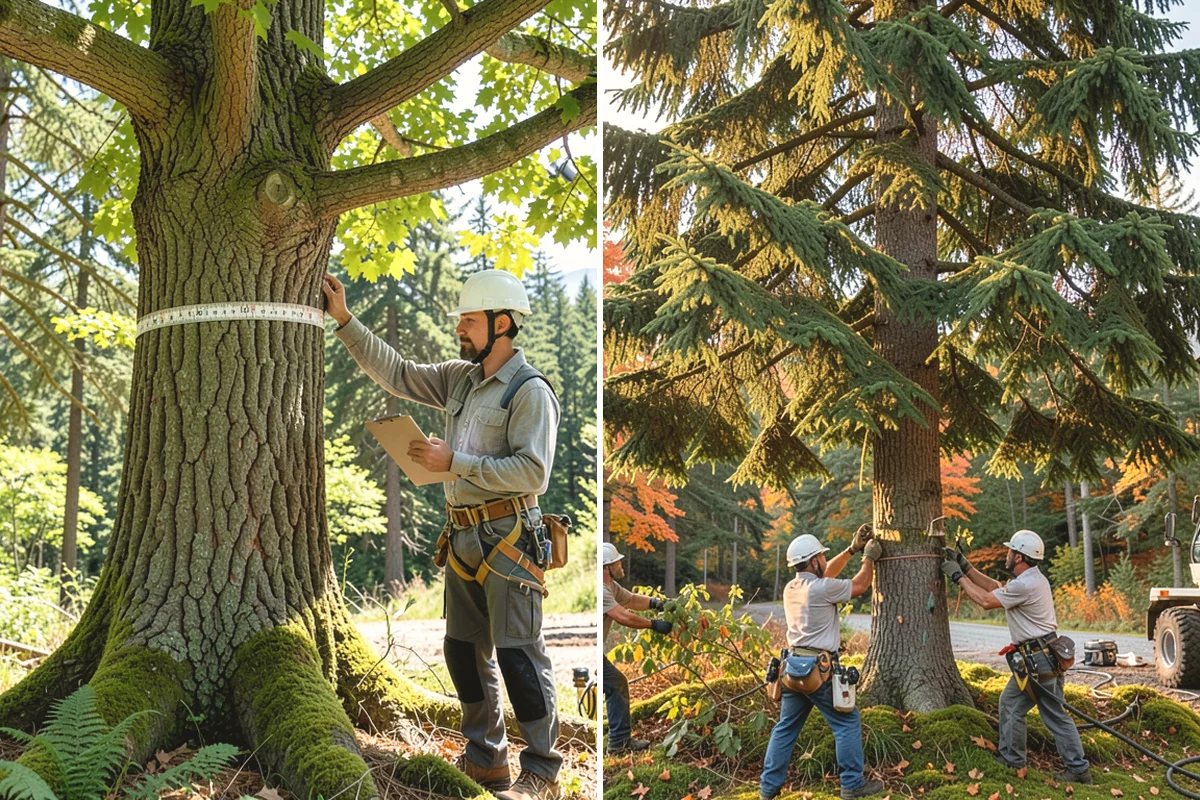

Ivy removal from trees in nearby areas
Also serving Burlington
- Shrub Transplanting in Burlingtonat Washington Landscaping
- Shrub Maintenance in Burlingtonat Washington City Services