Where Safety Meets Expert Tree Service.

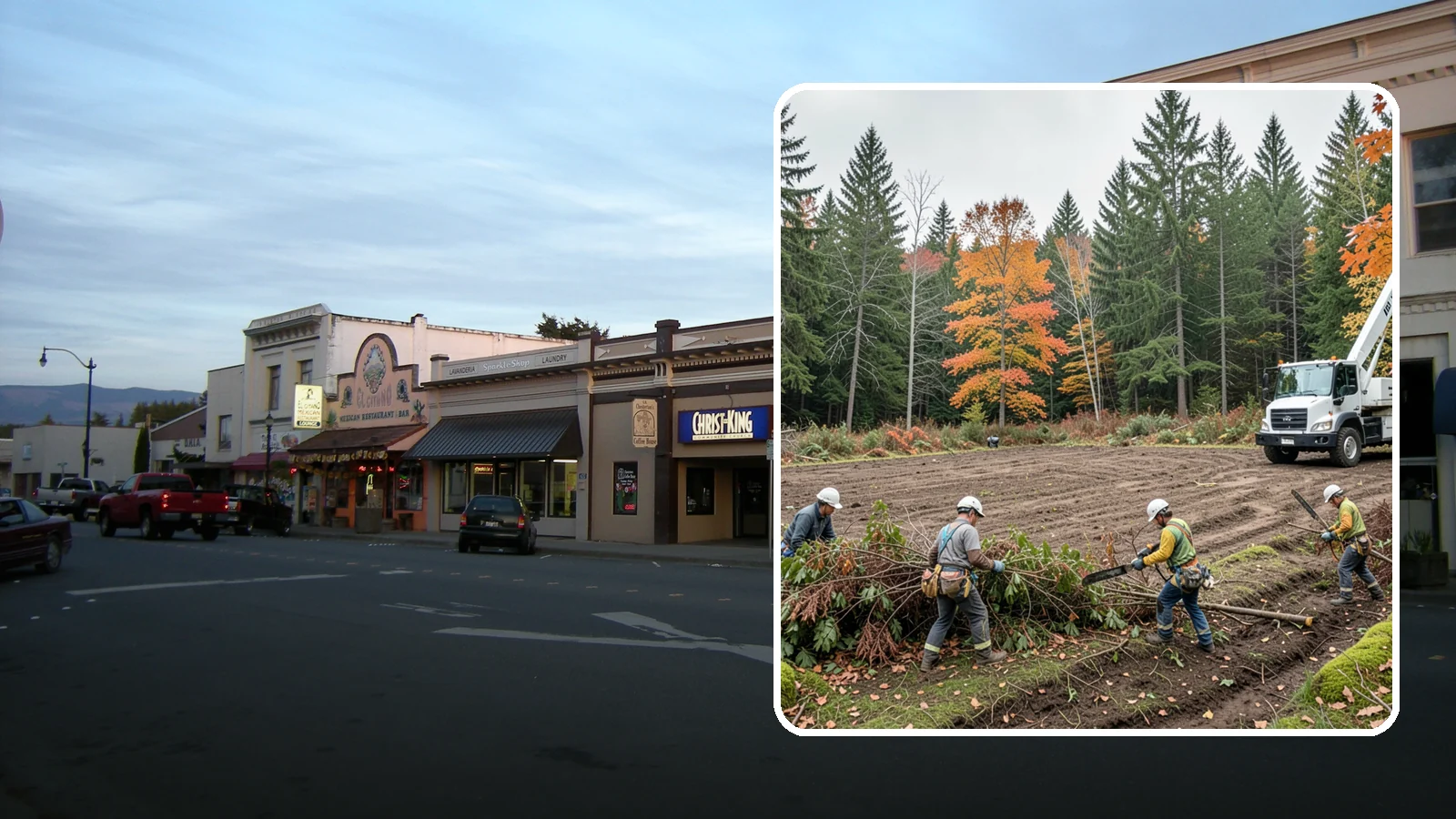
Burlington Invasive Vegetation Removal
The removal of invasive plant species.
You may have noticed blackberry canes arching over a fence, ivy climbing a trunk and reaching the upper branches, or a thicket along a ditch that gets denser every summer. Those are usually the first signs that invasive vegetation has moved past the point of a weekend trim.
Removing it well means cutting, digging and disposing in the right order, and protecting the trees and soil you want to keep. Here is how that plays out on Burlington properties, and what to settle before any cutting begins.
About Invasive Vegetation Removal in Burlington
We help homeowners manage overgrown areas by safely removing invasive plant species that threaten your property’s health. Our team is dedicated to restoring site conditions so you can enjoy a safer and more usable outdoor space. This service supports native vegetation while addressing common issues like dense, thorny growth or fire hazards.
What Burlington Invasive Vegetation Removal Includes
Invasive vegetation removal focuses on clearing unwanted plants to protect existing trees and improve overall land quality. We use methods tailored to your specific site conditions, ensuring that retained features remain safe during the process. The goal is to eliminate invasive species while preparing your land for its intended future use.
Burlington Invasive Vegetation Removal Process
Our trained crews begin by assessing your property and marking important features they need to protect throughout the job. Vegetation is cleared in a planned sequence using appropriate techniques matched to each tree species and access point. After clearing, we process materials, tidy the area as needed, and responsibly dispose of all debris left behind.
Equipment We Use for Burlington Invasive Vegetation Removal
To handle various growth types effectively, our crews utilize brush cutters, chainsaws, chippers, and hauling equipment alongside hand tools. We also wear full personal protective gear to ensure everyone stays safe while working around uneven terrain or hidden obstacles. The right combination of machinery allows us to tackle even the densest patches without damaging your retained trees.
Burlington Invasive Vegetation Removal Safety & Best Practices
Safety is a priority as we identify property lines, utilities, and features that must be kept intact during clearing operations. Our team carefully manages debris piles to prevent hazards while watching for uneven ground or wet spots on steep sites. We take extra care to protect the root zones of any healthy trees you want to keep standing after the work is done.
Signs You Need Invasive Vegetation Removal in Burlington
You may need this service if your site has dense, thorny growth that limits access and makes outdoor activities difficult. Signs include invasive species continuing to regrow despite previous attempts or vegetation creating a fuel load that increases fire risk. If uneven terrain or wet conditions are making parts of your yard unusable, clearing these areas can restore their function.
What Affects the Cost of Invasive Vegetation Removal in Burlington
The price for this work depends on factors like how dense the vegetation is and whether it has thorny characteristics that slow down removal. Uneven or difficult-to-access terrain will also influence the cost, as will our commitment to responsibly disposing of all debris generated during the project. These variables ensure we provide a fair quote based strictly on your specific site conditions rather than fixed rates.
Best Time of Year for Burlington Invasive Vegetation Removal
While work can generally proceed year-round in Puget Sound weather, heavy rain may delay projects involving wet or steep sites where safety is paramount. We plan our schedules to accommodate these natural conditions and avoid starting when the ground is too saturated for safe operation. This flexibility allows us to get your land cleared whenever it fits best with your needs while maintaining high safety standards.

Invasive vegetation removal in Burlington: what to plan for
Invasive plants spread because nothing holds them back. Ivy and blackberry root where stems touch soil, regrow from fragments, and shade out whatever grows beneath. Ivy on a trunk also hides bark, cavities and decay, which makes it harder to judge the health of the tree underneath.
Season matters here. Burlington gets about 78% of its yearly rain and snow from October to April, based on Daymet data for 2005 to 2025. Wet ground makes roots easier to pull, but it also means bare soil can wash or slump after the plants are gone. On a slope or near a ditch, we plan to remove vegetation in stages and replant or cover the soil rather than leave it exposed through the wet months.
Where the plants grow also decides what is allowed. Burlington's tree code, in BMC Title 14, covers critical areas such as streams and steep slopes. In riparian buffers, hazard trees, as determined by a certified arborist, may be removed only with prior written approval, and they must be replaced with appropriate species within one year. The code also describes a 30 ft buffer from landslide hazard areas where native vegetation is maintained. That text is about tree removal and native vegetation, and we do not assume it says anything about clearing weeds. If your thicket sits near a stream or a steep slope, we check with the city before work starts.
Tree cover is another reason to be careful. Satellite data shows only about 5% of Burlington's land under dense tree cover, meaning 50% canopy or more. That figure describes the city as a whole, not your lot. It does suggest that the trees you do have are worth protecting while you clear around them.
The work itself follows standard practice. We cut ivy at the base of the trunk and let the upper growth die back, rather than pulling it off the bark. Blackberry is cut down, and the crowns and main roots are dug out. Debris is bagged or hauled off so it does not resprout. Follow-up passes are common, since missed root pieces regrow. Call or text 425-484-4442 for a free estimate.
Burlington tree conditions at a glance
| Homes in the wildland-urban interface | 0% |
|---|---|
| Land under dense tree cover (50%+ canopy) | 5% |
| Slopes | Some steep slopes |
| Rain and snow falling October to April | 78% of the year’s total |
Tree removal rules in Burlington
Significant trees may not be removed without prior authorization from the department, BUT the significant-tree rules do not apply to trees within the boundaries of an existing landscaped yard associated with an individual dwelling (except redevelopment projects), nor to construction of a single detached dwelling, duplex or small multiunit building or land divisions of four lots or less. So ordinary removal in an existing single-family yard needs no tree approval outside critical areas.
Regulated size: 6 inches DBH (multi-stem: any stem at least 4 in. measured 6 in. from the trunk joint).
Official city source. Rules change; we confirm with the city before work starts.
Tree health near Burlington
- Decline, cause not identified3,555 ac
- Western tent caterpillar433 ac
- Bears244 ac
Forest damage mapped from the air within 10 km of Burlington, 2021-2025 (USDA Forest Service and WA DNR). This covers forest land, not street or yard trees. “Decline, cause not identified” is dieback with no single cause found.
Sources: Daymet daily weather (NASA/ORNL), NOAA Storm Events, USDA plant hardiness map 2023, NRCS soil survey, USGS elevation, WA DNR landslide inventory, USDA Forest Service aerial survey, WSDA, city tree assessments and street-tree inventories, SILVIS Lab, Arbor Day Foundation, and official city and utility pages.
Invasive Vegetation Removal Serving Burlington
Burlington

Invasive vegetation removal in nearby areas
Also serving Burlington
- Debris Removal in Burlingtonat Washington Landscaping
- Garage Demolition in Burlingtonat Washington Construction
- Blackberry Removal in Burlingtonat Washington City Services
- Customer Tree Processing in Burlingtonat Washington Firewood