Where Safety Meets Expert Tree Service.

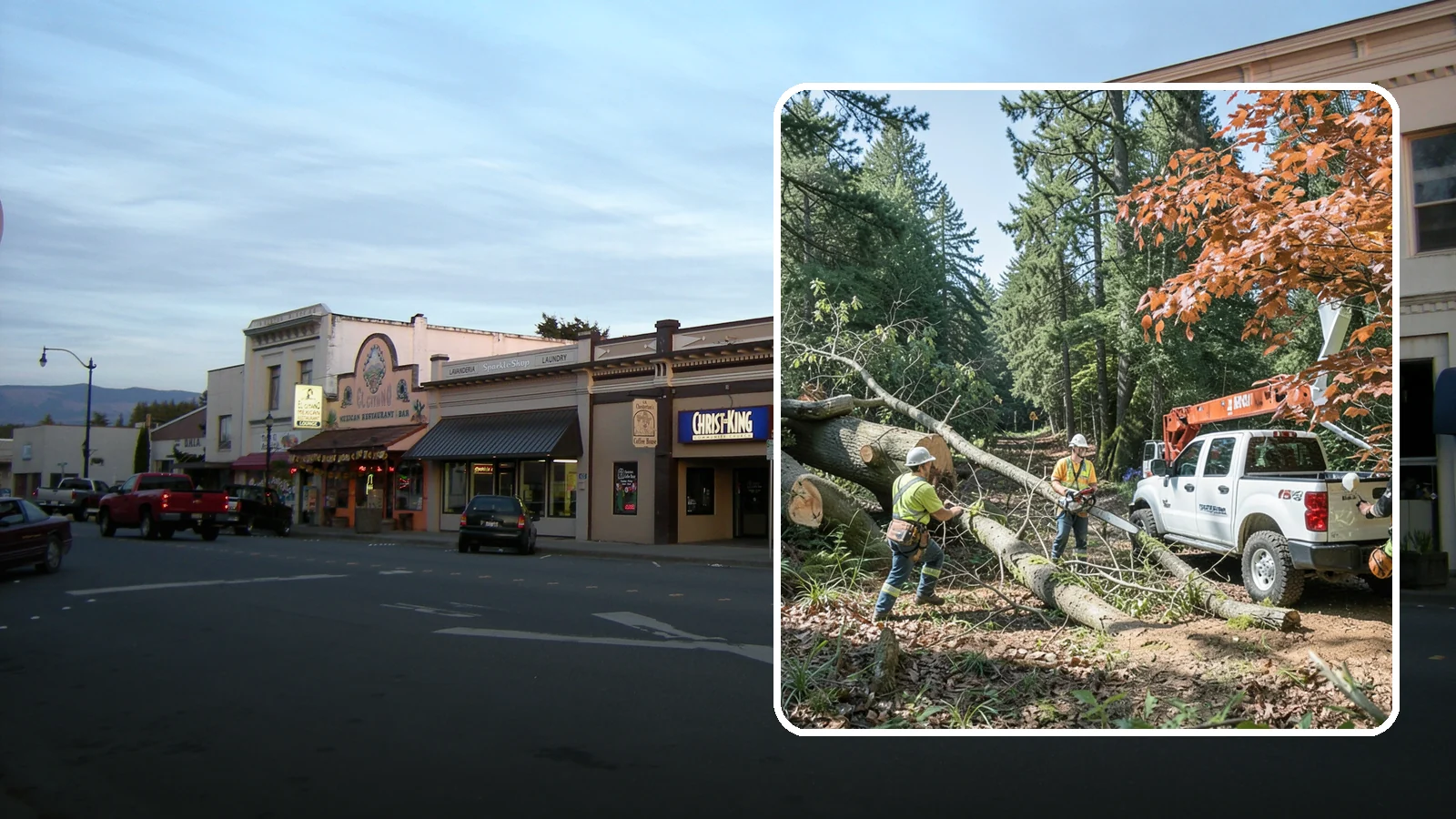
Burlington Fallen Tree Removal
The cleanup and removal of trees that have already fallen.
A fallen tree needs attention the day it comes down, not when the weather improves. In Burlington, the stretch from late fall through winter is when wind and ice are most likely to bring trees down, so that is also when most of this work happens.
If a tree has just fallen, stay clear of it, photograph it from a safe distance, and note what it is touching: a roof, a fence, a vehicle, or a power line. That information shapes how the removal gets planned.
About Fallen Tree Removal in Burlington
When a tree has already fallen across your yard or driveway, our crew is ready to help you clear the mess safely. We specialize in removing these hazards so you can regain full use of your property without worry. This service restores order after unexpected weather events or other incidents bring down large branches or entire trees.
What Burlington Fallen Tree Removal Includes
Fallen tree removal focuses on cleaning up and taking away wood that has already hit structures, landscaping, or roadsides. Our trained teams follow recognized arboricultural standards to ensure the job is done correctly for every specific site condition. We match our methods carefully to the type of tree species involved and how difficult it will be to reach them.
Burlington Fallen Tree Removal Process
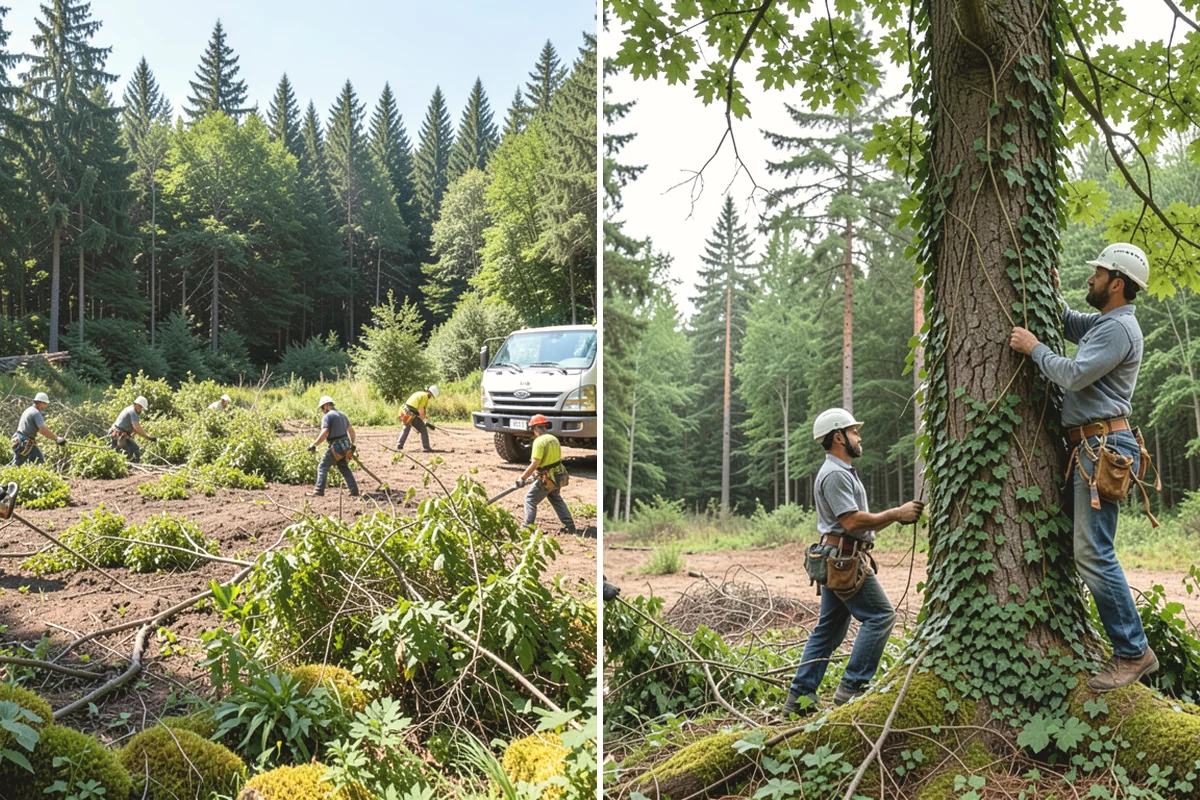
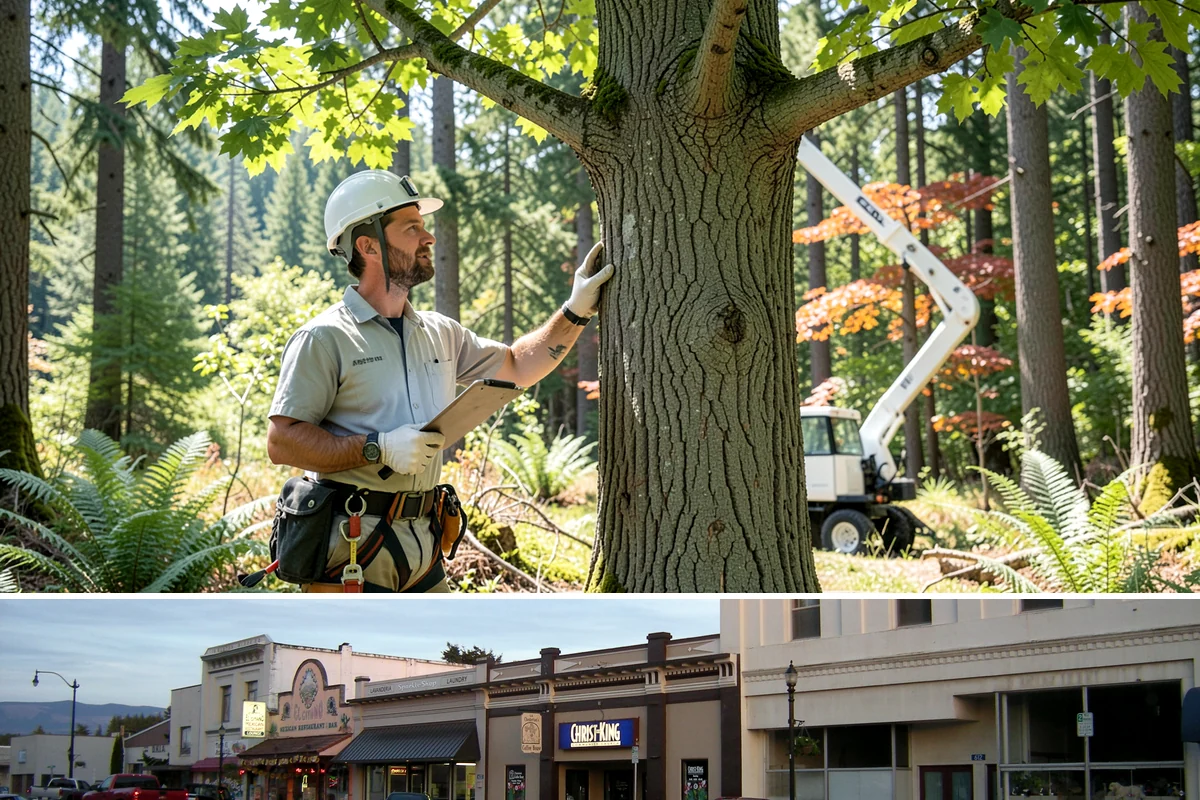
The work begins with an on-site assessment where we evaluate potential hazards before establishing a safe drop zone and perimeter. Crews then rig and lower limbs or fell the stem in a controlled sequence using careful planning for each step. Once the wood is processed, our team clears all debris from your property to leave the site clean behind them.
Equipment We Use for Burlington Fallen Tree Removal
We use professional tools like chainsaws, wood chippers, and climbing gear designed specifically for safe removal operations. Depending on access needs or tree size, we may bring aerial lifts or cranes to handle difficult situations effectively. Ground protection equipment is also used during setup to keep your lawn and surfaces intact while the work happens nearby.
Burlington Fallen Tree Removal Safety & Best Practices
Safety starts with identifying overhead utility lines before any crew member approaches the fallen wood or begins cutting. We maintain clear drop zones throughout the job and use coordinated ground communication to prevent accidents on site. Inspections for decay and structural defects happen first, ensuring that fall protection measures are always in place during climbing work.
Signs You Need Fallen Tree Removal in Burlington
You likely need this service if a tree has come down across your driveway, blocking access to your home or garage. Hidden internal rot might have caused the collapse without warning signs visible from the ground level earlier on. If you notice limited space for equipment due to nearby structures or power lines, our team can navigate these challenges safely.
What Affects the Cost of Fallen Tree Removal in Burlington
The final price depends heavily on factors such as the size of the tree and whether hidden decay complicates removal efforts. Proximity to buildings or electrical lines often requires specialized techniques that influence how much work is needed. Limited access for heavy machinery and specific requirements for wood disposal will also play a role in determining total costs.
Best Time of Year for Burlington Fallen Tree Removal
Our crews can perform this cleanup year-round, taking advantage of the mild Puget Sound climate whenever conditions allow safe operation. During wet seasons when ground soil becomes saturated, we utilize specialized rigging gear to ensure stability while working on muddy sites. This flexibility means you do not have to wait for dry weather if a tree falls unexpectedly during any season.

Fallen tree removal in Burlington: planning and what to expect
Wind is the main reason trees fall here. The National Weather Service forecast zone that includes Burlington logged 33 high and strong wind episodes from 2005 to 2025, and its strongest gust since 2005 was 85 mph on December 14, 2006. Those figures cover the whole zone, not one street or yard. They do tell you that a storm bringing a tree down is not a rare event, so it is worth having a plan for the next one.
Ice adds to the problem. Washington DNR's Tree Link notes that ice is particularly damaging, especially combined with high winds. Branches loaded with ice can break or pull a weakened tree over, which means other trees near the fallen one may be stressed too.
What affects scope
The size of the job depends on where the tree landed and what it is resting on. A tree lying on open lawn is simple. A tree pressed against a house, a fence, or other limbs is under tension, and cuts have to be sequenced so the trunk does not shift or spring. Root plates that have tipped up out of the ground also need care. Soil survey data from the NRCS shows only 4% of Burlington's land has a hard or restrictive layer such as glacial hardpan within 40 inches of the surface, and the most common soil series is Field. That is a general description of the city, not your lot, but it is a reason to look at the root plate and the hole it left rather than assume the cause.
On the day
We walk the site first, confirm the plan, and set up the work area. The tree is cut into manageable sections, lowered or moved by hand where needed, and the wood is handled according to what you have agreed on. Stump grinding and replanting are separate decisions. If the tree is large, or the rules are unclear, we check with the city before work starts. A free estimate is part of that first visit.
One practical tip: before anyone arrives, take photos from several angles and keep them with your insurance paperwork.
Burlington tree conditions at a glance
| High and strong wind episodes, 2005-2025 | 33 in the forecast zone |
|---|---|
| Average snowfall | 8.6 in a season |
| Soils | 4% of land has hardpan or another restrictive layer within 40 in; most common series Field |
| Rain and snow falling October to April | 78% of the year’s total |
| Electric utility | Puget Sound Energy (PSE) |
Tree removal rules in Burlington
Significant trees may not be removed without prior authorization from the department, BUT the significant-tree rules do not apply to trees within the boundaries of an existing landscaped yard associated with an individual dwelling (except redevelopment projects), nor to construction of a single detached dwelling, duplex or small multiunit building or land divisions of four lots or less. So ordinary removal in an existing single-family yard needs no tree approval outside critical areas.
Regulated size: 6 inches DBH (multi-stem: any stem at least 4 in. measured 6 in. from the trunk joint).
Official city source. Rules change; we confirm with the city before work starts.
Trees near the power line to your house
Puget Sound Energy (PSE): Service line (wire from PSE pole to home or meter pole): PSE does not trim it; homeowner/private arborist trims.
PSE performs a safety disconnection so the homeowner or private tree trimmer/arborist can work; Call at least 5 business days ahead to check crew availability and potential charges.
Safety disconnect: 1-888-321-7779 (5+ business days ahead). Utility page.
Any fee for a disconnect is set by the utility.
Strongest wind events near Burlington
- Dec 14, 2006: gusts to 85 mph
- Feb 3, 2006: gusts to 78 mph
- Nov 15, 2006: gusts to 74 mph
NOAA Storm Events, forecast zone that includes Burlington, 2005-2025.
Sources: Daymet daily weather (NASA/ORNL), NOAA Storm Events, USDA plant hardiness map 2023, NRCS soil survey, USGS elevation, WA DNR landslide inventory, USDA Forest Service aerial survey, WSDA, city tree assessments and street-tree inventories, SILVIS Lab, Arbor Day Foundation, and official city and utility pages.
Fallen Tree Removal Serving Burlington
Burlington
Fallen tree removal in nearby areas
Also serving Burlington
- Flower Bed Design in Burlingtonat Washington Landscaping
- Stump Grinding in Burlingtonat Washington City Services
- Firewood Hauling in Burlingtonat Washington Firewood