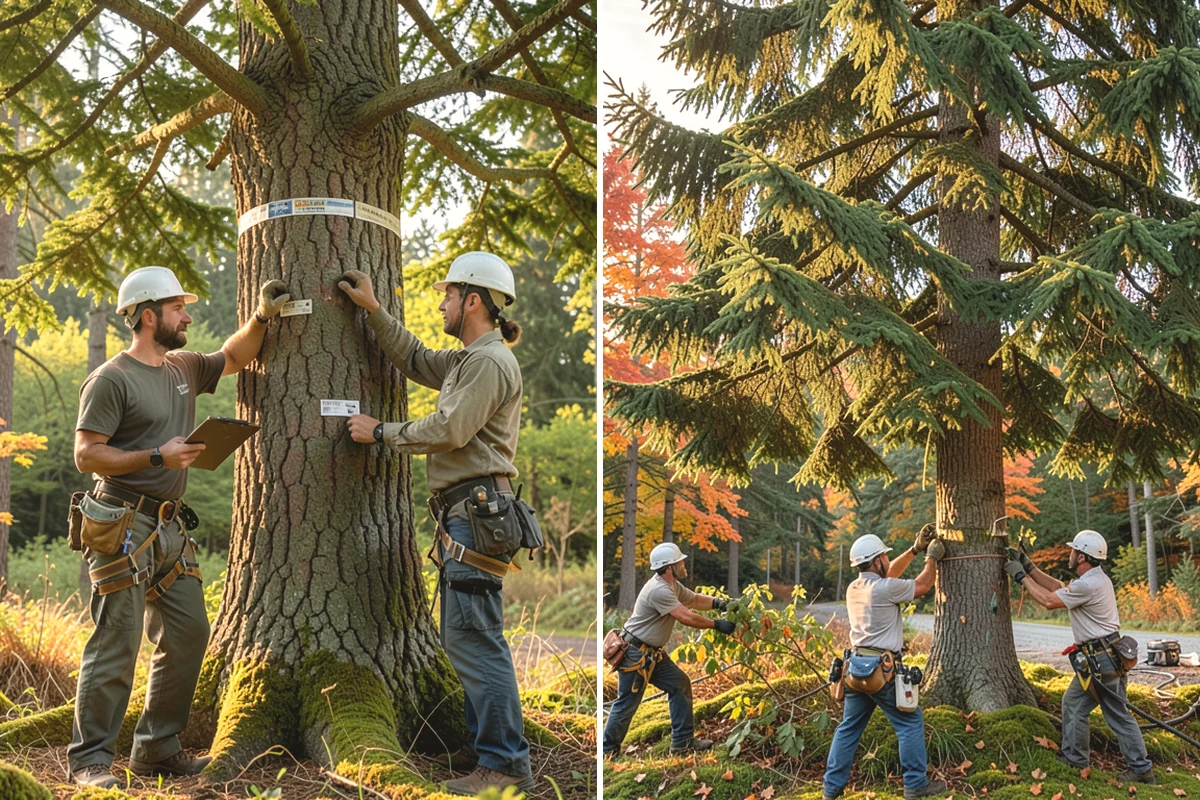
Where Safety Meets Expert Tree Service.

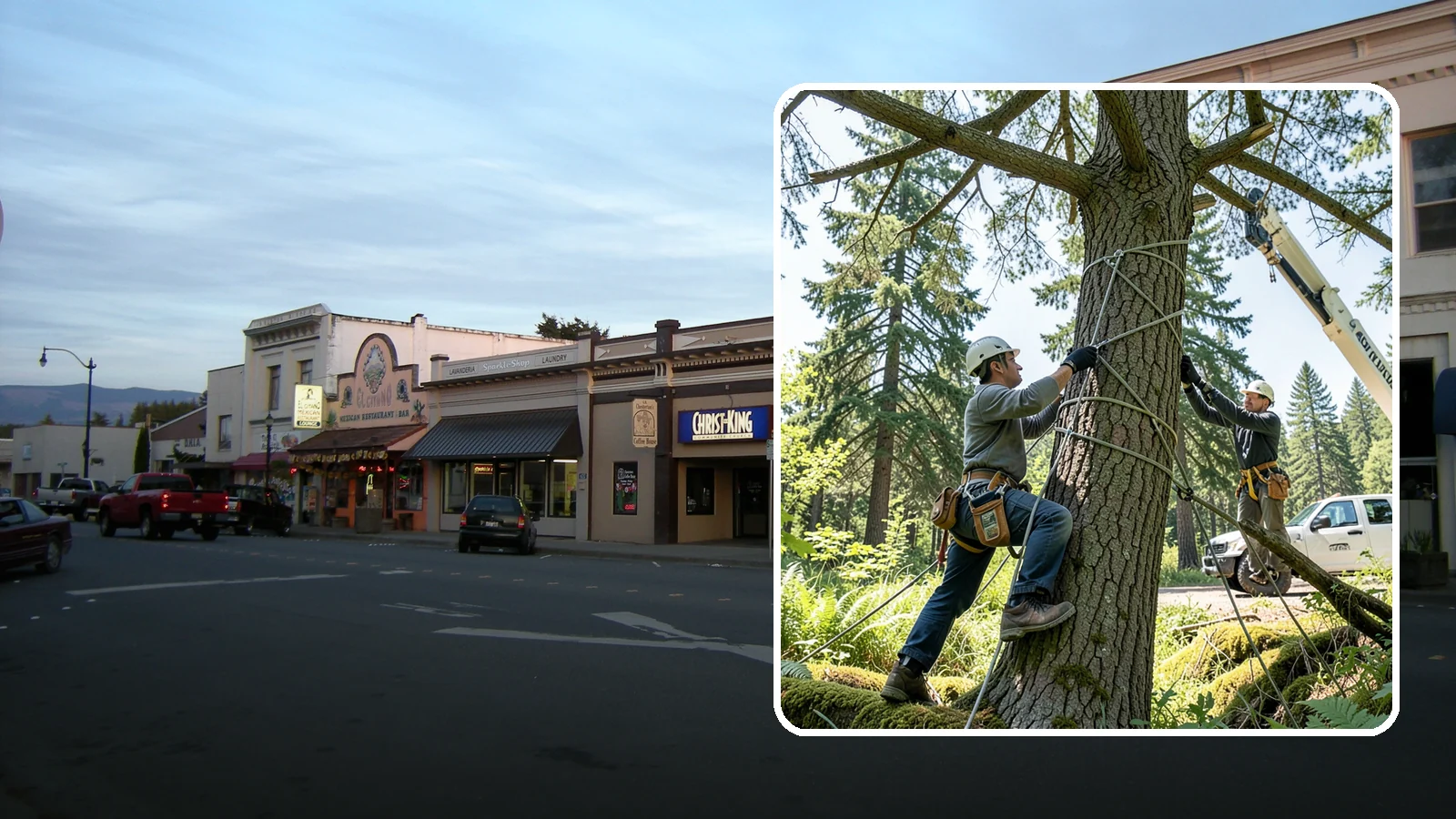
Burlington Emergency Tree Stabilization
The urgent, temporary stabilization of a compromised or partially failed tree.
A tree that leans more than it did yesterday, soil heaved up on one side, roots showing at the surface, or a large limb hanging in the crown are all signs that a tree may not hold through the next blow. If any of these appear after a storm, keep people, cars and pets out of the area under and around the tree.
Emergency stabilization means making a damaged tree or limb safe enough to deal with, using steps such as removing hanging limbs, reducing weight, or taking down what cannot be saved. Photos from a safe distance help in sorting out which situation you have.
About Emergency Tree Stabilization in Burlington
When a tree is at immediate risk of failure, our emergency stabilization team steps in quickly to make your property safe again. This urgent support helps preserve valued trees that are compromised or showing signs of partial failure right when you need them most. We work with homeowners across the region who face sudden structural threats from aging limbs or weak unions.
What Burlington Emergency Tree Stabilization Includes
Emergency Tree Stabilization provides temporary but effective reinforcement for a tree facing an immediate danger of falling. Our crews use specialized cabling and bracing hardware to support heavy limbs and strengthen vulnerable connections within the trunk. This approach is matched specifically to your unique site conditions, ensuring the solution fits both the species of tree and its current health status.
Burlington Emergency Tree Stabilization Process
We begin by carefully assessing structural defects and identifying exactly where loads need to be redirected for safety. Once a plan is selected, trained installers position high-quality hardware at correct locations using climbing gear or aerial lifts as needed. After installation, we document every step and set up an inspection schedule so you know when the system needs checking again.
Equipment We Use for Burlington Emergency Tree Stabilization
Our crews utilize professional cabling systems along with durable bracing hardware designed to handle significant weight loads. To reach difficult spots safely, we bring climbing gear, rigging equipment, and aerial lifts depending on your specific site access conditions. Every tool is used correctly to ensure the temporary support system remains secure without causing further damage to the tree’s bark or structure.
Burlington Emergency Tree Stabilization Safety & Best Practices
We install stabilization hardware only where it will be truly effective at reducing the risk of limb or stem failure. All systems are built using correctly rated components and inspected periodically to catch any signs of wear before they become hazards. If we determine that removal is actually safer than support, our trained crews recognize this immediately rather than forcing an inappropriate fix onto a failing tree.
Signs You Need Emergency Tree Stabilization in Burlington
You may need emergency stabilization if you notice cracks in the trunk, cavities near weak unions, or limbs stretching too far beyond their natural reach. Included-bark unions and codominant stems often require immediate attention to prevent sudden collapse during strong winds or heavy rain. Any sign of aging hardware from previous work also indicates it is time for a professional inspection and potential reinforcement.
What Affects the Cost of Emergency Tree Stabilization in Burlington
The investment required depends heavily on the specific species of tree you are trying to save rather than a flat rate per job. Site access conditions play a major role, as reaching tight spaces or steep slopes adds complexity to the installation process. Additionally, the intricacy of installing hardware around compromised structures will influence how much time and resources our team needs to dedicate.
Best Time of Year for Burlington Emergency Tree Stabilization
This critical safety measure can be performed year-round in Puget Sound weather whenever your tree faces an immediate risk of failure. There is no need to wait for a specific season; we are ready to respond quickly regardless of the current temperature or precipitation levels. Our goal is always to secure the area as fast as possible, ensuring you do not have to delay safety measures until spring or fall arrives.
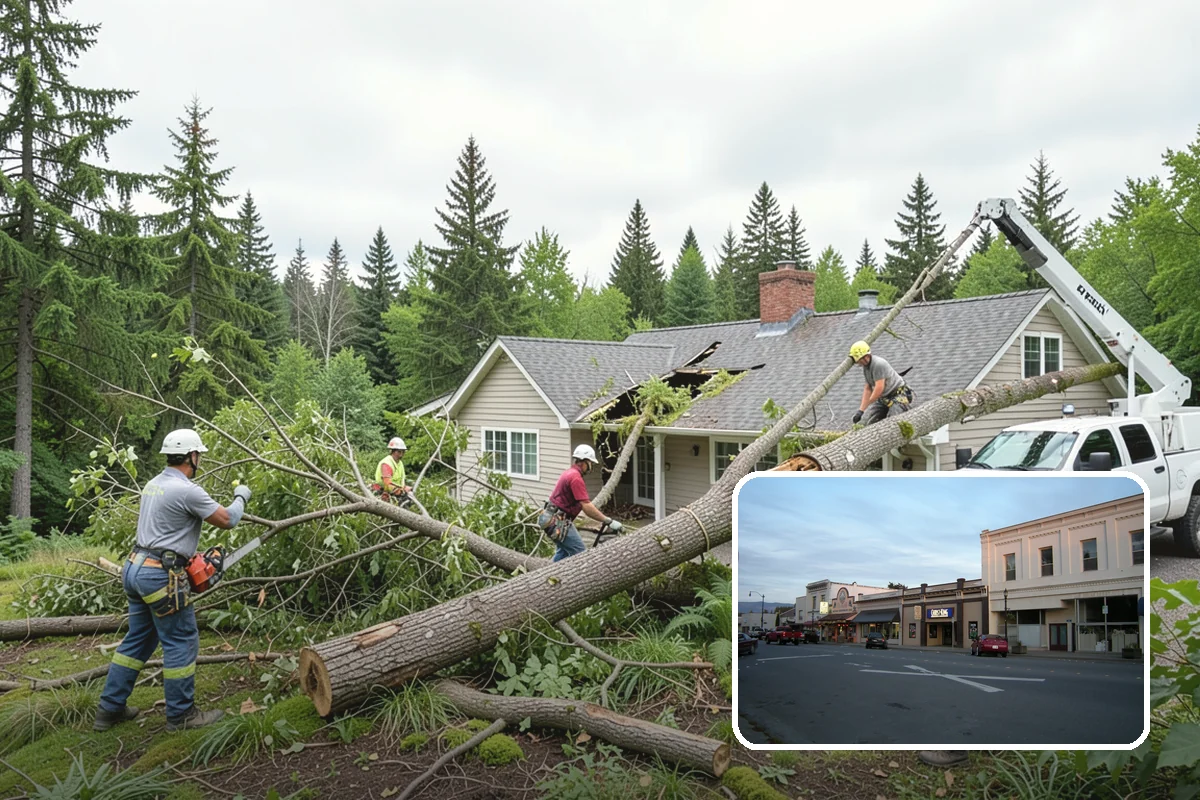
Storm-damaged trees in Burlington: what to expect
Trees fail in storms for a few common reasons. Wind loads the crown, the soil around the roots loosens when it is saturated, and any existing defect, such as a split union, decay or a cracked limb, gives way first. A tree that has already moved at the base is a different problem from one with a broken branch, and the response differs.
Wind history is worth knowing here. The forecast zone that includes Burlington recorded a strongest gust of 85 mph on December 14, 2006, since 2005. That is one event in one zone, not a measure of what any tree on your lot has faced. It does show that gusts strong enough to damage healthy trees have happened in this region, so a tree with visible damage should not be left to wait out the next system.
Soil matters for leaning trees. The NRCS soil survey says 4% of Burlington's land has a hard or restrictive layer, such as glacial hardpan, within 40 inches of the surface, and the most common soil series is Field. With so little of the land showing that layer, shallow rooting over hardpan is not the likely explanation for most failures here. We would look at your actual soil and roots instead of assuming. Saturated ground can still let a root plate shift.
Timing also matters after the storm. WA DNR Forest Health Program work by Glenn Kohler on a Pacific Coast windstorm found that most bark and ambrosia beetles build up in windthrown trees, with bigger flights in the second and third years afterward. Fallen or broken wood left lying around can become breeding material, so prompt cleanup of downed trees is worth planning for.
On site, the work usually begins with a check of the tree, the target below it, and any hazards such as lines. Where a tree can be kept, we remove broken or hanging parts with clean cuts. Where it cannot, we take it down in sections. If a tree is touching utility lines, call the utility first. We could not find a published Puget Sound Energy storm-debris policy, so ask about cleanup before assuming anything. If a permit or city review could apply to removal, we check with the city before work starts. Call or text 425-484-4442 for a free estimate.
Burlington tree conditions at a glance
| High and strong wind episodes, 2005-2025 | 33 in the forecast zone |
|---|---|
| Average snowfall | 8.6 in a season |
| Soils | 4% of land has hardpan or another restrictive layer within 40 in; most common series Field |
| Rain and snow falling October to April | 78% of the year’s total |
| Electric utility | Puget Sound Energy (PSE) |
Tree removal rules in Burlington
Significant trees may not be removed without prior authorization from the department, BUT the significant-tree rules do not apply to trees within the boundaries of an existing landscaped yard associated with an individual dwelling (except redevelopment projects), nor to construction of a single detached dwelling, duplex or small multiunit building or land divisions of four lots or less. So ordinary removal in an existing single-family yard needs no tree approval outside critical areas.
Regulated size: 6 inches DBH (multi-stem: any stem at least 4 in. measured 6 in. from the trunk joint).
Official city source. Rules change; we confirm with the city before work starts.
Trees near the power line to your house
Puget Sound Energy (PSE): Service line (wire from PSE pole to home or meter pole): PSE does not trim it; homeowner/private arborist trims.
PSE performs a safety disconnection so the homeowner or private tree trimmer/arborist can work; Call at least 5 business days ahead to check crew availability and potential charges.
Safety disconnect: 1-888-321-7779 (5+ business days ahead). Utility page.
Any fee for a disconnect is set by the utility.
Strongest wind events near Burlington
- Dec 14, 2006: gusts to 85 mph
- Feb 3, 2006: gusts to 78 mph
- Nov 15, 2006: gusts to 74 mph
NOAA Storm Events, forecast zone that includes Burlington, 2005-2025.
Sources: Daymet daily weather (NASA/ORNL), NOAA Storm Events, USDA plant hardiness map 2023, NRCS soil survey, USGS elevation, WA DNR landslide inventory, USDA Forest Service aerial survey, WSDA, city tree assessments and street-tree inventories, SILVIS Lab, Arbor Day Foundation, and official city and utility pages.
Emergency Tree Stabilization Serving Burlington
Burlington