Where Safety Meets Expert Tree Service.

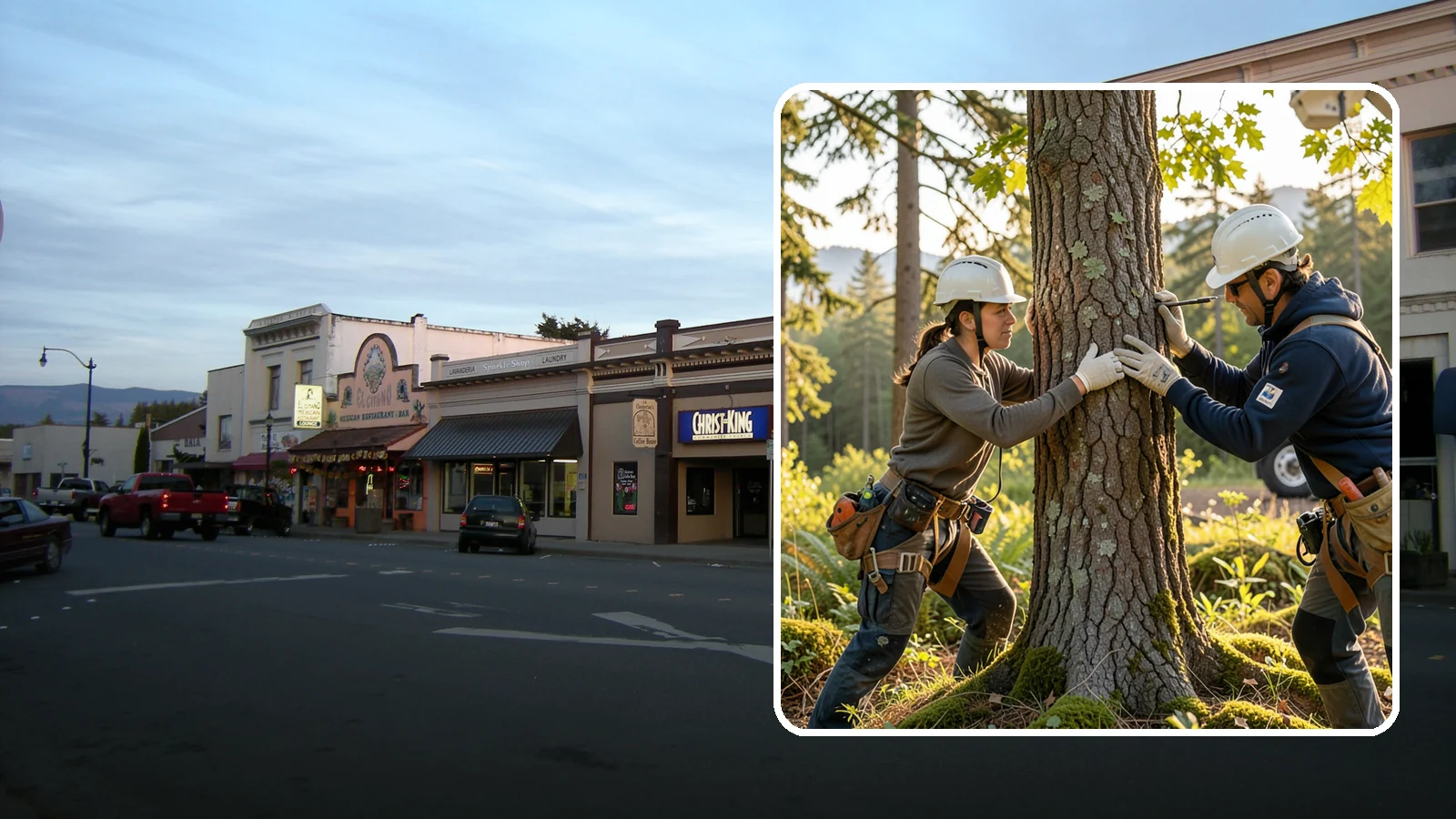
Burlington Disease Diagnosis
The identification of fungal, bacterial, or other diseases affecting a tree.
Disease diagnosis is for Burlington owners whose tree shows thinning leaves, dead branches, odd spots, early color or a crown that looks different from last year. It also suits anyone planning to buy or keep a tree and wanting to know if a problem is already present.
The goal is to find out what is actually wrong before anyone cuts, sprays or removes. Many symptoms look alike. Drought stress, root damage, insects and fungi can all cause dieback, and each calls for a different response.
About Disease Diagnosis in Burlington
Our disease diagnosis service helps you understand exactly what is troubling your trees so we can act quickly to protect them. This care focuses on identifying fungal or bacterial issues before they become serious problems for the whole landscape. We work with homeowners who want clear answers about their tree health and a plan to keep their valued plants stable.
What Burlington Disease Diagnosis Includes
This service identifies specific diseases affecting a tree, whether caused by fungi, bacteria, or other factors. It helps us determine why your trees are declining and what treatment steps will restore them properly. Our trained crews use recognized standards to match methods with the unique species of each tree and its site conditions.
Burlington Disease Diagnosis Process
We begin by inspecting the tree along with its surrounding environment to find contributing issues like soil quality or pest activity. After identifying these factors, we recommend and apply treatments that fit your specific situation while documenting our findings for future reference. This process ensures you receive accurate information about follow-up care needed to support long-term stability.
Equipment We Use for Burlington Disease Diagnosis
Our crews bring diagnostic tools alongside specialized kits for taking soil samples when necessary. We also use injection or application equipment to deliver treatments safely, along with air excavation tools if access requires careful maneuvering around roots. All work is done while wearing personal protective equipment to ensure the safety of our team and your property.
Burlington Disease Diagnosis Safety & Best Practices
When applying any products during diagnosis or treatment, we strictly follow label guidelines to protect both the soil and nearby plantings. We take great care to avoid damaging tree trunks or root systems while performing inspections or sampling in tight spaces. Accurate documentation of site conditions is part of our safety protocol to ensure consistent results over time.
Signs You Need Disease Diagnosis in Burlington
You may need this service if you notice sudden decline, poor growth, or signs that past construction has affected your trees’ roots and soil. Compacted ground, girdling roots, or visible pest activity are common situations where a professional diagnosis provides the clarity needed for recovery. Catching these problems early allows us to improve root conditions before they escalate into major health issues.
What Affects the Cost of Disease Diagnosis in Burlington
The price of this service depends on factors such as the specific species of your tree and how difficult it is to access its roots or trunk. Site conditions like steep slopes or limited space can also influence the complexity required to identify contributing soil or pest issues accurately. We tailor our approach to ensure you get a thorough evaluation without unnecessary expense for simple cases.
Best Time of Year for Burlington Disease Diagnosis
While we can perform disease diagnosis year-round in this region, certain times may be better depending on which pathogens are active at that moment. Some treatments work best when applied during specific seasons to match the life cycle of the tree and its potential threats. We will advise you on the ideal window for observation or application based on current symptoms and treatment needs.

Choosing a diagnosis approach for Burlington trees
There are a few ways to approach an unhealthy tree. The right one depends on how fast the symptoms are changing and how much risk the tree poses.
Option 1: Watch and record
If a tree has minor symptoms, such as a few off-color leaves, you can photograph it each month from the same spot and note changes. This costs nothing. It suits slow, mild cases, and it gives an arborist a useful history later.
Option 2: On-site inspection
An inspection looks at the whole tree: crown, trunk, root flare, soil, and recent site changes. A certified arborist can tell whether the pattern points to a pest, a pathogen, or a growing condition. This is the best fit when symptoms spread, when a tree is near a house or driveway, or when you are unsure.
Option 3: Sampling and lab testing
When an inspection does not settle the cause, samples of foliage, wood or soil can go to a lab. It takes longer, but it is worth it when the answer decides whether to treat, monitor or remove.
What local conditions favor
Burlington gets 78% of its yearly rain and snow from October to April, according to Daymet data for 2005 to 2025. Wet soil through the cool months favors root and fungal problems, so we look closely at drainage and root collars. Then the dry late spring and summer can stress the same trees.
That second point matters for western redcedar. The 2023 Forest Health Highlights in Washington, from WA DNR and the USDA Forest Service, says redcedar dieback reflects cumulative stress from warmer, drier late spring and early summer conditions. So a browning redcedar may be stressed rather than infected, and watering and mulching may help more than treatment.
A federal aerial survey of forest within 10 km of Burlington, 2021 to 2025, mapped 3,555 acres of decline with no cause identified, including bigleaf maple and western redcedar. That is forest land, not yard trees. It shows that dieback can have no single cause, which is why we look at the specific tree.
If diagnosis points toward removal, we check with the city before any work starts.
Burlington tree conditions at a glance
| USDA hardiness zone | 8b |
|---|---|
| Soils | 4% of land has hardpan or another restrictive layer within 40 in; most common series Field |
| Rain and snow falling October to April | 78% of the year’s total |
| Days with 0.1 in or more of rain | 107 a year |
| Days that freeze at night and thaw by day | 35 a year |
Tree health near Burlington
- Decline, cause not identified3,555 ac
- Western tent caterpillar433 ac
- Bears244 ac
Forest damage mapped from the air within 10 km of Burlington, 2021-2025 (USDA Forest Service and WA DNR). This covers forest land, not street or yard trees. “Decline, cause not identified” is dieback with no single cause found.
Sources: Daymet daily weather (NASA/ORNL), NOAA Storm Events, USDA plant hardiness map 2023, NRCS soil survey, USGS elevation, WA DNR landslide inventory, USDA Forest Service aerial survey, WSDA, city tree assessments and street-tree inventories, SILVIS Lab, Arbor Day Foundation, and official city and utility pages.
Disease Diagnosis Serving Burlington
Burlington

Disease diagnosis in nearby areas
Also serving Burlington
- Topiary Pruning in Burlingtonat Washington Landscaping
- Turf Mowing in Burlingtonat Washington City Services