Where Safety Meets Expert Tree Service.

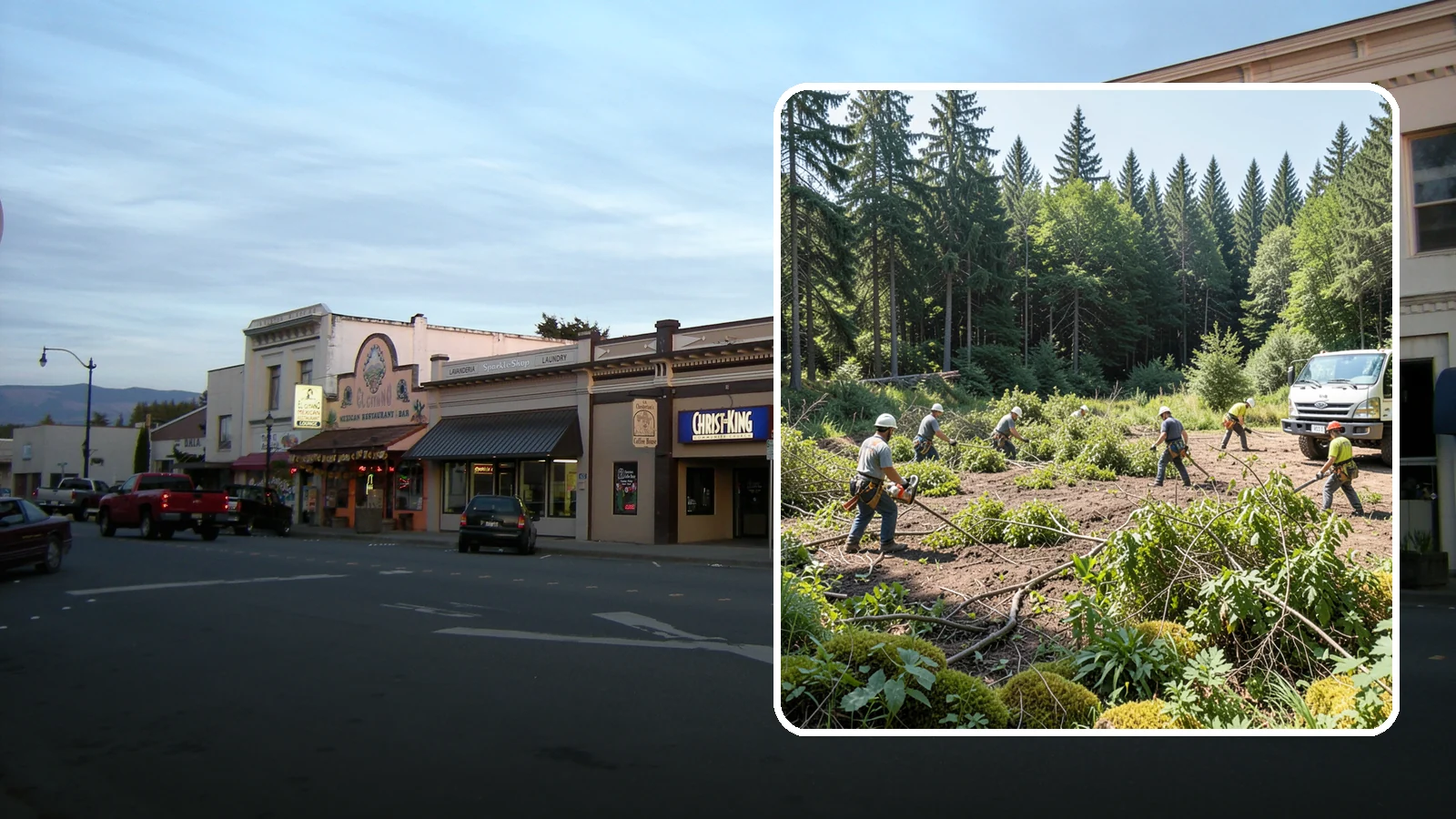
Burlington Blackberry Removal
The removal of invasive blackberry thickets.
The canes arrive first as a few arching stems along the fence. A season later they have rooted at the tips, closed off a corner of the yard, and started pushing under the gate. If that sounds familiar, the patch is probably larger underground than it looks above.
Blackberry removal is easier to plan once you know what you are dealing with. Cutting the canes is only the first step. The crown and roots decide whether the plants come back, so the work has to deal with both.
About Blackberry Removal in Burlington
We help homeowners reclaim overgrown areas by safely removing invasive blackberry thickets from their land. Our trained crews work to clear these dense patches so you can regain full access and usability of your property. This service is designed for anyone looking to improve the look and function of their lot while managing unwanted vegetation.
What Burlington Blackberry Removal Includes
Blackberry removal focuses on eliminating established thicket growth that has taken over parts of a site. The work includes clearing the invasive plants in a planned sequence, removing all debris responsibly, and tidying the area as needed. We also take steps to discourage future regrowth so your land stays manageable for its intended use.
Burlington Blackberry Removal Process
Our team begins by assessing the specific conditions of your property and marking important features to protect during the job. Vegetation is cleared using a logical sequence that accounts for site access, while we carefully manage debris to prevent hazards. Once the thickets are gone, we grade or tidy the area to leave it ready for whatever you plan next.
Equipment We Use for Burlington Blackberry Removal
To handle dense and thorny growth effectively, our crews utilize brush cutters, chainsaws, chippers, and hauling equipment. Hand tools and personal protective gear allow us to navigate tricky spots with precision while keeping everyone safe. We select the right combination of machinery based on the tree species present and the specific conditions at your site.
Burlington Blackberry Removal Safety & Best Practices
Safety is a priority as we identify property lines, utilities, and any features that must remain untouched during clearing. Our workers stay alert for uneven terrain or hidden obstacles to ensure no accidents occur while managing large amounts of debris. We also take extra care to protect retained trees and their root zones from damage throughout the removal process.
Signs You Need Blackberry Removal in Burlington
You may need this service if you notice dense, thorny growth that makes it difficult to walk across your land. Overgrown areas with blackberry thickets can increase fire risk or prevent you from using parts of your property as intended. If invasive plants seem to keep coming back despite previous efforts, our removal process helps control and manage these species effectively.
What Affects the Cost of Blackberry Removal in Burlington
The price for this work depends on how dense the thicket is in specific areas of your lot. Difficult access caused by uneven or wet terrain can also influence the overall cost of the project. Additionally, the volume of debris that needs to be removed and disposed of responsibly will play a role in the final estimate.
Best Time of Year for Burlington Blackberry Removal
While blackberry removal can happen year-round, we may use specific equipment during wetter seasons to handle invasive species regrowth carefully. Timing is adjusted based on site conditions to ensure safety and effectiveness throughout the process. We work with you to schedule the job when it best fits your needs while considering seasonal factors like soil moisture.
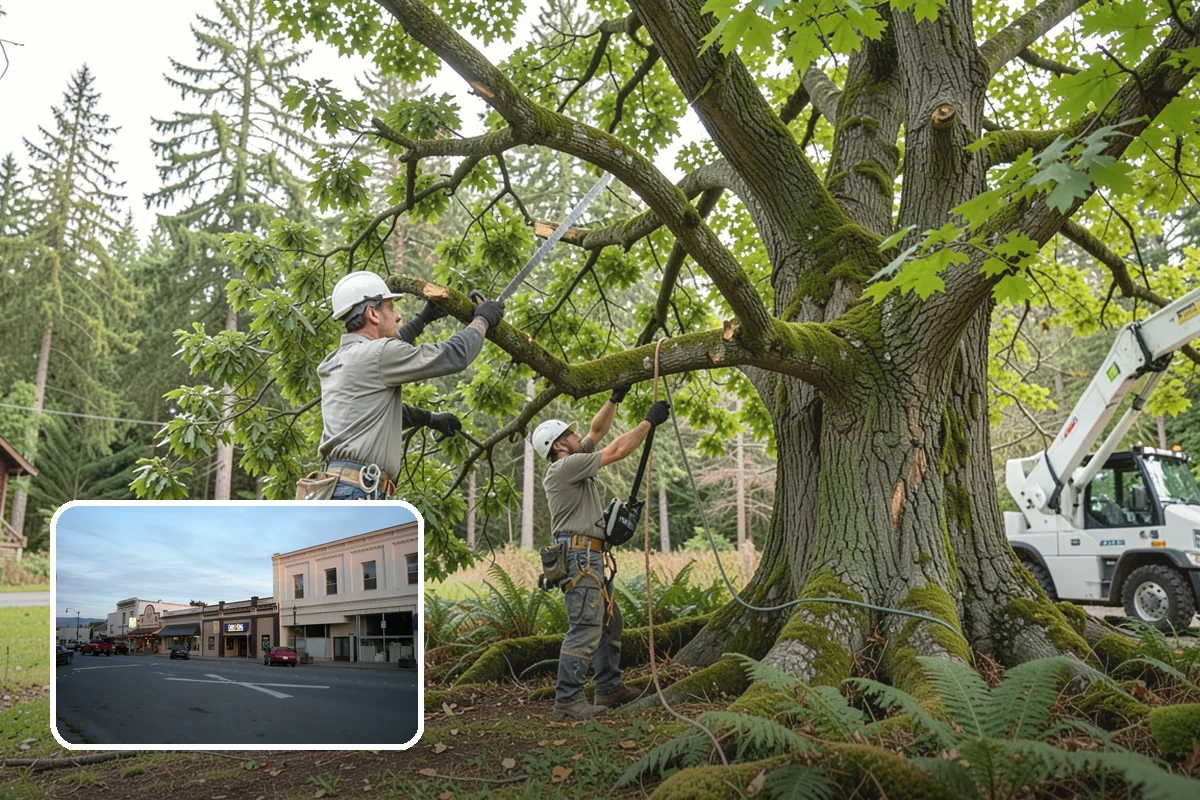
Why blackberries take hold in Burlington yards
Blackberry spreads in two ways. Canes arch over and root where the tips touch soil, and the plant also sends out roots that sprout new stems. A patch can grow from a single cane left alone for a season or two. Birds and animals also spread seed, so berries can appear along fence lines and ditch edges without anyone planting them.
Local conditions help explain why regrowth is common. Daymet climate data for 2005 to 2025 show that about 78% of Burlington's yearly rain and snow falls from October to April. Wet soil in those months keeps roots active, and it can soften the ground enough that old crowns pull out more easily. That makes late fall through early spring a practical time to dig, though the ground can also be muddy and easy to rut with equipment. We plan around the conditions on the day.
Slope matters too. USGS elevation data show Burlington has some steep slopes, though fewer than the hilliest Puget Sound cities. If your patch sits on a bank, the roots may be holding soil in place. Clearing it in stages, and replanting bare ground soon after, helps limit erosion during the wet months.
Satellite data show only about 5% of Burlington's land has dense tree cover, meaning 50% canopy or more. Blackberry does best in sun, and open ground gives it plenty. Where you have shade from trees, the patch is often thinner, and keeping that canopy healthy helps hold it back.
How the work is done
The first step is cutting the canes down to a manageable height and clearing them out. Next comes digging out the crowns, the woody knuckles at the base, along with as much of the main root as can be reached. Any piece left behind may resprout. After that, the site usually needs a follow-up check for new shoots. Persistent patches may need more than one pass. If the area is near a wetland, a ditch, or a protected tree, we check with the city before work starts. For an estimate, call or text 425-484-4442.
Burlington tree conditions at a glance
| Homes in the wildland-urban interface | 0% |
|---|---|
| Land under dense tree cover (50%+ canopy) | 5% |
| Slopes | Some steep slopes |
| Rain and snow falling October to April | 78% of the year’s total |
Tree removal rules in Burlington
Significant trees may not be removed without prior authorization from the department, BUT the significant-tree rules do not apply to trees within the boundaries of an existing landscaped yard associated with an individual dwelling (except redevelopment projects), nor to construction of a single detached dwelling, duplex or small multiunit building or land divisions of four lots or less. So ordinary removal in an existing single-family yard needs no tree approval outside critical areas.
Regulated size: 6 inches DBH (multi-stem: any stem at least 4 in. measured 6 in. from the trunk joint).
Official city source. Rules change; we confirm with the city before work starts.
Tree health near Burlington
- Decline, cause not identified3,555 ac
- Western tent caterpillar433 ac
- Bears244 ac
Forest damage mapped from the air within 10 km of Burlington, 2021-2025 (USDA Forest Service and WA DNR). This covers forest land, not street or yard trees. “Decline, cause not identified” is dieback with no single cause found.
Sources: Daymet daily weather (NASA/ORNL), NOAA Storm Events, USDA plant hardiness map 2023, NRCS soil survey, USGS elevation, WA DNR landslide inventory, USDA Forest Service aerial survey, WSDA, city tree assessments and street-tree inventories, SILVIS Lab, Arbor Day Foundation, and official city and utility pages.
Blackberry Removal Serving Burlington
Burlington

Blackberry removal in nearby areas
Also serving Burlington
- Large-Scale Landscape Construction in Burlingtonat Washington Landscaping
- Structure Demolition in Burlingtonat Washington Construction
- Noxious Weed Treatment in Burlingtonat Washington City Services
- Customer Tree Processing in Burlingtonat Washington Firewood