Where Safety Meets Expert Tree Service.

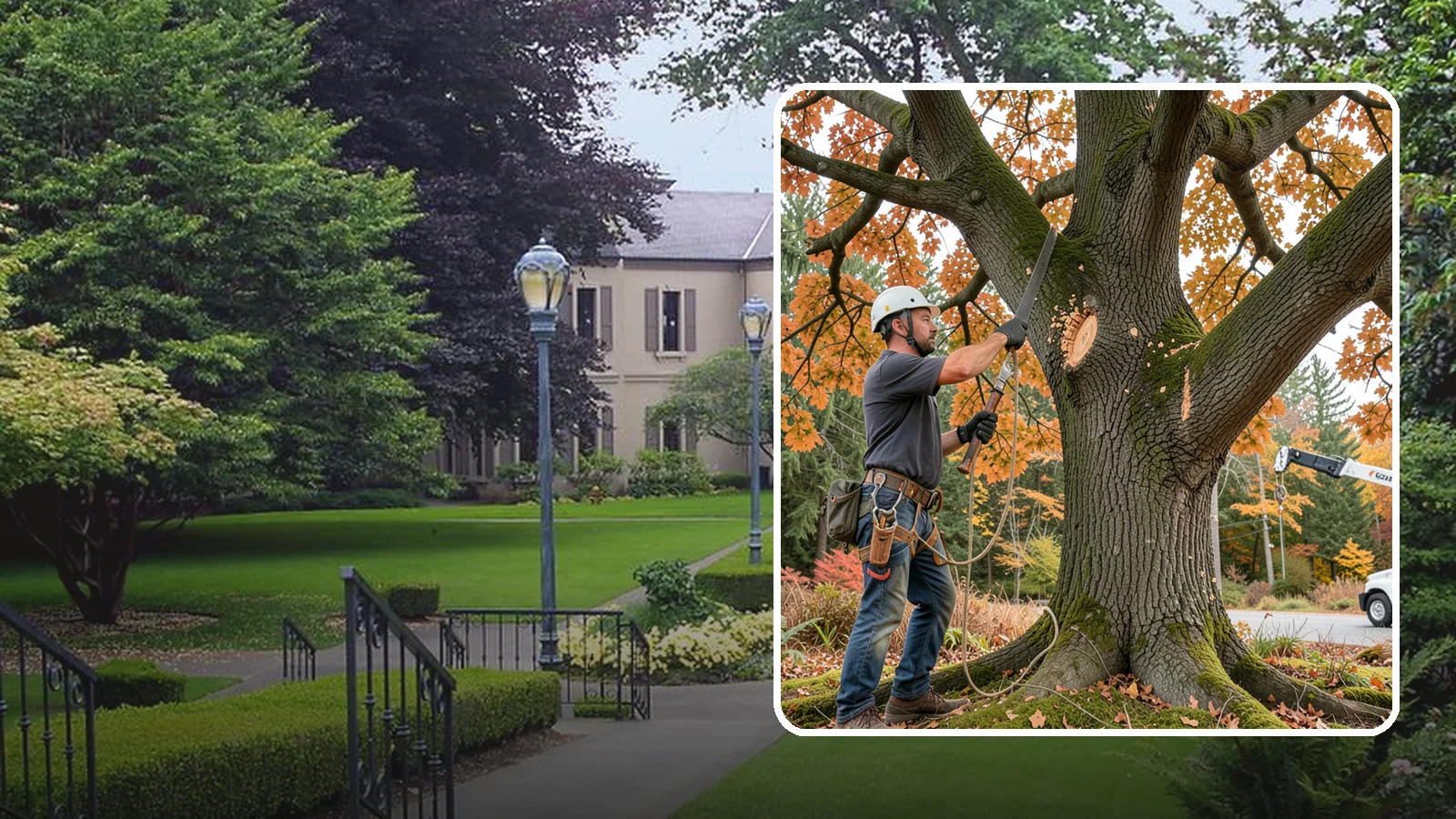
Woodinville Crown Reduction
The reduction of a crown’s height or spread using proper reduction cuts.
If a tree's branches are reaching toward the wire that runs from the pole to your house, check who is responsible for that wire before you plan any pruning. In Woodinville, Puget Sound Energy (PSE) does not trim the service line, the wire from its pole to your home or meter pole. Trimming near it falls to the homeowner or a private arborist.
A crown reduction shortens the longest branches back to suitable side branches, so the tree becomes smaller without losing its natural shape. It suits trees that have outgrown their spot over a roof, a yard or that wire.
About Crown Reduction in Woodinville
Crown reduction is a thoughtful tree care option designed to help you manage large trees safely while keeping them healthy. This service supports homeowners who want better clearance around their home or improved sightlines without removing the entire canopy. Our trained crews work with your specific trees to find solutions that fit your property needs.
What Woodinville Crown Reduction Includes
We perform crown reduction by making proper cuts to lower a tree’s height or spread, which helps manage size and reduce structural stress. This process is done carefully to preserve the long-term health of your tree while improving its structure and appearance. The goal is always to maintain natural growth patterns rather than simply cutting back branches indiscriminately.
Woodinville Crown Reduction Process
Our team starts by assessing the condition of your canopy and defining clear pruning objectives for each tree. We select specific cuts that match the species and current season, ensuring we do not over-prune or harm the wood. After making clean reductions at proper points, our crew lowers cut material safely and cleans up the work area completely.
Equipment We Use for Woodinville Crown Reduction
To complete this job effectively, crews use hand saws, pole saws, chainsaws, and climbing gear tailored to each site’s access needs. An aerial lift may be utilized when necessary to reach higher branches without compromising safety or tree stability. We also bring wood chippers for efficient debris processing and wear full personal protective equipment throughout the workday.
Woodinville Crown Reduction Safety & Best Practices
Safety is our priority, so we follow recognized pruning standards that avoid harmful cuts which can stress a living tree. Our technicians watch closely for overhead power lines and unstable limbs to prevent accidents during any part of the job. When working aloft, every crew member uses appropriate fall protection gear to ensure everyone stays secure on site.
Signs You Need Crown Reduction in Woodinville
You may need crown reduction if you notice deadwood, weak unions in your branches, or interference with nearby structures and utility lines. This service is also beneficial when a tree’s size creates clearance issues for vehicles or blocks important sightlines from windows and driveways. Addressing these signs early helps prevent branch failure and supports the overall vigor of your landscape trees.
What Affects the Cost of Crown Reduction in Woodinville
The investment for this work depends on factors like tree species, current canopy condition, and structural complexity that influence cut selection. More complex rigging requirements may also impact pricing based on how difficult it is to safely lower heavy branches from specific locations. We evaluate these variables carefully so you understand exactly what drives the cost before any job begins.
Best Time of Year for Woodinville Crown Reduction
The best time for crown reduction follows recognized arboricultural standards matched to the growing seasons of trees in our local Puget Sound climate. Scheduling work during appropriate windows ensures that cuts heal properly and minimizes stress on your specific tree species throughout the year. We plan projects around these natural cycles to support long-term health rather than rushing jobs into unsuitable weather or growth periods.
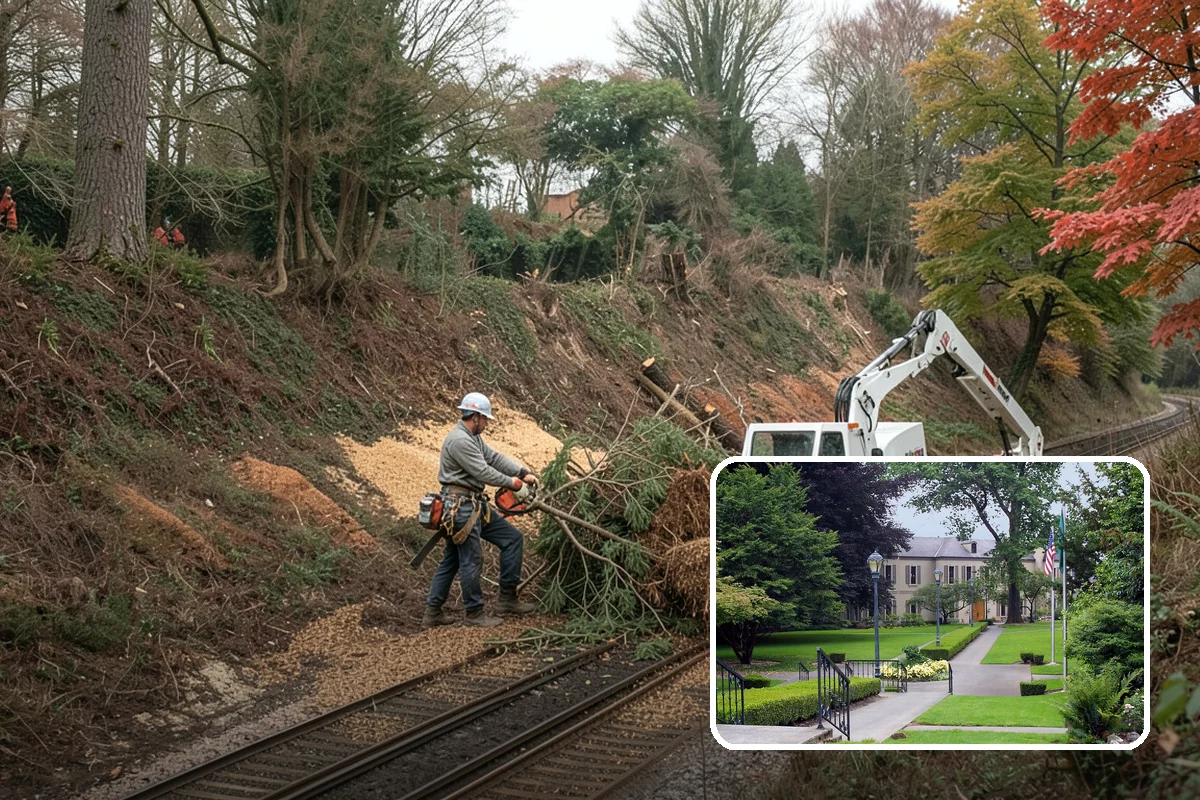
How crown reduction works on Woodinville properties
Crown reduction is selective. It is not the same as cutting every branch to a stub. Here is how the work goes, step by step.
The steps
- Look at the whole tree and decide what needs clearance: the roof, the service line, a neighbor's yard or a view.
- Pick branches to shorten and find a side branch, called a lateral, that is large enough to take over as the new branch end. Standard practice (ISA/ANSI A300) is to cut back to a lateral roughly one third the diameter of the branch being removed.
- Make clean cuts at the branch collar, not flush with the trunk and not as flat stubs.
- Keep the tree's overall outline so it still looks like itself.
Why not topping
Topping is a different thing, and we do not recommend it. Linda Chalker-Scott of the WSU Puyallup Research and Extension Center writes that topping is never a justifiable pruning practice, that it increases health problems and that it is unattractive. If someone suggests cutting every limb to the same height, ask for a reduction instead.
The wire to your house
Because PSE leaves the service line to the homeowner or a private arborist, any reduction near it is your job to plan. Work near a live wire needs extra care. We would look at where the branches sit relative to the line before anyone climbs.
Timing and weather
About 80% of Woodinville's yearly rain and snow falls from October to April, according to Daymet data for 2005 to 2025. That means wet ground and slick conditions for much of the cooler season, which can affect access to a backyard tree and how we plan the day. Dry months often make access easier.
The USDA map places Woodinville in hardiness zone 8b, with parts of the city ranging from 8b to 9a. That is a general climate rating, not a statement about your tree, but it tells us a wide range of species can grow here, so the right cuts depend on the species in front of us.
Call or text 425-484-4442 for a free estimate, and an ISA Certified Arborist can look at the tree with you.
Woodinville tree conditions at a glance
| USDA hardiness zone | 8b (8b to 9a across the city) |
|---|---|
| Rain and snow falling October to April | 80% of the year’s total |
| Tree canopy | Among the most heavily treed Puget Sound cities (satellite data) |
| Days that freeze at night and thaw by day | 32 a year |
| Tree City USA | 30 years |
| Electric utility | Puget Sound Energy (PSE) |
Trees near the power line to your house
Puget Sound Energy (PSE): Service line (wire from PSE pole to home or meter pole): PSE does not trim it; homeowner/private arborist trims.
PSE performs a safety disconnection so the homeowner or private tree trimmer/arborist can work; Call at least 5 business days ahead to check crew availability and potential charges.
Safety disconnect: 1-888-321-7779 (5+ business days ahead). Utility page.
Any fee for a disconnect is set by the utility.
Sources: Daymet daily weather (NASA/ORNL), NOAA Storm Events, USDA plant hardiness map 2023, NRCS soil survey, USGS elevation, WA DNR landslide inventory, USDA Forest Service aerial survey, WSDA, city tree assessments and street-tree inventories, SILVIS Lab, Arbor Day Foundation, and official city and utility pages.
Crown Reduction Serving Woodinville
Woodinville
Also serving Woodinville
- Dogwood Pruning in Woodinvilleat Washington Landscaping
- Roof Preservation in Woodinvilleat Washington Roofing
- Stump Grinding in Woodinvilleat Washington City Services