Where Safety Meets Expert Tree Service.

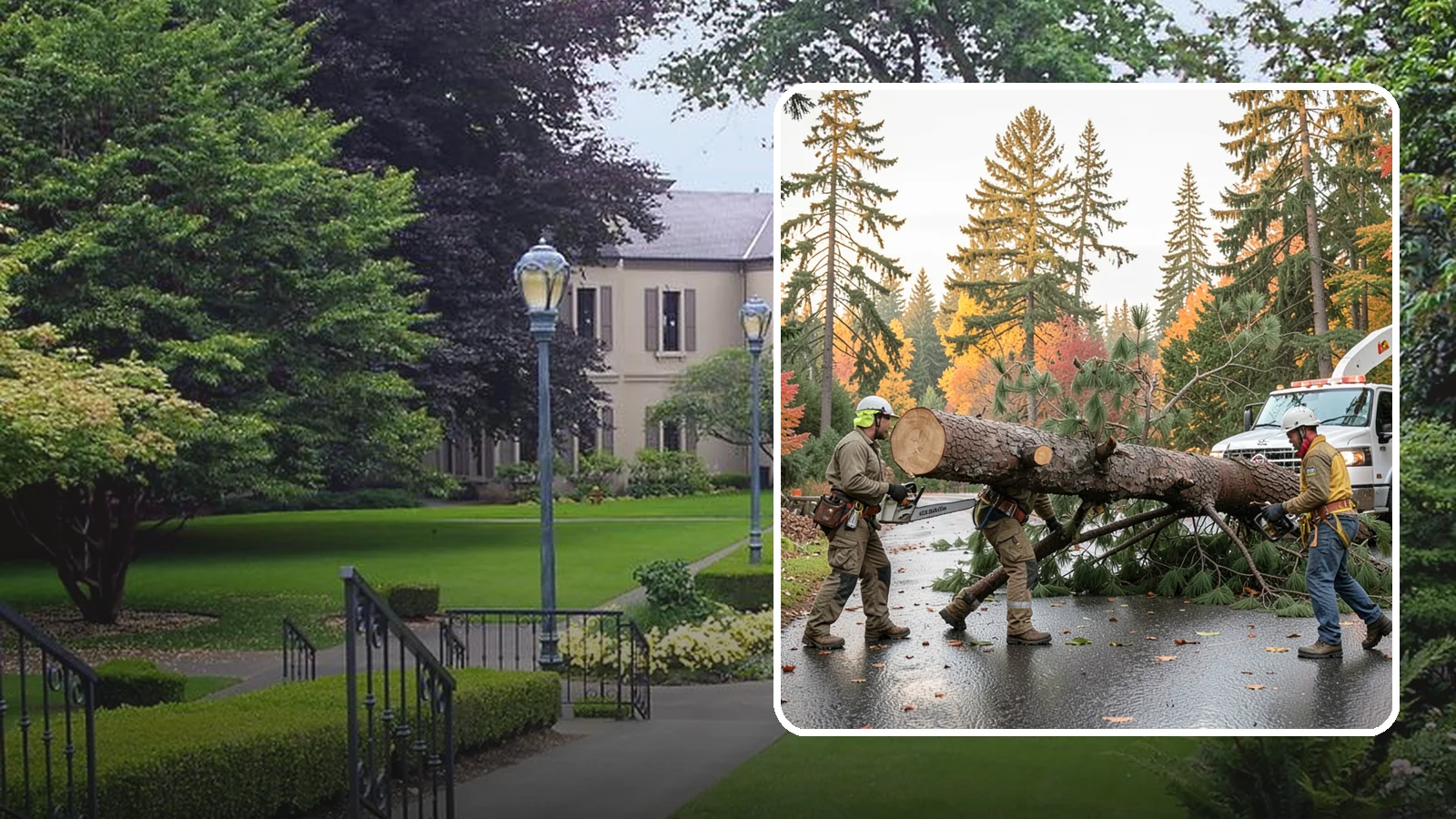
Woodinville Emergency Tree Removal
The urgent removal of trees that present an immediate danger.
What should you do when a tree comes down on your house, driveway or fence in Woodinville? First, get everyone away from the tree and from anything it may be touching, especially wires. Then photograph the damage from a safe distance and call for help. Do not climb on a fallen tree or cut under tension.
Trees under strain can shift without warning. A trunk resting on a roof or another tree may hold stored force that releases when a cut is made. Emergency removal means making the site safe first, then clearing what is blocking access or threatening structures.
About Emergency Tree Removal in Woodinville
When a tree suddenly fails or begins falling toward your home, you need immediate help from our emergency removal team. We are here to act quickly for homeowners facing dangerous situations that require urgent attention regardless of the season. Our goal is to secure your property and restore peace of mind as fast as safely possible.
What Woodinville Emergency Tree Removal Includes
This service involves the rapid extraction of trees or large limbs that pose an immediate threat to safety. Work follows recognized arboricultural standards, with specific methods chosen based on the tree species and current site conditions. We focus entirely on removing hazards without delay while protecting your structures and landscaping from further damage.
Woodinville Emergency Tree Removal Process
Our crews begin by assessing the hazard and establishing a clear drop zone along with a safe perimeter around the work area. Limbs are rigged for lowering or the stem is felled in a controlled sequence to manage unpredictable lean or load distribution. Once the tree is down, we process the wood, haul away debris, and complete final site cleanup to leave your property secure.
Equipment We Use for Woodinville Emergency Tree Removal
We utilize chainsaws and climbing gear alongside rigging equipment to handle complex removals safely. Depending on access needs, an aerial lift or crane may be brought in to assist with lowering heavy limbs or stems. Ground protection measures are also used during the process to safeguard your lawn and hardscapes from damage caused by machinery movement.
Woodinville Emergency Tree Removal Safety & Best Practices
Safety is our priority as we maintain clear drop zones and carefully plan controlled fall paths away from overhead utility lines. Every crew member inspects for hidden decay and structural defects before climbing, using proper fall protection at all times. Coordinated ground communication ensures that everyone stays safe while managing the risks associated with unstable trees near power sources or buildings.
Signs You Need Emergency Tree Removal in Woodinville
You likely need this urgent service if a tree has already fallen or is actively leaning in an unsafe direction toward your house. Signs of hidden internal decay, such as cracks or hollows, combined with limited access for standard equipment often indicate that immediate action is required. If you notice unpredictable shifts in the tree’s position near structures or power lines, do not wait to address these potential dangers.
What Affects the Cost of Emergency Tree Removal in Woodinville
The final cost depends on factors like how much hidden internal decay exists within the trunk and branches. Proximity to active utility lines and nearby buildings can significantly influence the complexity of the job required for a safe removal. Additionally, limited access for heavy equipment or the need for specialized rigging due to an unpredictable lean will affect the overall pricing.
Best Time of Year for Woodinville Emergency Tree Removal
This critical service must be performed immediately whenever a tree fails, regardless of whether it is summer or winter in our region. While crews are ready to work year-round, wetter conditions during the Puget Sound winters may complicate site safety and require extra caution. There is no ideal season for emergency removal; if a hazard exists today, we must address it without delay to protect your family.
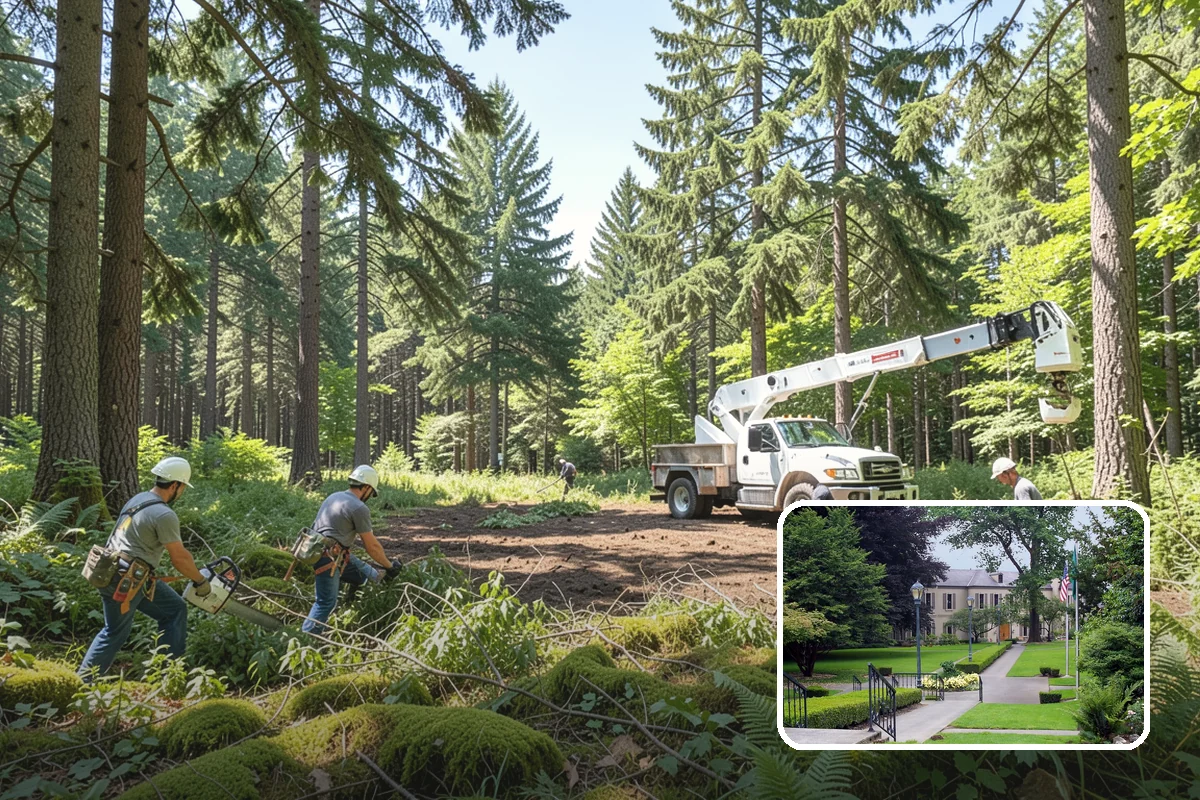
Emergency tree removal in Woodinville: what to expect
Why storm calls come in clusters
The National Weather Service forecast zone that includes Woodinville logged 33 high and strong wind episodes from 2005 to 2025. The strongest gust recorded in that zone since 2005 was 72 mph on December 17, 2010. These are zone-wide figures, not measurements from your yard. They do show that damaging wind is a repeat event here, so a storm that drops one tree often drops several nearby. Expect that others may be waiting for help, and take photos and note hazards so the call is quick and clear.
Power lines and utility questions
If a limb or trunk is on a line, stay back and treat the line as live. Call the utility. We did not find a published Puget Sound Energy policy on storm debris, so do not assume the utility will haul away wood from your property. For routine work, cut wood is left on site in manageable pieces. Ask about cleanup when you call so there are no surprises.
City rules and permission
The Woodinville tree rules we found do not clearly spell out which removals need city approval. So we check with the city before work starts. When a tree is an immediate danger, document it with photos. That record helps if the city asks questions later.
When you call, have this ready:
- Where the tree is and what it is touching
- Whether any wires are involved
- Photos taken from a safe distance
- Whether the tree blocks a driveway or road
You can call or text 425-484-4442. An ISA Certified Arborist is on staff, and estimates are free. We will talk through what is urgent and what can safely wait for daylight.
Woodinville tree conditions at a glance
| High and strong wind episodes, 2005-2025 | 33 in the forecast zone |
|---|---|
| Ice storm episodes, 2005-2025 | 2 in the forecast zone |
| Average snowfall | 8.8 in a season |
| Soils | 55% of land has hardpan or another restrictive layer within 40 in; most common series Alderwood |
| Rain and snow falling October to April | 80% of the year’s total |
| Electric utility | Puget Sound Energy (PSE) |
Tree removal rules in Woodinville
Woodinville’s published rules don’t spell out clearly which removals need city approval. We check with the city before work starts.
Trees near the power line to your house
Puget Sound Energy (PSE): Service line (wire from PSE pole to home or meter pole): PSE does not trim it; homeowner/private arborist trims.
PSE performs a safety disconnection so the homeowner or private tree trimmer/arborist can work; Call at least 5 business days ahead to check crew availability and potential charges.
Safety disconnect: 1-888-321-7779 (5+ business days ahead). Utility page.
Any fee for a disconnect is set by the utility.
Strongest wind events near Woodinville
- Dec 17, 2010: gusts to 72 mph
- Feb 7, 2012: gusts to 70 mph
- Dec 14, 2006: gusts to 68 mph
NOAA Storm Events, forecast zone that includes Woodinville, 2005-2025.
Sources: Daymet daily weather (NASA/ORNL), NOAA Storm Events, USDA plant hardiness map 2023, NRCS soil survey, USGS elevation, WA DNR landslide inventory, USDA Forest Service aerial survey, WSDA, city tree assessments and street-tree inventories, SILVIS Lab, Arbor Day Foundation, and official city and utility pages.
Emergency Tree Removal Serving Woodinville
Woodinville

Also serving Woodinville
- Event & Seasonal Displays in Woodinvilleat Washington Landscaping
- Tree Mulching in Woodinvilleat Washington City Services
- Firewood Processing in Woodinvilleat Washington Firewood