Where Safety Meets Expert Tree Service.

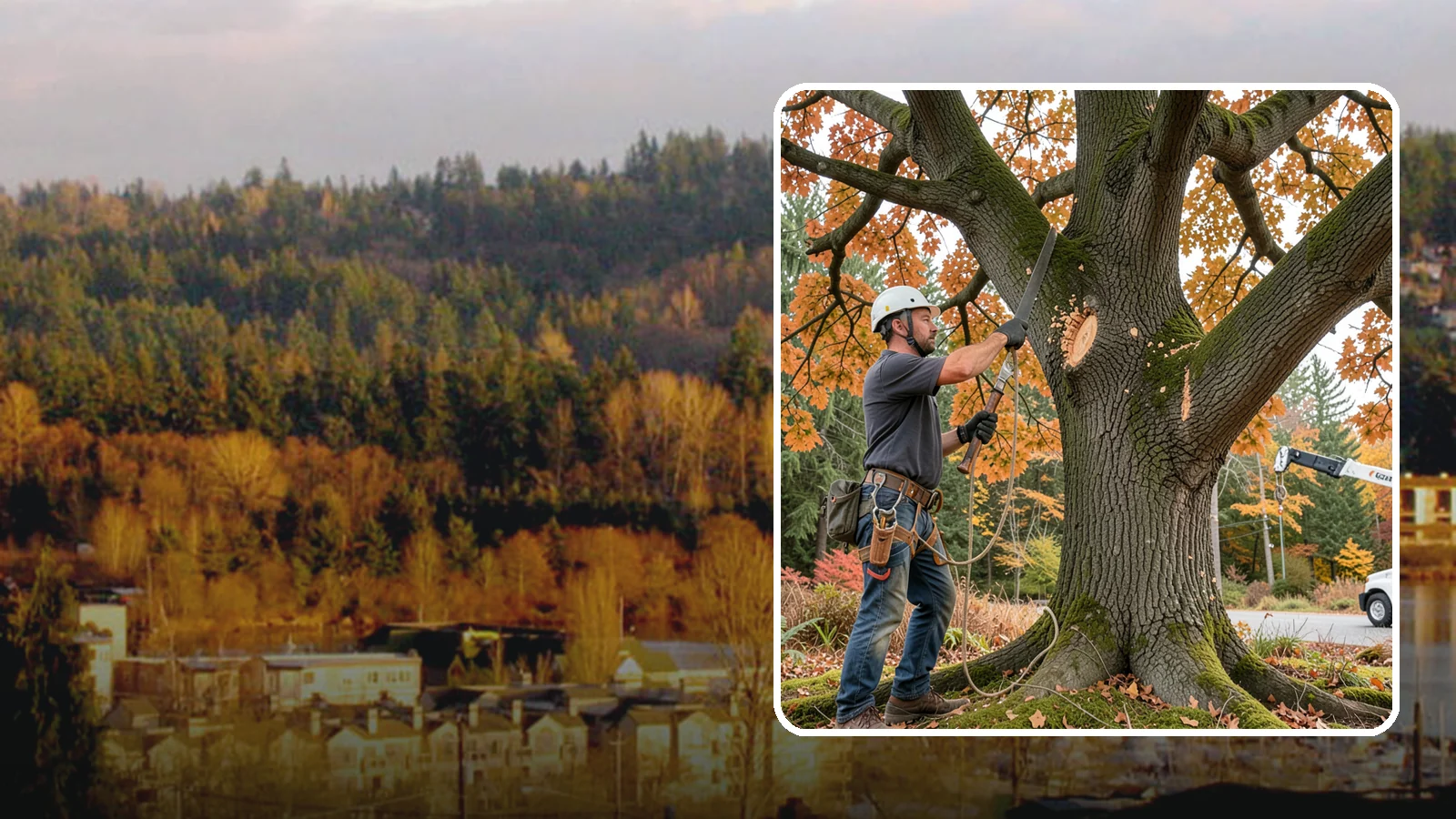
Kenmore Crown Reduction
The reduction of a crown’s height or spread using proper reduction cuts.
The tree has grown until it shades the whole yard, brushes the roof, or hangs over the driveway. Maybe branches now reach toward the wire running to your house. Those are common reasons people start asking about a crown reduction.
A crown reduction shortens the tallest or widest parts of a tree by cutting back to side branches that can take over as the new ends. It lowers the height or spread without removing the whole tree. Here is how it works and what to weigh in Kenmore.
About Crown Reduction in Kenmore
Crown reduction is a thoughtful tree care option designed to help you manage large trees safely while keeping them healthy. This service supports homeowners who want better clearance around their home or improved sightlines without removing the entire canopy. Our trained crews work with your specific trees to find solutions that fit your property needs.
What Kenmore Crown Reduction Includes
We perform crown reduction by making proper cuts to lower a tree’s height or spread, which helps manage size and reduce structural stress. This process is done carefully to preserve the long-term health of your tree while improving its structure and appearance. The goal is always to maintain natural growth patterns rather than simply cutting back branches indiscriminately.
Kenmore Crown Reduction Process
Our team starts by assessing the condition of your canopy and defining clear pruning objectives for each tree. We select specific cuts that match the species and current season, ensuring we do not over-prune or harm the wood. After making clean reductions at proper points, our crew lowers cut material safely and cleans up the work area completely.
Equipment We Use for Kenmore Crown Reduction
To complete this job effectively, crews use hand saws, pole saws, chainsaws, and climbing gear tailored to each site’s access needs. An aerial lift may be utilized when necessary to reach higher branches without compromising safety or tree stability. We also bring wood chippers for efficient debris processing and wear full personal protective equipment throughout the workday.
Kenmore Crown Reduction Safety & Best Practices
Safety is our priority, so we follow recognized pruning standards that avoid harmful cuts which can stress a living tree. Our technicians watch closely for overhead power lines and unstable limbs to prevent accidents during any part of the job. When working aloft, every crew member uses appropriate fall protection gear to ensure everyone stays secure on site.
Signs You Need Crown Reduction in Kenmore
You may need crown reduction if you notice deadwood, weak unions in your branches, or interference with nearby structures and utility lines. This service is also beneficial when a tree’s size creates clearance issues for vehicles or blocks important sightlines from windows and driveways. Addressing these signs early helps prevent branch failure and supports the overall vigor of your landscape trees.
What Affects the Cost of Crown Reduction in Kenmore
The investment for this work depends on factors like tree species, current canopy condition, and structural complexity that influence cut selection. More complex rigging requirements may also impact pricing based on how difficult it is to safely lower heavy branches from specific locations. We evaluate these variables carefully so you understand exactly what drives the cost before any job begins.
Best Time of Year for Kenmore Crown Reduction
The best time for crown reduction follows recognized arboricultural standards matched to the growing seasons of trees in our local Puget Sound climate. Scheduling work during appropriate windows ensures that cuts heal properly and minimizes stress on your specific tree species throughout the year. We plan projects around these natural cycles to support long-term health rather than rushing jobs into unsuitable weather or growth periods.
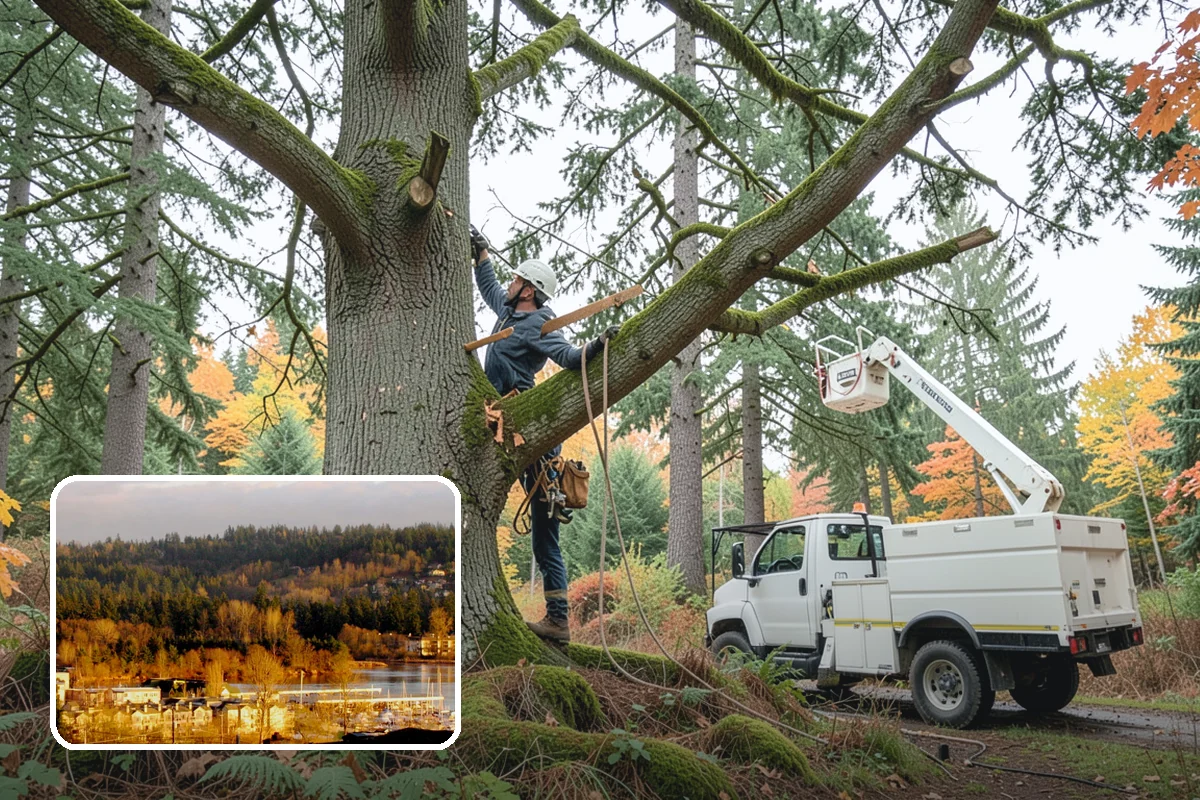
How crown reduction works for Kenmore properties
Crowns usually get too big because the tree kept growing in a space that was sized for a smaller tree. Heavy limbs extend past the trunk, and the weight and reach increase the chance of damage near a house, fence or driveway. Reduction is meant to ease that by shortening those limbs.
The method matters. Each cut is made back to a lateral branch, generally about one third the diameter of the limb being removed, so the remaining branch can carry the growth. This is standard practice under ISA and ANSI A300 pruning guidance. It is not topping. WSU Extension's Pacific Northwest Gardener's Handbook says topping leaves stubs that decay and can become a safety hazard in large trees, and calls it an inappropriate pruning strategy. If someone proposes cutting every limb to a stub, that is the wrong job.
Size is a local factor worth knowing. Kenmore's street-tree inventory shows a median trunk diameter of 10.0 in, and 14.0% of the inventoried trees are 24 in or wider. That inventory covers city street trees, not yard trees, so it says nothing about yours. It does show that a good share of trees here are large, and the bigger the trunk, the more a reduction cut matters. Large wounds are harder for a tree to close, so we favor a few modest cuts over heavy removal.
The USDA lists Kenmore in hardiness zone 9a, with parts of the city from 8b to 9a (2023 map). That is a winter-cold rating, not a guide to pruning. It does tell us that many landscape species are viable here, and each reacts differently to reduction, so the plan depends on what species you have.
If a limb reaches the service line, the wire from the pole to your house, Puget Sound Energy does not trim it. That falls to the homeowner or a private arborist. Work near energized lines needs careful planning, so call before you try it yourself.
Before we cut anything, we look at the species, the structure and the clearance you want. We also check with the city if there is any question about rules for your tree. Call or text 425-484-4442 for a free estimate.
Kenmore tree conditions at a glance
| USDA hardiness zone | 9a (8b to 9a across the city) |
|---|---|
| Rain and snow falling October to April | 81% of the year’s total |
| Tree canopy | Among the most heavily treed Puget Sound cities (satellite data) |
| Days that freeze at night and thaw by day | 30 a year |
| Electric utility | Puget Sound Energy (PSE) |
Trees near the power line to your house
Puget Sound Energy (PSE): Service line (wire from PSE pole to home or meter pole): PSE does not trim it; homeowner/private arborist trims.
PSE performs a safety disconnection so the homeowner or private tree trimmer/arborist can work; Call at least 5 business days ahead to check crew availability and potential charges.
Safety disconnect: 1-888-321-7779 (5+ business days ahead). Utility page.
Any fee for a disconnect is set by the utility.
Most common street trees in Kenmore
- Douglas-fir11.3%
- Eastern arborvitae9.8%
- Red alder8.4%
- Western red cedar7.4%
- Bigleaf maple5.1%
- Black cottonwood4.8%
Share of 12,435 trees in the city’s street-tree inventory; median trunk diameter 10.0 in, 14.0% at 24 in or wider.
Sources: Daymet daily weather (NASA/ORNL), NOAA Storm Events, USDA plant hardiness map 2023, NRCS soil survey, USGS elevation, WA DNR landslide inventory, USDA Forest Service aerial survey, WSDA, city tree assessments and street-tree inventories, SILVIS Lab, Arbor Day Foundation, and official city and utility pages.
Crown Reduction Serving Kenmore
Kenmore

Crown reduction in nearby areas
Also serving Kenmore
- Cedar Tree Pruning in Kenmoreat Washington Landscaping
- Roof Maintenance in Kenmoreat Washington Roofing
- Memorial Tree Planting in Kenmoreat Washington City Services