Where Safety Meets Expert Tree Service.

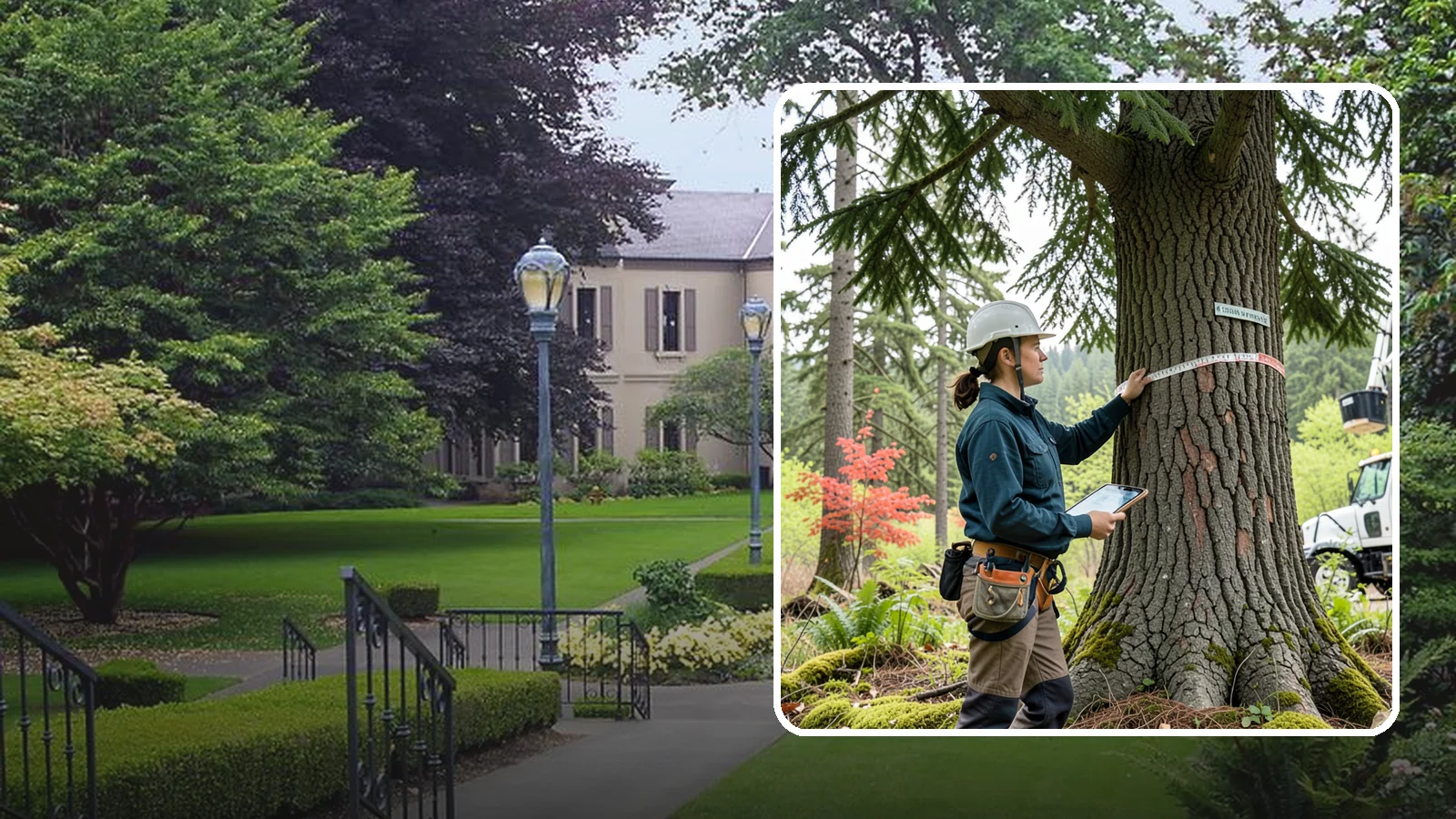
Woodinville Certified Arborist Reports
Written reports prepared by a certified arborist.
A certified arborist report is for owners who need a written, professional opinion about a tree. That includes people buying or selling a home with large trees, neighbors in a dispute over a leaning or dropping tree, and owners planning a project near roots.
The report records what the tree is, how it looks, and what work is reasonable. You can use it with an insurer, a buyer, a neighbor or a city office. Below, we compare the kinds of reports you can ask for in Woodinville.
About Certified Arborist Reports in Woodinville
Our certified arborist reports provide expert documentation that helps homeowners make informed decisions about their property trees. Whether you need support for permitting or insurance purposes, our trained crews prepare clear records based on recognized standards. This service is designed to give you objective guidance when planning care or evaluating your landscape assets.
What Woodinville Certified Arborist Reports Includes
A certified arborist prepares written reports tailored to the specific needs of your site and tree species. These documents are created using methods that match local conditions, ensuring accurate assessment for property decisions or regulatory requirements. The final output offers a reliable record of findings backed by professional expertise.
Woodinville Certified Arborist Reports Process
We begin by gathering essential information about your trees and their surroundings before conducting a thorough inspection. Our team analyzes these observations against established objectives to develop clear recommendations included in the report. Finally, we review all findings with you to ensure you fully understand the results and next steps.
Equipment We Use for Woodinville Certified Arborist Reports
The work utilizes specialized diagnostic tools for measurement as well as mapping and imaging equipment when necessary. We also use professional documentation software to create precise reports that stand up to scrutiny. All crew members wear appropriate personal protective gear while operating these advanced assessment tools on your property.
Woodinville Certified Arborist Reports Safety & Best Practices
Our findings are always based strictly on observed evidence and recognized industry standards rather than assumptions. If an assessment has limitations or if uncertainty remains about certain conditions, we clearly disclose those factors in the report. We recommend follow-up actions whenever a situation requires further evaluation to ensure long-term safety for your trees.
Signs You Need Certified Arborist Reports in Woodinville
You may need this service when facing incomplete site history that complicates tree care planning or hidden defects you cannot see from the ground. Regulatory requirements often vary by jurisdiction, and our reports help navigate these complex rules effectively. Competing objectives on a property can also benefit from an expert analysis to prioritize what matters most for your landscape.
What Affects the Cost of Certified Arborist Reports in Woodinville
The price of this service is influenced by factors such as site complexity and variations in tree species found at the location. Access limitations around difficult-to-reach trees may require additional time or specialized approaches during the assessment phase. Additionally, if specialized diagnostic tools or mapping imaging are needed to fully understand a condition, these requirements will affect the overall cost.
Best Time of Year for Woodinville Certified Arborist Reports
Reports can generally be performed year-round given our favorable Puget Sound climate conditions for outdoor work. However, inspections conducted during wet seasons may require extra caution from our crew to ensure safe access and accurate assessment of hidden defects. We schedule visits when we believe they offer the best opportunity for a thorough evaluation while keeping everyone secure.
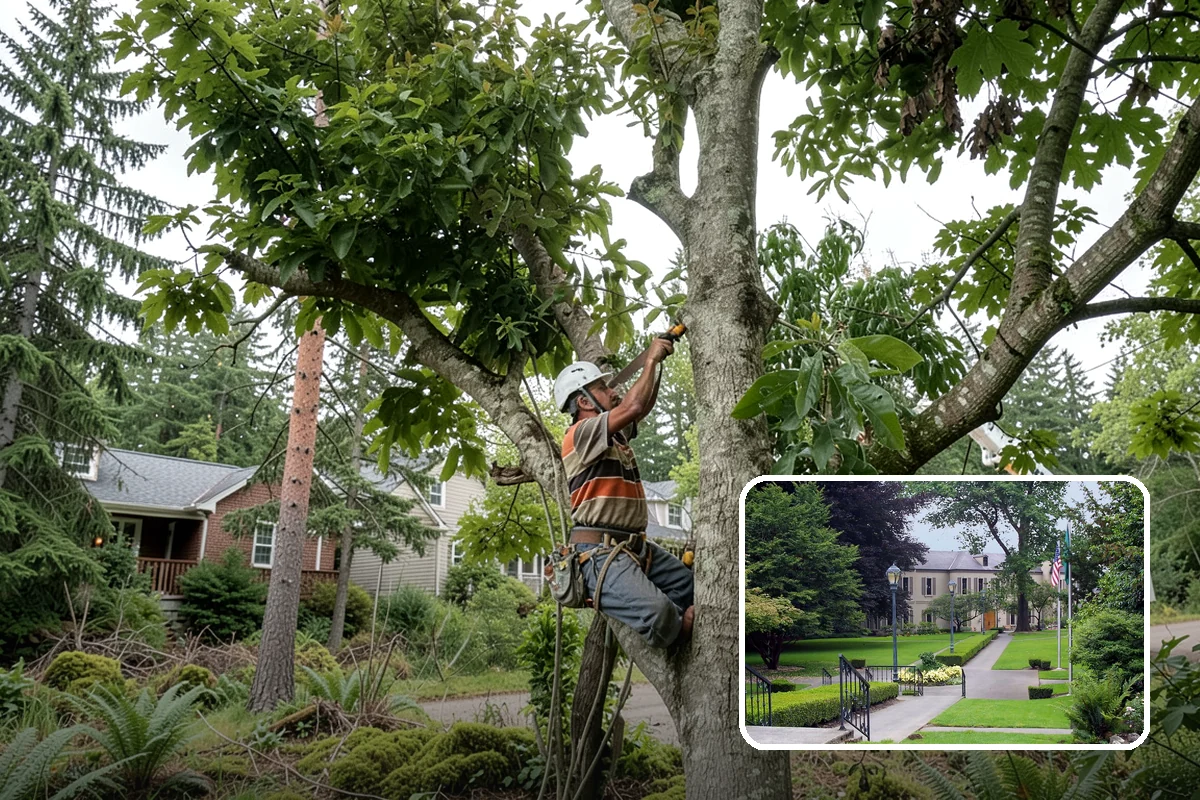
Choosing an arborist report for your Woodinville property
Not every situation needs the same level of detail. Here are the main approaches, and how local conditions bear on each.
Single-tree condition assessment
This fits when one tree worries you: a lean, dead limbs, fungus at the base, or a crack. The arborist inspects the tree from the ground, notes defects, and rates the likelihood of failure and what could be hit. It is the quickest option and usually enough for an insurer or a neighbor.
Multi-tree or property survey
This fits when you are buying, selling, or planning to build. Each significant tree is identified, measured and rated, often with a map. It helps you see which trees to keep, which to prune and which to consider removing before you commit to a plan.
Report for removal or a permit question
Sometimes the report exists to support a removal request. Woodinville's published tree rules do not clearly spell out which removals need city approval. So we check with the city before work starts, and the report can be written to match what the city asks for.
Local conditions that shape the choice
Woodinville sits in USDA hardiness zone 8b, with parts of the city ranging from 8b to 9a (USDA map, 2023). That is a mild range, so winter cold is rarely what damages trees here. Moisture matters more. Daymet data for 2005 to 2025 shows about 80% of the city's yearly rain and snow falls from October to April. Soils stay wet through the season when storms arrive, which is worth having an arborist consider when judging root stability and lean.
A quick way to decide:
- One tree, one concern: condition assessment.
- Sale, purchase or construction: property survey.
- Removal under consideration: report written for the city question.
If you are unsure which fits, call or text 425-484-4442. Our ISA Certified Arborist can help you choose, and estimates are free.
Woodinville tree conditions at a glance
| Slopes | Some steep slopes |
|---|---|
| Soils | 55% of land has hardpan or another restrictive layer within 40 in; most common series Alderwood |
| Tree canopy | Among the most heavily treed Puget Sound cities (satellite data) |
| High and strong wind episodes, 2005-2025 | 33 in the forecast zone |
| USDA hardiness zone | 8b (8b to 9a across the city) |
Tree removal rules in Woodinville
Woodinville’s published rules don’t spell out clearly which removals need city approval. We check with the city before work starts.
Sources: Daymet daily weather (NASA/ORNL), NOAA Storm Events, USDA plant hardiness map 2023, NRCS soil survey, USGS elevation, WA DNR landslide inventory, USDA Forest Service aerial survey, WSDA, city tree assessments and street-tree inventories, SILVIS Lab, Arbor Day Foundation, and official city and utility pages.
Certified Arborist Reports Serving Woodinville
Woodinville
Also serving Woodinville
- Landscape Renovation in Woodinvilleat Washington Landscaping