Where Safety Meets Expert Tree Service.


Seattle Wood Chipping
The on-site chipping of branches and limbs.
A pile of branches by the fence keeps growing, and the pruning or storm cleanup that made it is long done. Maybe the brush is blocking a path, or you want to know what happens to the wood once it is cut.
Wood chipping turns that brush into chips you can put to use. Chips can cover bare soil, line a path, or go back under trees and shrubs as mulch. How you spread them matters as much as chipping them, so it helps to plan the pile before the work starts.
About Wood Chipping in Seattle
Wood chipping turns your removed branches into useful products while keeping your property clean and free of debris burdens. Our trained crews are ready to help homeowners process wood efficiently using methods that match their specific site conditions. This service supports responsible reuse by converting waste material into usable chips right where it is needed.
What Seattle Wood Chipping Includes
We perform on-site chipping for branches and limbs, processing the debris directly at your location. The work follows recognized arboricultural standards to ensure every task fits the tree species present and the access available. By handling this process locally, we reduce disposal needs while creating a supply of wood chips you can use elsewhere.
Seattle Wood Chipping Process
Our team begins by sorting material based on its type and size before moving it through our chipping or milling equipment. We then load the processed product for transport or delivery to your preferred destination. Finally, we clean up the entire work area to leave your site neat after completion.
Equipment We Use for Seattle Wood Chipping
To get the job done safely, we use wood chipers along with chainsaws and necessary milling tools. Loaders and hauling vehicles move materials efficiently while personal protective equipment keeps our crew safe throughout the day. We bring all required gear on-site so you do not need to worry about providing any specialized machinery.
Seattle Wood Chipping Safety & Best Practices
Safety is a priority, which means keeping hands and bystanders clear of feed equipment at all times during operation. Our crews wear eye and hearing protection while handling logs with proper technique and secure loads for transport. We take extra care when dealing with embedded debris or metal to prevent accidents and ensure everyone goes home safely.
Signs You Need Wood Chipping in Seattle
You may need this service if you have large amounts of branches that require efficient processing into usable chips. Situations involving oversized material, moisture concerns affecting quality, or access limits often call for our professional handling. If your site has hidden debris in logs or wet conditions typical of the Pacific Northwest seasons, we can manage these challenges carefully.
What Affects the Cost of Wood Chipping in Seattle
The price is influenced by the size and type of material you have to process rather than a fixed rate. Access limitations that restrict equipment movement or embedded debris requiring careful handling will also impact the final cost. Additionally, moisture levels in your wood can affect chip quality, which may be considered when determining pricing factors.
Best Time of Year for Seattle Wood Chipping
This service is available year-round for homeowners who need their branches processed efficiently regardless of the season. However, we exercise extra caution during wet Pacific Northwest seasons to avoid mud-related access issues or processing delays. Planning ahead helps us maintain high standards even when weather conditions require additional care and attention.
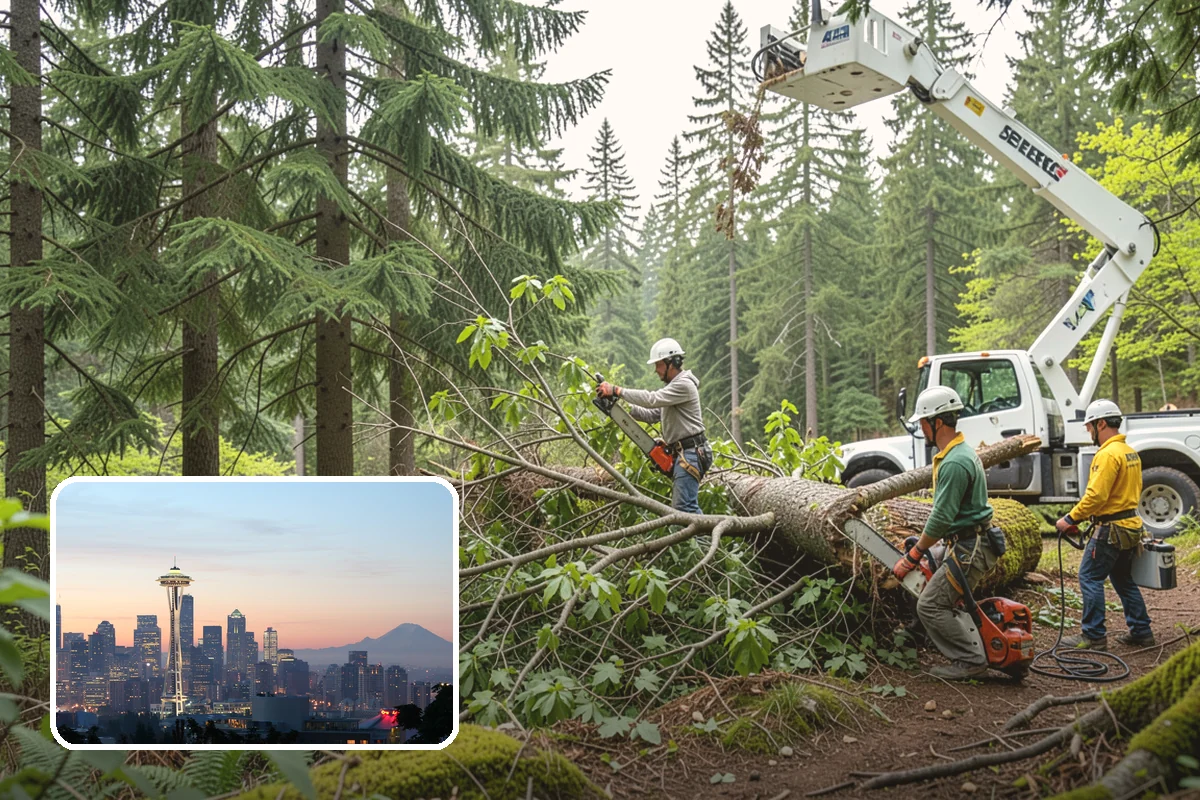
Wood chipping in Seattle: using chips and moving yard waste
Brush piles build up for a simple reason. Pruning, storm breakage and removals all produce more woody material than a yard can hold. Chipping reduces the bulk and gives you a material you can use right away, instead of hauling it off.
The most common mistake with finished chips is how they go around trees. The WSU Extension Pacific Northwest Gardener's Handbook warns against mulch volcanoes. Mounded mulch inhibits soil gas exchange and water infiltration. So when chips go around a trunk, spread them in a flat, even layer and keep them off the bark. Pull them back so the root flare stays visible. If you do not want that much mulch, we can talk about where the extra chips should go before we start.
One local rule affects where yard waste can go. King County is inside the WSDA apple maggot quarantine. Homegrown fruit and yard waste may not be moved out of the quarantine area into pest-free areas. For you, that means chips and brush from your property should not be carried to a friend's yard or a site outside the quarantine area. Keep them on your property or use a disposal route that stays inside the area. If your brush includes fallen or pruned fruit-tree material, mention it when you call, and we will check how to handle it before work begins.
Seattle's own canopy assessment puts tree cover at 28.0% of the city (2021). That is a citywide figure, not a statement about your lot. It does mean there are many trees producing prunings and storm debris, and plenty of yards with the same pile problem.
How the work goes
We look at the brush, sort out pieces too large or too dirty to chip, and feed the rest through a chipper. You decide whether the chips stay in a pile, get spread, or are taken away. For a plan that fits your yard, call or text 425-484-4442 for a free estimate.
Seattle tree conditions at a glance
| Tree canopy | 28.0% of the city (city assessment, 2021) |
|---|---|
| Land under dense tree cover (50%+ canopy) | 7% |
| Rain and snow falling October to April | 82% of the year’s total |
| Days with 0.1 in or more of rain | 98 a year |
Tree health near Seattle
Spongy moth (WSDA 2025): WSDA trap detection(s): 1 moth(s) in 1 trap catch record(s).
Spongy moth (WSDA 2022): WSDA trap detection(s): 1 catch record(s) listed (per-trap counts not given).
- Decline, cause not identified4,629 ac
- Bears190 ac
- Douglas-fir engraver114 ac
Forest damage mapped from the air within 10 km of Seattle, 2021-2025 (USDA Forest Service and WA DNR). This covers forest land, not street or yard trees. “Decline, cause not identified” is dieback with no single cause found.
Sources: Daymet daily weather (NASA/ORNL), NOAA Storm Events, USDA plant hardiness map 2023, NRCS soil survey, USGS elevation, WA DNR landslide inventory, USDA Forest Service aerial survey, WSDA, city tree assessments and street-tree inventories, SILVIS Lab, Arbor Day Foundation, and official city and utility pages.
Wood Chipping Serving Seattle
Seattle

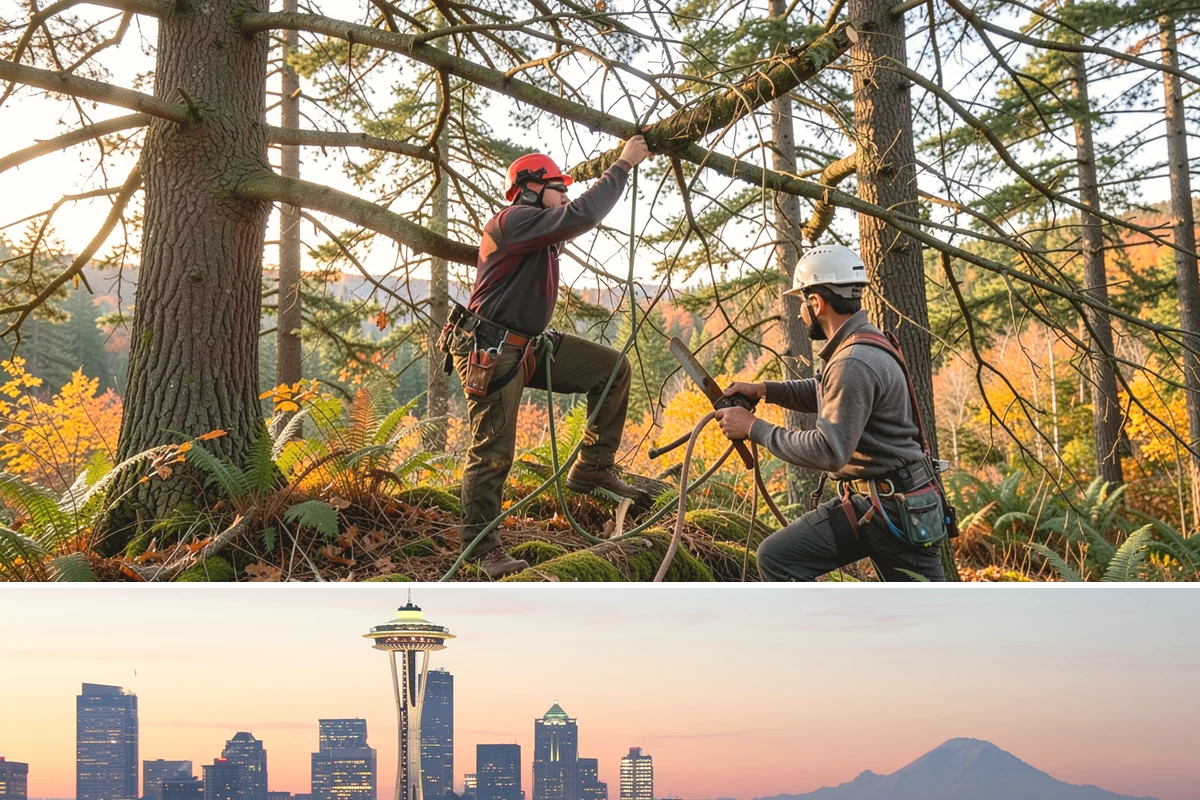
Wood chipping in nearby areas
Also serving Seattle
- Firewood Restocking in Seattleat Washington Firewood
- Landscape Fabric Installation in Seattleat Washington Landscaping