Where Safety Meets Expert Tree Service.

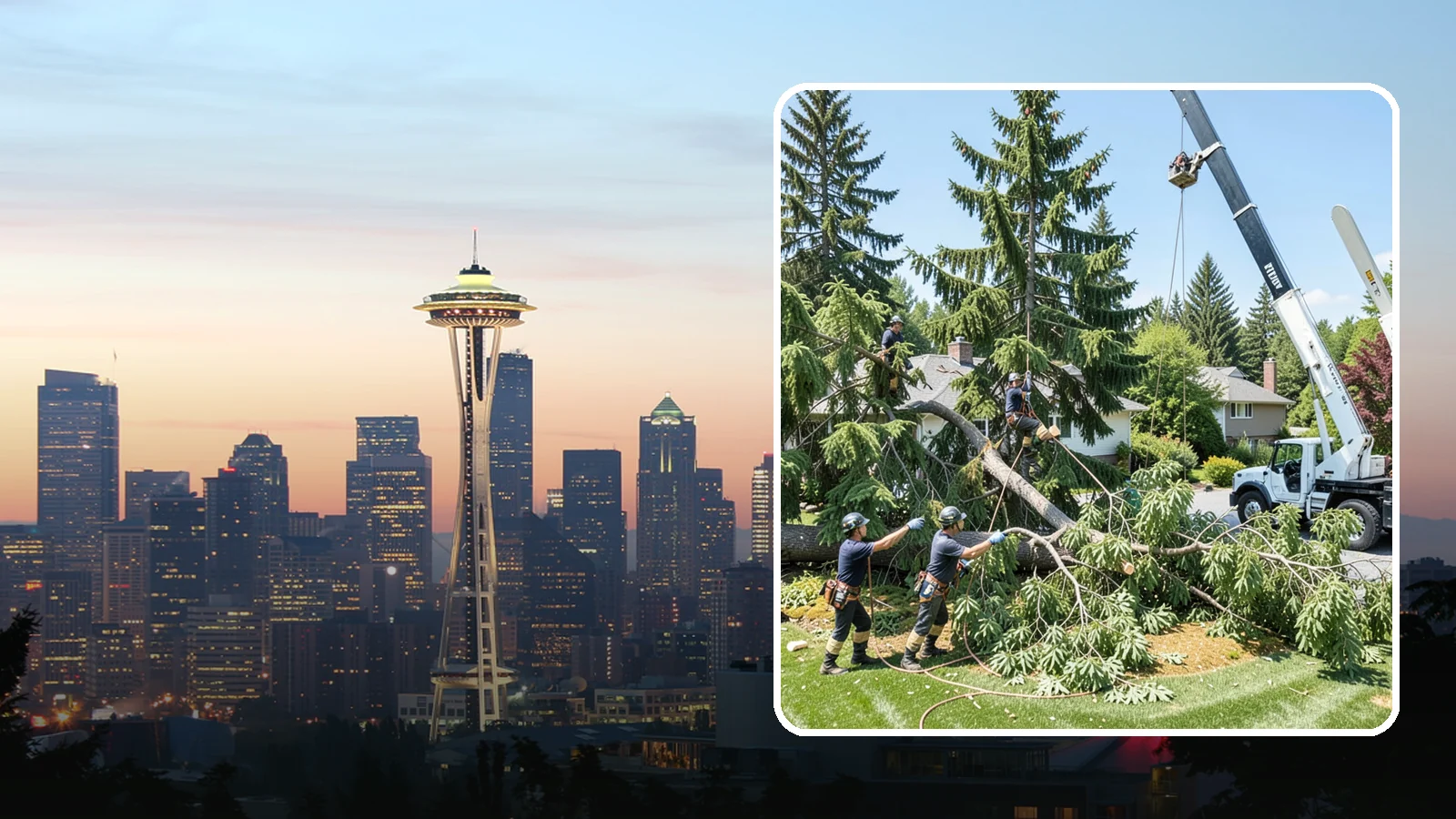
Seattle Tree Removal
Safe and complete removal of unwanted, dead, or hazardous trees.
Before you book a removal in Seattle, measure the trunk. The city regulates trees by diameter at standard height, 4.5 feet above the ground, and the rule starts at 6 inches. Where the tree falls on that scale decides whether removal is allowed at all.
Measure around the trunk at that height, then divide the distance by pi to get the diameter, or use a diameter tape. Note the zone your lot is in and whether any construction is planned. Those three details tell you what to ask the city before anyone picks up a saw.
About Tree Removal in Seattle
We handle the safe removal of unwanted or hazardous trees so you can feel secure on your property again. Whether a tree has fallen in a storm or is simply blocking access to part of your yard, our team is ready to help. This service brings peace of mind by eliminating risks and restoring order to your landscape.
What Seattle Tree Removal Includes
Tree removal involves cutting down the entire structure from top to bottom and clearing it from your site completely. We manage every step of this process to ensure no damage occurs to nearby buildings, fences, or other vegetation. The work includes taking away all limbs and trunk sections once they are safely lowered to the ground.
Seattle Tree Removal Process
Our team begins with a careful assessment to plan how each tree will be taken down without causing harm. We establish clear drop zones and safety perimeters before starting any cutting from top-down sectioning or full felling. After removing the main structure, we handle limb extraction and optional stump grinding followed by thorough debris cleanup.
Equipment We Use for Seattle Tree Removal
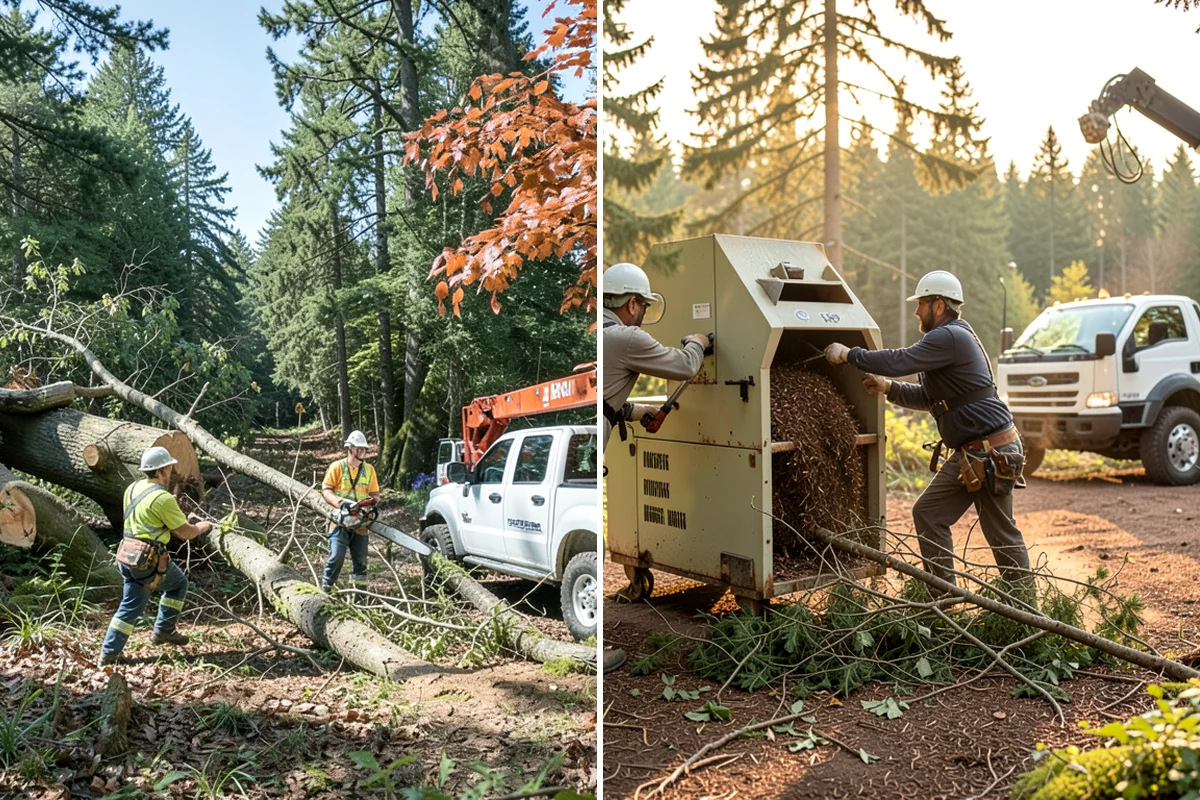
Professional work relies on chainsaws for precise cuts and heavy-duty rigging gear to control how trees fall safely. We utilize wood chippers to process branches efficiently and stump grinders to address remaining roots at ground level. For taller jobs or tight spaces, we bring bucket trucks or cranes to reach high clearance areas without risk.
Seattle Tree Removal Safety & Best Practices
Maintaining clear drop zones is essential so that falling limbs do not strike people or property unexpectedly. We always watch closely for overhead power lines and never work alone when removing large trees from a site. Checking for hidden structural rot before climbing ensures our team stays safe while working at height on your job.
Signs You Need Tree Removal in Seattle
You may need this service if a tree has died, become diseased, or is leaning dangerously toward your home. Storm damage that leaves branches hanging precariously or roots damaging foundations are clear indicators it is time to act. If you plan new construction and the existing trees interfere with building plans, removal might be necessary for progress.
What Affects the Cost of Tree Removal in Seattle
The final price depends heavily on the size of the tree and how dense its branch structure becomes during cutting. Access requirements play a major role, such as needing a bucket truck when working around high clearance obstacles or limited space. Whether stump grinding and debris haul-away are included in your project scope will also influence the total investment required.
Best Time of Year for Seattle Tree Removal
While we can perform removal year-round here in Washington State, many homeowners prefer scheduling during drier months for better ground conditions. Waiting until the soil is firm prevents heavy machinery from sinking into soft earth while ensuring a stable base for our equipment. This approach allows us to complete your project efficiently regardless of when you decide it needs attention.
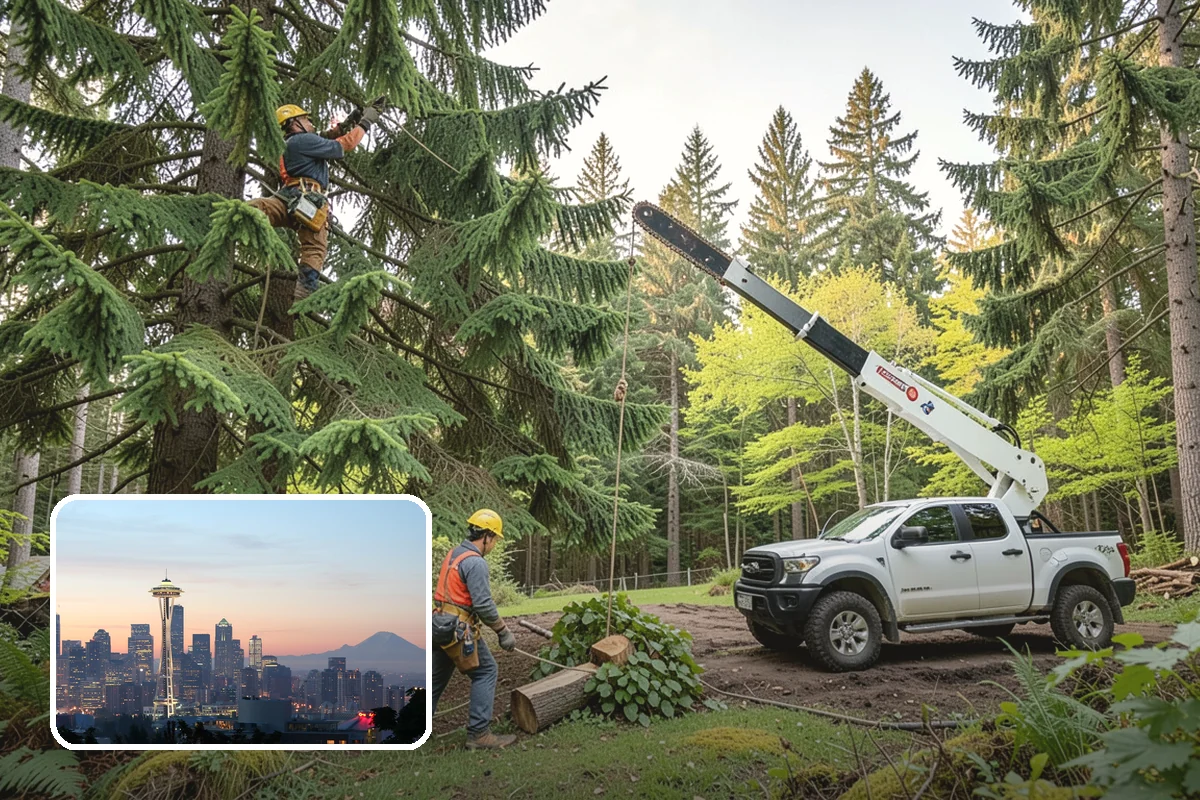
How Tree Removal Works on Seattle Properties
Removal starts with a site visit. We look at the species, the lean, the condition of the trunk and roots, and what sits under and around the tree: roofs, fences, wires and neighboring yards. Then we plan how the tree comes down.
Check the city rule first
According to the City of Seattle's tree rule for private property, when no development is proposed, removal of Tier 1-4 trees (6 inches in diameter or larger) is generally prohibited, apart from listed exemptions and allowances. In the NR, RSL, LR, MR, NC, C and SM zones, up to two Tier 4 trees (6-12 inches) can be removed per 3-year period without SDCI review. That covers removal only. If your tree is larger, your zone is different, or the rule is unclear for your lot, we check with the city before work starts.
The usual steps
- Measure the trunk and confirm the tree's tier and your zone.
- Locate the wire from the pole to your house.
- Climb or rig the tree and take it down in controlled sections where there is no room to fell it whole.
- Cut up the wood and clear the debris.
- Grind the stump if you want it gone.
Wires near the house
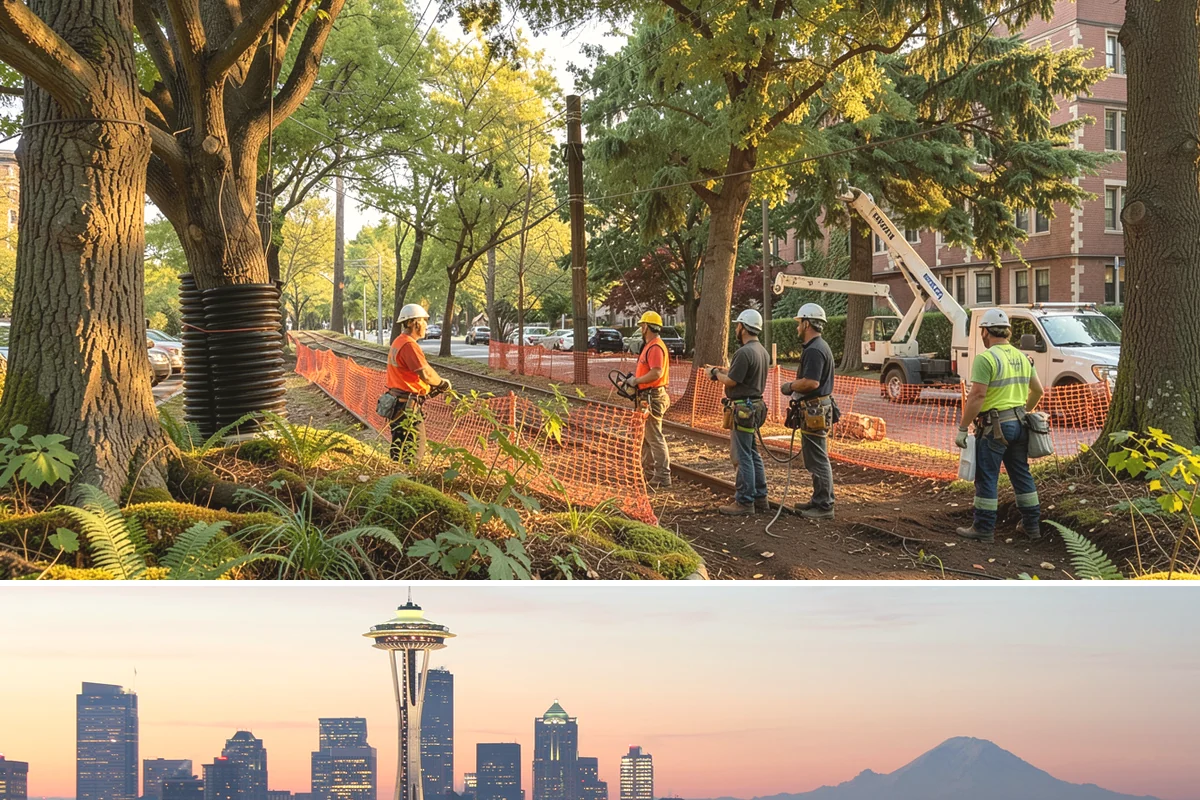
Seattle City Light says maintaining clearance after the first 10 feet of the service wire is the property owner's responsibility. It recommends hiring a professional and checking with City Light first. City Light also does not prune for privately owned communication or cable lines. If a tree leans toward a wire, tell us when you call so the plan accounts for it.
Slopes
The Washington DNR maps 197 landslides in Seattle. That is a citywide figure, not a statement about your yard. If your tree stands on a steep slope, mention it. Roots help hold soil, so removal there deserves a closer look before any cutting begins.
Call or text 425-484-4442 for a free estimate with an ISA Certified Arborist.
Seattle tree conditions at a glance
| USDA hardiness zone | 9a (9a to 9b across the city) |
|---|---|
| Tree canopy | 28.0% of the city (city assessment, 2021) |
| Slopes | Some steep slopes |
| Landslides mapped by WA DNR | 197 |
| High and strong wind episodes, 2005-2025 | 38 in the forecast zone |
| Electric utility | Seattle City Light |
Tree removal rules in Seattle
With no development proposed, removal of Tier 1-4 trees (6 in DSH+) is generally prohibited except listed exemptions/allowances. In NR, RSL, LR, MR, NC, C and SM zones, up to two Tier 4 trees (6-12 in) per 3-year period may be removed without SDCI review; in all other zones up to three Tier 3+Tier 4 trees combined per 1-year period.
Regulated size: 6 in DSH (diameter at 4.5 ft).
Official city source. Rules change; we confirm with the city before work starts.
Trees near the power line to your house
Seattle City Light: "Maintaining clearance after the first 10 feet is the property owner's responsibility." City Light recommends hiring a professional and checking with City Light first. City Light does not prune for privately owned communication/cable lines.
City Light provides a 24-hour power disconnect so private work can be done safely (cost not stated - unknown).
Disconnect: North of Denny Way (206) 615-0600. Utility page.
Any fee for a disconnect is set by the utility.
Strongest wind events near Seattle
- Dec 14, 2006: gusts to 74 mph
- Feb 3, 2006: gusts to 67 mph
- Jan 12, 2021: gusts to 61 mph
NOAA Storm Events, forecast zone that includes Seattle, 2005-2025.
Sources: Daymet daily weather (NASA/ORNL), NOAA Storm Events, USDA plant hardiness map 2023, NRCS soil survey, USGS elevation, WA DNR landslide inventory, USDA Forest Service aerial survey, WSDA, city tree assessments and street-tree inventories, SILVIS Lab, Arbor Day Foundation, and official city and utility pages.
Tree Removal Serving Seattle
Seattle
Tree Removal in nearby areas
Also serving Seattle
- Perennial Planting in Seattleat Washington Landscaping
- Root Pruning in Seattleat Washington City Services
- Log Bucking in Seattleat Washington Firewood