Where Safety Meets Expert Tree Service.


SeaTac Tree Preservation During Construction
Measures to protect trees throughout construction.
You have a building project coming, and a tree you want to keep is standing right where the equipment will go. Maybe the trunk looks fine, but the soil around it is about to be driven over, dug into, or buried under gravel and stacked materials.
Most construction damage to a tree happens below ground and shows up later. Planning for the roots before work begins is the most useful step you can take. Here is how that planning works for a SeaTac lot.
About Tree Preservation During Construction in SeaTac
We help homeowners keep their valued trees healthy while building projects happen on their property. Our team takes care of tree preservation during construction so your landscape remains strong after the work is done. This service ensures that retained trees stay in good condition throughout the entire build process.
What SeaTac Tree Preservation During Construction Includes
Tree preservation during construction involves specific measures designed to protect trees from damage caused by nearby building activities. We use methods matched to each tree species and site conditions to keep them healthy while you construct your home or addition. These steps help reduce the risk of decline that often comes with major landscaping changes.
SeaTac Tree Preservation During Construction Process
The work begins by identifying which trees need protection and mapping out their specific zones before any digging starts. Our trained crews establish protective measures early on and monitor tree health throughout the construction timeline. If issues arise, we address impacts immediately and provide follow-up care to support recovery after the project ends.
Equipment We Use for SeaTac Tree Preservation During Construction
We utilize protective fencing and signage to clearly mark areas where equipment must not enter. Ground protection materials like mulch are used to shield roots from compaction, while air excavation tools help us work carefully near sensitive root systems. Monitoring tools allow our team to track tree health closely without disturbing the soil unnecessarily.
SeaTac Tree Preservation During Construction Safety & Best Practices
Keeping heavy machinery and traffic out of designated protection zones is a top priority for every job we complete. We avoid making grade changes or compacting soil over existing roots to maintain proper drainage and stability. Coordinating directly with your site crews ensures everyone follows safety protocols, and all measures are documented for compliance.
Signs You Need Tree Preservation During Construction in SeaTac
You may need this service if you have plans that involve retaining mature trees while building a new structure. Signs include concerns about root-zone compaction from equipment or delayed decline appearing months after construction finishes. If encroachment by machinery threatens your landscape, our preservation plan helps mitigate those risks before they become permanent damage.
What Affects the Cost of Tree Preservation During Construction in SeaTac
The price is influenced by the number of trees you want to keep and their individual size requirements. Species-specific protection needs vary, as do site access constraints that affect how easily equipment can reach certain areas. Additionally, the complexity of establishing root zones against active construction activities plays a role in determining the final cost.
Best Time of Year for SeaTac Tree Preservation During Construction
This service can be performed year-round throughout our region, offering flexibility for your project schedule. However, careful monitoring is required during wetter seasons to prevent soil saturation issues that could worsen compaction risks around roots. Planning ahead allows us to adjust methods based on current weather conditions and site moisture levels.

Protecting Trees on a SeaTac Construction Site
Tree roots spread well beyond the trunk, and most of the ones that take up water and oxygen sit in the top layer of soil. Trenching cuts them. Heavy machinery compacts the soil and squeezes out the air pockets they need. Added fill can smother them. A tree may look unchanged for a season or two and then thin out or decline.
Local conditions raise the stakes. Daymet data for SeaTac from 2005 to 2025 shows that 83% of the year's rain and snow falls from October to April. That is usually when a site is torn up and bare. Wet soil compacts more easily under traffic, and runoff over exposed ground can wash sediment toward roots. If your project runs through the wet months, protection matters even more. SeaTac is also in USDA hardiness zone 9a (USDA map, 2023), which tells you about winter cold, not about construction stress. A mild-zone tree is not tougher against a bulldozer.
What the work looks like
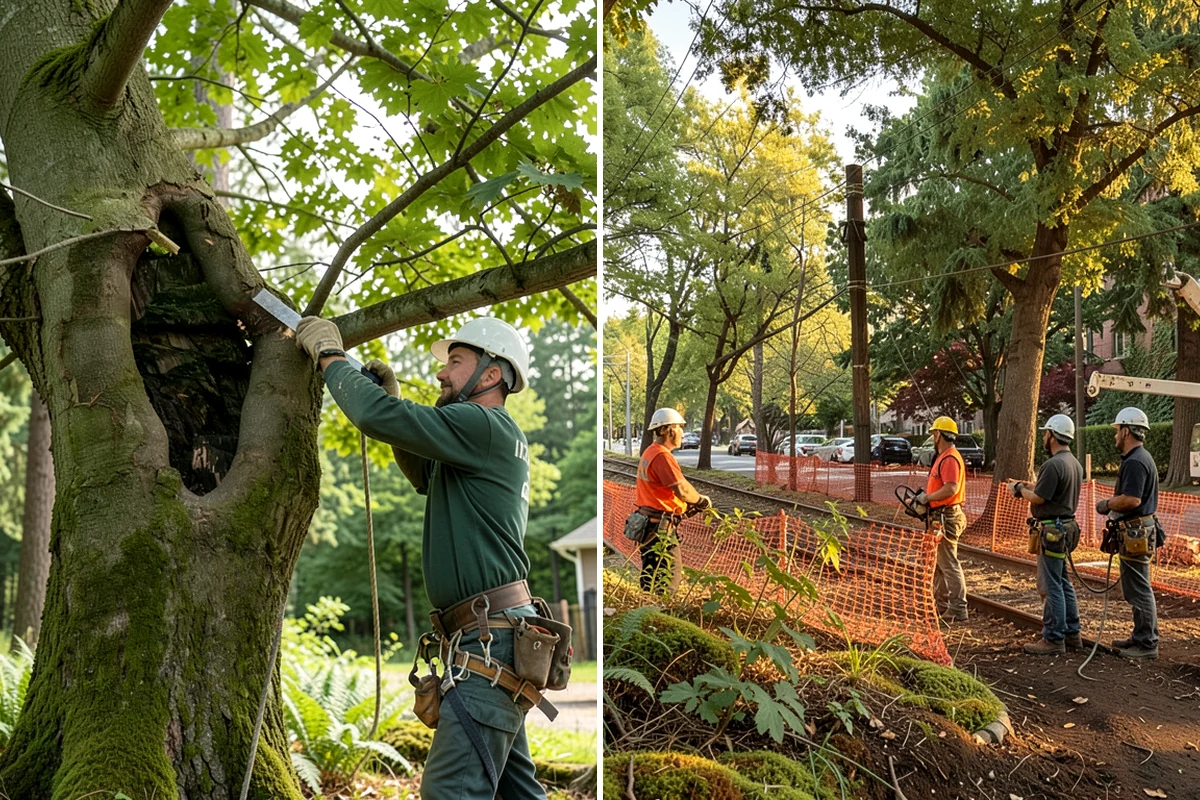
It starts with an assessment of which trees are worth keeping and how close the plans come to their roots. An ISA Certified Arborist on our staff can do that review and walk the site with you and your builder. From there, standard practice is to set a protection zone around each tree with sturdy fencing, placed as far out from the trunk as the site allows, and to keep vehicles, fuel, soil piles and debris outside it. Where access cannot be avoided, a layer of mulch with boards or plywood over it can spread the load. Where a root must be cut for a footing or utility, it should be cut cleanly, not torn, and as far from the trunk as possible. Branches that would be hit by equipment can be pruned beforehand to avoid ragged tears.
If you mulch the protection zone, keep wood chips back from the trunk. Piled mulch creates a dark, moist, low-oxygen environment, according to Washington State University Extension (Using Arborist Wood Chips as Landscape Mulch, FS160E).
The published SeaTac rules we found do not clearly spell out which tree removals need city approval, so we check with the city before work starts. Call or text 425-484-4442 for a free estimate.
SeaTac tree conditions at a glance
| Landslides mapped by WA DNR | 2 |
|---|---|
| High and strong wind episodes, 2005-2025 | 38 in the forecast zone |
| USDA hardiness zone | 9a |
Tree removal rules in SeaTac
SeaTac’s published rules don’t spell out clearly which removals need city approval. We check with the city before work starts.
Sources: Daymet daily weather (NASA/ORNL), NOAA Storm Events, USDA plant hardiness map 2023, NRCS soil survey, USGS elevation, WA DNR landslide inventory, USDA Forest Service aerial survey, WSDA, city tree assessments and street-tree inventories, SILVIS Lab, Arbor Day Foundation, and official city and utility pages.
Tree Preservation During Construction Serving SeaTac
SeaTac
Tree preservation during construction in nearby areas
Also serving SeaTac
- Debris Removal in SeaTacat Washington Construction
- Debris Removal in SeaTacat Washington Landscaping
- Municipal Shelter Construction in SeaTacat Washington City Services