Where Safety Meets Expert Tree Service.

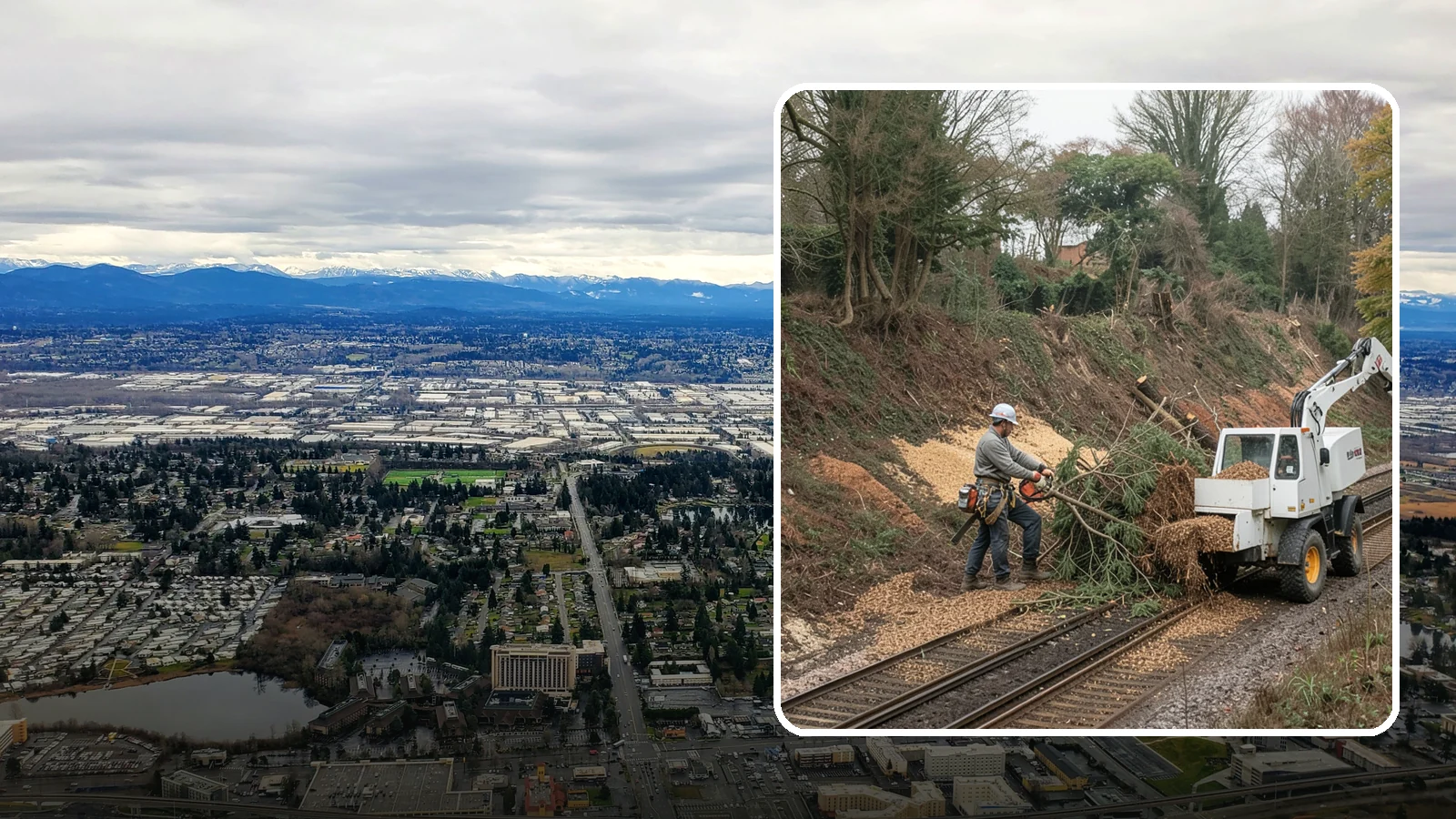
SeaTac Wood Chipping
The on-site chipping of branches and limbs.
A pile of branches stacked behind the garage keeps growing, and the bare patch under your trees keeps getting muddier. Those two problems often have one answer. Branches and limbs can be chipped on site, and the chips can go back onto the ground as mulch.
Chipping turns bulky brush into a material you can use. This page explains how chips work as mulch around trees in SeaTac, what to know before moving yard waste, and what to settle before a chipper shows up.
About Wood Chipping in SeaTac
Wood chipping turns your removed branches into useful products while keeping your property clean and free of debris burdens. Our trained crews are ready to help homeowners process wood efficiently using methods that match their specific site conditions. This service supports responsible reuse by converting waste material into usable chips right where it is needed.
What SeaTac Wood Chipping Includes
We perform on-site chipping for branches and limbs, processing the debris directly at your location. The work follows recognized arboricultural standards to ensure every task fits the tree species present and the access available. By handling this process locally, we reduce disposal needs while creating a supply of wood chips you can use elsewhere.
SeaTac Wood Chipping Process
Our team begins by sorting material based on its type and size before moving it through our chipping or milling equipment. We then load the processed product for transport or delivery to your preferred destination. Finally, we clean up the entire work area to leave your site neat after completion.
Equipment We Use for SeaTac Wood Chipping
To get the job done safely, we use wood chipers along with chainsaws and necessary milling tools. Loaders and hauling vehicles move materials efficiently while personal protective equipment keeps our crew safe throughout the day. We bring all required gear on-site so you do not need to worry about providing any specialized machinery.
SeaTac Wood Chipping Safety & Best Practices
Safety is a priority, which means keeping hands and bystanders clear of feed equipment at all times during operation. Our crews wear eye and hearing protection while handling logs with proper technique and secure loads for transport. We take extra care when dealing with embedded debris or metal to prevent accidents and ensure everyone goes home safely.
Signs You Need Wood Chipping in SeaTac
You may need this service if you have large amounts of branches that require efficient processing into usable chips. Situations involving oversized material, moisture concerns affecting quality, or access limits often call for our professional handling. If your site has hidden debris in logs or wet conditions typical of the Pacific Northwest seasons, we can manage these challenges carefully.
What Affects the Cost of Wood Chipping in SeaTac
The price is influenced by the size and type of material you have to process rather than a fixed rate. Access limitations that restrict equipment movement or embedded debris requiring careful handling will also impact the final cost. Additionally, moisture levels in your wood can affect chip quality, which may be considered when determining pricing factors.
Best Time of Year for SeaTac Wood Chipping
This service is available year-round for homeowners who need their branches processed efficiently regardless of the season. However, we exercise extra caution during wet Pacific Northwest seasons to avoid mud-related access issues or processing delays. Planning ahead helps us maintain high standards even when weather conditions require additional care and attention.

How wood chipping works for SeaTac yard trees and brush
Brush piles take up space and shelter pests, and they don't break down quickly. Chipping cuts limbs into small pieces so they can be spread out or hauled off in far less volume. The cause of most piles is simple: pruning, storm cleanup, or a removal leaves more wood than a yard bin can take.
Local conditions affect what you do with the chips. Daymet data for 2005 to 2025 shows that 83% of SeaTac's yearly rain and snow falls from October to April. That means bare soil gets soaked for most of the cool season. A layer of chips over the root zone shields the surface from heavy rain and helps hold moisture for the drier months. SeaTac sits in USDA hardiness zone 9a (USDA map, 2023), which is a mild range, but mulch still helps buffer the soil around roots.
For depth, the WSU Extension Pacific Northwest Gardener's Handbook, Chapter 12, advises a 2 to 4 inch layer of mulch over the root zone. Finer mulches should stay closer to 2 to 3 inches. Fresh chips from a chipper are often coarse, so spread them evenly and keep them from piling against the trunk. Mulch stacked on the trunk holds moisture against the bark.
One rule affects where chips and debris can go. King County is inside the WSDA apple maggot quarantine. Homegrown fruit and yard waste may not be moved out of the quarantine area into pest-free areas. If you plan to haul chips or brush elsewhere, keep that in mind. Spreading them on your own property avoids the question.
The work itself is straightforward. Branches are fed into the chipper, the chips are collected or dropped where you want them, and the area is raked or cleaned up. Tell us how much mulch you want kept and where it should go. If the chipping follows tree removal or heavy pruning, we check with the city before work starts where the rules are unclear. Call or text 425-484-4442 for a free estimate.
SeaTac tree conditions at a glance
| Land under dense tree cover (50%+ canopy) | 13% |
|---|---|
| Rain and snow falling October to April | 83% of the year’s total |
| Days with 0.1 in or more of rain | 109 a year |
Tree health near SeaTac
Japanese beetle (WSDA 2026): 843 beetles caught in WSDA traps, 2026.
Japanese beetle (WSDA 2026): First WSDA Japanese beetle treatments in Western Washington ("South King County Treatment Area" around SeaTac).
- Decline, cause not identified86 ac
Forest damage mapped from the air within 10 km of SeaTac, 2021-2025 (USDA Forest Service and WA DNR). This covers forest land, not street or yard trees. “Decline, cause not identified” is dieback with no single cause found.
Sources: Daymet daily weather (NASA/ORNL), NOAA Storm Events, USDA plant hardiness map 2023, NRCS soil survey, USGS elevation, WA DNR landslide inventory, USDA Forest Service aerial survey, WSDA, city tree assessments and street-tree inventories, SILVIS Lab, Arbor Day Foundation, and official city and utility pages.
Wood Chipping Serving SeaTac
SeaTac
Wood chipping in nearby areas
Also serving SeaTac
- Seasoned Firewood in SeaTacat Washington Firewood
- Landscape Edging Installation in SeaTacat Washington Landscaping