Where Safety Meets Expert Tree Service.

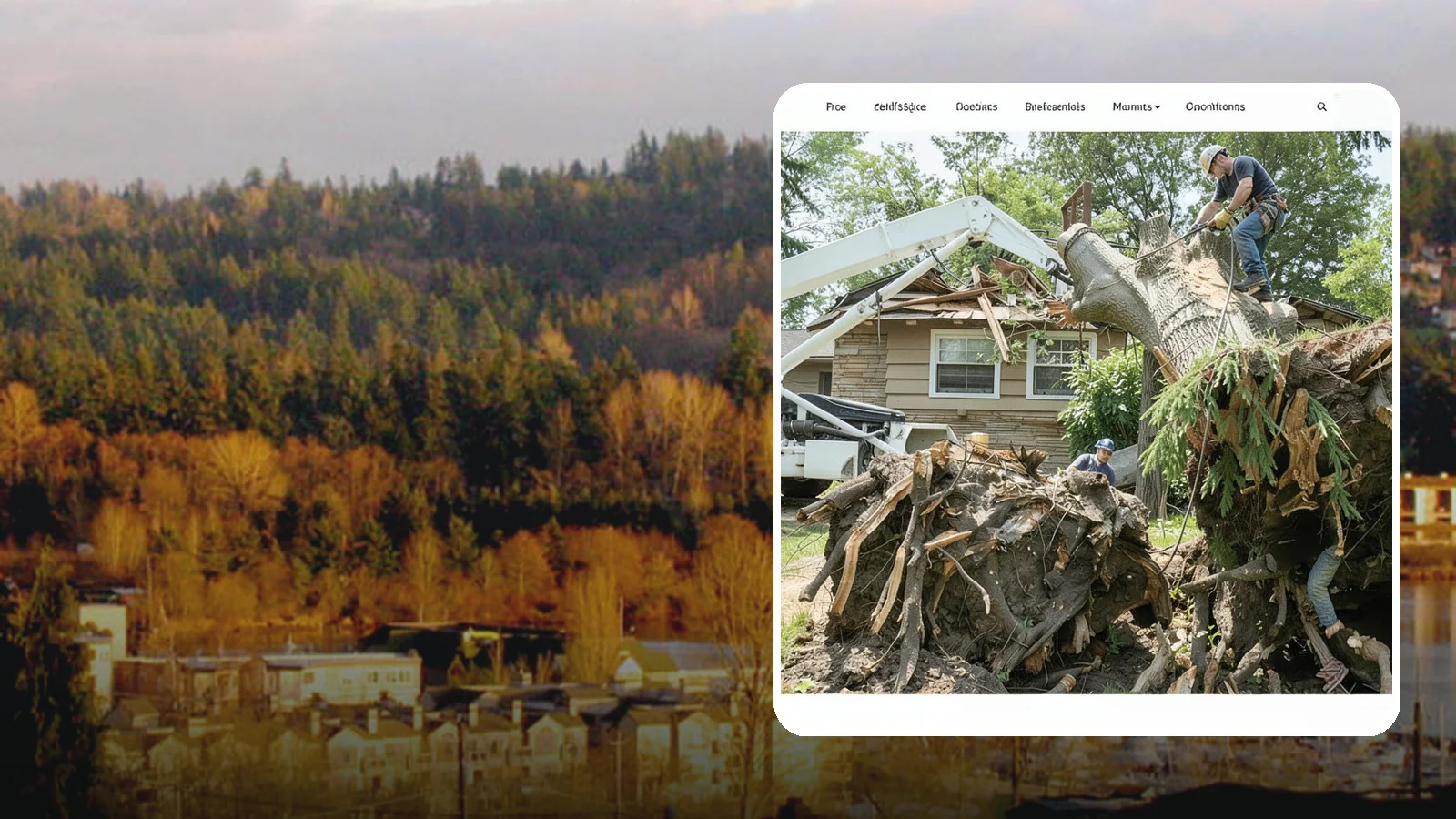
Kenmore Confined-space Tree Removal
The careful dismantling of trees in tight or restricted areas.
Confined-space tree removal is for owners whose tree stands where a crane or bucket truck can't reach and where there is little room to drop it: between houses, beside a fence line, behind a garage, or in a tight backyard with no side access. If your tree sits in a spot like that, the job has to be done in pieces, from the top down.
Before you call, note what is near the tree: the house, the roof, fences, and any wire running to the building. Photos from a few angles help. They let us talk through the realistic options before anyone climbs.
About Confined-space Tree Removal in Kenmore
If your property has trees growing very close to buildings or fences where standard removal isn’t possible, our confined-space tree removal service is designed for you. We help homeowners safely clear tight spots without damaging nearby structures or landscaping. This approach ensures that difficult-to-reach trees are handled with care and precision.
What Kenmore Confined-space Tree Removal Includes
Confined-space tree removal involves the careful dismantling of trees in restricted areas where there is little room for controlled felling. Our trained crews follow recognized arboricultural standards to match their methods to your specific tree species, site conditions, and access limitations. This service protects structures, utilities, and landscaping while removing safety hazards and reducing liability on your property.
Kenmore Confined-space Tree Removal Process
The work typically begins with an on-site assessment and hazard evaluation to establish safe drop zones and a perimeter around the job area. We then rig and lower limbs or fell the stem in a controlled sequence before processing the wood and clearing debris from the site. Final cleanup ensures the area is left tidy after all equipment has been removed.
Equipment We Use for Kenmore Confined-space Tree Removal
Our crews utilize chainsaws, climbing and rigging gear, and ground protection to navigate tight spaces safely. Depending on the specific conditions of your job site, we may also use a wood chipper or an aerial lift or crane as needed. All team members wear necessary personal protective equipment while operating these tools in confined areas.
Kenmore Confined-space Tree Removal Safety & Best Practices
Safety is our priority, so we maintain clear drop zones and controlled fall paths throughout every step of the project. Before starting any work, we identify overhead utility lines to prevent accidents during removal. We also inspect trees for decay and structural defects before climbing and use coordinated ground communication along with proper fall protection gear.
Signs You Need Confined-space Tree Removal in Kenmore
You likely need this service if hidden internal decay or unpredictable lean makes a tree dangerous in its current location. Situations where proximity to structures, fences, or power lines leaves no room for safe felling also indicate the need for our specialized approach. Limited access for standard equipment due to landscaping features is another clear sign that confined-space techniques are required.
What Affects the Cost of Confined-space Tree Removal in Kenmore
The cost of this service is influenced by factors such as tree size and any hidden internal decay present in the trunk or branches. Proximity to structures like buildings and fences, along with limited access for heavy machinery, will also impact the overall price. Additionally, specific debris disposal requirements can affect how much you pay for removal.
Best Time of Year for Kenmore Confined-space Tree Removal
This service can be performed year-round given our local climate conditions. However, we require extra caution during wet seasons when ground conditions may compromise safety perimeters or rigging stability. We adjust our methods to ensure the site remains safe regardless of recent weather patterns.
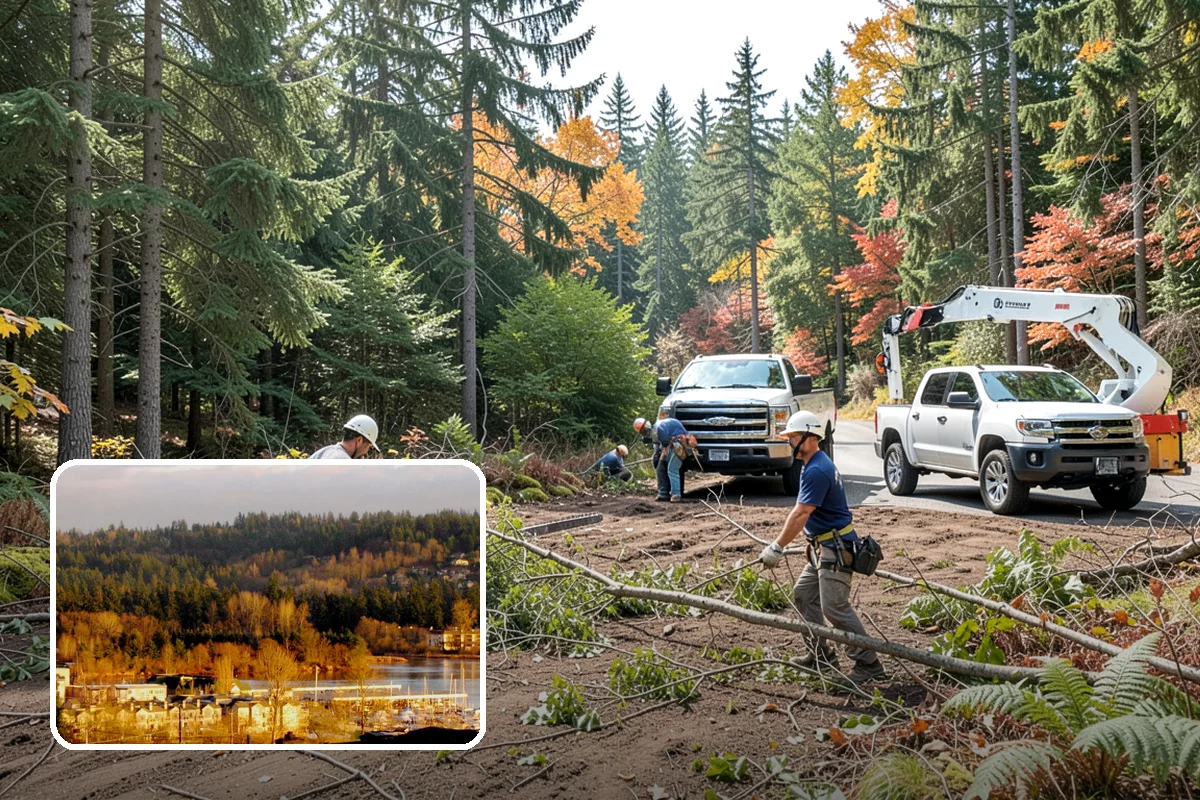
Removal options for tight Kenmore lots
In a confined space, an owner usually chooses between a few approaches. Which one fits depends on the tree, the access, and what is underneath it.
Your options
- Climb and section the tree. A climber takes the tree down in small pieces, working from the top. Each piece is lowered on ropes instead of dropped. This suits trees close to a house or fence.
- Partial removal. Where the issue is one failing leader or limb, removing only that part can be enough. It leaves the rest of the tree standing, so it only fits if the remaining structure is sound.
- Full removal with rigging. Pieces are lowered to a clear spot, and the trunk is taken down in sections. This is the usual choice for a large tree with no safe fall zone.
What local details change
Single-family detached houses make up about 63% of Kenmore's housing, according to Census ACS 2020-2024. On lots like these, trees often stand close to a neighbor's fence or roof, so rigging is often the safer method than felling.
Size matters too. In the city's street-tree inventory, the median trunk diameter is 10.0 in, and 14.0% of trees are 24 in or wider. That inventory covers street trees, not yard trees, so it says nothing about yours. It does show that a wide trunk is not unusual. Measure yours at chest height, because a wider trunk means heavier pieces and slower, more careful rigging.
Check for the wire to your house as well. Puget Sound Energy does not trim the service line, which runs from the PSE pole to your home or meter pole. The homeowner or a private arborist handles it. If a branch crosses that wire, tell us when you call so we can plan around it.
We also check with the city before work starts, since rules on removal can vary. Free estimates are available at 425-484-4442.
Kenmore tree conditions at a glance
| USDA hardiness zone | 9a (8b to 9a across the city) |
|---|---|
| Tree canopy | Among the most heavily treed Puget Sound cities (satellite data) |
| Slopes | Some steep slopes |
| Landslides mapped by WA DNR | 4 |
| Soils | 51% of land has hardpan or another restrictive layer within 40 in; most common series Alderwood |
| High and strong wind episodes, 2005-2025 | 33 in the forecast zone |
| Electric utility | Puget Sound Energy (PSE) |
Tree removal rules in Kenmore
Kenmore’s published rules don’t spell out clearly which removals need city approval. We check with the city before work starts.
Trees near the power line to your house
Puget Sound Energy (PSE): Service line (wire from PSE pole to home or meter pole): PSE does not trim it; homeowner/private arborist trims.
PSE performs a safety disconnection so the homeowner or private tree trimmer/arborist can work; Call at least 5 business days ahead to check crew availability and potential charges.
Safety disconnect: 1-888-321-7779 (5+ business days ahead). Utility page.
Any fee for a disconnect is set by the utility.
Strongest wind events near Kenmore
- Dec 17, 2010: gusts to 72 mph
- Feb 7, 2012: gusts to 70 mph
- Dec 14, 2006: gusts to 68 mph
NOAA Storm Events, forecast zone that includes Kenmore, 2005-2025.
Sources: Daymet daily weather (NASA/ORNL), NOAA Storm Events, USDA plant hardiness map 2023, NRCS soil survey, USGS elevation, WA DNR landslide inventory, USDA Forest Service aerial survey, WSDA, city tree assessments and street-tree inventories, SILVIS Lab, Arbor Day Foundation, and official city and utility pages.
Confined-space Tree Removal Serving Kenmore
Kenmore
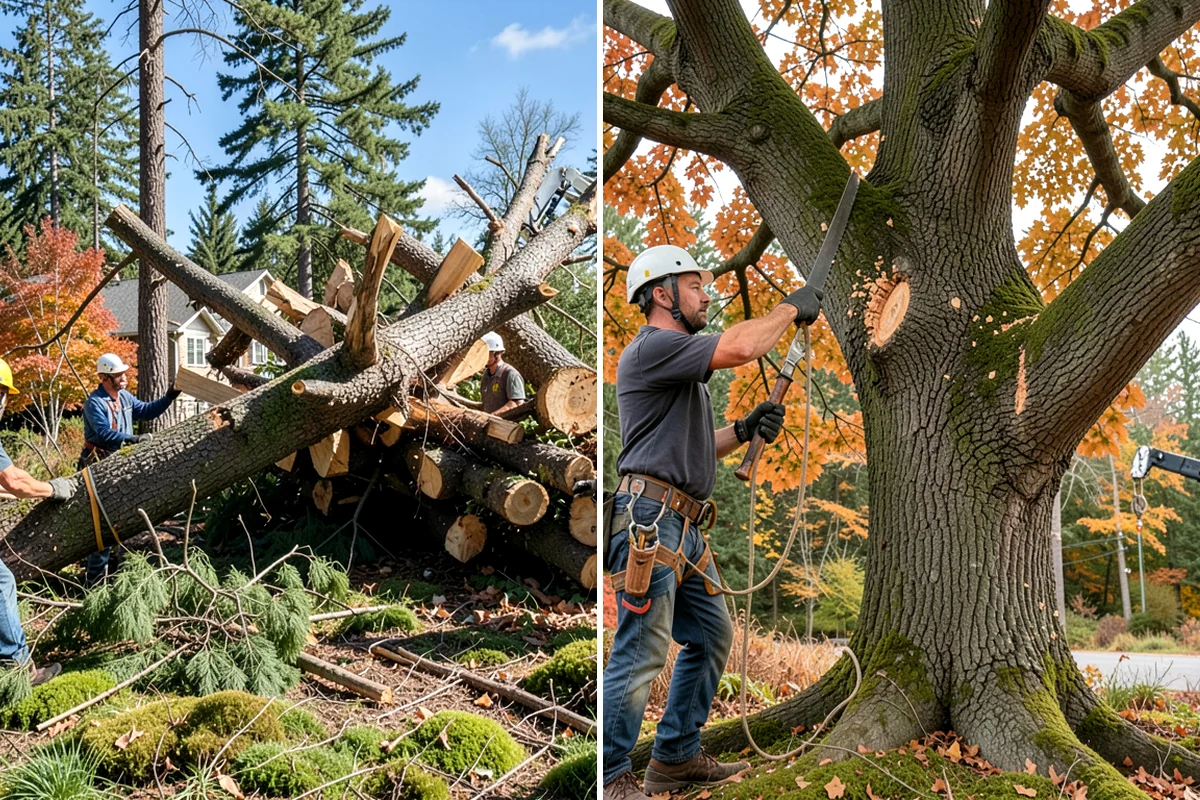

Confined-space tree removal in nearby areas
Also serving Kenmore
- Garden Bed Installation in Kenmoreat Washington Landscaping
- Vegetation Management in Kenmoreat Washington City Services
- Log Bucking in Kenmoreat Washington Firewood