Where Safety Meets Expert Tree Service.

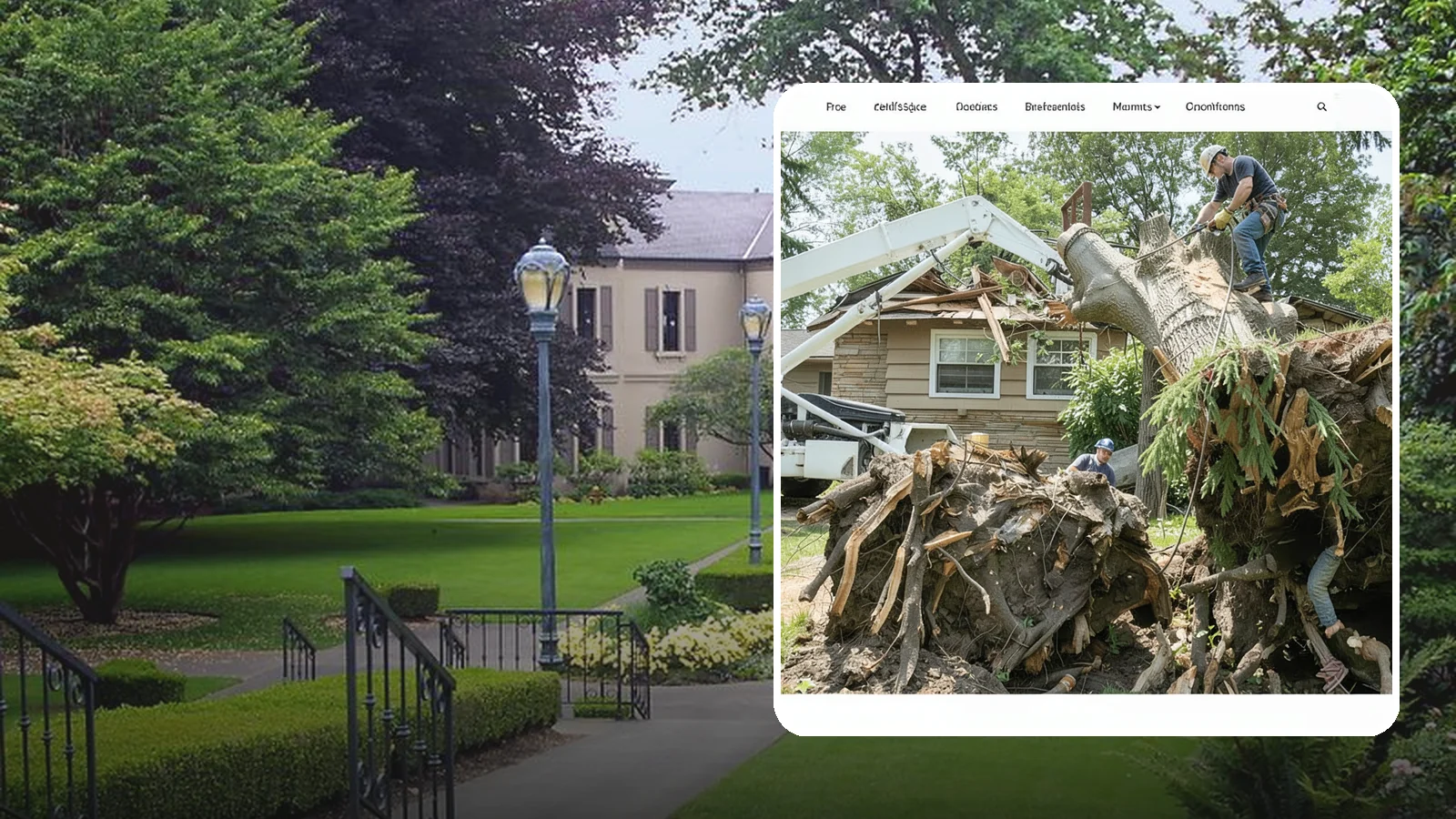
Woodinville Confined-space Tree Removal
The careful dismantling of trees in tight or restricted areas.
Can a tree be removed if there is no room for a crane or a drop zone? Usually yes. Confined-space removal means taking the tree down in sections, often climbed and rigged, so each piece is lowered under control instead of felled whole.
The first step is a site walk. We look at what sits under and around the tree: the house, fences, a patio, neighboring yards and any wires. That shows whether the pieces can be roped down, passed over a roof or carried out through a gate.
About Confined-space Tree Removal in Woodinville
If your property has trees growing very close to buildings or fences where standard removal isn’t possible, our confined-space tree removal service is designed for you. We help homeowners safely clear tight spots without damaging nearby structures or landscaping. This approach ensures that difficult-to-reach trees are handled with care and precision.
What Woodinville Confined-space Tree Removal Includes
Confined-space tree removal involves the careful dismantling of trees in restricted areas where there is little room for controlled felling. Our trained crews follow recognized arboricultural standards to match their methods to your specific tree species, site conditions, and access limitations. This service protects structures, utilities, and landscaping while removing safety hazards and reducing liability on your property.
Woodinville Confined-space Tree Removal Process
The work typically begins with an on-site assessment and hazard evaluation to establish safe drop zones and a perimeter around the job area. We then rig and lower limbs or fell the stem in a controlled sequence before processing the wood and clearing debris from the site. Final cleanup ensures the area is left tidy after all equipment has been removed.
Equipment We Use for Woodinville Confined-space Tree Removal
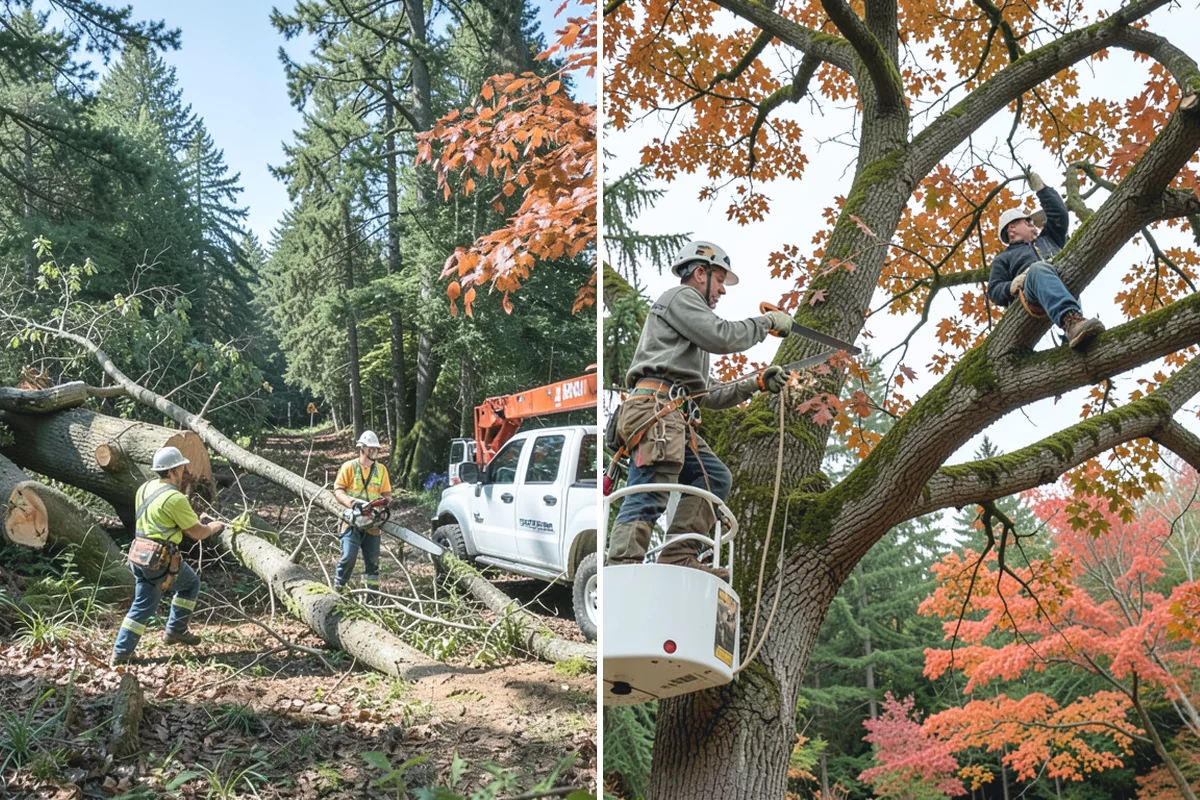
Our crews utilize chainsaws, climbing and rigging gear, and ground protection to navigate tight spaces safely. Depending on the specific conditions of your job site, we may also use a wood chipper or an aerial lift or crane as needed. All team members wear necessary personal protective equipment while operating these tools in confined areas.
Woodinville Confined-space Tree Removal Safety & Best Practices
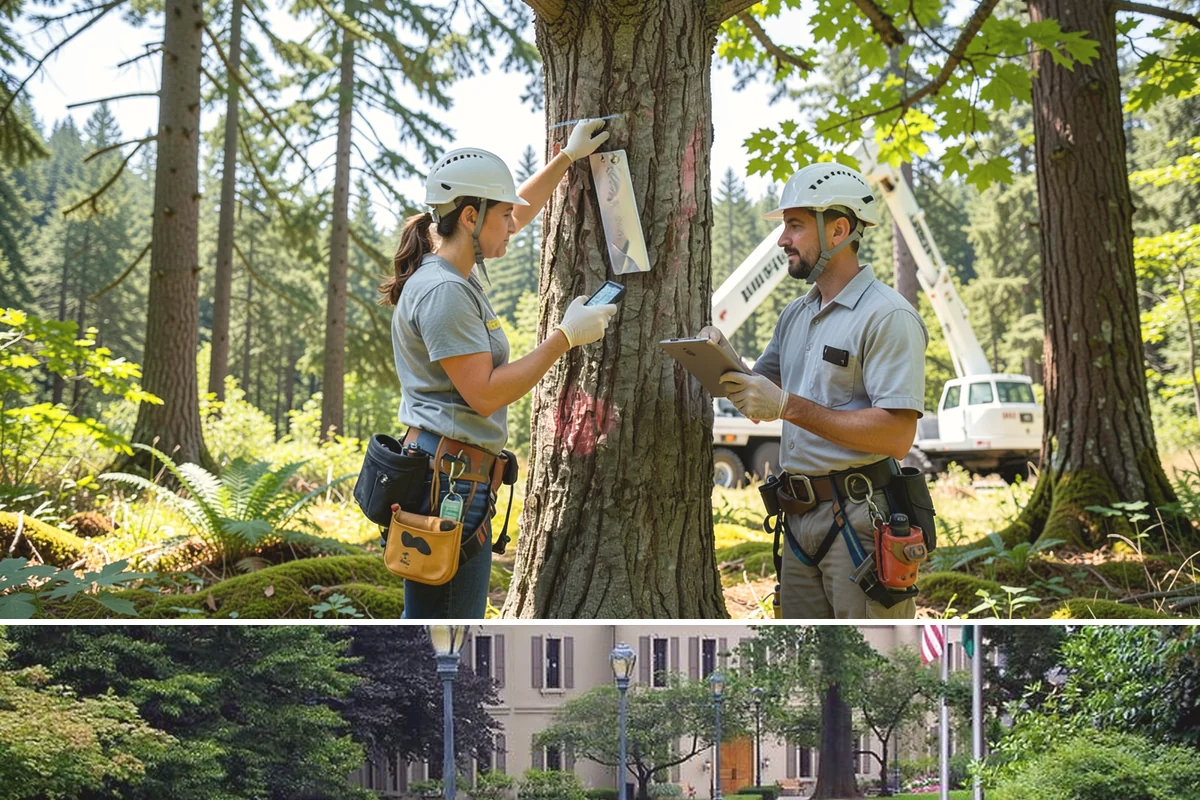
Safety is our priority, so we maintain clear drop zones and controlled fall paths throughout every step of the project. Before starting any work, we identify overhead utility lines to prevent accidents during removal. We also inspect trees for decay and structural defects before climbing and use coordinated ground communication along with proper fall protection gear.
Signs You Need Confined-space Tree Removal in Woodinville
You likely need this service if hidden internal decay or unpredictable lean makes a tree dangerous in its current location. Situations where proximity to structures, fences, or power lines leaves no room for safe felling also indicate the need for our specialized approach. Limited access for standard equipment due to landscaping features is another clear sign that confined-space techniques are required.
What Affects the Cost of Confined-space Tree Removal in Woodinville
The cost of this service is influenced by factors such as tree size and any hidden internal decay present in the trunk or branches. Proximity to structures like buildings and fences, along with limited access for heavy machinery, will also impact the overall price. Additionally, specific debris disposal requirements can affect how much you pay for removal.
Best Time of Year for Woodinville Confined-space Tree Removal
This service can be performed year-round given our local climate conditions. However, we require extra caution during wet seasons when ground conditions may compromise safety perimeters or rigging stability. We adjust our methods to ensure the site remains safe regardless of recent weather patterns.
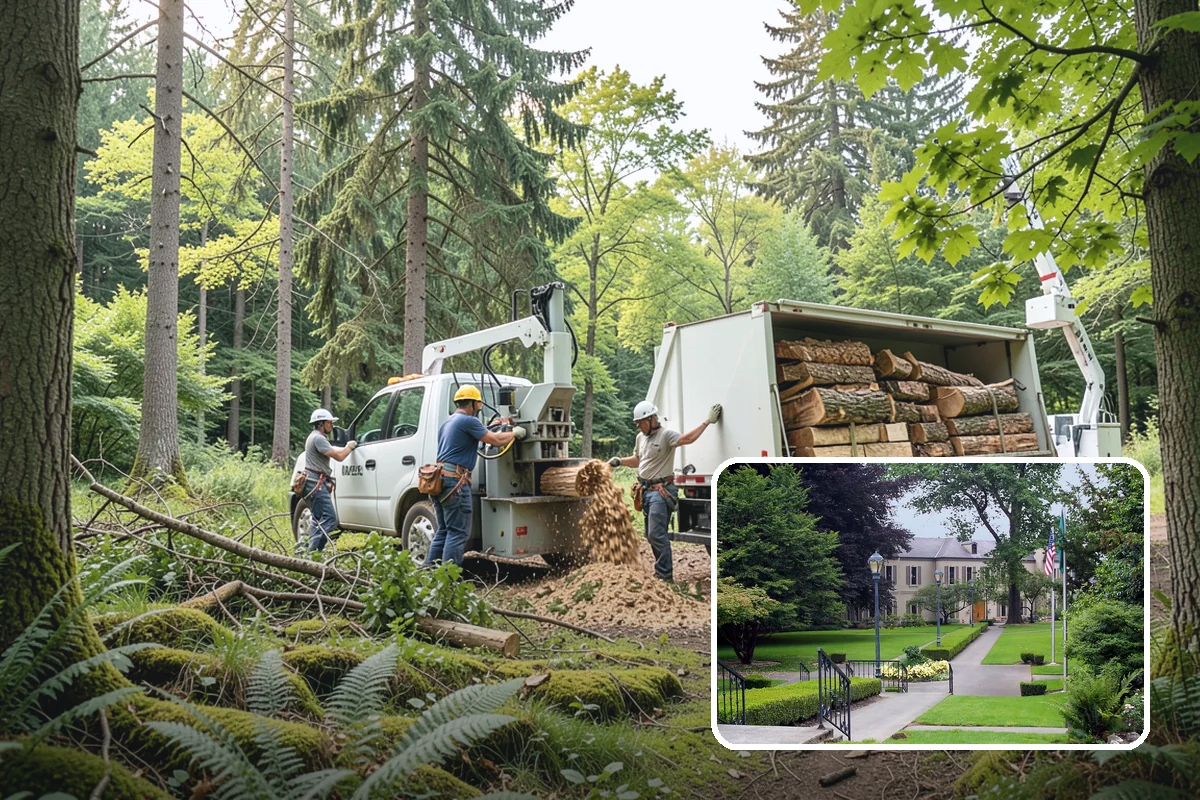
Tight-access tree removal in Woodinville homes
Single-family detached houses make up about 51% of Woodinville's housing, according to the Census ACS for 2020-2024. That is a citywide figure, not a count of trees. It does tell you that many removal jobs here involve a tree standing in a private yard with a house, a fence and a property line close by. Those are the conditions that call for sectional work.
Wires to the house
Puget Sound Energy (PSE) is the electric utility in Woodinville. Its rule for the service line, the wire from the PSE pole to the home or meter pole, is that PSE does not trim it. The homeowner or a private arborist handles the trimming. If a branch or trunk is near that wire, plan for it before the job is scheduled. Do not climb or cut near it yourself. We note where the wire runs during the site walk and plan the cuts around it.
How sectional removal works
The climber works from the top down. Limbs are cut and lowered on ropes, and the trunk is taken in pieces. Rigging points are chosen so the load stays clear of structures. Where a piece cannot be lowered straight down, it may be swung to an open spot. Stumps can be ground afterward if you want the space cleared.
What to check before the visit
A few details help us plan the work:
- Gate width and the path from the tree to the street
- Where the service line attaches to the house
- Structures, fences or plantings within reach of the tree
- Whether the tree is near a property line
Woodinville sits in USDA hardiness zone 8b, with parts of the city ranging from 8b to 9a, per the USDA map from 2023. That mostly matters for what you replant afterward, since it shows which species suit the winter lows. Because tree rules can vary, we check with the city before work starts. Call or text 425-484-4442 for a free estimate.
Woodinville tree conditions at a glance
| USDA hardiness zone | 8b (8b to 9a across the city) |
|---|---|
| Tree canopy | Among the most heavily treed Puget Sound cities (satellite data) |
| Slopes | Some steep slopes |
| Soils | 55% of land has hardpan or another restrictive layer within 40 in; most common series Alderwood |
| High and strong wind episodes, 2005-2025 | 33 in the forecast zone |
| Electric utility | Puget Sound Energy (PSE) |
Tree removal rules in Woodinville
Woodinville’s published rules don’t spell out clearly which removals need city approval. We check with the city before work starts.
Trees near the power line to your house
Puget Sound Energy (PSE): Service line (wire from PSE pole to home or meter pole): PSE does not trim it; homeowner/private arborist trims.
PSE performs a safety disconnection so the homeowner or private tree trimmer/arborist can work; Call at least 5 business days ahead to check crew availability and potential charges.
Safety disconnect: 1-888-321-7779 (5+ business days ahead). Utility page.
Any fee for a disconnect is set by the utility.
Strongest wind events near Woodinville
- Dec 17, 2010: gusts to 72 mph
- Feb 7, 2012: gusts to 70 mph
- Dec 14, 2006: gusts to 68 mph
NOAA Storm Events, forecast zone that includes Woodinville, 2005-2025.
Sources: Daymet daily weather (NASA/ORNL), NOAA Storm Events, USDA plant hardiness map 2023, NRCS soil survey, USGS elevation, WA DNR landslide inventory, USDA Forest Service aerial survey, WSDA, city tree assessments and street-tree inventories, SILVIS Lab, Arbor Day Foundation, and official city and utility pages.
Confined-space Tree Removal Serving Woodinville
Woodinville
Also serving Woodinville
- Pollinator Garden Installation in Woodinvilleat Washington Landscaping
- Hazard Tree Inspections in Woodinvilleat Washington City Services
- On-Site Firewood Milling in Woodinvilleat Washington Firewood