Where Safety Meets Expert Tree Service.

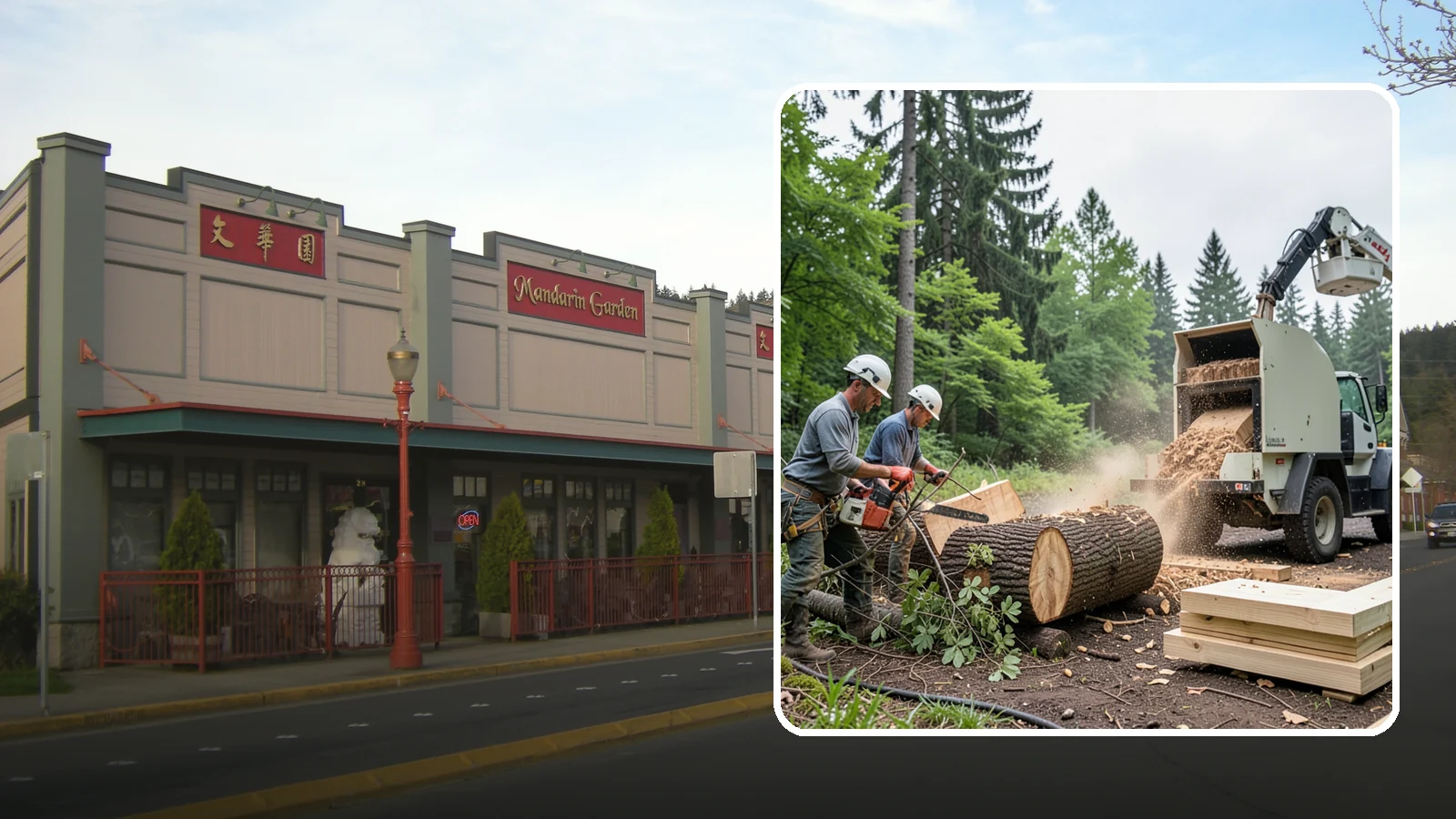
Issaquah Wood Milling
The milling of logs into usable slabs or boards.
Wood milling suits Issaquah owners who have a tree coming down anyway, or a fallen log already on the ground, and would rather get boards, slabs, or beams than a pile of firewood. It fits lots with a large maple, cedar, or Douglas-fir that has to go, and projects that need a mantel, bench, or tabletop.
Not every log is worth milling. Size, straightness, and condition decide that. Below are the main ways to handle a log and what to weigh before you choose.
About Wood Milling in Issaquah
Wood milling gives removed trees a second life by turning logs into usable slabs or boards. This service is perfect for homeowners who want their yard clean while creating valuable lumber from debris we remove together. We help you see the potential in wood that might otherwise be discarded, ensuring nothing goes to waste unnecessarily.
What Issaquah Wood Milling Includes
Our team specializes in milling logs directly on site to produce high-quality slabs and boards suitable for various projects. This process is designed to keep your property tidy by converting debris into products rather than sending everything straight to a landfill. We match our methods carefully to the specific tree species, current site conditions, and available access points at your home.
Issaquah Wood Milling Process
The work begins with sorting material based on type and size before we chip, cut, or mill it as needed for your desired product. Once processed into lumber of the required quality, we either haul away excess waste or deliver finished pieces to you. We always take care to clean up the entire work area so your property is left in better shape than when we arrived.
Equipment We Use for Issaquah Wood Milling
To complete this job safely and efficiently, our crews use wood chippers, chainsaws, and specialized milling equipment as required for each log. Loaders and hauling vehicles are brought along to manage materials throughout the site, ensuring smooth movement of heavy items. Every crew member also wears necessary personal protective gear while operating these powerful tools around your property.
Issaquah Wood Milling Safety & Best Practices
We strictly keep hands and bystanders clear from feed equipment during all operations involving our machinery. Loads are secured properly before transport to prevent shifting or accidents on the way home, protecting both people and cargo. Crew members wear eye and hearing protection at all times while handling logs with proper technique and using appropriate lifting equipment.
Signs You Need Wood Milling in Issaquah
You may need wood milling when you have removed trees that could become lumber instead of just being chipped into mulch. If your project requires specific sizes or qualities of boards, this service allows us to tailor the output directly from the fallen timber we remove. Situations where embedded metal debris exists in logs also signal a need for careful sorting and processing before milling can begin.
What Affects the Cost of Wood Milling in Issaquah
The final price is influenced by factors such as log size and moisture content which affect product quality standards. Any embedded metal or other debris found inside the logs will require additional removal steps that impact overall costs. Equipment access limits at your specific job site are also considered when determining how much work we can perform efficiently.
Best Time of Year for Issaquah Wood Milling
Wood milling works best during dry seasons in our region to ensure logs have low enough moisture levels for high-quality lumber production. Attempting this service too early or late may result in wood that is not suitable for making fine boards or slabs due to natural water content changes. Planning your project around these seasonal conditions helps us deliver the highest quality finished products from every tree we remove.
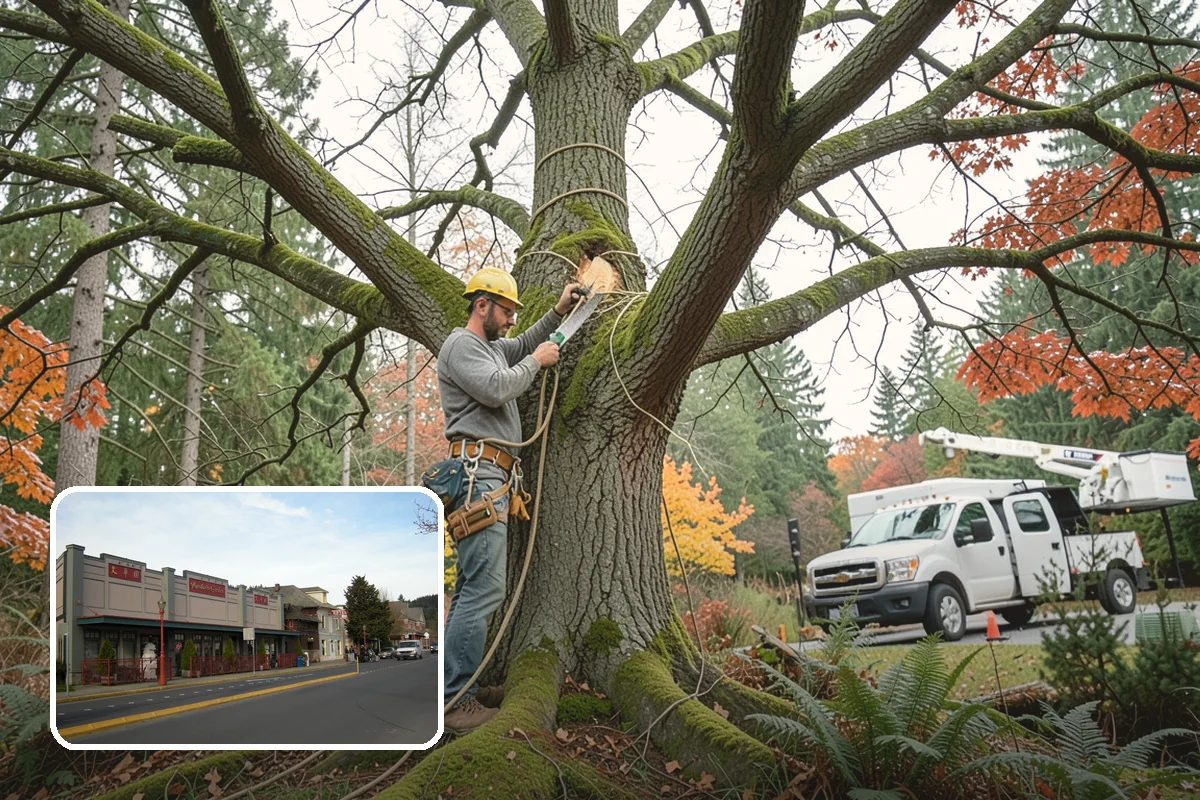
Milling options for Issaquah logs and what favors each
Once a tree is down, you have a few paths. The right one depends on the species, the log's condition, and what you want to build.
Your main choices
- Slabs: Cut lengthwise with the natural edge left on. Good for tables, benches, and mantels. Wide logs of bigleaf maple or western redcedar suit this.
- Dimensional lumber: Squared boards and beams for framing, shelving, or garden beds. Straight Douglas-fir logs are the usual candidates.
- Chip or firewood instead: Better for logs with rot, metal, or heavy decay that would waste the milling effort.
What local conditions change
A federal aerial survey by the USDA Forest Service and WA DNR (2021-2025) mapped damage in forest within 10 km of Issaquah. These are forest lands, not yard trees, so they do not tell you about your tree. Still, the largest mapped category was decline with no single cause identified, about 7,786 acres, in bigleaf maple and western redcedar. Dieback like that can mean stained or hollow wood. Those are two species people often want milled, so inspect the log's cross-section before committing to a large slab.
The same survey mapped Douglas-fir damage from bears on about 2,827 acres. Bears strip bark and feed on the wood beneath. If a Douglas-fir shows old scarring, we look at how deep the damage runs before planning cuts.
Issaquah is also among the most heavily treed Puget Sound cities we compared, based on satellite canopy data (USFS/NLCD 2025). That means plenty of mature trees may come down on residential lots, so it makes sense to plan for milling before removal rather than after.
Before the saw starts
Planning matters. Logs should be cut to length at removal, kept off the ground, and milled soon, since sapwood stains and checks as it sits. Milled lumber then needs stacking and air drying, which takes time. If the tree is being removed, we check Issaquah's rules with the city before work begins. For a free estimate, call or text 425-484-4442.
Issaquah tree conditions at a glance
| Tree canopy | Among the most heavily treed Puget Sound cities (satellite data) |
|---|---|
| Land under dense tree cover (50%+ canopy) | 41% |
| Rain and snow falling October to April | 81% of the year’s total |
| Days with 0.1 in or more of rain | 118 a year |
Tree health near Issaquah
- Decline, cause not identified7,786 ac
- Bears2,827 ac
- Heat1,132 ac
Forest damage mapped from the air within 10 km of Issaquah, 2021-2025 (USDA Forest Service and WA DNR). This covers forest land, not street or yard trees. “Decline, cause not identified” is dieback with no single cause found.
Sources: Daymet daily weather (NASA/ORNL), NOAA Storm Events, USDA plant hardiness map 2023, NRCS soil survey, USGS elevation, WA DNR landslide inventory, USDA Forest Service aerial survey, WSDA, city tree assessments and street-tree inventories, SILVIS Lab, Arbor Day Foundation, and official city and utility pages.
Wood Milling Serving Issaquah
Issaquah

Wood milling in nearby areas
Also serving Issaquah
- Kiln-Dried Firewood in Issaquahat Washington Firewood
- Mulch Replacement in Issaquahat Washington Landscaping