Where Safety Meets Expert Tree Service.

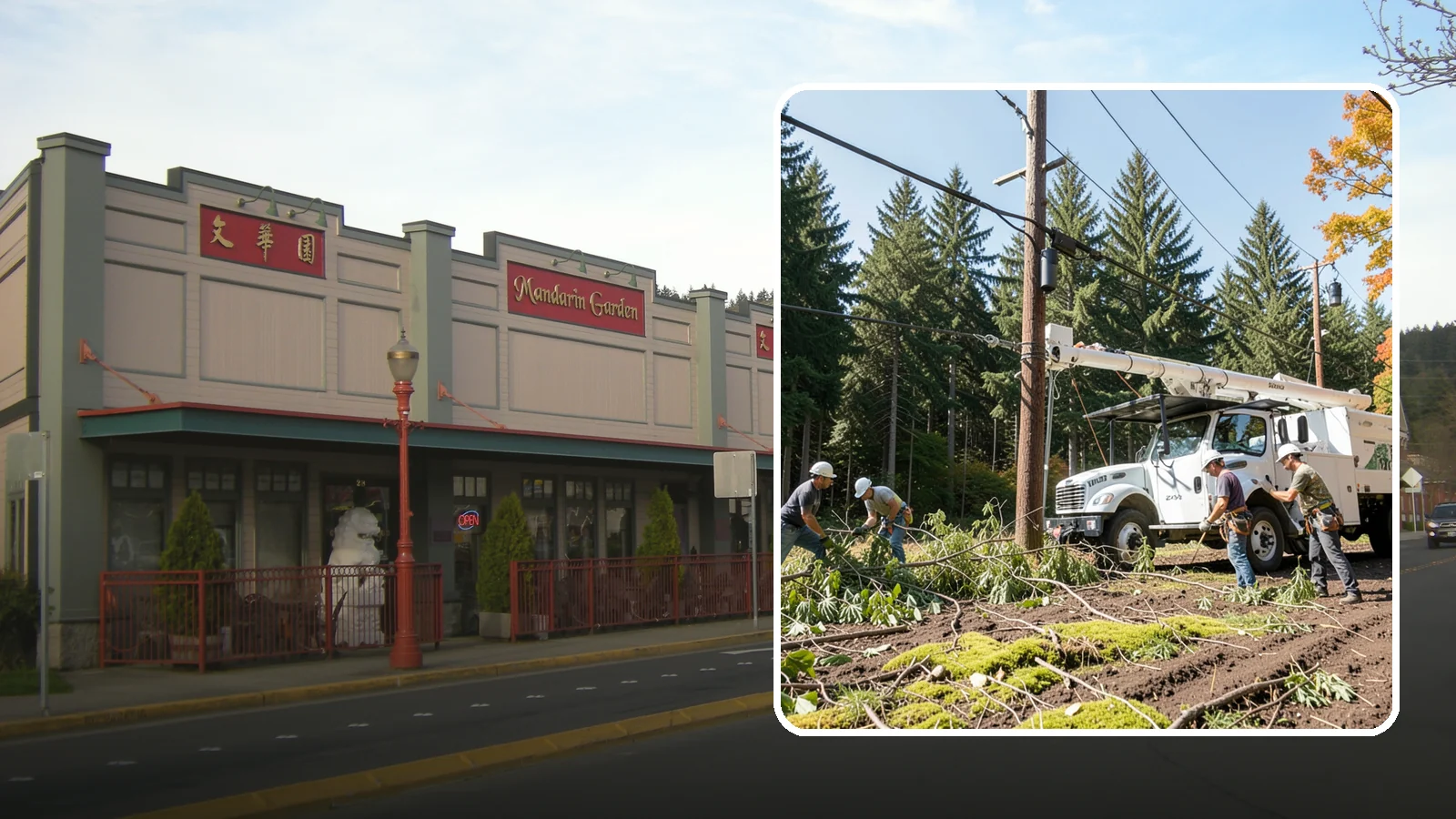
Issaquah Utility Line Clearance Pruning
Pruning to maintain safe clearance between trees and utility lines.
You may notice branches resting on the wire that runs from the pole to your house, or limbs that brush it when the wind picks up. Maybe the wire sags lower than it used to, or you hear scraping against the siding or meter mast.
Wood and live wire do not mix. Before anyone climbs, it helps to know which wire it is and who is responsible for the trees around it. That answer decides who can trim and how soon the work can happen.
About Utility Line Clearance Pruning in Issaquah
Utility line clearance pruning helps keep your trees safe from overhead power lines while protecting your home’s electrical infrastructure. This essential service is ideal for homeowners who want to reduce the risk of outages or accidental contact near their property. We work with you to maintain a healthy distance between branches and utility wires without harming your landscape.
What Issaquah Utility Line Clearance Pruning Includes
This pruning category focuses specifically on maintaining safe clearance distances between trees and existing utility lines. The goal is to lower the chance of branch failure touching overhead cables, which can lead to dangerous outages or contact risks. Our approach matches specific cutting methods to your tree species and current site conditions for effective results.
Issaquah Utility Line Clearance Pruning Process
We begin by assessing the overall canopy condition and defining clear pruning objectives for each tree on your property. Trained crews select precise cuts suited to the season and species, ensuring clean incisions that avoid over-pruning or stress. After making these strategic cuts, we carefully lower branches, process the wood, and thoroughly clean up the work area around you.
Equipment We Use for Issaquah Utility Line Clearance Pruning
Our teams utilize a range of tools including hand saws, pole saws, chainsaws, and various climbing and rigging gear to reach difficult spots. When necessary, we deploy aerial lifts to access higher limbs safely while using personal protective equipment throughout the job. A wood chipper is also used on-site to efficiently manage and dispose of cut material from your property.
Issaquah Utility Line Clearance Pruning Safety & Best Practices
We strictly follow recognized pruning standards to avoid making harmful cuts that could weaken a tree’s structure or health. Our crews watch closely for unstable limbs and overhead lines, using proper fall protection whenever anyone works aloft. By limiting removal to healthy amounts of live tissue, we ensure the work supports long-term vigor rather than causing stress.
Signs You Need Utility Line Clearance Pruning in Issaquah
You may need this service if you notice branches growing dangerously close to power lines or structures that interfere with sightlines. Deadwood and weak unions near utility wires are also indicators that clearance pruning is required to prevent future hazards. If your tree species has specific timing sensitivities, addressing these issues early helps avoid interference with essential infrastructure.
What Affects the Cost of Utility Line Clearance Pruning in Issaquah
The final cost depends on factors like the specific type of trees you have and how complex their canopy structure becomes during cutting. Site access conditions play a major role in pricing, as difficult terrain requires specialized techniques to reach certain branches. Additionally, costs are influenced by the amount of material that needs disposal after we complete our pruning work.
Best Time of Year for Issaquah Utility Line Clearance Pruning
Work should be scheduled according to recognized arboricultural standards and matched to the specific seasonal timing sensitivities for your tree species. In our local Puget Sound climate, adhering to these natural cycles ensures trees heal properly without unnecessary stress from improper cuts. Planning around these windows helps maintain both the health of your landscape and safety near overhead lines year-round.
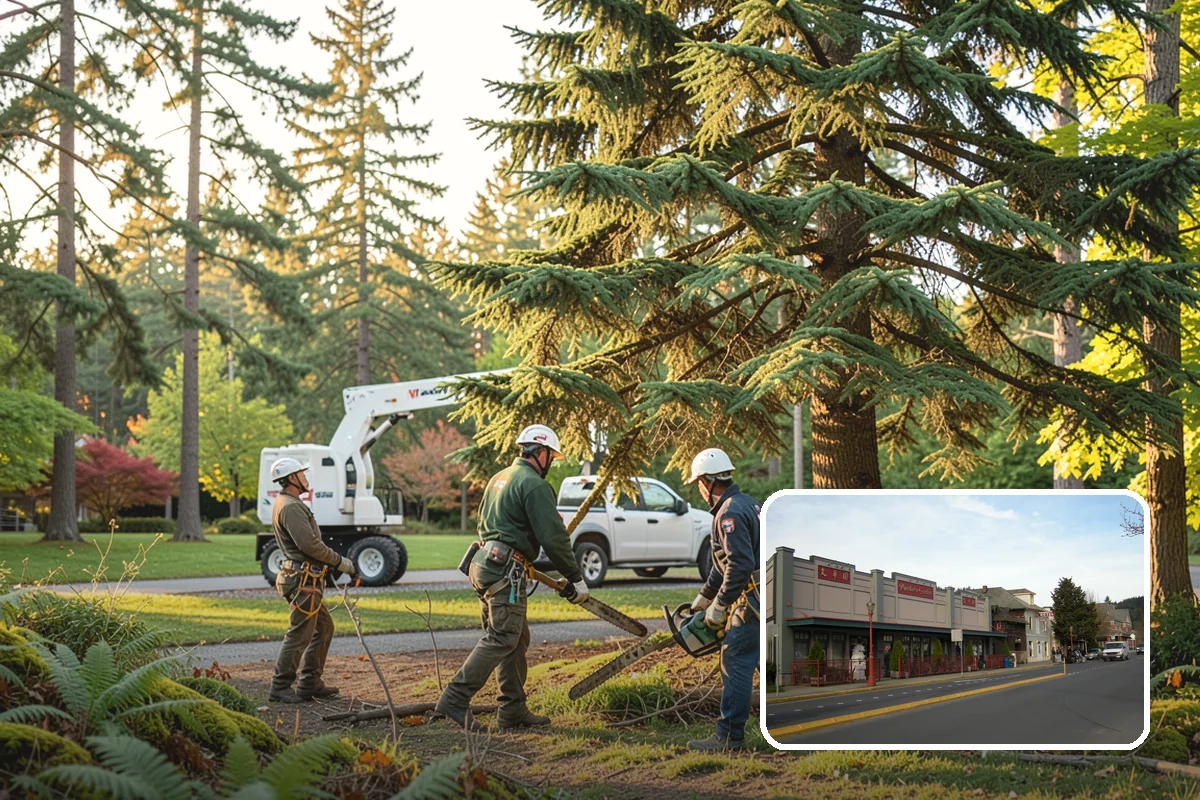
Service line tree pruning in Issaquah: who does what
Start by finding the wire. The service line is the one running from a Puget Sound Energy (PSE) pole to your home or to a meter pole. PSE's stated rule is that it does not trim this wire. The homeowner or a private arborist handles it. Lines along the street are a different matter, and we would not assume they follow the same rule.
Because the work is on your side of the responsibility line, planning matters. PSE performs a safety disconnection so a homeowner or private tree trimmer can work near the service line. The utility asks you to call at least 5 business days ahead to check crew availability and possible charges. Any fee is set by the utility, not by us. So call early, before a limb becomes urgent, and build that lead time into your schedule.
Local conditions make the timing worth thinking about. Satellite tree-canopy data (USFS/NLCD 2025) puts Issaquah among the most heavily treed Puget Sound cities we compared. That is a citywide picture, not a statement about your yard, but it is a reminder that many properties have trees growing near wires. Wind adds to it. The forecast zone that includes Issaquah recorded 33 high and strong wind episodes from 2005 to 2025. Branches that only touch a wire on a calm day can swing, rub and load it in those conditions.
The pruning itself follows standard practice, in line with ISA and ANSI A300 guidance. We identify the branches that are in contact or will grow into the line, then make clean cuts back to a suitable branch or the trunk collar. We do not top trees, since that leaves weak regrowth that returns to the wire faster. Where a tree is too close to prune well, we will talk through options, including removal.
If a limb is already on the wire, stay well away and call PSE. For planned work, call or text 425-484-4442 and we will look at the line with you. We also check with the city before work starts if any tree rule might apply.
Issaquah tree conditions at a glance
| Electric utility | Puget Sound Energy (PSE) |
|---|---|
| Tree canopy | Among the most heavily treed Puget Sound cities (satellite data) |
| Land under dense tree cover (50%+ canopy) | 41% |
| High and strong wind episodes, 2005-2025 | 33 in the forecast zone |
| Ice storm episodes, 2005-2025 | 2 in the forecast zone |
Trees near the power line to your house
Puget Sound Energy (PSE): Service line (wire from PSE pole to home or meter pole): PSE does not trim it; homeowner/private arborist trims.
PSE performs a safety disconnection so the homeowner or private tree trimmer/arborist can work; Call at least 5 business days ahead to check crew availability and potential charges.
Safety disconnect: 1-888-321-7779 (5+ business days ahead). Utility page.
Any fee for a disconnect is set by the utility.
Sources: Daymet daily weather (NASA/ORNL), NOAA Storm Events, USDA plant hardiness map 2023, NRCS soil survey, USGS elevation, WA DNR landslide inventory, USDA Forest Service aerial survey, WSDA, city tree assessments and street-tree inventories, SILVIS Lab, Arbor Day Foundation, and official city and utility pages.
Utility Line Clearance Pruning Serving Issaquah
Issaquah
Utility line clearance pruning in nearby areas
Also serving Issaquah
- Maple Tree Pruning in Issaquahat Washington Landscaping
- Annual Roof Maintenance Program in Issaquahat Washington Roofing
- Trail Clearing in Issaquahat Washington City Services