Where Safety Meets Expert Tree Service.

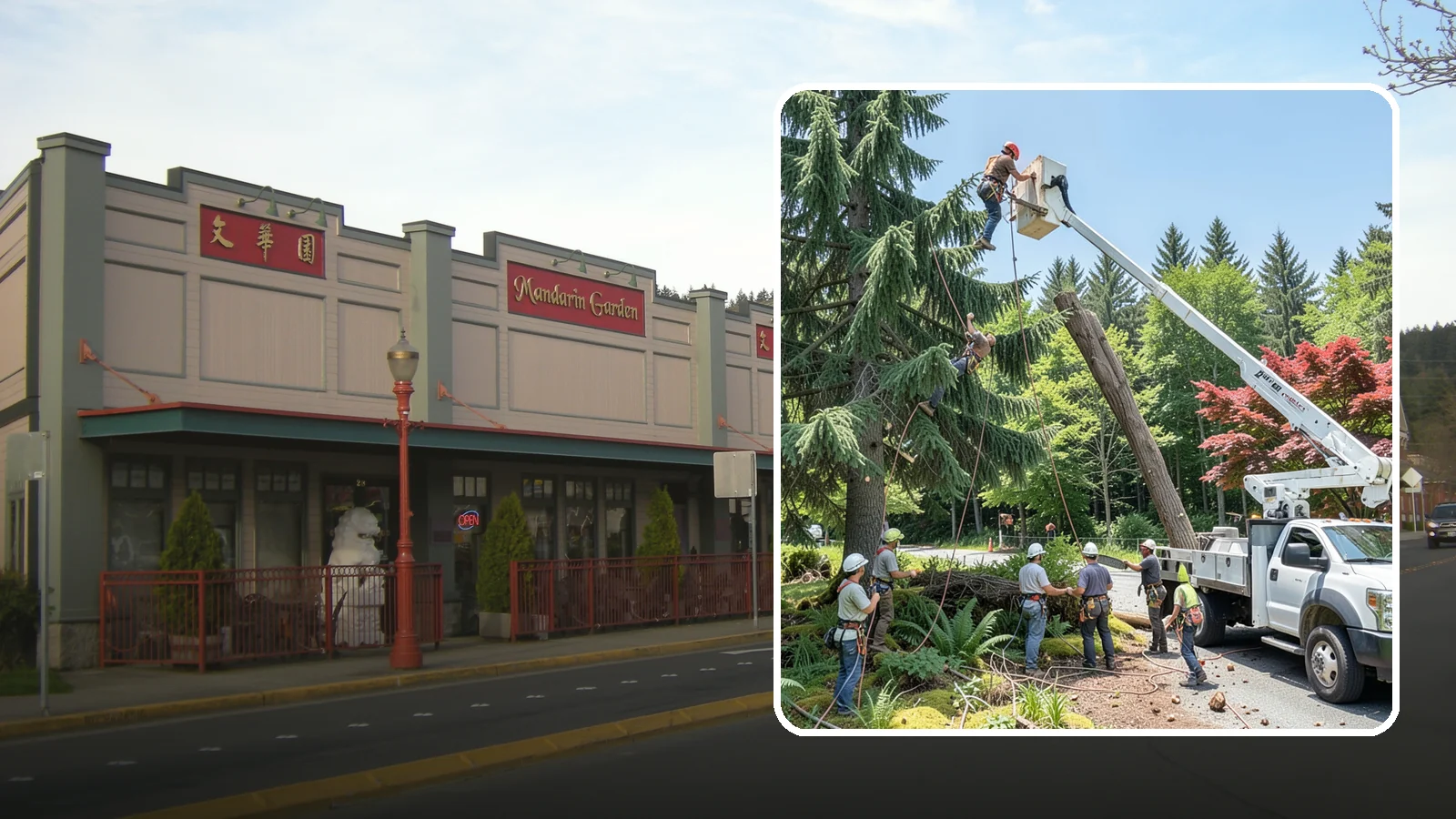
Issaquah Tree Dismantling / Sectional Removal
The piece-by-piece dismantling of a tree from the top down.
You may be looking at a tree that is too close to the house, a fence, or a wire to fall in one piece. Maybe it is dead at the top, leaning, or crowded by a deck. When a tree cannot be felled whole, it is taken down in sections, from the top, one piece at a time.
This page explains how sectional removal works and what the ground and the power wire at an Issaquah property can change about the job. It should help you decide what to ask before anyone climbs.
About Tree Dismantling / Sectional Removal in Issaquah
When a tree cannot be safely lowered in one piece due to nearby structures or power lines, our sectional removal team can help clear the area without risk. This specialized approach is perfect for homeowners who need precise control over how their property looks after work is complete. We focus on keeping your home and landscape safe while removing unwanted trees from difficult sites.
What Issaquah Tree Dismantling / Sectional Removal Includes
Tree dismantling involves taking apart a tree piece by piece, starting from the top down rather than felling it all at once. Our trained crews follow recognized arboricultural standards to match their methods with the specific species of tree and conditions on your site. This process effectively removes safety hazards, frees up usable space, and helps prevent pests or disease from spreading to healthy neighbors.
Issaquah Tree Dismantling / Sectional Removal Process
We begin every job with an on-site assessment to identify potential dangers and establish clear drop zones around your property. Once safe boundaries are set, our crew will rig the tree to lower limbs carefully before removing the stem in a controlled sequence. After all wood is processed and debris hauled away, we finish by clearing the site so you can enjoy your yard again.
Equipment We Use for Issaquah Tree Dismantling / Sectional Removal
To handle these complex jobs safely, we use chainsaws along with specialized climbing and rigging gear designed for precision work. Depending on access needs at your location, an aerial lift or crane may be brought in to assist with lowering heavy sections. We also utilize wood chippers for processing the timber and ground protection equipment to keep your lawn intact during operations.
Issaquah Tree Dismantling / Sectional Removal Safety & Best Practices
Your safety is our priority, so we always identify overhead utility lines before starting any work on a tree near power infrastructure. Our team maintains strict control over drop zones and fall paths while using personal protective equipment throughout the entire project. We also inspect every tree for hidden decay or structural defects before climbing to ensure no one gets hurt during removal.
Signs You Need Tree Dismantling / Sectional Removal in Issaquah
You likely need this service if you have a large tree leaning unpredictably toward your house, driveway, or favorite seating area. Situations where limited access prevents standard equipment from reaching the trunk often require us to dismantle the tree section by section. If hidden internal decay makes a single fall dangerous for people below, our sectional method provides the necessary caution and control.
What Affects the Cost of Tree Dismantling / Sectional Removal in Issaquah
The final price depends on factors such as the overall size of the tree and how difficult it is to access your property with equipment. Trees located very close to structures will require additional rigging gear, which influences the total cost of the project. Disposal requirements for the wood also play a role in determining what you pay for this essential service.
Best Time of Year for Issaquah Tree Dismantling / Sectional Removal
While we can work year-round given our local climate conditions, extra precautions are taken during wet seasons when hidden decay might be more likely to cause issues. Ice formation on branches is another time that requires us to take additional safety steps before beginning any dismantling work. Planning ahead ensures your team can proceed efficiently while maintaining the highest standards of care for your property.
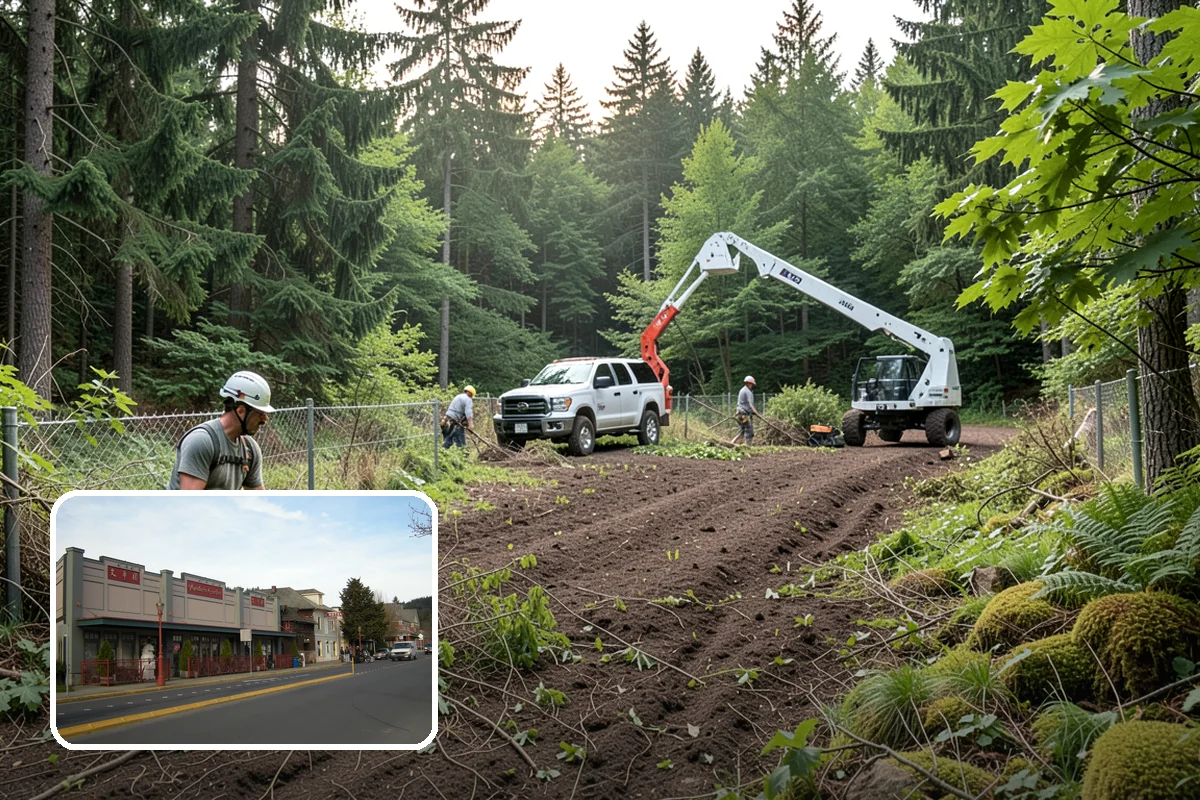
Sectional tree removal on Issaquah's slopes and near service lines
Sectional removal exists because of limited space. A climber works up the tree, cuts off limbs and then the trunk in manageable lengths, and controls each piece with rigging so it does not drop onto a roof, a yard, or a wire. Pieces are lowered on ropes or set down in a clear area. The stump is usually left unless grinding is arranged separately.
Steep ground matters here. USGS elevation data shows Issaquah has a lot of steep ground compared with other Puget Sound cities. On a slope, cut sections can roll or slide, and the footing for the crew and any equipment is poorer. A plan for a sloped lot often means choosing where pieces will land, roping them down, and limiting what is staged below the tree. When we look at a tree, we check the grade around it, not just the tree itself.
The power wire is the second thing to settle. In Issaquah the electric utility is Puget Sound Energy. For the service line, the wire from a PSE pole to your home or meter pole, PSE does not trim it. Trimming it is the homeowner's job, done by a private arborist. If a tree you want removed has limbs near that wire, the job has to be planned around it before cutting starts. Do not try to move or push the wire yourself, and call us if you are unsure whose wire it is.
The USDA lists Issaquah in plant hardiness zone 8b, with parts of the city from 8b to 9a (USDA map, 2023). That is a winter-cold rating, not a measure of tree health, so it will not tell you whether a given tree should come down. What it does tell you is the range of conditions trees here are growing in, which is one reason an on-site look beats a guess.
Before work, we also check with the city about any removal rules that could apply to your tree, since requirements are not always clear from the street. Call or text 425-484-4442 for a free estimate, and have an ISA Certified Arborist assess the tree and the site.
Issaquah tree conditions at a glance
| USDA hardiness zone | 8b (8b to 9a across the city) |
|---|---|
| Tree canopy | Among the most heavily treed Puget Sound cities (satellite data) |
| Slopes | More steep ground than most Puget Sound cities |
| Landslides mapped by WA DNR | 39 |
| Soils | 45% of land has hardpan or another restrictive layer within 40 in; most common series Alderwood; 33% well drained |
| High and strong wind episodes, 2005-2025 | 33 in the forecast zone |
| Electric utility | Puget Sound Energy (PSE) |
Tree removal rules in Issaquah
A Tree Permit is required to remove significant trees; the only exemptions are removal of nonsignificant trees not otherwise protected, pruning that is not 'excessive', public agency/utility work in ROW/easements, and mineral extraction. Each removal must meet approval criteria in IMC 18.812.050 (e.g., nuisance trees, replacing dead significant trees, dying or diseased trees with qualified arborist recommendations).
Regulated size: 6 in.+ DBH, or alder/cottonwood 8 in.+ DBH, excluding King County Noxious Weed List species (per search-index text of city tree-code document.
Official city source. Rules change; we confirm with the city before work starts.
Trees near the power line to your house
Puget Sound Energy (PSE): Service line (wire from PSE pole to home or meter pole): PSE does not trim it; homeowner/private arborist trims.
PSE performs a safety disconnection so the homeowner or private tree trimmer/arborist can work; Call at least 5 business days ahead to check crew availability and potential charges.
Safety disconnect: 1-888-321-7779 (5+ business days ahead). Utility page.
Any fee for a disconnect is set by the utility.
Strongest wind events near Issaquah
- Dec 17, 2010: gusts to 72 mph
- Feb 7, 2012: gusts to 70 mph
- Dec 14, 2006: gusts to 68 mph
NOAA Storm Events, forecast zone that includes Issaquah, 2005-2025.
Sources: Daymet daily weather (NASA/ORNL), NOAA Storm Events, USDA plant hardiness map 2023, NRCS soil survey, USGS elevation, WA DNR landslide inventory, USDA Forest Service aerial survey, WSDA, city tree assessments and street-tree inventories, SILVIS Lab, Arbor Day Foundation, and official city and utility pages.
Tree Dismantling / Sectional Removal Serving Issaquah
Issaquah
Tree dismantling / sectional removal in nearby areas
Also serving Issaquah
- Seasonal Color Rotation in Issaquahat Washington Landscaping
- Brush Clearing in Issaquahat Washington City Services
- Log Bucking in Issaquahat Washington Firewood