Where Safety Meets Expert Tree Service.

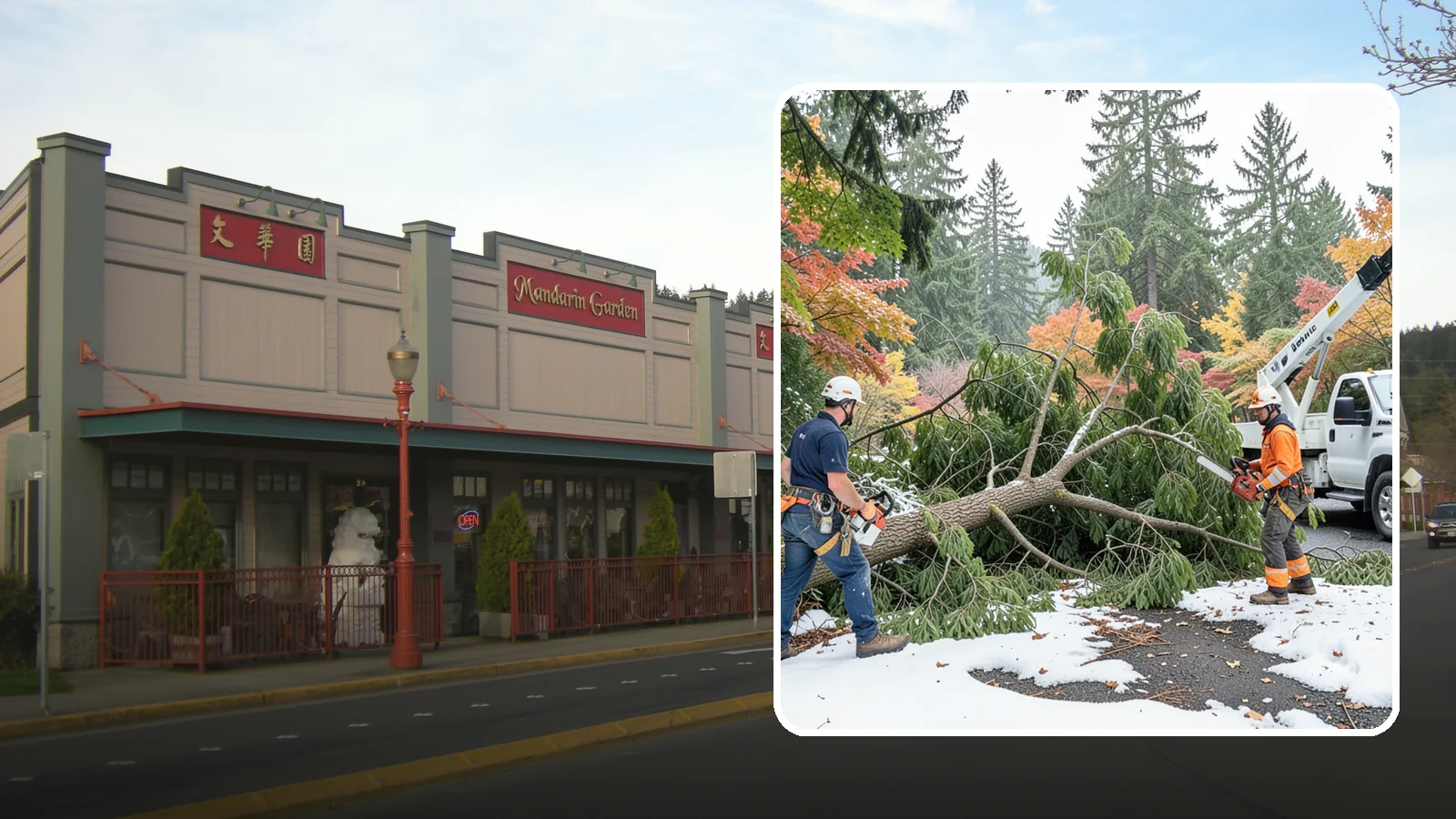
Issaquah Snow And Ice Damage Cleanup
The cleanup of trees damaged by snow and ice loading.
Is that cracked limb safe to leave until the snow melts? Often it is not. A branch that has split but still hangs can drop without warning, so keep people, cars and walkways out from under it and photograph the damage from the ground.
Once the weather settles, look at how each tree broke. A clean tear on a small branch is a different job from a split trunk fork or a leaning tree with lifted soil. Sorting that out first tells you what can wait and what needs attention soon.
About Snow And Ice Damage Cleanup in Issaquah
When heavy snow or ice weighs down your trees, our team is ready to help you recover quickly and safely. We specialize in clearing away the damage caused by winter storms so you can regain full access to your property without delay. Our goal is to restore peace of mind while ensuring that any remaining risks are properly managed.
What Issaquah Snow And Ice Damage Cleanup Includes
This service focuses on relieving tension from loaded limbs and removing branches or trees that have failed after a storm. We work carefully to clear debris efficiently, which helps reduce the chance of secondary failures during cleanup operations. Every job is tailored to match your specific tree species, site conditions, and available access points for safe removal.
Issaquah Snow And Ice Damage Cleanup Process
Our trained crews begin by assessing damage and addressing immediate hazards before making your area secure again. Once safety is established, we remove hanging or broken limbs as well as any downed material from the landscape. We then process and haul away all debris, documenting the extent of the damage if needed for insurance purposes later on.
Equipment We Use for Issaquah Snow And Ice Damage Cleanup
To handle these challenging conditions, we use chainsaws along with specialized rigging gear to control heavy loads safely. Depending on your specific site needs, an aerial lift or crane may be brought in to reach difficult branches without causing further harm. We also utilize professional chippers and hauling equipment to manage the volume of debris generated by storm cleanup efforts.
Issaquah Snow And Ice Damage Cleanup Safety & Best Practices
Storm-damaged trees are often unstable and under significant load, so we treat every situation with extra caution during removal. Our crews stay alert for downed or hidden utility lines that could pose a danger if not identified first. We release tension carefully on bent or pinned material while keeping bystanders clear to ensure everyone remains safe throughout the operation.
Signs You Need Snow And Ice Damage Cleanup in Issaquah
You likely need this service when you see trees under stored tension, such as limbs bowing heavily from accumulated snow and ice. Other warning signs include hidden cracks in branches that have partially failed or downed power lines blocking your driveway. If limited access makes it hard to move around safely after a storm, our team can help clear the path for emergency vehicles or daily use.
What Affects the Cost of Snow And Ice Damage Cleanup in Issaquah
The final cost is influenced by factors such as tree species and how difficult the site conditions are following a severe weather event. Access limitations caused by fallen debris or snow accumulation will also impact the time required to complete your cleanup project. Additionally, the total volume of debris that needs processing and hauling plays a major role in determining the overall price for this work.
Best Time of Year for Issaquah Snow And Ice Damage Cleanup
This service is performed during winter months specifically after snow and ice loading events have occurred on your property. We wait until immediate hazards are addressed before we begin relieving tension on limbs to prevent further damage or collapse. Scheduling this cleanup promptly helps you recover from severe weather while minimizing the risks associated with unstable trees in cold conditions.

Snow and ice damage in Issaquah: what to expect and when to act
Snow here is modest, but it still breaks trees
Issaquah averages 7.8 inches of snow per season, and its elevation is about 61 feet. That is not a heavy-snow location, so many yards go several winters with little to clean up. When snow does come, wet, heavy accumulation on branches that are not used to the load can cause breakage. Check the places where limbs attach, since those are the usual failure points.
Ice storms are rare, freeze-thaw is not
The forecast zone that includes Issaquah had 2 ice storm episodes between 2005 and 2025. Ice adds weight fast, so damage after one of those events can be widespread and uneven. Separately, Daymet climate data shows about 33 days a year in Issaquah that freeze at night and thaw by day. Repeated freezing and thawing can open up cracks in already damaged wood and bark. A wound you see in winter may look worse a few weeks later, so recheck it.
What cleanup usually involves
Standard practice, in line with ANSI A300 pruning guidance, is to remove broken or hanging limbs and cut back to the branch collar or a suitable lateral rather than leaving stubs. Jagged tears are trimmed so the wound can seal as well as the tree allows. We do not top trees to fix storm damage, because it creates weak regrowth.
- Hanging or split limbs over a house, driveway or play area
- Cracks at a trunk fork or a trunk that has shifted
- Soil heaved up at the base of a leaning tree
- Branches resting on power lines, which you should leave to the utility
If removal of a whole tree seems likely, we check with the city before work starts, since rules can apply. For an assessment of what is salvageable, call or text 425-484-4442 for a free estimate.
Issaquah tree conditions at a glance
| High and strong wind episodes, 2005-2025 | 33 in the forecast zone |
|---|---|
| Ice storm episodes, 2005-2025 | 2 in the forecast zone |
| Average snowfall | 7.8 in a season |
| Soils | 45% of land has hardpan or another restrictive layer within 40 in; most common series Alderwood; 33% well drained |
| Rain and snow falling October to April | 81% of the year’s total |
| Electric utility | Puget Sound Energy (PSE) |
Tree removal rules in Issaquah
A Tree Permit is required to remove significant trees; the only exemptions are removal of nonsignificant trees not otherwise protected, pruning that is not 'excessive', public agency/utility work in ROW/easements, and mineral extraction. Each removal must meet approval criteria in IMC 18.812.050 (e.g., nuisance trees, replacing dead significant trees, dying or diseased trees with qualified arborist recommendations).
Regulated size: 6 in.+ DBH, or alder/cottonwood 8 in.+ DBH, excluding King County Noxious Weed List species (per search-index text of city tree-code document.
Official city source. Rules change; we confirm with the city before work starts.
Trees near the power line to your house
Puget Sound Energy (PSE): Service line (wire from PSE pole to home or meter pole): PSE does not trim it; homeowner/private arborist trims.
PSE performs a safety disconnection so the homeowner or private tree trimmer/arborist can work; Call at least 5 business days ahead to check crew availability and potential charges.
Safety disconnect: 1-888-321-7779 (5+ business days ahead). Utility page.
Any fee for a disconnect is set by the utility.
Strongest wind events near Issaquah
- Dec 17, 2010: gusts to 72 mph
- Feb 7, 2012: gusts to 70 mph
- Dec 14, 2006: gusts to 68 mph
NOAA Storm Events, forecast zone that includes Issaquah, 2005-2025.
Sources: Daymet daily weather (NASA/ORNL), NOAA Storm Events, USDA plant hardiness map 2023, NRCS soil survey, USGS elevation, WA DNR landslide inventory, USDA Forest Service aerial survey, WSDA, city tree assessments and street-tree inventories, SILVIS Lab, Arbor Day Foundation, and official city and utility pages.
Snow And Ice Damage Cleanup Serving Issaquah
Issaquah

Snow and ice damage cleanup in nearby areas
Also serving Issaquah
- Roof Shrink Wrap in Issaquahat Washington Roofing
- Joist Sistering in Issaquahat Washington Construction
- Winter Landscape Protection in Issaquahat Washington Landscaping
- Heavy Snowfall Removal in Issaquahat Washington Snow Removal