Where Safety Meets Expert Tree Service.


Issaquah Sidewalk Clearance Pruning
Pruning to provide clearance over walkways.
The best time to plan sidewalk clearance pruning in Issaquah is late fall through winter, or early spring before growth takes off. About 81% of the city's yearly rain and snow falls from October to April (Daymet, 2005-2025), so branches are often heavy and hanging low in those months. Wet foliage sags over walkways, and that is when you notice the problem.
Walk your sidewalk edge after a rainy day and look up. Note any branch that brushes your head, catches an umbrella, or hides a sign or a driveway view. Those are the limbs to flag for pruning.
About Sidewalk Clearance Pruning in Issaquah
Sidewalk clearance pruning helps keep your pedestrian paths safe and unobstructed by managing tree branches near walkways. This service is designed for homeowners who want clear sightlines while maintaining the health of their trees. We work with you to ensure that people can move freely without worrying about overhead limbs.
What Issaquah Sidewalk Clearance Pruning Includes
This specific type of pruning focuses on providing adequate clearance over sidewalks and other walkable areas. Our trained crews follow recognized arboricultural standards, selecting methods that match your tree species and site conditions. The goal is to keep paths open while preserving the natural structure and beauty of each tree.
Issaquah Sidewalk Clearance Pruning Process
We begin by assessing the current canopy condition and defining clear pruning objectives for your property. Careful cuts are made at proper points without over-pruning, ensuring minimal stress on the trees. Afterward, we lower and process all cut material before thoroughly cleaning up the work area to leave everything tidy.
Equipment We Use for Issaquah Sidewalk Clearance Pruning
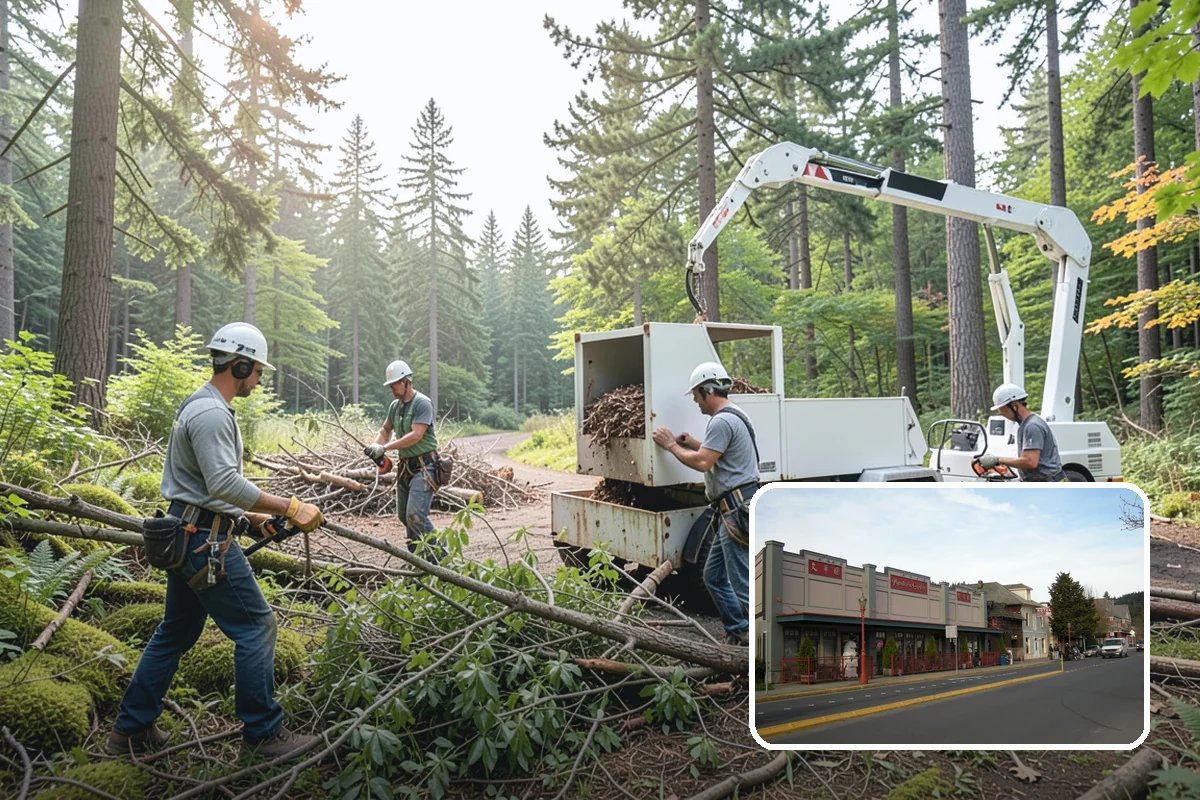
Our crews use a variety of tools including hand saws, pole saws, chainsaws, and wood chippers depending on the job size. When branches are high or hard to reach, we utilize climbing gear, rigging equipment, or aerial lifts as needed. All team members wear necessary personal protective equipment while operating these machines safely around your home.
Issaquah Sidewalk Clearance Pruning Safety & Best Practices
We strictly follow recognized pruning standards to avoid making harmful cuts that could weaken a tree’s structure. Our approach limits removal to healthy amounts of live tissue and keeps an eye out for unstable limbs or overhead power lines. When working at height, we always use proper fall protection to ensure the safety of our crew on your property.
Signs You Need Sidewalk Clearance Pruning in Issaquah
You may need this service if you notice branches hanging low over sidewalks where pedestrians walk daily. Deadwood in weak unions or interference with nearby structures are also common reasons to schedule a clearance pruning session. If you feel that sightlines along your path are blocked by dense foliage, it is time to contact us for an assessment.
What Affects the Cost of Sidewalk Clearance Pruning in Issaquah
The final cost depends on the specific tree species and their overall canopy condition at the site. Access requirements such as using climbing gear or aerial lifts will also influence how much work is needed. Additionally, the volume of material that must be processed through our wood chipper plays a role in the total price.
Best Time of Year for Issaquah Sidewalk Clearance Pruning
While we follow recognized arboricultural standards matched to your specific site conditions, it is best to avoid dormant seasons for certain Pacific Northwest species. We aim to schedule this work when tree health will not be stressed by seasonal changes or weather patterns. Our team will advise you on the ideal time based on the unique needs of each tree in your yard.
Planning Sidewalk Clearance Pruning in Issaquah
Start by deciding what clearance you want. Walkways are commonly cleared of branches to a height well above head level, and many owners also want the view of a driveway or corner opened up. Walk the route, tie a bit of ribbon on branches that bother you, and take a few photos. That gives us a clear starting point for an estimate.
What affects the scope
Branch size matters most. Small twigs and low limbs are quick work. Larger limbs need proper cuts just outside the branch collar so the tree can seal the wound, and standard practice (ISA and ANSI A300) limits how much live crown is removed at one visit. That means we may suggest spreading heavy clearance over more than one season rather than cutting everything at once. We do not recommend topping.
Tree species, the number of trees along the frontage, and whether limbs reach over a neighbor's yard or utility lines also change the plan. Issaquah is a current Tree City USA, recognized by the Arbor Day Foundation for 33 years. That tells you the city takes trees seriously, so we check with the city before work starts if there is any question about a street tree or a rule that might apply. A city tree rule usually speaks to removal, and clearance pruning may be treated differently, so we confirm instead of assuming.
Issaquah sits in USDA hardiness zone 8b, with parts of the city ranging from 8b to 9a (USDA map, 2023). That is a mild range, and many trees here keep growing vigorously. Expect clearance cuts to need a repeat visit over time as new shoots fill in.
What to expect on the day
A crew arrives, reviews the marked branches with you, and sets up cones or a work zone along the sidewalk if needed. Cuts are made branch by branch, and debris is cleaned up and hauled off. Ask us to walk the finished stretch with you before we leave.
One practical tip: take your photos in summer when trees are fully leafed, then compare them to winter views. It shows how much growth you can expect to manage each year. To book a free estimate, call or text 425-484-4442. Our ISA Certified Arborist can review the plan with you.
Issaquah tree conditions at a glance
| USDA hardiness zone | 8b (8b to 9a across the city) |
|---|---|
| Rain and snow falling October to April | 81% of the year’s total |
| Tree canopy | Among the most heavily treed Puget Sound cities (satellite data) |
| Days that freeze at night and thaw by day | 33 a year |
| Tree City USA | 33 years |
| Electric utility | Puget Sound Energy (PSE) |
Trees near the power line to your house
Puget Sound Energy (PSE): Service line (wire from PSE pole to home or meter pole): PSE does not trim it; homeowner/private arborist trims.
PSE performs a safety disconnection so the homeowner or private tree trimmer/arborist can work; Call at least 5 business days ahead to check crew availability and potential charges.
Safety disconnect: 1-888-321-7779 (5+ business days ahead). Utility page.
Any fee for a disconnect is set by the utility.
Sources: Daymet daily weather (NASA/ORNL), NOAA Storm Events, USDA plant hardiness map 2023, NRCS soil survey, USGS elevation, WA DNR landslide inventory, USDA Forest Service aerial survey, WSDA, city tree assessments and street-tree inventories, SILVIS Lab, Arbor Day Foundation, and official city and utility pages.
Sidewalk Clearance Pruning Serving Issaquah
Issaquah

Sidewalk clearance pruning in nearby areas
Also serving Issaquah
- Birch Tree Pruning in Issaquahat Washington Landscaping
- Roof Algae Treatment in Issaquahat Washington Roofing
- Trail Clearing in Issaquahat Washington City Services