Where Safety Meets Expert Tree Service.


Yarrow Point Underbrush Clearing
The clearing of understory growth beneath trees.
You may notice that you can no longer see the back of your lot from the house. Blackberry canes lean over the path, ivy climbs trunks, and the ground under your trees is a tangle you can't walk through.
Underbrush clearing removes that low growth so the property is open, easy to walk, and easier to inspect. Here is how to tell what needs to go, what should stay, and what to expect from the work in Yarrow Point.
About Underbrush Clearing in Yarrow Point
Underbrush clearing helps homeowners manage the growth beneath their trees to create safer, more usable outdoor spaces. This essential land-clearing work reduces fire risks while improving access across your property for daily activities or future projects. We are here to assist with removing dense vegetation that may have become overgrown or invasive on your lot.
What Yarrow Point Underbrush Clearing Includes
Our underbrush clearing service focuses specifically on the understory growth found beneath existing trees and shrubs. By carefully cutting back this lower layer of plants, we reduce fuel loads to help prevent fire spread and enhance visibility throughout your yard. The process also allows us to control unwanted invasive species that might otherwise take over difficult areas of your landscape.
Yarrow Point Underbrush Clearing Process
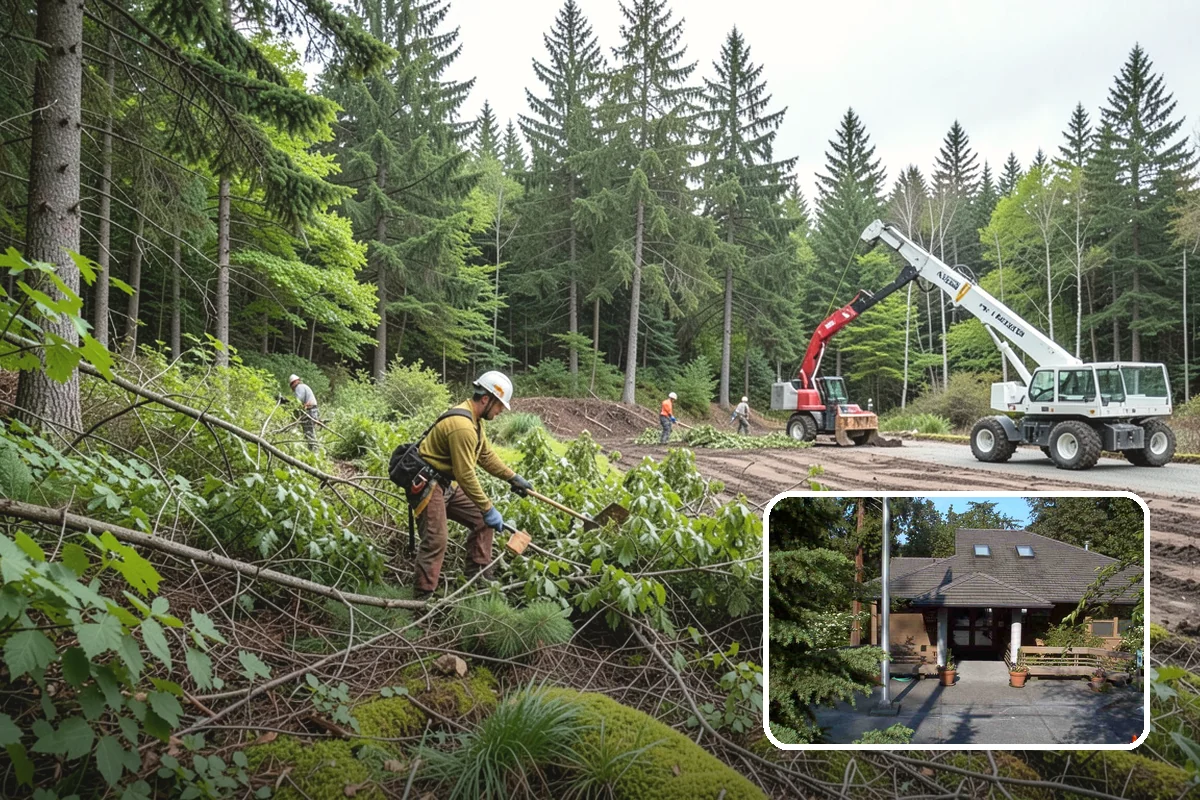
We begin by assessing the site and marking important features like property lines or utilities that need protection during clearing. Our trained crews then remove vegetation in a planned sequence, using hand tools and machinery matched to specific tree species and ground conditions. After clearing is complete, we process and haul away debris responsibly while tidying the area as needed for your next steps.
Equipment We Use for Yarrow Point Underbrush Clearing
To handle various site conditions effectively, our teams utilize brush cutters, chainsaws, chippers, and specialized hauling equipment. Hand tools are often employed to navigate tight spaces or delicate areas where larger machines cannot go safely. All crew members wear personal protective equipment while operating these powerful tools to ensure a safe working environment for everyone involved.
Yarrow Point Underbrush Clearing Safety & Best Practices
Safety is our priority as we identify property lines, underground utilities, and natural features that must be retained during the work. We stay alert to uneven terrain or hidden obstacles that could become hazards if debris shifts unexpectedly throughout the clearing process. Our methods are designed specifically to protect your retained trees and root zones while managing waste away from active areas of your home.
Signs You Need Underbrush Clearing in Yarrow Point
You may need this service when you notice dense, thorny growth making it difficult to walk through parts of your yard or garden. If invasive species keep regrowing despite previous efforts, or if wet ground makes access challenging after rainstorms, underbrush clearing can restore order. This work is also recommended whenever you want to reduce fire fuel around your trees and improve overall site usability for family use.
What Affects the Cost of Underbrush Clearing in Yarrow Point
The final cost depends on the density of vegetation present in the understory area rather than a fixed price per square foot. Factors such as thorny growth, specific invasive species management requirements, and uneven terrain conditions will influence how much work is needed. Additionally, the volume of debris generated and its disposal needs play a significant role in determining the overall project cost for your property.
Best Time of Year for Yarrow Point Underbrush Clearing
While this service can generally be performed year-round in our region, wet seasons may require special equipment or adjusted timing to manage access on saturated ground. We plan projects carefully so that we do not work when the soil is too soft or slippery near uneven areas of your lot. If you have specific concerns about weather conditions during a planned project window, please discuss them with us before starting any work.
Underbrush clearing in Yarrow Point: what the local data says
Underbrush is the layer of shrubs, brambles, vines and young seedlings that grows beneath mature trees. It spreads where light reaches the ground and nothing keeps it in check. Himalayan blackberry, English ivy and holly seedlings are common examples in the Pacific Northwest. Left alone, they crowd out the plants you want, hide hazards like stumps and drainage ditches, and make it hard to see the base of your trees.
Local conditions shape how you should think about the job. A federal wildland-urban interface study from SILVIS Lab (2020) puts about 0% of Yarrow Point's homes in the interface, where homes meet wildland vegetation. That means clearing here is mostly about access, tidiness and tree health, not about creating a defensible buffer against wildfire. You can plan the work around what you want the property to look like and how you use it.
Satellite data shows about 11% of Yarrow Point's land under dense tree cover, meaning 50% canopy or more. That figure is for the city as a whole, not your lot. It does suggest that many properties mix open ground with pockets of heavy shade, and those two situations call for different handling. In shaded areas, regrowth is often slower, so selective clearing may hold longer. In sunny gaps, brambles and vines tend to return quickly and may need follow-up cutting.
The USDA lists Yarrow Point in plant hardiness zone 9a, with parts of the city ranging from 8b to 9a (USDA map, 2023). Mild winters mean many invasive plants stay green and keep growing for much of the year. Plan on checking cleared areas each season instead of assuming one visit is the end of it.
The work itself is done by hand tools and small powered equipment. We cut brush back, pull or dig out roots where practical, and haul away the debris. Native shrubs, healthy young trees and anything protecting a slope are left in place. Care is taken around the root zones of mature trees so that cleaning up the ground does not damage them. If an area is near a steep bank, a stream or a tree you may want removed, we check with the city before work starts.
Yarrow Point tree conditions at a glance
| Homes in the wildland-urban interface | 0% |
|---|---|
| Land under dense tree cover (50%+ canopy) | 11% |
| Rain and snow falling October to April | 81% of the year’s total |
Tree removal rules in Yarrow Point
A tree removal permit is required to remove any significant tree on private property (YPMC 20.22.030(A)). Minimum density of one significant tree per 5,000 sq ft of lot area must be shown whenever a significant or heritage tree is removed. Trees proposed for removal must be marked with yellow tape at DSH.
Regulated size: Any healthy tree at least 12 in DSH (diameter at 4.5 ft).
Official city source. Rules change; we confirm with the city before work starts.
Tree health near Yarrow Point
- Decline, cause not identified134 ac
Forest damage mapped from the air within 10 km of Yarrow Point, 2021-2025 (USDA Forest Service and WA DNR). This covers forest land, not street or yard trees. “Decline, cause not identified” is dieback with no single cause found.
Sources: Daymet daily weather (NASA/ORNL), NOAA Storm Events, USDA plant hardiness map 2023, NRCS soil survey, USGS elevation, WA DNR landslide inventory, USDA Forest Service aerial survey, WSDA, city tree assessments and street-tree inventories, SILVIS Lab, Arbor Day Foundation, and official city and utility pages.
Underbrush Clearing Serving Yarrow Point
Yarrow Point
Underbrush clearing in nearby areas
Also serving Yarrow Point
- Land Clearing in Yarrow Pointat Washington Landscaping
- Site Clearing in Yarrow Pointat Washington Construction
- Ivy Removal in Yarrow Pointat Washington City Services
- Fallen Tree Firewood in Yarrow Pointat Washington Firewood