Where Safety Meets Expert Tree Service.

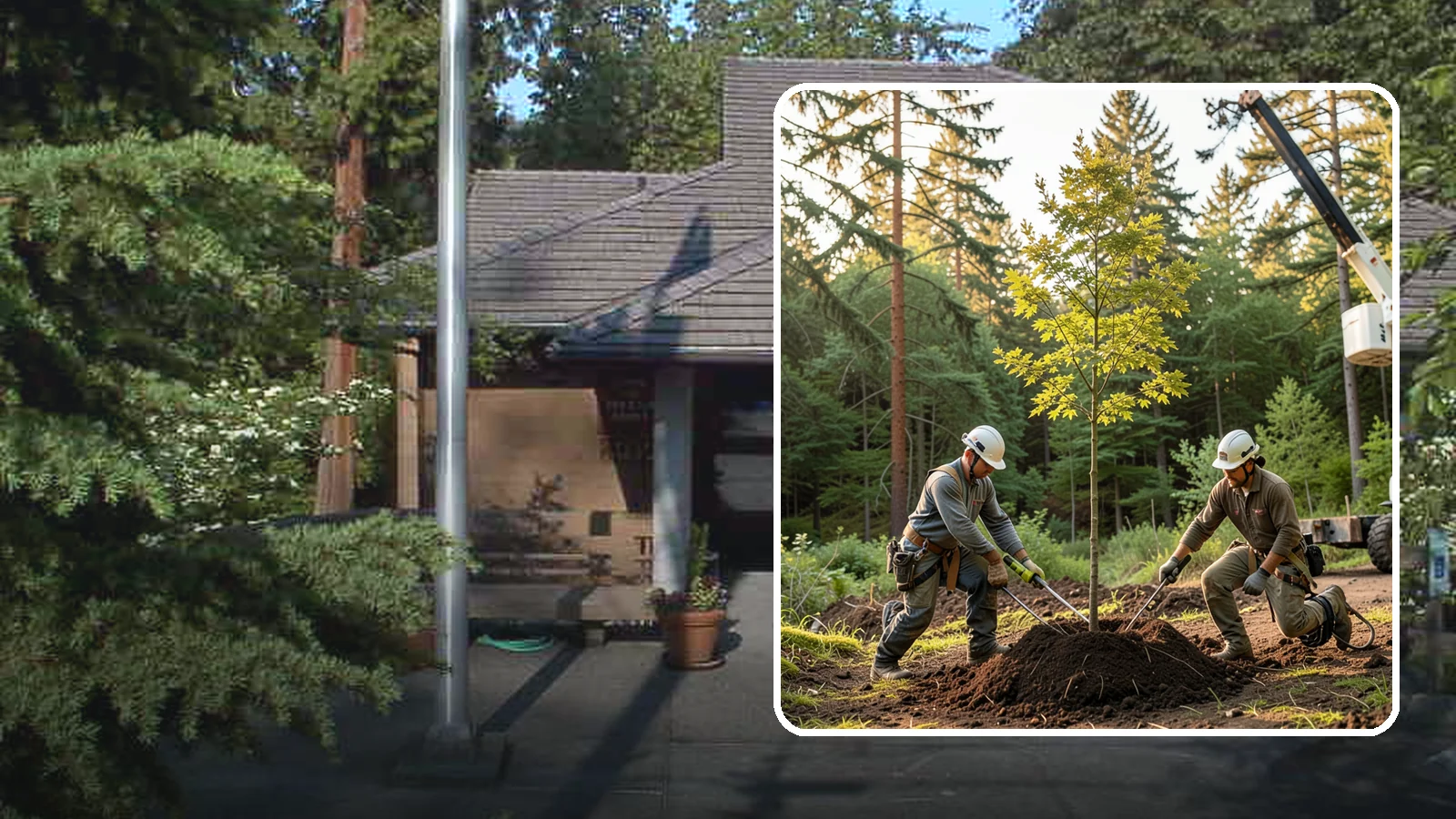
Yarrow Point Tree Replacement
The replanting of trees to replace those removed.
In Yarrow Point, replacing a removed tree is sometimes more than a choice. The city's tree code requires mitigation planting when a lot falls short of its density requirement of 1 significant tree per 5,000 square feet, or when a heritage tree is removed.
So the first step is to work out whether your project triggers that requirement. If it does, the size, timing and care of the new tree are set by the code. If it doesn't, you have more freedom to choose a tree that suits the spot and how you use the yard.
About Tree Replacement in Yarrow Point
We help homeowners restore their landscape by replanting trees after removals or other changes. This approach brings back essential shade, privacy, and ecological benefits to your property. Our trained crews work carefully to ensure each new tree is well-suited to its specific site conditions.
What Yarrow Point Tree Replacement Includes
Tree replacement focuses on restoring canopy cover with healthy specimens chosen for their local adaptability. We match planting methods to the species selected while considering soil quality and access constraints at your location. The goal is to establish a robust foundation that supports long-term growth and stability in your yard.
Yarrow Point Tree Replacement Process
Our team begins by assessing site conditions to select suitable tree varieties before preparing the planting area. Soil amendments are added as needed, followed by careful placement at the correct depth with proper spacing between trees. We finish each job by applying mulch, watering thoroughly, and providing guidance on care during the establishment phase.
Equipment We Use for Yarrow Point Tree Replacement
Successful replanting relies on digging tools designed for precise hole preparation alongside equipment for efficient soil handling. We bring necessary supplies such as soil amendments, mulch, and specialized watering gear to support new growth immediately after planting. Staking materials are used when required to help young trees withstand wind until their root systems strengthen.
Yarrow Point Tree Replacement Safety & Best Practices
Before any digging begins, we take steps to locate underground utilities to protect both workers and your infrastructure. We select species that fit the site dimensions to prevent future conflicts with structures or power lines. Proper planting depth is maintained throughout the process, and care is taken during handling to avoid damaging delicate root systems.
Signs You Need Tree Replacement in Yarrow Point
You may need this service if you are looking to replace trees removed for safety reasons or development projects. Situations where canopy has been lost often call for replanting to regain privacy screening and cooling shade. If your soil feels compacted or if previous plantings struggled, establishing new, healthy trees can improve overall site ecology.
What Affects the Cost of Tree Replacement in Yarrow Point
The investment varies based on the specific species chosen and how accessible the planting location is for our equipment. Soil conditions that require amendments will influence the final cost along with any necessary staking requirements to support young saplings. These factors ensure we provide a solution tailored to your unique landscape needs without unnecessary expenses.
Best Time of Year for Yarrow Point Tree Replacement
The ideal time for replanting arrives in late fall or early spring when soil work is easier and roots can establish before summer heat sets in. We avoid periods of deep dormancy that slow growth as well as times of extreme wetness that make proper depth placement difficult. Choosing the right season gives your new trees the best chance to thrive year after year.

How tree replacement works in Yarrow Point
Replacement starts with the site and the rule, not the nursery. Here is the usual order of work.
1. Check whether mitigation applies
The city's tree code requires mitigation when the density requirement is not met or a heritage tree is removed. Where the rules are unclear for your lot, we check with the city before work starts. We do not guess, and we do not treat any permit question as settled in advance.
2. Choose the tree and size
When mitigation is required, the code sets minimum sizes. Evergreens must be at least 10 feet tall. Deciduous trees must be at least 3-inch caliper. Those are the smallest trees that count, so plan the budget and the planting location around them.
Beyond size, we look at mature height and spread, distance from the house, utilities and neighbors, sun, and drainage. A tree that fits the space at maturity needs less corrective pruning later.
3. Match the tree to the climate
The USDA map from 2023 puts Yarrow Point in plant hardiness zone 9a, with parts of the city ranging from 8b to 9a. That is a general guide to winter cold. It does not tell you about your soil or wind exposure, so we still look at the planting spot itself.
4. Plant on schedule
Mitigation trees must be planted within six months. If a removal is coming, line up the replacement early so the deadline does not become a problem. Standard planting practice applies:
- Set the root flare at or just above the soil line.
- Do not bury the trunk in soil or mulch.
- Spread mulch in a ring, kept back from the trunk.
- Water deeply through the first dry seasons.
5. Plan for the warranty period
The code includes a 10-year warranty period for mitigation trees. Keep watering and basic care consistent, and keep records of what was planted and when. Yarrow Point is a current Tree City USA, recognized by the Arbor Day Foundation for 16 years, so the city takes its canopy seriously.
Call or text 425-484-4442 to talk through your lot. Estimates are free.
Yarrow Point tree conditions at a glance
| USDA hardiness zone | 9a (8b to 9a across the city) |
|---|---|
| Soils | 93% of land has hardpan or another restrictive layer within 40 in; most common series Alderwood |
| Rain and snow falling October to April | 81% of the year’s total |
| Days that freeze at night and thaw by day | 28 a year |
| Tree City USA | 16 years |
Tree removal rules in Yarrow Point
A tree removal permit is required to remove any significant tree on private property (YPMC 20.22.030(A)). Minimum density of one significant tree per 5,000 sq ft of lot area must be shown whenever a significant or heritage tree is removed. Trees proposed for removal must be marked with yellow tape at DSH.
Regulated size: Any healthy tree at least 12 in DSH (diameter at 4.5 ft).
Official city source. Rules change; we confirm with the city before work starts.
Sources: Daymet daily weather (NASA/ORNL), NOAA Storm Events, USDA plant hardiness map 2023, NRCS soil survey, USGS elevation, WA DNR landslide inventory, USDA Forest Service aerial survey, WSDA, city tree assessments and street-tree inventories, SILVIS Lab, Arbor Day Foundation, and official city and utility pages.
Tree Replacement Serving Yarrow Point
Yarrow Point
Tree replacement in nearby areas
Also serving Yarrow Point
- Shade Tree Planting in Yarrow Pointat Washington Landscaping
- Municipal Turf Management in Yarrow Pointat Washington City Services