Where Safety Meets Expert Tree Service.


Yarrow Point Tree Dismantling / Sectional Removal
The piece-by-piece dismantling of a tree from the top down.
In Yarrow Point, the easiest window for sectional tree removal is usually the drier part of the year, May through September. Daymet data for 2005-2025 shows 81% of the city's yearly rain and snow falls from October to April. Wet ground is softer, and that matters when pieces are lowered and carried across a yard.
Dismantling means taking a tree down in sections instead of felling it whole. It is used when a tree stands close to a house, a fence, a dock or other trees. Here is how to plan for it.
About Tree Dismantling / Sectional Removal in Yarrow Point
When a tree cannot be safely lowered in one piece due to nearby structures or power lines, our sectional removal team can help clear the area without risk. This specialized approach is perfect for homeowners who need precise control over how their property looks after work is complete. We focus on keeping your home and landscape safe while removing unwanted trees from difficult sites.
What Yarrow Point Tree Dismantling / Sectional Removal Includes
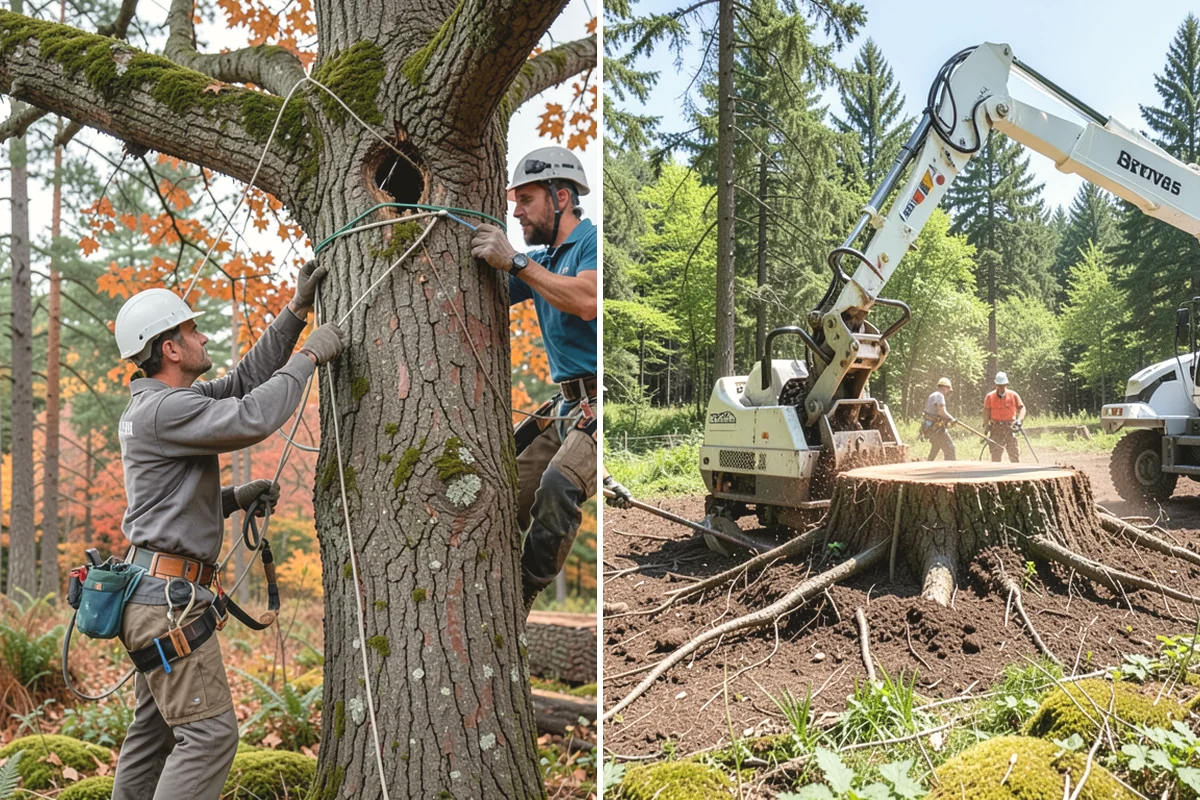
Tree dismantling involves taking apart a tree piece by piece, starting from the top down rather than felling it all at once. Our trained crews follow recognized arboricultural standards to match their methods with the specific species of tree and conditions on your site. This process effectively removes safety hazards, frees up usable space, and helps prevent pests or disease from spreading to healthy neighbors.
Yarrow Point Tree Dismantling / Sectional Removal Process
We begin every job with an on-site assessment to identify potential dangers and establish clear drop zones around your property. Once safe boundaries are set, our crew will rig the tree to lower limbs carefully before removing the stem in a controlled sequence. After all wood is processed and debris hauled away, we finish by clearing the site so you can enjoy your yard again.
Equipment We Use for Yarrow Point Tree Dismantling / Sectional Removal
To handle these complex jobs safely, we use chainsaws along with specialized climbing and rigging gear designed for precision work. Depending on access needs at your location, an aerial lift or crane may be brought in to assist with lowering heavy sections. We also utilize wood chippers for processing the timber and ground protection equipment to keep your lawn intact during operations.
Yarrow Point Tree Dismantling / Sectional Removal Safety & Best Practices
Your safety is our priority, so we always identify overhead utility lines before starting any work on a tree near power infrastructure. Our team maintains strict control over drop zones and fall paths while using personal protective equipment throughout the entire project. We also inspect every tree for hidden decay or structural defects before climbing to ensure no one gets hurt during removal.
Signs You Need Tree Dismantling / Sectional Removal in Yarrow Point
You likely need this service if you have a large tree leaning unpredictably toward your house, driveway, or favorite seating area. Situations where limited access prevents standard equipment from reaching the trunk often require us to dismantle the tree section by section. If hidden internal decay makes a single fall dangerous for people below, our sectional method provides the necessary caution and control.
What Affects the Cost of Tree Dismantling / Sectional Removal in Yarrow Point
The final price depends on factors such as the overall size of the tree and how difficult it is to access your property with equipment. Trees located very close to structures will require additional rigging gear, which influences the total cost of the project. Disposal requirements for the wood also play a role in determining what you pay for this essential service.
Best Time of Year for Yarrow Point Tree Dismantling / Sectional Removal
While we can work year-round given our local climate conditions, extra precautions are taken during wet seasons when hidden decay might be more likely to cause issues. Ice formation on branches is another time that requires us to take additional safety steps before beginning any dismantling work. Planning ahead ensures your team can proceed efficiently while maintaining the highest standards of care for your property.
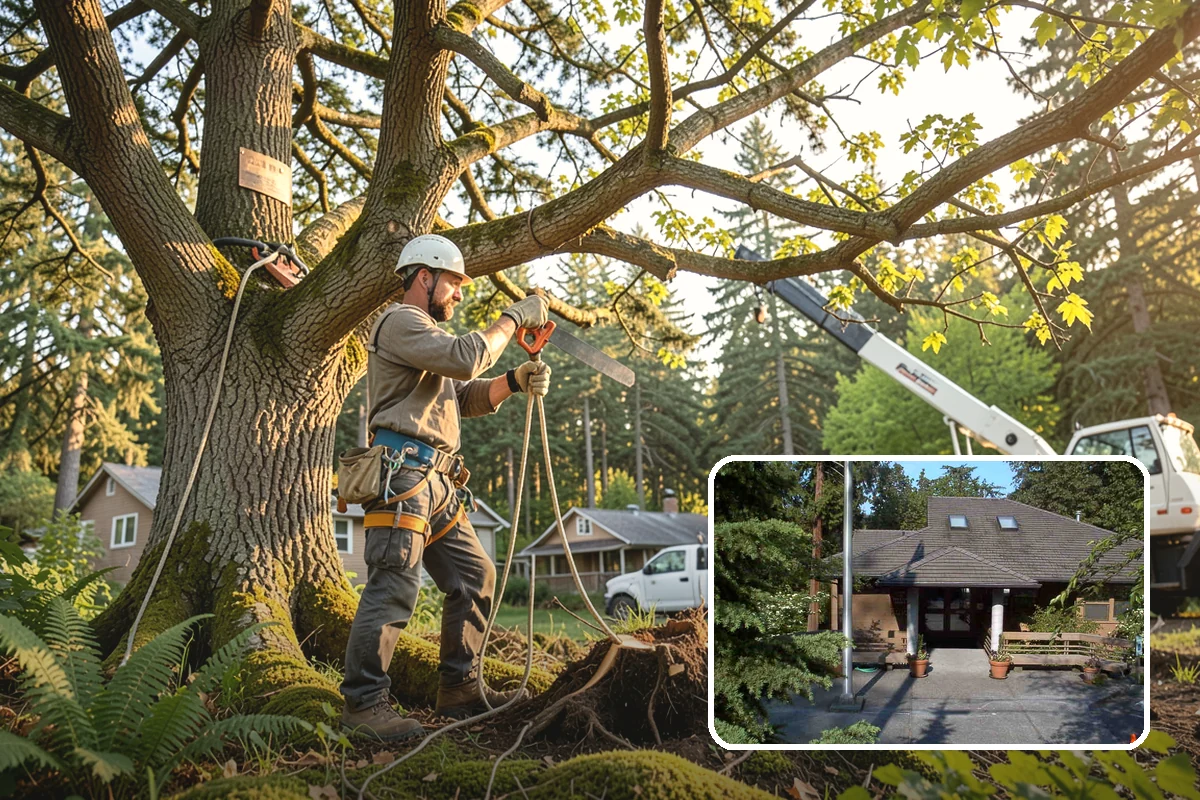
Planning sectional tree removal in Yarrow Point
Start by walking the site and noting what sits under and around the tree. Roofs, patios, septic lids, irrigation lines and garden beds all affect how pieces come down and where they are staged. Take a few photos from different sides. They help a good estimate.
What affects the scope
Access is the first factor. If a crew can reach the tree only through a narrow side yard, more of the wood has to be carried or rigged out by hand. Tree condition is the second. Decay, hollow sections or dead limbs change how a climber moves and where ropes are tied. Size, lean and nearby structures decide how many cuts are needed and whether pieces are roped down or lowered with rigging.
Ground conditions matter too. Because 81% of the area's yearly precipitation falls from October to April (Daymet, 2005-2025), lawns and soft beds can rut under foot traffic and wood loads in the wet months. Planning for the drier season can limit that damage, though a dangerous tree should not wait.
Rules are another part of planning. We have not confirmed which electric utility serves the property, so if any limbs are near power lines, say so up front. We also check with the city before work starts, since permit requirements for removal can vary.
What to expect on the day
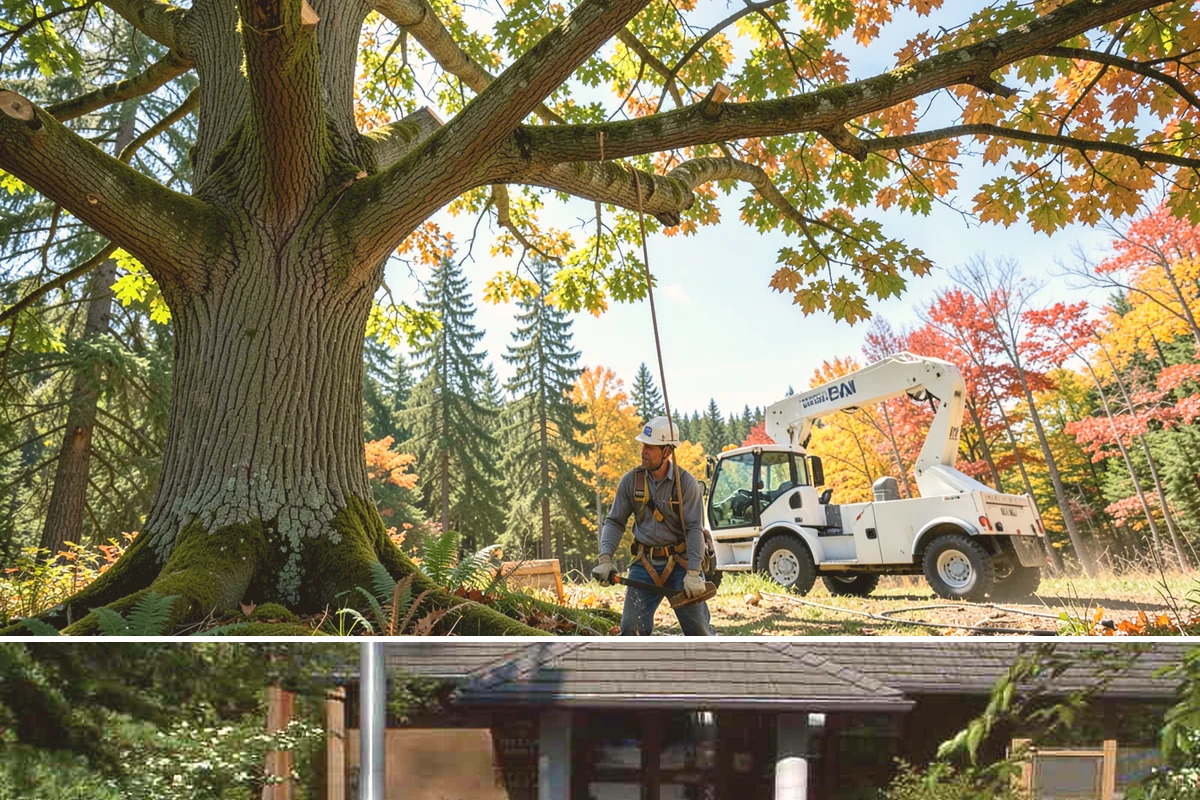
The crew starts by setting up the work area and protecting anything that can be moved. A climber then works down from the top, removing limbs first and then cutting the trunk in sections. Each piece is lowered on ropes or controlled by rigging. Wood and brush are then processed and cleared as agreed. Stump grinding is a separate step, so ask about it when you request the estimate.
One practical tip: before the crew arrives, move vehicles, patio furniture and planters well away from the work zone, and tell neighbors if the tree overhangs their side.
To get an estimate, call or text 425-484-4442. Estimates are free, and an ISA Certified Arborist is on staff.
Yarrow Point tree conditions at a glance
| USDA hardiness zone | 9a (8b to 9a across the city) |
|---|---|
| Soils | 93% of land has hardpan or another restrictive layer within 40 in; most common series Alderwood |
| High and strong wind episodes, 2005-2025 | 33 in the forecast zone |
| Electric utility | unconfirmed |
Tree removal rules in Yarrow Point
A tree removal permit is required to remove any significant tree on private property (YPMC 20.22.030(A)). Minimum density of one significant tree per 5,000 sq ft of lot area must be shown whenever a significant or heritage tree is removed. Trees proposed for removal must be marked with yellow tape at DSH.
Regulated size: Any healthy tree at least 12 in DSH (diameter at 4.5 ft).
Official city source. Rules change; we confirm with the city before work starts.
Strongest wind events near Yarrow Point
- Dec 17, 2010: gusts to 72 mph
- Feb 7, 2012: gusts to 70 mph
- Dec 14, 2006: gusts to 68 mph
NOAA Storm Events, forecast zone that includes Yarrow Point, 2005-2025.
Sources: Daymet daily weather (NASA/ORNL), NOAA Storm Events, USDA plant hardiness map 2023, NRCS soil survey, USGS elevation, WA DNR landslide inventory, USDA Forest Service aerial survey, WSDA, city tree assessments and street-tree inventories, SILVIS Lab, Arbor Day Foundation, and official city and utility pages.
Tree Dismantling / Sectional Removal Serving Yarrow Point
Yarrow Point
Tree dismantling / sectional removal in nearby areas
Also serving Yarrow Point
- Ground Cover Installation in Yarrow Pointat Washington Landscaping
- Memorial Tree Planting in Yarrow Pointat Washington City Services
- Log Splitting in Yarrow Pointat Washington Firewood