Where Safety Meets Expert Tree Service.

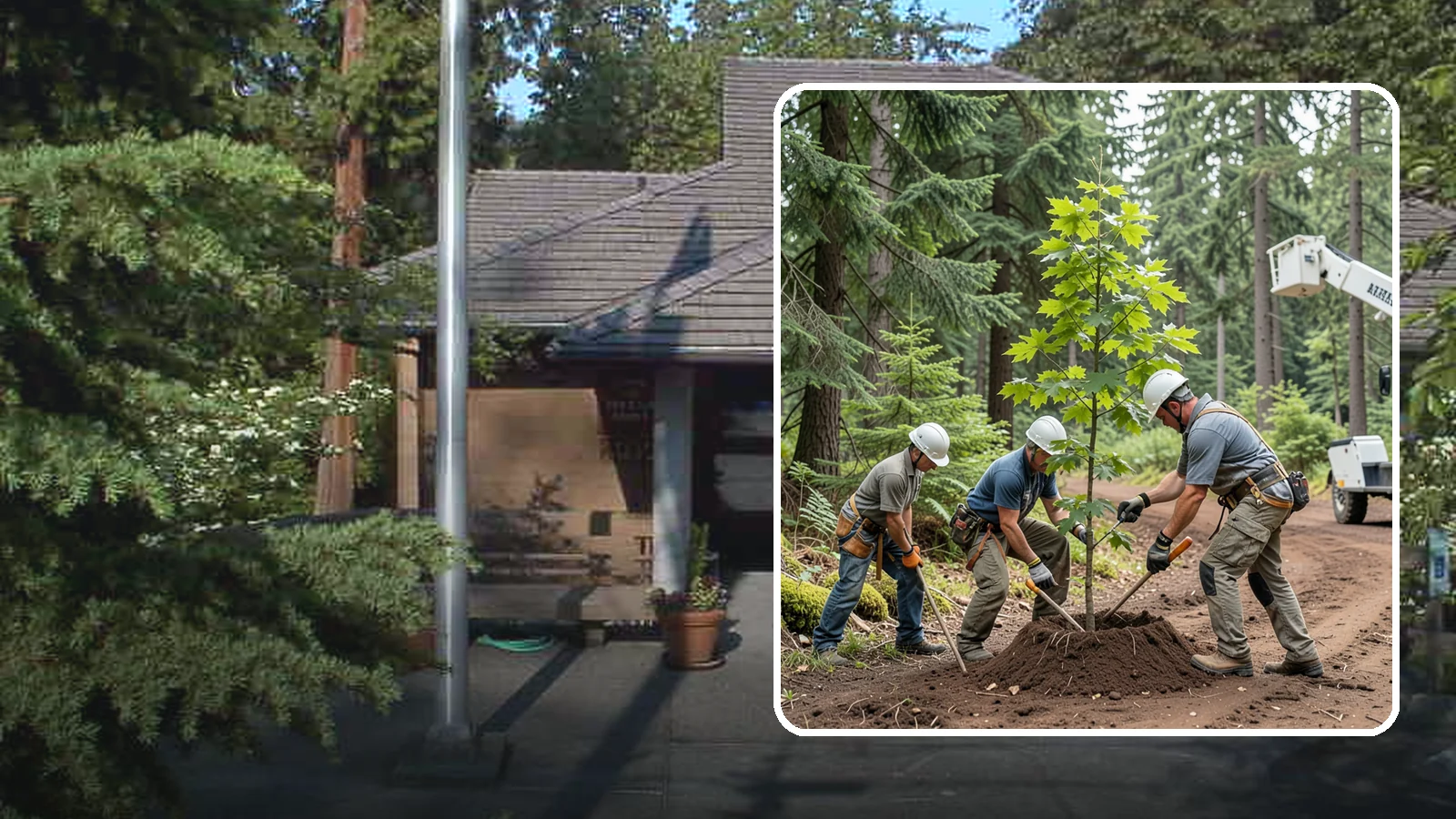
Yarrow Point Reforestation Planting
Larger-scale planting to re-establish tree cover.
Plan to plant between October and April. In Yarrow Point, 81% of the year's rain and snow falls in those months (Daymet, 2005-2025), so new roots get natural watering while the trees are dormant or just waking up. Planting in that window usually means less hand watering than a summer planting would.
Reforestation planting means putting back a stand of trees, not just one specimen. Good planning before the first hole is dug decides whether the trees settle in and grow. Here is how we approach it.
About Reforestation Planting in Yarrow Point
Reforestation planting helps homeowners restore tree cover on larger areas that have been cleared or degraded. This approach brings back the benefits of shade, privacy, and improved site ecology for your property. Our trained crews work to establish healthy trees that are well-suited to your specific location.
What Yarrow Point Reforestation Planting Includes
This service focuses on re-establishing broad canopy coverage rather than planting individual specimens in isolation. We match our methods carefully to the tree species chosen, current site conditions, and available access points. The goal is to create a resilient forest layer that supports long-term environmental health for your land.
Yarrow Point Reforestation Planting Process
Our team begins by assessing your site to select suitable species before preparing the soil and planting area. Each tree is planted at the correct depth with proper spacing, followed by mulching and watering in. We also provide guidance on establishment care to ensure these new trees thrive as they grow into a mature canopy.
Equipment We Use for Yarrow Point Reforestation Planting
The work utilizes digging tools for site preparation alongside equipment designed specifically for efficient planting operations. Soil amendments and fresh mulch are applied to support root development, while specialized watering gear ensures adequate moisture levels. Staking materials and personal protective equipment are used whenever necessary to secure young trees and keep crews safe.
Yarrow Point Reforestation Planting Safety & Best Practices
Before any ground is broken, we locate underground utilities to prevent damage during the digging process. We strictly select species suited to your site conditions to avoid future conflicts with structures or other vegetation. Planting at the proper depth and handling roots carefully are essential steps that protect both the new trees and our workers.
Signs You Need Reforestation Planting in Yarrow Point
You may need this service if you have areas of land where tree cover has been lost due to clearing or degradation. Signs include compacted soil, existing gaps in your canopy, or a desire to expand privacy and shade across a larger footprint. This project is ideal when the goal is to restore ecological balance rather than just adding isolated trees.
What Affects the Cost of Reforestation Planting in Yarrow Point
The overall investment depends on how accessible your site is for our crews and equipment teams. Costs are also influenced by soil conditions that might require amendments, the complexity of species selection, and whether staking or specialized watering gear is needed. These factors determine the resources required to successfully establish a new forest layer on your property.
Best Time of Year for Yarrow Point Reforestation Planting
In Washington’s Puget Sound climate, planting is generally best performed during dormant seasons to minimize stress on young trees. However, specific timing must always match the unique establishment requirements of the tree species you choose for your site. We will coordinate with you to schedule work when conditions are optimal for successful root growth and survival.
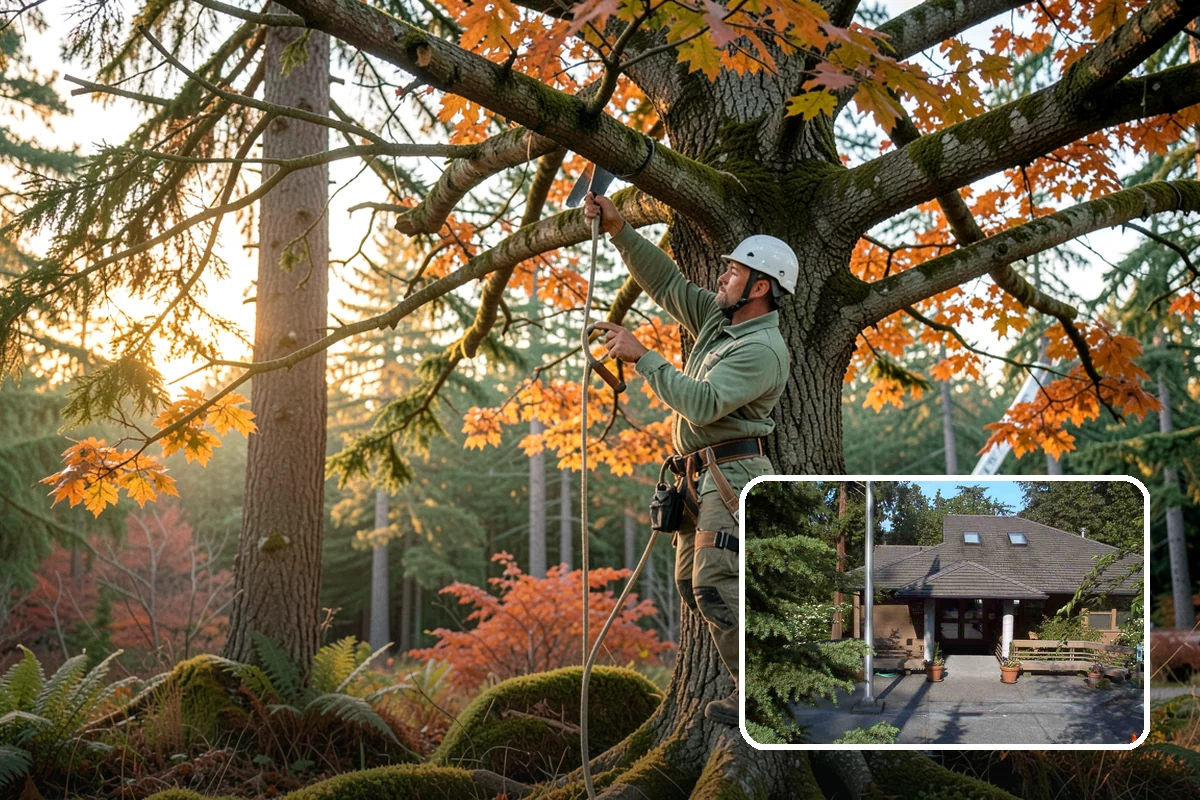
Planning a Reforestation Planting in Yarrow Point
Start with the site. Walk the area and note where water collects, where the ground stays dry, and how much light reaches the soil. These details guide which species fit and where each tree should go.
Climate sets the outer limits. The USDA map (2023) places Yarrow Point in hardiness zone 9a, with parts of the city ranging from 8b to 9a. That tells you winter cold is rarely the limiting factor. Soil, shade and summer dryness usually matter more, so we look at those first.
Western redcedar deserves a careful look. A federal aerial survey by the USDA Forest Service and WA DNR (2021-2025) mapped 134 acres of western redcedar in decline with no cause identified, in forest within 10 km of Yarrow Point. That is forest land, not yard trees, and it says nothing about your property. 'Decline, cause not identified' means dieback with no single cause found. If you want redcedar, we talk through site moisture and consider mixing species so one problem does not affect the whole planting.
What affects scope
Scope depends on the size of the area, the number of trees, the species mix, and how much clearing is needed first. Invasive growth, compacted soil and slopes all add work. We give a free estimate after seeing the site.
What to expect on the day
We mark planting spots, dig holes wide and no deeper than the root ball, and set each tree so the root flare sits at or just above grade. We inspect the roots as well. Circling roots get straightened or cut at planting, because they can cause poor anchorage up to 30 years later (WSU Extension, Pacific Northwest Gardener's Handbook, Chapter 12). Then we backfill, mulch and water in.
One practical tip: keep mulch a few inches back from each trunk, and check the soil weekly during the first dry summer.
Yarrow Point tree conditions at a glance
| USDA hardiness zone | 9a (8b to 9a across the city) |
|---|---|
| Soils | 93% of land has hardpan or another restrictive layer within 40 in; most common series Alderwood |
| Rain and snow falling October to April | 81% of the year’s total |
| Days that freeze at night and thaw by day | 28 a year |
| Tree City USA | 16 years |
Tree removal rules in Yarrow Point
A tree removal permit is required to remove any significant tree on private property (YPMC 20.22.030(A)). Minimum density of one significant tree per 5,000 sq ft of lot area must be shown whenever a significant or heritage tree is removed. Trees proposed for removal must be marked with yellow tape at DSH.
Regulated size: Any healthy tree at least 12 in DSH (diameter at 4.5 ft).
Official city source. Rules change; we confirm with the city before work starts.
Sources: Daymet daily weather (NASA/ORNL), NOAA Storm Events, USDA plant hardiness map 2023, NRCS soil survey, USGS elevation, WA DNR landslide inventory, USDA Forest Service aerial survey, WSDA, city tree assessments and street-tree inventories, SILVIS Lab, Arbor Day Foundation, and official city and utility pages.
Reforestation Planting Serving Yarrow Point
Yarrow Point


Reforestation planting in nearby areas
Also serving Yarrow Point
- Ground Cover Installation in Yarrow Pointat Washington Landscaping
- Municipal Grounds Maintenance in Yarrow Pointat Washington City Services