Where Safety Meets Expert Tree Service.

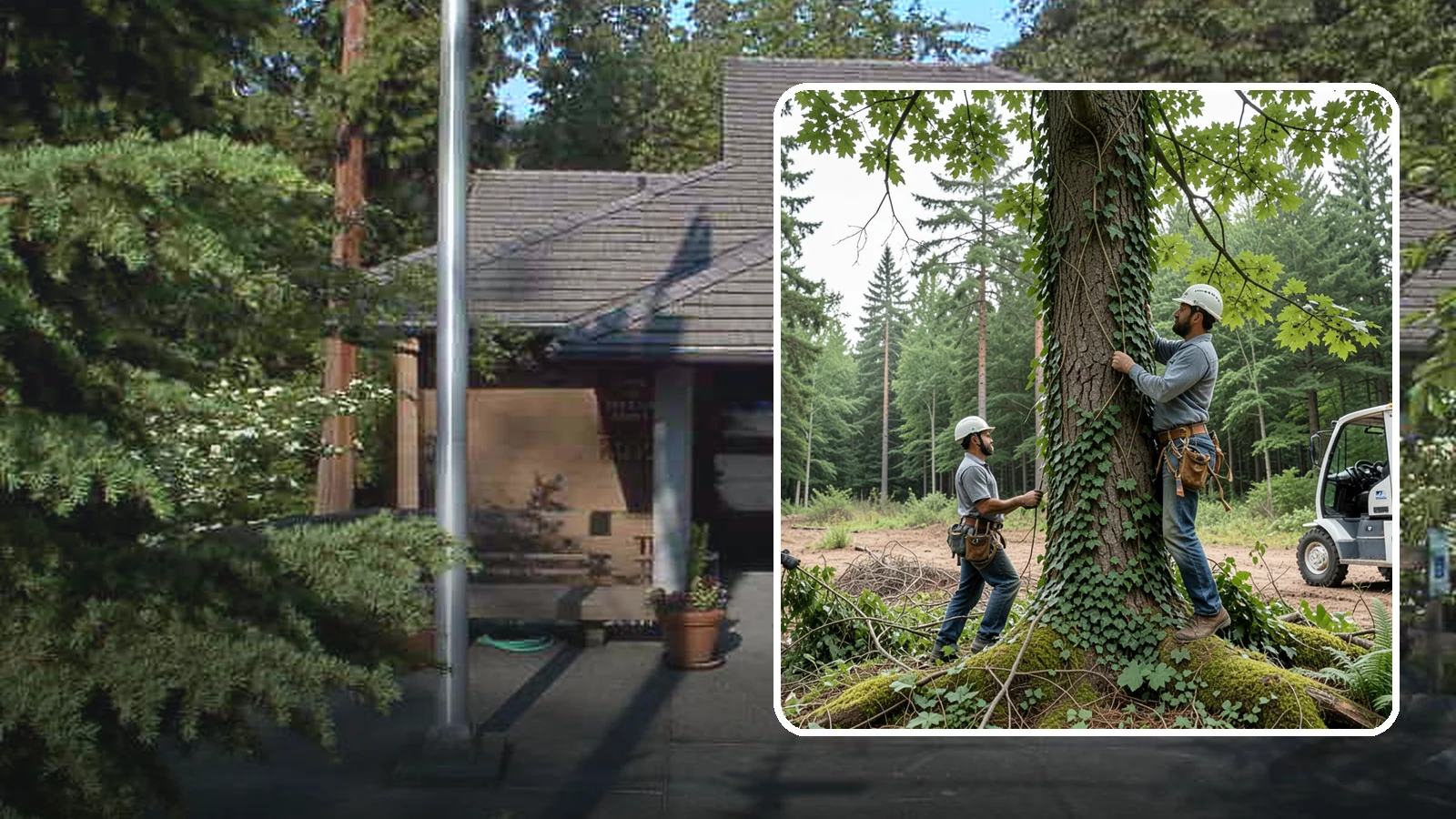
Yarrow Point Ivy Removal From Trees
The removal of ivy and climbing vines from trees.
This service is for Yarrow Point owners whose trees have English ivy climbing the trunk, especially where the vines have reached the lower branches or the ivy covers the trunk so thickly that bark, root flare and structural defects are hidden.
Ivy on a tree is not always an emergency, but it is easier to deal with while the stems are thin. Cutting it at the base is the first step, and how you handle the rest depends on the tree and the ground around it.
About Ivy Removal From Trees in Yarrow Point
Removing ivy from trees is a vital part of keeping your landscape healthy and stable. This care helps protect long-term tree health while allowing for proper inspection of the trunk and branches. It supports the stability of valued specimens by addressing issues before they escalate into larger problems.
What Yarrow Point Ivy Removal From Trees Includes
Our crews specialize in removing climbing vines like ivy to restore natural conditions around the root system. The work is tailored to match specific tree species, site conditions, and access constraints for a safe outcome. This process also improves soil and root conditions that may have been compromised by heavy vine growth.
Yarrow Point Ivy Removal From Trees Process
We begin with a thorough inspection of the tree and its surrounding area to identify contributing factors such as pests or disease. Based on these findings, we recommend and apply appropriate treatments while documenting all observations for follow-up care. Our methods are designed to avoid damage to roots and trunks during removal operations.
Equipment We Use for Yarrow Point Ivy Removal From Trees
Trained crews use diagnostic tools and soil probes to assess the health of your trees before starting work. We utilize injection or application equipment as needed, along with air excavation tools when specific conditions require them. All personnel wear necessary personal protective equipment to ensure safety throughout every step of the job.
Yarrow Point Ivy Removal From Trees Safety & Best Practices
Safety is a priority, so we strictly follow label and application guidelines for any products used during removal. Our team takes care to protect nearby soil and surrounding plantings while avoiding damage to roots or trunks. We also document conditions accurately to maintain clear records of our work and recommendations.
Signs You Need Ivy Removal From Trees in Yarrow Point
You may need this service if you notice signs of decline from past construction, grade changes, or compacted soils. Girdling roots caused by vines are another indicator that ivy removal could benefit your tree’s stability. Catching these problems early allows us to improve soil conditions before they lead to serious health issues.
What Affects the Cost of Ivy Removal From Trees in Yarrow Point
The cost is influenced by the height and spread of each individual tree being treated. Access constraints for equipment can also impact pricing, as well as the volume of ivy debris that requires removal. These factors ensure we provide a fair estimate based on the specific needs of your property.
Best Time of Year for Yarrow Point Ivy Removal From Trees
This work can be performed year-round in our local climate to address issues whenever they arise. However, extra caution is required during wet seasons to prevent soil erosion or slipping hazards while working near trees. Planning around these weather patterns helps ensure the safety of both workers and your landscape.
Ivy removal options for Yarrow Point trees
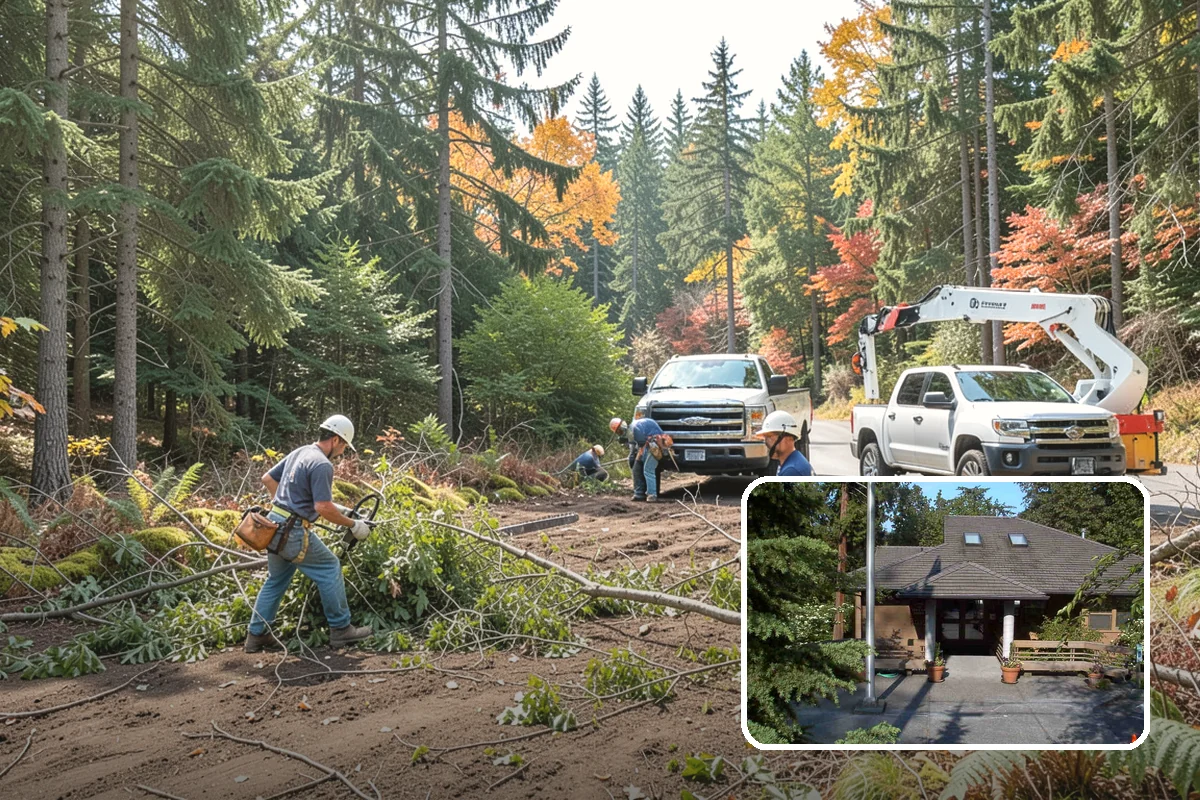
Owners usually choose between three approaches. The right one depends on how far the ivy has climbed and how the tree looks underneath.
- Cut and let it die back. We cut a clear band of stems around the trunk at a comfortable working height and remove a section of vine. The ivy above loses its roots and dies over time. This is the least invasive choice and suits healthy, mature trunks.
- Cut, then hand-pull the lower trunk. We also peel the vines off the trunk within reach and clear the ground around the base. This lets you see the bark and root flare again.
- Full removal, including the crown. If ivy has reached the branches, dead vines can be pulled or cut out by a climber. This takes more time and must be done without tearing bark or breaking limbs.
Why local conditions matter
Yarrow Point sees about 108 days a year with 0.1 inch or more of rain, based on Daymet data for 2005 to 2025. Ivy stays damp and keeps growing in a climate like that, and the ground is often soft enough to pull the roots out by hand. Wet bark is also easier to damage, so we pull slowly and never force stems that are fused to the trunk. We leave those in place to die and rot off.
The USDA lists Yarrow Point in hardiness zone 9a, with parts of the city from 8b to 9a. That is a mild range, so ivy is rarely set back by cold. Cutting is the control, and regrowth from the ground needs follow-up.
A federal aerial survey of forests within 10 km of the city, by the USDA Forest Service and WA DNR from 2021 to 2025, mapped 134 acres of western redcedar in decline with no cause identified. That is forest land, not yard trees, and it says nothing about your tree. It is a reminder that dense ivy can hide dieback, so once the trunk is exposed we look at the bark and canopy for signs of trouble.
Our ISA Certified Arborist can look at the tree before you choose. Call or text 425-484-4442 for a free estimate.
Yarrow Point tree conditions at a glance
| Homes in the wildland-urban interface | 0% |
|---|---|
| Land under dense tree cover (50%+ canopy) | 11% |
| Rain and snow falling October to April | 81% of the year’s total |
Tree removal rules in Yarrow Point
A tree removal permit is required to remove any significant tree on private property (YPMC 20.22.030(A)). Minimum density of one significant tree per 5,000 sq ft of lot area must be shown whenever a significant or heritage tree is removed. Trees proposed for removal must be marked with yellow tape at DSH.
Regulated size: Any healthy tree at least 12 in DSH (diameter at 4.5 ft).
Official city source. Rules change; we confirm with the city before work starts.
Tree health near Yarrow Point
- Decline, cause not identified134 ac
Forest damage mapped from the air within 10 km of Yarrow Point, 2021-2025 (USDA Forest Service and WA DNR). This covers forest land, not street or yard trees. “Decline, cause not identified” is dieback with no single cause found.
Sources: Daymet daily weather (NASA/ORNL), NOAA Storm Events, USDA plant hardiness map 2023, NRCS soil survey, USGS elevation, WA DNR landslide inventory, USDA Forest Service aerial survey, WSDA, city tree assessments and street-tree inventories, SILVIS Lab, Arbor Day Foundation, and official city and utility pages.
Ivy Removal From Trees Serving Yarrow Point
Yarrow Point

Ivy removal from trees in nearby areas
Also serving Yarrow Point
- Garden Bed Maintenance in Yarrow Pointat Washington Landscaping
- Soil Amendments in Yarrow Pointat Washington City Services