Where Safety Meets Expert Tree Service.


Yarrow Point Emergency Storm Cleanup
The rapid cleanup of tree damage after a storm.
This service is for Yarrow Point property owners with storm damage on the ground or still hanging: a limb across a driveway, a split trunk leaning over a fence, or a yard buried in broken branches after a windstorm.
Start by staying clear of anything that is under tension, touching a power line, or hanging overhead. Take photos from a safe distance, note what is blocked, and call for an assessment. The right response depends on whether the tree is down, partly down, or only shedding debris.
About Emergency Storm Cleanup in Yarrow Point
When severe weather hits our area, emergency storm cleanup helps restore safety and access quickly after a tree falls or breaks. This rapid response is designed for property owners who need debris removed efficiently following a storm event. Our trained crews are ready to assist you in recovering from the damage caused by wind, rain, or other harsh conditions.
What Yarrow Point Emergency Storm Cleanup Includes
Emergency storm cleanup focuses on clearing downed material and hanging limbs to prevent secondary failures around your home. We match our removal methods carefully to the specific tree species found at your site and current access limitations. This service ensures that dangerous debris is processed and hauled away so you can move forward with repairs.
Yarrow Point Emergency Storm Cleanup Process
Our typical approach begins by assessing immediate hazards and making the area safe for everyone involved. Crews then remove broken branches and fallen trunks while documenting any necessary damage details for your records. Finally, we process the wood at our facility or on-site before hauling it away to leave your property clear.
Equipment We Use for Yarrow Point Emergency Storm Cleanup
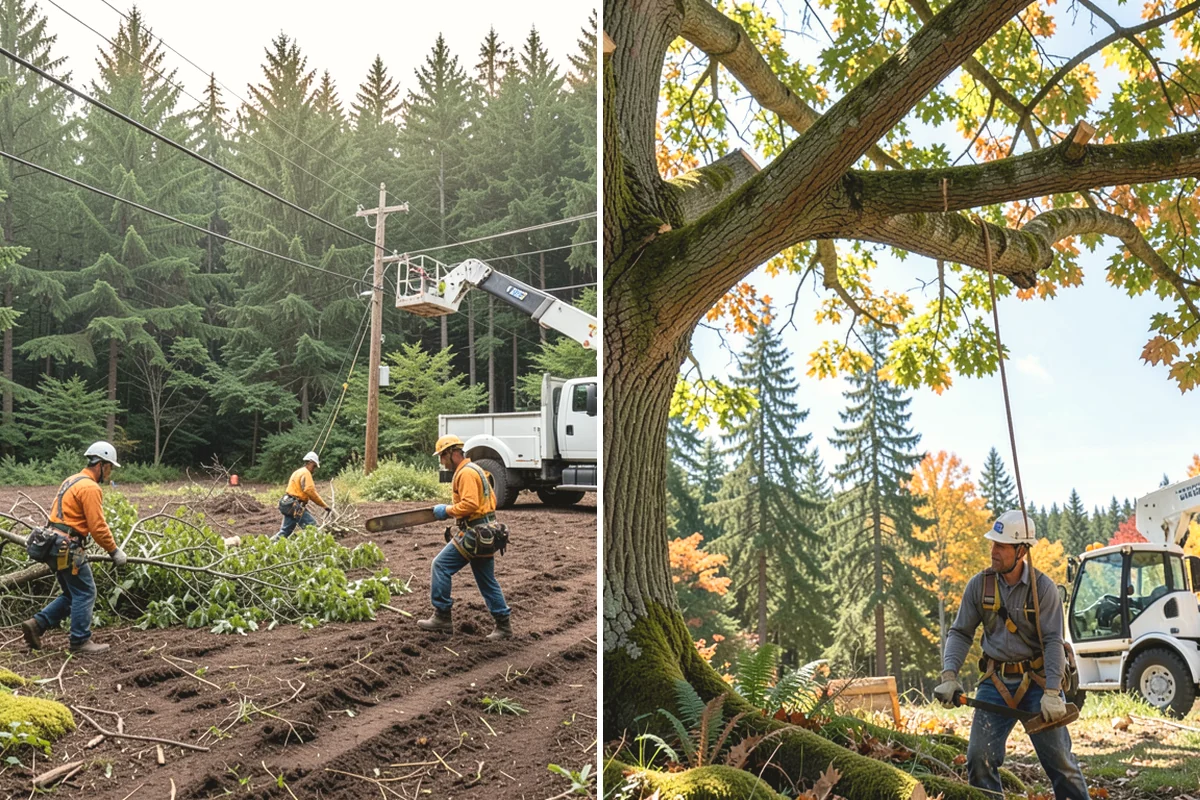
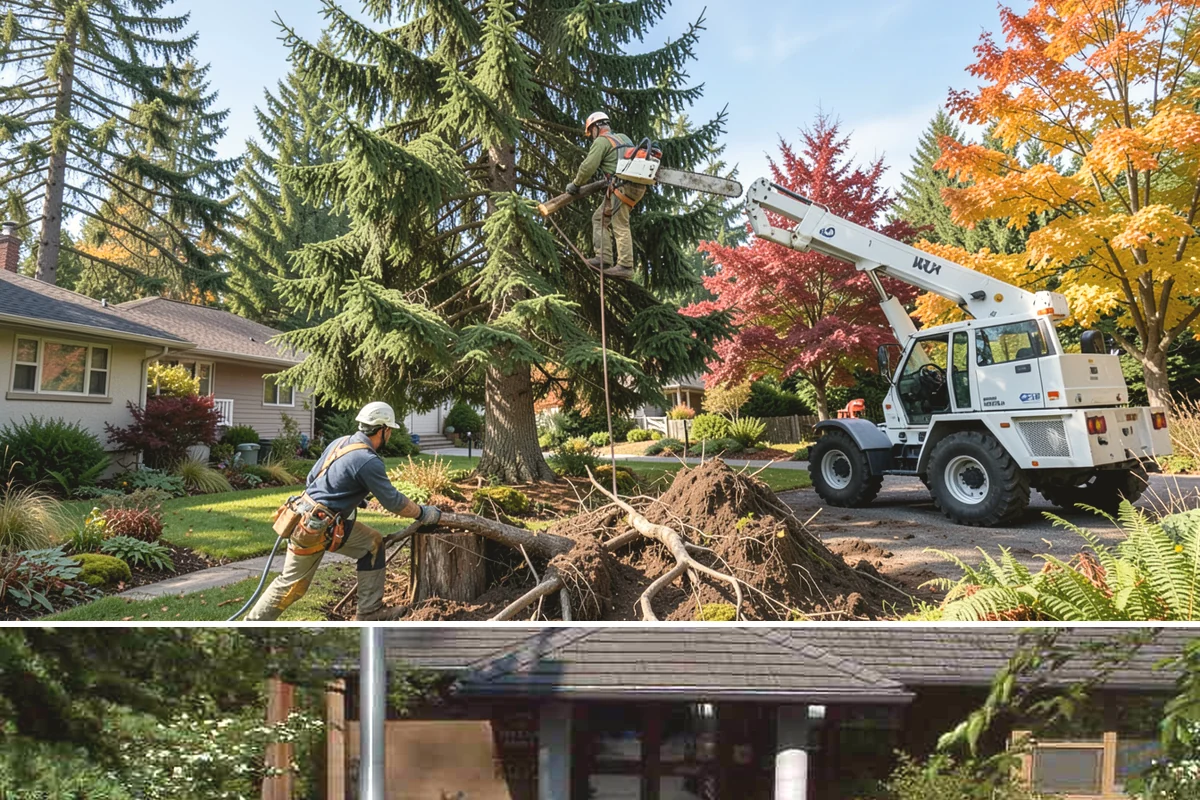
We utilize professional chainsaws, rigging gear, and personal protective equipment to handle storm-damaged trees safely. Depending on the size of the job and site access needs, an aerial lift or crane may be brought in as required. Additional tools like a chipper are used to break down wood before it is loaded onto hauling trucks for removal.
Yarrow Point Emergency Storm Cleanup Safety & Best Practices
Storm-damaged trees often remain unstable under load, so we treat every situation with caution until fully secured. Our crews watch closely for hidden utility lines and release tension carefully on bent or pinned material during removal. We also keep bystanders clear of the work zone to ensure everyone stays safe while debris is cleared efficiently.
Signs You Need Emergency Storm Cleanup in Yarrow Point
You may need this service if you see trees under stored tension, downed power lines, or cracks that have partially failed in your yard. Limited access after a storm often signals the need for professional help to navigate safely around hazardous conditions. If hanging limbs threaten structures or block driveways following severe weather, our cleanup team is prepared to respond immediately.
What Affects the Cost of Emergency Storm Cleanup in Yarrow Point
The final cost depends on factors like tree species and specific site conditions where the damage occurred. Access limitations created by fallen debris can also influence how much time and equipment are needed for removal. Additionally, the total volume of debris requiring processing and haul-away will play a significant role in pricing your project.
Best Time of Year for Yarrow Point Emergency Storm Cleanup
This service is available year-round to address severe weather events that occur throughout the Puget Sound region rather than just one season. Whether it happens after an unexpected winter storm or a summer thunderstorm, we are ready to deploy crews when you need them most. There is no specific seasonal restriction on our availability for emergency cleanup needs during bad weather.
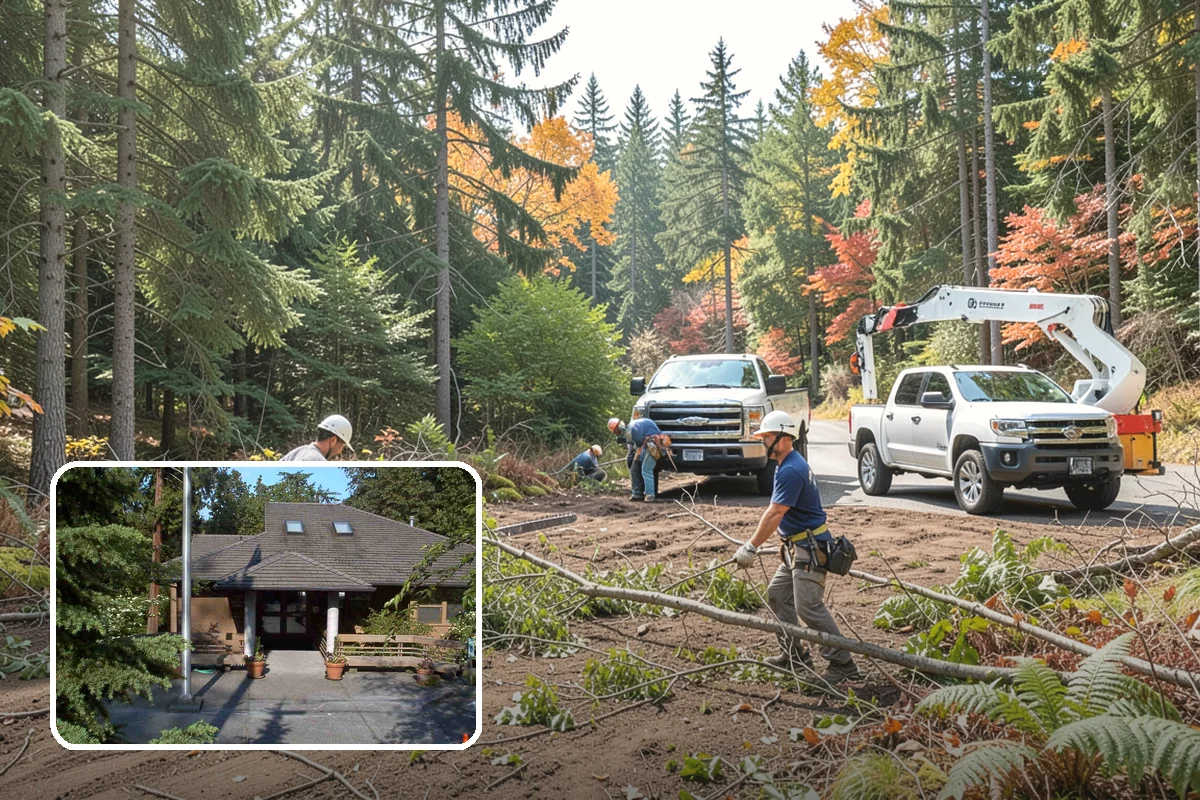
Storm cleanup options for Yarrow Point properties
After a storm, an owner usually chooses between three approaches. Which one fits depends on what the tree is doing and how fast conditions could change.
Debris-only cleanup
If branches are down but the tree above looks sound, cleanup can be limited to cutting and clearing what fell. This is the simplest option. It still helps to have someone look up into the canopy for hanging limbs and cracks before the work starts.
Make-safe cut, repair later
If a tree is leaning, split, or lying on a structure, the first job is to remove the part that is dangerous or blocking access. Further pruning or removal can be planned afterward. This is standard practice when the damage is complex, because it separates the urgent work from decisions that can wait.
Full removal
When the trunk is cracked, the root plate has lifted, or most of the crown is gone, removal is often the sensible choice. If the tree is removed, we check with the city before work starts, since Yarrow Point may have its own rules on removals.
Wind history is a reason to plan ahead rather than wait. The forecast zone that includes Yarrow Point recorded 33 high and strong wind episodes from 2005 to 2025. That is a zone-wide record, not a count for any one yard, but it shows that damaging wind is a repeat event here. Trees with weak unions or past damage are worth having assessed before the next one.
Rain matters less often, but it matters. Daymet data shows about 4.2 days a year in Yarrow Point with an inch or more of rain. Saturated soil can loosen root hold, so a tree that stood through a dry-weather gale may fail after a wet one.
Disposal is the third local factor. King County is inside the WSDA apple maggot quarantine. Homegrown fruit and yard waste may not be moved out of the quarantine area into pest-free areas. If your storm debris includes fallen fruit or branches, plan to keep it within the quarantine area.
For an assessment, call or text 425-484-4442. Estimates are free, and an ISA Certified Arborist is on staff.
Yarrow Point tree conditions at a glance
| High and strong wind episodes, 2005-2025 | 33 in the forecast zone |
|---|---|
| Ice storm episodes, 2005-2025 | 2 in the forecast zone |
| Average snowfall | 5.4 in a season |
| Soils | 93% of land has hardpan or another restrictive layer within 40 in; most common series Alderwood |
| Rain and snow falling October to April | 81% of the year’s total |
| Electric utility | unconfirmed |
Tree removal rules in Yarrow Point
A tree removal permit is required to remove any significant tree on private property (YPMC 20.22.030(A)). Minimum density of one significant tree per 5,000 sq ft of lot area must be shown whenever a significant or heritage tree is removed. Trees proposed for removal must be marked with yellow tape at DSH.
Regulated size: Any healthy tree at least 12 in DSH (diameter at 4.5 ft).
Official city source. Rules change; we confirm with the city before work starts.
Strongest wind events near Yarrow Point
- Dec 17, 2010: gusts to 72 mph
- Feb 7, 2012: gusts to 70 mph
- Dec 14, 2006: gusts to 68 mph
NOAA Storm Events, forecast zone that includes Yarrow Point, 2005-2025.
Sources: Daymet daily weather (NASA/ORNL), NOAA Storm Events, USDA plant hardiness map 2023, NRCS soil survey, USGS elevation, WA DNR landslide inventory, USDA Forest Service aerial survey, WSDA, city tree assessments and street-tree inventories, SILVIS Lab, Arbor Day Foundation, and official city and utility pages.
Emergency Storm Cleanup Serving Yarrow Point
Yarrow Point
Emergency storm cleanup in nearby areas
Also serving Yarrow Point
- Temporary Roof Covering in Yarrow Pointat Washington Roofing
- Foundation Crack Injection in Yarrow Pointat Washington Construction
- Snow Removal in Yarrow Pointat Washington Landscaping
- Winter Storm Cleanup in Yarrow Pointat Washington Snow Removal