Where Safety Meets Expert Tree Service.


Yarrow Point Compost Spreading
The application of compost to improve soil.
In Yarrow Point, the soil under your trees likely matters more than the compost you put on it. A county soil survey from the NRCS shows 93% of the city's land has a hard or restrictive layer, such as glacial hardpan, within 40 inches of the surface. Alderwood is the most common soil series.
That layer slows how fast water drains and limits how deep roots can go. Compost spread as a thin surface layer is one way to improve the top of the soil without digging into roots. Here is how the work goes and what to plan for.
About Compost Spreading in Yarrow Point
Compost spreading is a thoughtful way to nourish your trees by adding organic matter directly where roots need it most. This service helps improve soil biology so that valued specimens can thrive for years to come. It works well for homeowners who want their landscape to stay healthy and stable over the long term.
What Yarrow Point Compost Spreading Includes
We apply compost specifically designed to support soil life and enhance root conditions around your trees. Our trained crews match application methods to each tree species, site condition, and access point on your property. The goal is simple: add organic matter that catches problems before they escalate into larger issues.
Yarrow Point Compost Spreading Process
Work begins with a careful inspection of the tree and its surrounding environment to identify factors like soil quality or past construction impacts. Based on these findings, we recommend and apply appropriate treatments while documenting our observations for future reference. We follow up regularly to ensure the care provided continues to support your trees effectively.
Equipment We Use for Yarrow Point Compost Spreading
Our crews use diagnostic tools and soil probes to understand exactly what each site needs before starting work. Depending on access conditions or compaction levels, we may bring in injection equipment, air excavation tools, or sampling kits as required. Everyone also wears personal protective equipment to keep the job safe for our team and your landscape.
Yarrow Point Compost Spreading Safety & Best Practices
We strictly follow label guidelines when applying products to protect both the soil and nearby plantings from unintended harm. Our methods are designed to avoid damaging roots or trunks while we work around complex site conditions like girdling roots or compacted earth. Accurate documentation of these safety measures ensures that every job is completed responsibly and correctly.
Signs You Need Compost Spreading in Yarrow Point
You might need this service if your trees show signs of decline from poor soils, pests, disease, or changes in ground grade over time. Compacted areas around the root zone often struggle to support healthy growth without additional organic matter. If you suspect past construction has hurt your soil structure, adding compost can help restore balance and stability quickly.
What Affects the Cost of Compost Spreading in Yarrow Point
The final price depends on how difficult it is for crews to access your specific site conditions during work. Soil compaction levels that require excavation tools will influence the cost alongside the volume of compost needed for different tree species. These factors ensure we provide a solution tailored precisely to what each individual project requires without hidden fees.
Best Time of Year for Yarrow Point Compost Spreading
In our local climate, this service can be performed year-round whenever your trees would benefit from extra organic matter. However, during periods of heavy rain, we schedule carefully to prevent runoff and make sure the compost incorporates well into compacted soils. Planning around weather patterns helps ensure every application supports soil biology effectively without causing damage.
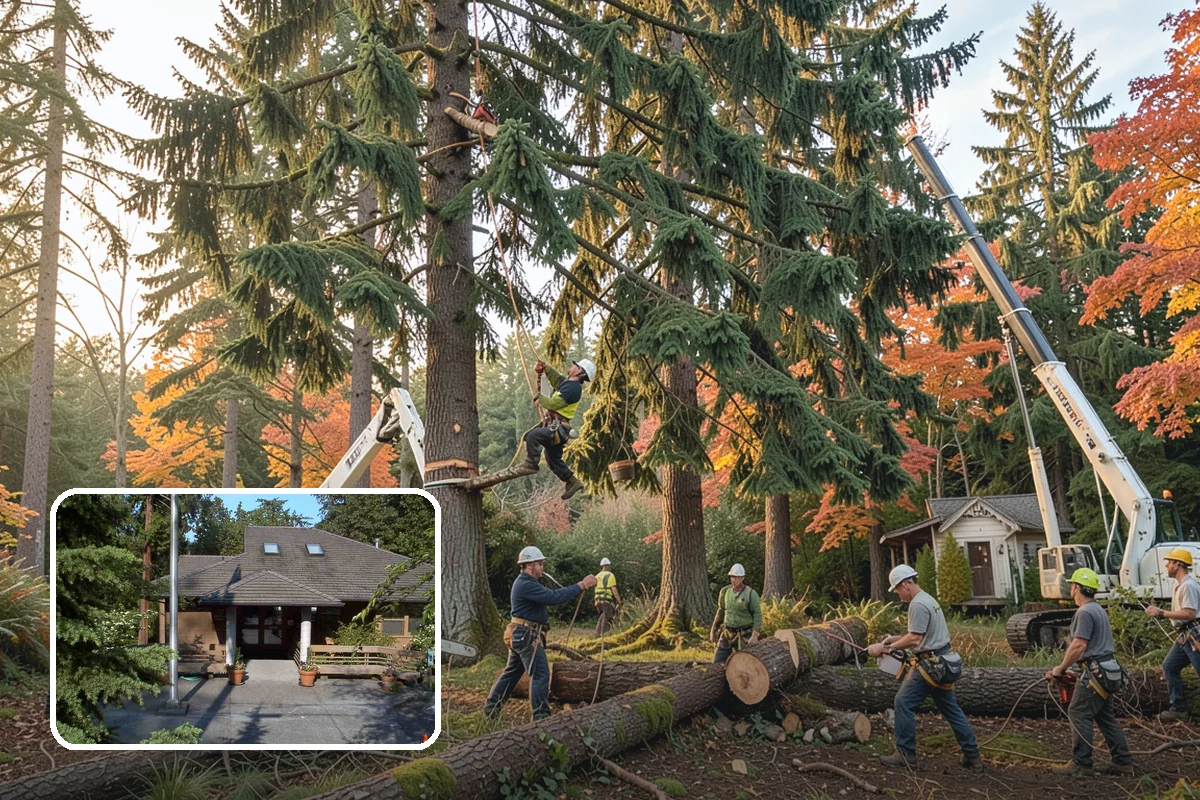
How compost spreading works on Yarrow Point soils
Compost spreading means laying a layer of organic material over the soil around trees and shrubs. It is not mixed in. Digging near a tree cuts roots, so the material is left on top and soil life moves it down over time.
The basic steps
- Clear weeds and debris from the area under the canopy.
- Spread compost evenly, usually a few inches deep, out toward the drip line.
- Keep compost and mulch back from the trunk so the bark stays dry and can breathe.
- Water in lightly if the ground is dry.
Why the hardpan changes the plan
The NRCS survey describes soils across the city, not the ground under any one tree. Still, with a restrictive layer so common, it is wise to expect slow drainage in places. A heavy pile of compost will not fix that. A modest layer helps the surface soil take in water, and it avoids sitting wet against the trunk. If a spot stays soggy, tell us. That may call for a different approach than more material.
Climate and yard waste
The USDA map puts Yarrow Point in hardiness zone 9a, with parts of the city between 8b and 9a. That tells you which plants survive winter cold. It does not tell you how much compost to use, so we base amounts on the site.
King County is inside the WSDA apple maggot quarantine. Homegrown fruit and yard waste may not be moved out of the quarantine area into pest-free areas. If you have fallen fruit or trimmings, keep them on site or dispose of them within the quarantine area. Do not haul them elsewhere yourself.
One more note. Wood chips from diseased trees used as surface mulch do not infect healthy trees, according to WSU Extension research by Linda Chalker-Scott. So chip mulch is a reasonable companion to compost.
For a free estimate, call or text 425-484-4442.
Yarrow Point tree conditions at a glance
| USDA hardiness zone | 9a (8b to 9a across the city) |
|---|---|
| Soils | 93% of land has hardpan or another restrictive layer within 40 in; most common series Alderwood |
| Rain and snow falling October to April | 81% of the year’s total |
| Days with 0.1 in or more of rain | 108 a year |
| Days that freeze at night and thaw by day | 28 a year |
Tree health near Yarrow Point
- Decline, cause not identified134 ac
Forest damage mapped from the air within 10 km of Yarrow Point, 2021-2025 (USDA Forest Service and WA DNR). This covers forest land, not street or yard trees. “Decline, cause not identified” is dieback with no single cause found.
Sources: Daymet daily weather (NASA/ORNL), NOAA Storm Events, USDA plant hardiness map 2023, NRCS soil survey, USGS elevation, WA DNR landslide inventory, USDA Forest Service aerial survey, WSDA, city tree assessments and street-tree inventories, SILVIS Lab, Arbor Day Foundation, and official city and utility pages.
Compost Spreading Serving Yarrow Point
Yarrow Point

Compost spreading in nearby areas
Also serving Yarrow Point
- Shrub Pruning in Yarrow Pointat Washington Landscaping
- Soil Amendments in Yarrow Pointat Washington City Services