Where Safety Meets Expert Tree Service.


Yarrow Point Brush Clearing
The removal of brush and light vegetation.
The blackberry canes have crept over the fence line. Ivy is climbing the trunks. A corner of the lot has become a tangle you can no longer walk through, and you can't see what is growing under it.
Brush clearing removes that overgrowth so the ground, the trees and the edges of your property are visible and workable again. Here is what causes the buildup in Yarrow Point and how the clearing is done.
About Brush Clearing in Yarrow Point
Brush clearing helps homeowners manage overgrown areas by removing light vegetation that can hinder access or increase fire risk. Our trained crews work carefully to prepare your site while protecting the features you want to keep. This service is ideal for anyone looking to reduce fuel loads and regain control of their land.
What Yarrow Point Brush Clearing Includes
This category focuses on clearing brush and thinning out dense, light vegetation across a property. The goal is to improve usability by creating clear pathways and removing invasive plants that might otherwise take over. We tailor our methods to match the specific tree species and conditions found at your site.
Yarrow Point Brush Clearing Process
We begin by assessing the area and marking important features like trees or structures that need protection. Crews then remove vegetation in a planned sequence, processing and hauling away debris responsibly as they go. Finally, we grade or tidy the cleared zone so it is ready for its intended use without leaving hazards behind.
Equipment We Use for Yarrow Point Brush Clearing
Our teams utilize brush cutters, chainsaws, chippers, and hand tools to handle various types of growth efficiently. Hauling equipment ensures that all removed material is transported away from the property promptly. We also wear full personal protective gear to keep everyone safe while operating these powerful machines.
Yarrow Point Brush Clearing Safety & Best Practices
Safety starts with identifying utility lines, uneven terrain, and hidden obstacles before any work begins. Our crews take extra care to manage debris properly so it does not create new hazards or damage retained trees. By respecting property boundaries and root zones, we ensure the site remains secure throughout the clearing process.
Signs You Need Brush Clearing in Yarrow Point
You may need this service if you notice dense thorny growth making your yard difficult to navigate. Signs that include invasive species regrowing quickly or wet ground complicating access also indicate a time for intervention. If overgrown vegetation is threatening nearby structures or increasing fire risk, brush clearing can help restore safety and order.
What Affects the Cost of Brush Clearing in Yarrow Point
The price of this work depends on how dense the vegetation is and whether the plants are thorny or invasive. Uneven terrain conditions that require special care will also influence the overall cost of the project. Additionally, any specific features at your site that must be protected during clearing can affect the final estimate.
Best Time of Year for Yarrow Point Brush Clearing
While brush clearing can happen year-round in our region, we always check ground conditions before starting work. Wet or muddy weather common to the Puget Sound climate may require us to adjust schedules for better access and safety. Planning around these seasonal factors ensures that your crew can move efficiently without damaging the site.
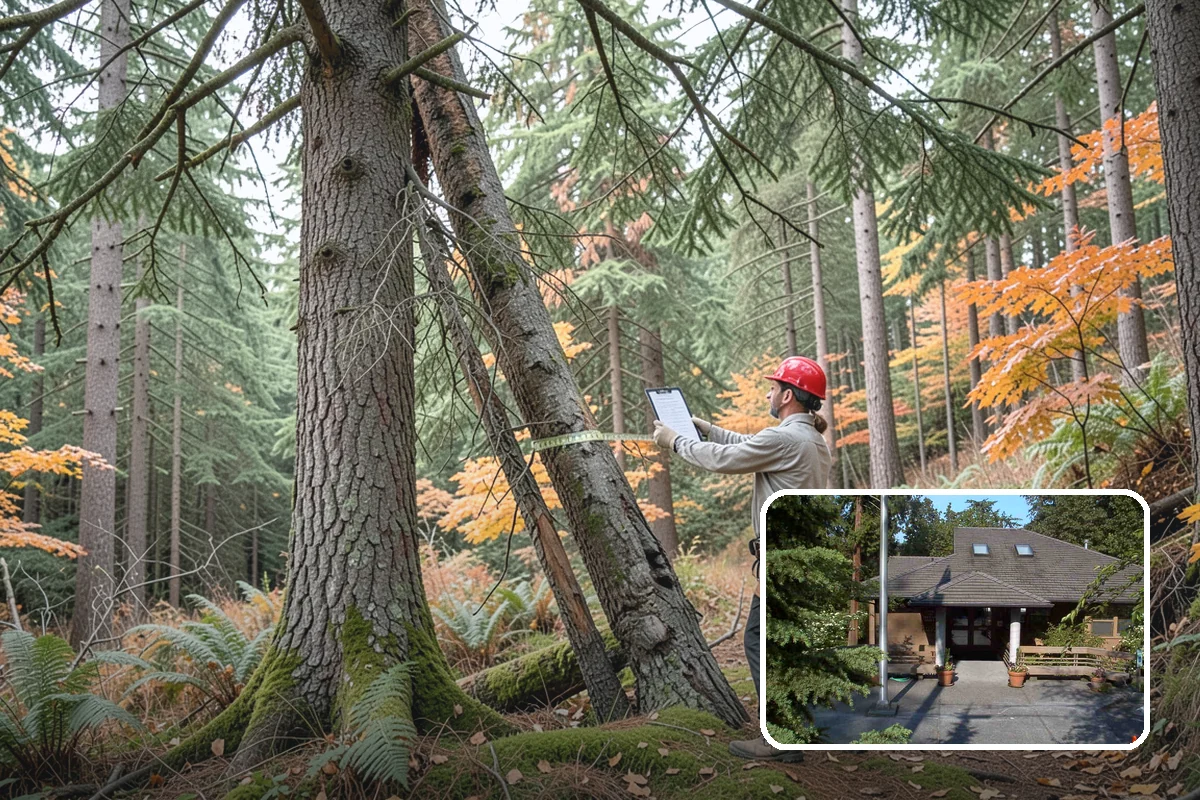
Why brush builds up in Yarrow Point and how we clear it
Brush is mostly fast-growing, opportunistic plants: Himalayan blackberry, English ivy, scotch broom, young alder and maple seedlings, and dense shrubs that have gone unpruned. They take over wherever light reaches the ground and nobody disturbs the soil. A gap left by a fallen limb, a neglected slope or a fence line is enough to start it.
Yarrow Point sits in USDA hardiness zone 9a, with parts of the city ranging from 8b to 9a, according to the USDA's 2023 map. That is a mild range for plants. Winter cold is unlikely to knock back vigorous growers, so overgrowth tends to return unless the roots are dealt with. Plan on follow-up, not a single pass.
Two other local figures help set expectations. A 2020 analysis from the SILVIS Lab puts about 0% of Yarrow Point's homes in the wildland-urban interface, the zone where houses meet wildland vegetation. So clearing here is mainly about access, drainage, sightlines and the health of your trees, not about meeting a wildfire-buffer standard. Satellite data also shows about 11% of the city's land under dense tree cover, meaning 50% canopy or more. Most lots, then, are not deep woods. Brush is more often a patch or a border to manage than a whole forested parcel.
How the work is done
We start by walking the area and marking what stays. Desirable shrubs, native plants and tree seedlings worth keeping are flagged before any cutting begins. Then the brush is cut back with hand tools and brush cutters, and the debris is hauled off or chipped. Around trees we work carefully by hand, since roots and bark near the base are easy to injure.
Cutting alone often leads to regrowth, so we talk through options for the roots, such as digging out crowns or repeated cutting. Ivy on trunks is cut at the base so it can die back, not pulled off the bark. If the area includes a tree you plan to remove, or sits near a steep slope or critical area, we check with the city before work starts, since rules differ for removal and for other work.
For an estimate, call or text 425-484-4442. Estimates are free, and an ISA Certified Arborist is on staff to advise on the trees in the clearing area.
Yarrow Point tree conditions at a glance
| Homes in the wildland-urban interface | 0% |
|---|---|
| Land under dense tree cover (50%+ canopy) | 11% |
| Rain and snow falling October to April | 81% of the year’s total |
Tree removal rules in Yarrow Point
A tree removal permit is required to remove any significant tree on private property (YPMC 20.22.030(A)). Minimum density of one significant tree per 5,000 sq ft of lot area must be shown whenever a significant or heritage tree is removed. Trees proposed for removal must be marked with yellow tape at DSH.
Regulated size: Any healthy tree at least 12 in DSH (diameter at 4.5 ft).
Official city source. Rules change; we confirm with the city before work starts.
Tree health near Yarrow Point
- Decline, cause not identified134 ac
Forest damage mapped from the air within 10 km of Yarrow Point, 2021-2025 (USDA Forest Service and WA DNR). This covers forest land, not street or yard trees. “Decline, cause not identified” is dieback with no single cause found.
Sources: Daymet daily weather (NASA/ORNL), NOAA Storm Events, USDA plant hardiness map 2023, NRCS soil survey, USGS elevation, WA DNR landslide inventory, USDA Forest Service aerial survey, WSDA, city tree assessments and street-tree inventories, SILVIS Lab, Arbor Day Foundation, and official city and utility pages.
Brush Clearing Serving Yarrow Point
Yarrow Point

Brush clearing in nearby areas
Also serving Yarrow Point
- Large-Scale Landscape Construction in Yarrow Pointat Washington Landscaping
- Deck Demolition in Yarrow Pointat Washington Construction
- Brush Mowing in Yarrow Pointat Washington City Services
- Tree Removal for Firewood in Yarrow Pointat Washington Firewood