Where Safety Meets Expert Tree Service.

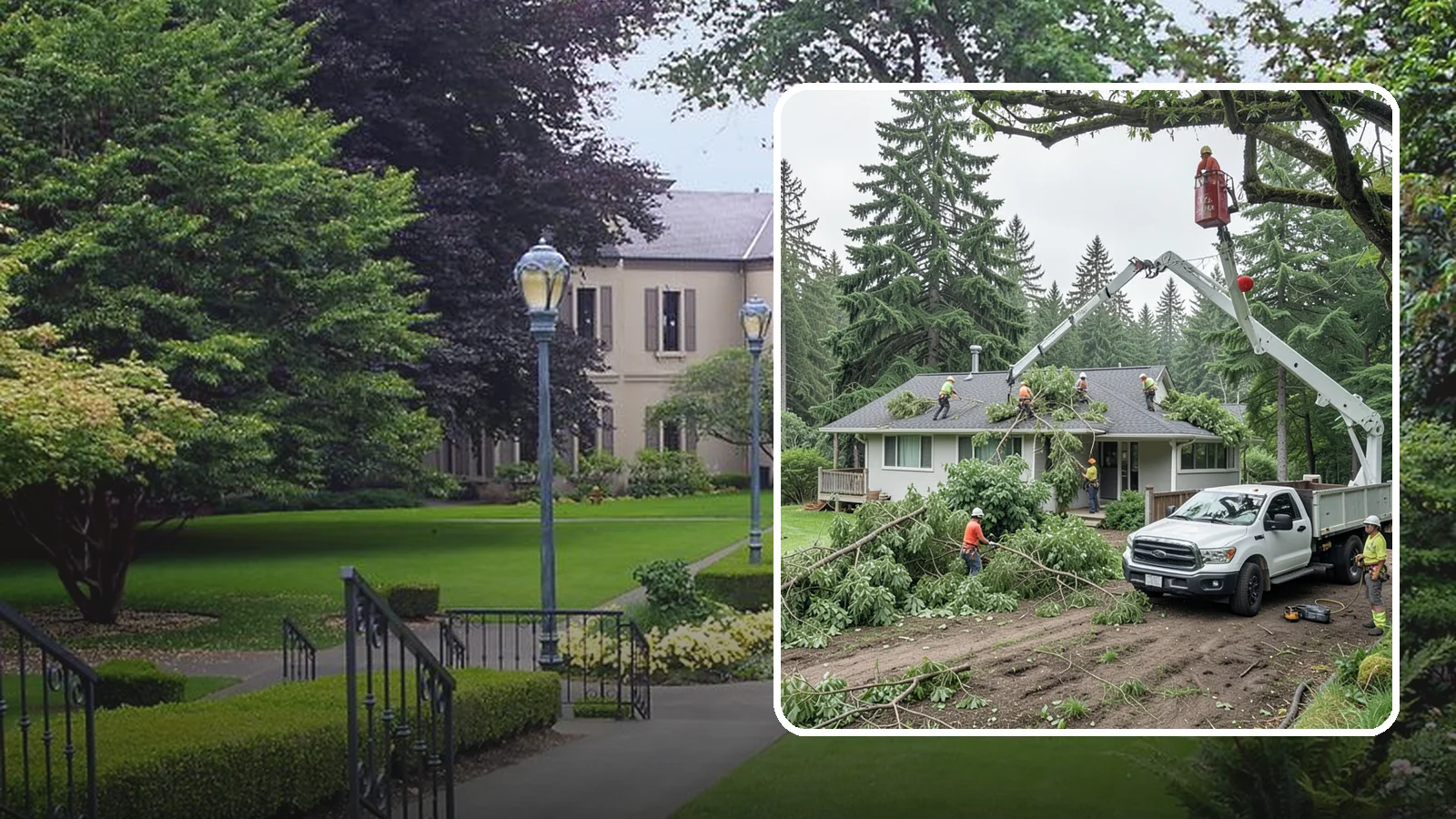
Woodinville Roof Clearance Pruning
The pruning of branches away from rooflines.
The best time to prune branches back from a roof is before the wet months settle in, when you can still see how limbs sit over shingles and gutters. In Woodinville, about 116 days a year bring 0.1 inch or more of rain (Daymet, 2005-2025). Limbs that rub or drip on a roof stay damp for long stretches.
Roof clearance pruning shortens or removes branches that touch, overhang, or drop debris onto your roof. Early fall, or any dry spell, is a good time to walk the property, look up from each corner of the house, and note which limbs are close.
About Roof Clearance Pruning in Woodinville
Roof clearance pruning helps keep your home’s exterior safe by trimming branches away from rooflines. This essential tree care protects roofing materials and gutters while reducing the amount of debris that accumulates over time. We work with homeowners throughout our service area to maintain healthy trees without compromising their structure or safety.
What Woodinville Roof Clearance Pruning Includes
Our team specializes in pruning branches specifically to create safe distance between your limbs and your home’s roofline. This targeted approach reduces potential damage from falling leaves, twigs, and larger debris that can clog gutters or wear down shingles. We focus on removing only what is necessary while respecting the natural growth patterns of each tree species.
Woodinville Roof Clearance Pruning Process
The work begins with a careful assessment of your canopy condition to determine the best pruning objectives for your specific trees. Our trained crews select precise cuts tailored to the season and species, ensuring clean incisions that avoid stressing the plant. After making these strategic cuts, we lower the material safely and thoroughly clean up the entire work area around your property.
Equipment We Use for Woodinville Roof Clearance Pruning
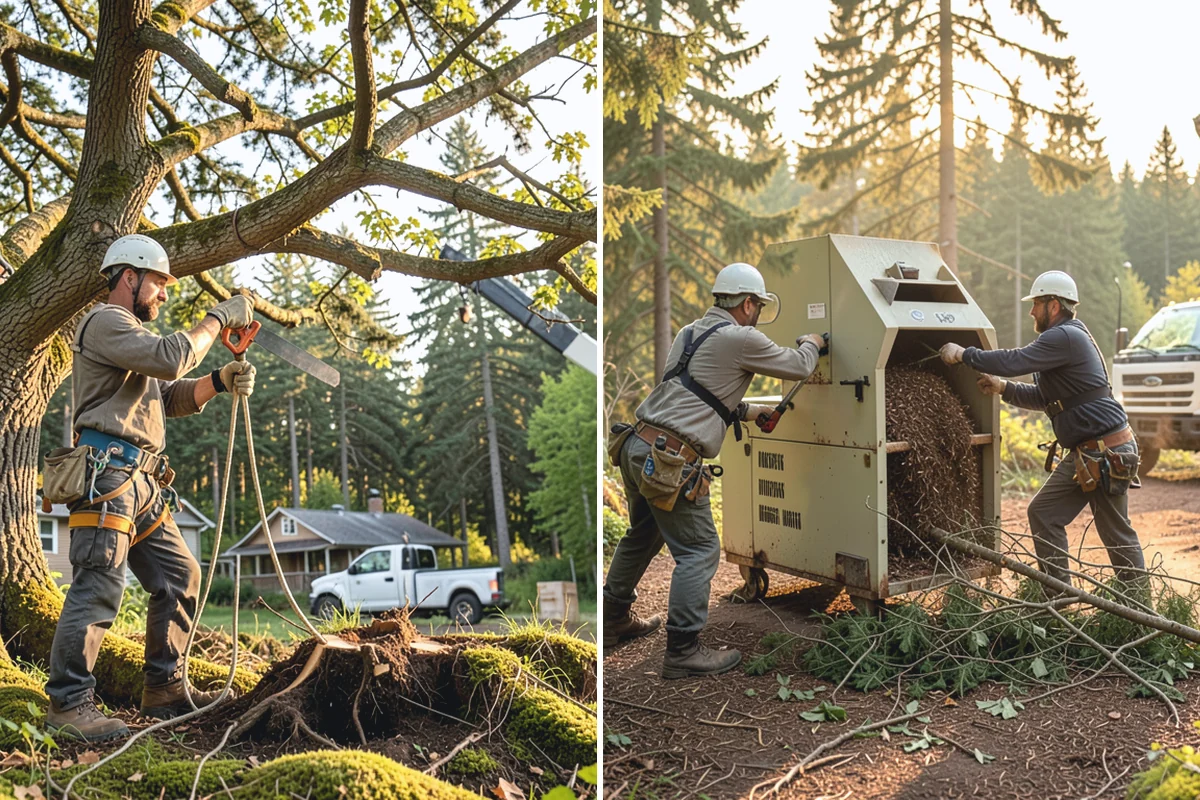
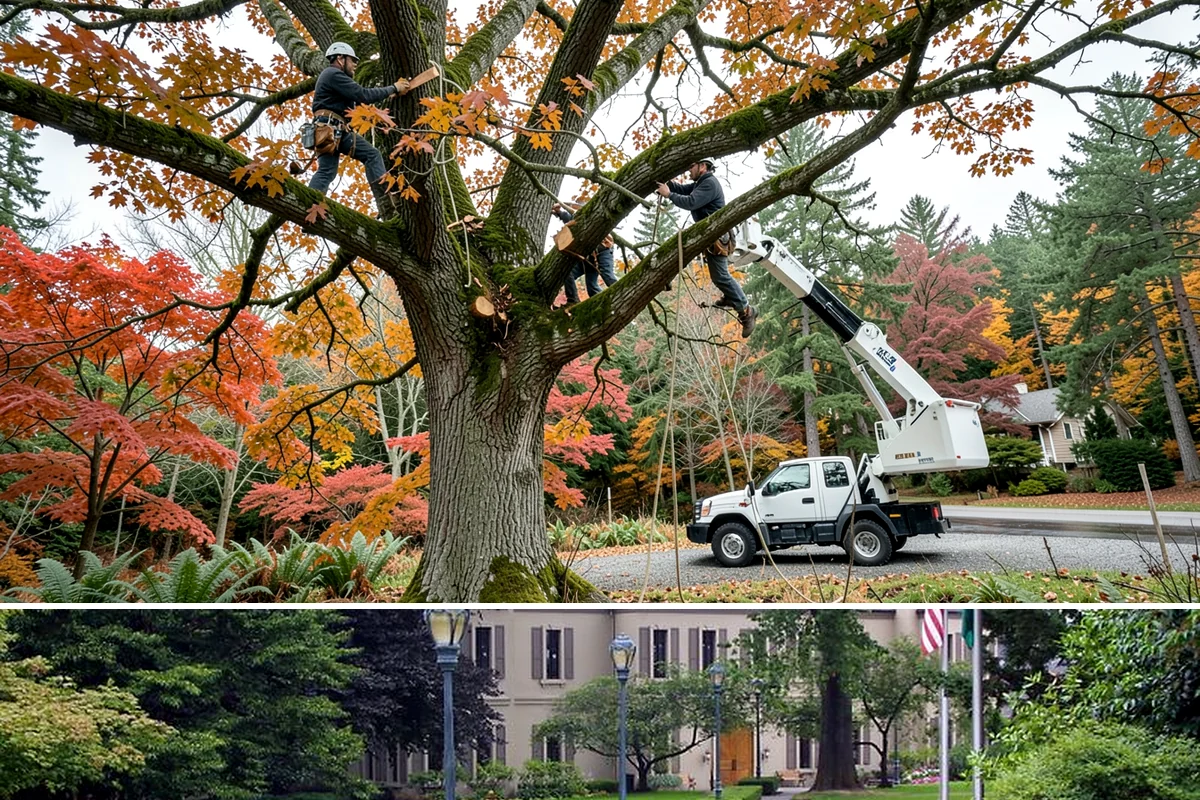
We utilize a variety of tools including hand saws, pole saws, chainsaws, and wood chippers to handle branches efficiently. Depending on how close trees are to structures or roofs, our crews may use climbing rigging gear or aerial lifts for safe access. All personnel wear proper personal protective equipment while operating this specialized machinery around your home.
Woodinville Roof Clearance Pruning Safety & Best Practices
We strictly follow recognized arboricultural standards to avoid making harmful cuts that could weaken a tree’s structure. Our crew watches carefully for overhead power lines and unstable limbs before beginning any work aloft or on the ground. Fall protection systems are used whenever workers climb, ensuring everyone remains secure throughout the pruning process.
Signs You Need Roof Clearance Pruning in Woodinville
You may need this service if you notice branches hanging low over your roofline or accumulating excessive debris in gutters. Deadwood found near weak unions or limbs interfering with structures also indicate that clearance work is appropriate for your trees. Addressing these issues early helps prevent branch failure and supports the long-term health of your landscape.
What Affects the Cost of Roof Clearance Pruning in Woodinville
The final price depends on factors such as tree species, current canopy condition, and specific access requirements like climbing gear or lifts. We also consider the volume of debris that needs processing and removal from your site before concluding our estimate. Each project is unique, so we evaluate these variables to provide a fair assessment for every job.
Best Time of Year for Woodinville Roof Clearance Pruning
Scheduling work during dormant seasons often minimizes stress on trees caused by over-pruning live tissue at the wrong time. We adhere to specific timing sensitivities required by different tree species common in our region to ensure optimal healing and growth. Planning ahead allows us to match methods to site conditions while keeping your trees vigorous throughout their life cycle.
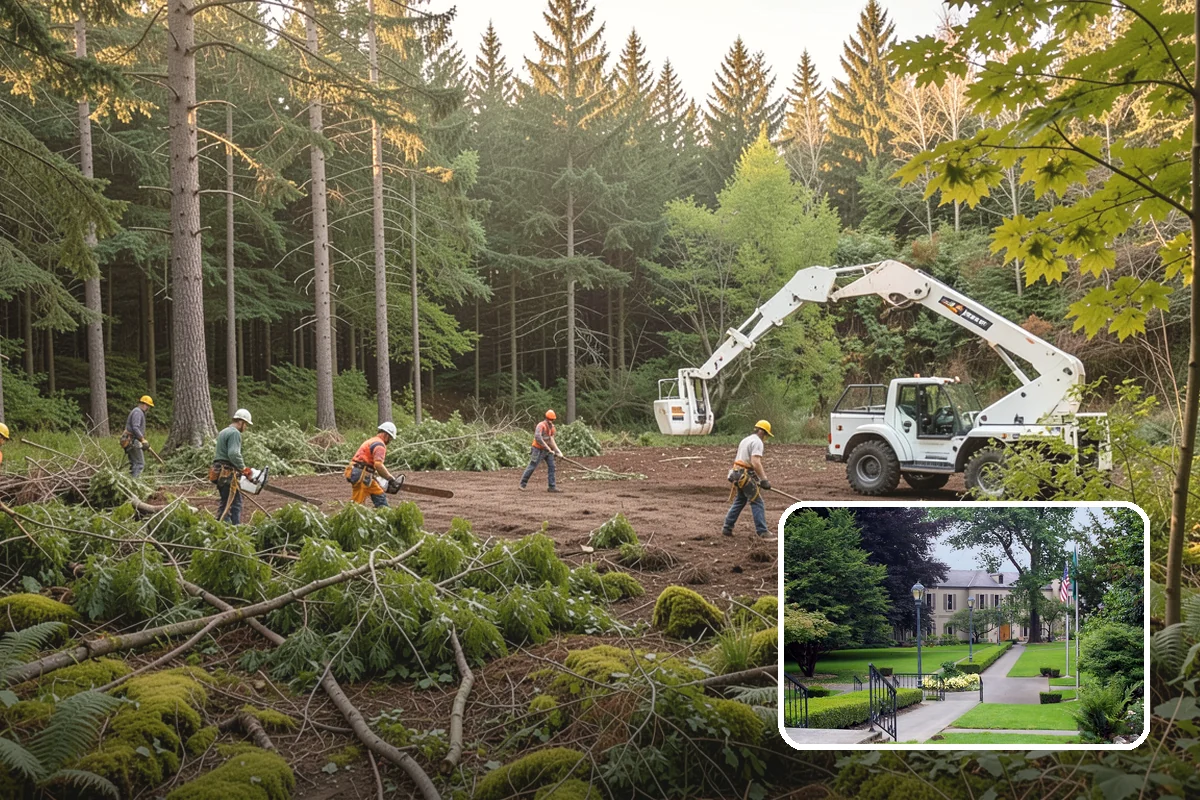
Planning roof clearance pruning in Woodinville
Start by looking at where branches meet the house. Check the roof edge, the gutters, the chimney and any vent pipes. Moss, dark streaks, and piles of needles or leaves under a limb show where contact or shedding is heaviest.
What affects the scope
Satellite tree-canopy data (USFS/NLCD 2025) puts Woodinville among the most heavily treed Puget Sound cities we compared. That is a citywide figure, not a statement about your yard. It does tell you that overhanging limbs are common here, and that a neighbor's tree may reach your roof as well. Branches on the other side of a property line raise questions about who approves the work, so talk with the neighbor first.
Wind matters too. The forecast zone that includes Woodinville recorded 33 high and strong wind episodes from 2005 to 2025. A limb that clears the roof on a calm day can swing down onto it in a gust. So we judge clearance with movement in mind, not just where the branch hangs at rest.
Scope also depends on branch size, how much live crown a cut would remove, and whether the tree is better served by pruning at the branch collar or by taking out a whole limb. Standard practice under ISA and ANSI A300 guidance is to make clean cuts at the branch collar and avoid removing too much foliage at once. We do not top trees. If one tree needs more than clearance, we will say so.
Pruning is not removal, and we do not assume a city rule on removal applies to it. If the rules for your lot are unclear, we check with the city before work starts.
On the day
Expect a walk around the house first to confirm which limbs are marked. Then the cutting, with ropes or rigging to lower larger limbs so they do not land on the roof. Debris gets cleared from the roof and gutters near the work, and chipped or hauled as agreed.
One practical tip: take photos of the roof from the ground before the visit, with the problem limbs in view. They make it easier to agree on what gets cut, and you can compare after the work.
Woodinville tree conditions at a glance
| USDA hardiness zone | 8b (8b to 9a across the city) |
|---|---|
| Rain and snow falling October to April | 80% of the year’s total |
| Tree canopy | Among the most heavily treed Puget Sound cities (satellite data) |
| Days that freeze at night and thaw by day | 32 a year |
| Tree City USA | 30 years |
| Electric utility | Puget Sound Energy (PSE) |
Trees near the power line to your house
Puget Sound Energy (PSE): Service line (wire from PSE pole to home or meter pole): PSE does not trim it; homeowner/private arborist trims.
PSE performs a safety disconnection so the homeowner or private tree trimmer/arborist can work; Call at least 5 business days ahead to check crew availability and potential charges.
Safety disconnect: 1-888-321-7779 (5+ business days ahead). Utility page.
Any fee for a disconnect is set by the utility.
Sources: Daymet daily weather (NASA/ORNL), NOAA Storm Events, USDA plant hardiness map 2023, NRCS soil survey, USGS elevation, WA DNR landslide inventory, USDA Forest Service aerial survey, WSDA, city tree assessments and street-tree inventories, SILVIS Lab, Arbor Day Foundation, and official city and utility pages.
Roof Clearance Pruning Serving Woodinville
Woodinville
Also serving Woodinville
- Pear Tree Pruning in Woodinvilleat Washington Landscaping
- Copper Strip Installation in Woodinvilleat Washington Roofing
- Emergency Tree Response in Woodinvilleat Washington City Services