Where Safety Meets Expert Tree Service.

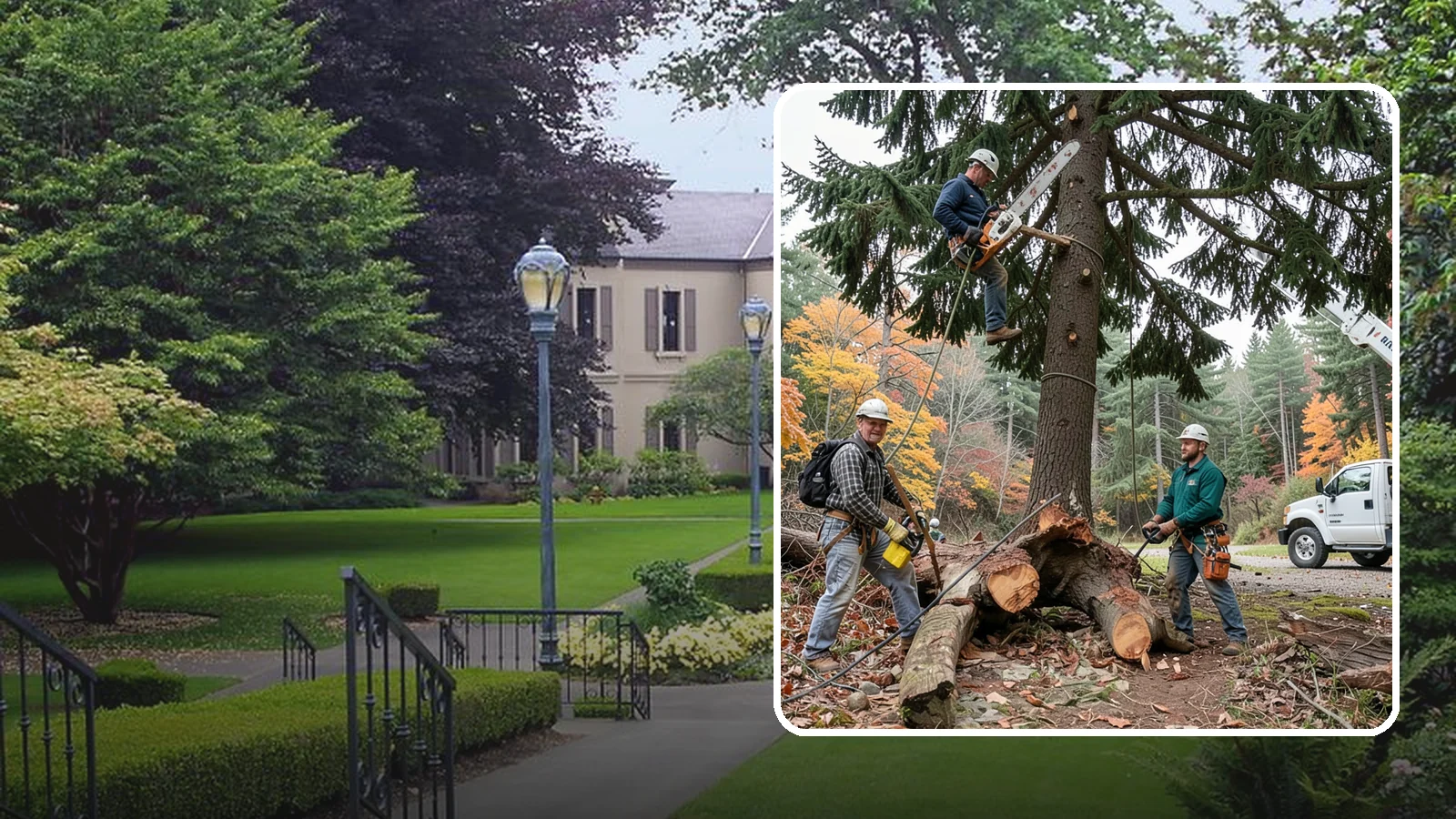
Woodinville Dead Tree Removal
The removal of dead trees that no longer have living tissue.
This page is for Woodinville owners with a tree that has stopped leafing out, dropped its bark, turned brown through the crown, or started shedding limbs, especially when it stands near a house, driveway, fence or power line.
A dead tree gets more brittle over time, so the first step is to have it looked at and decide how it should come down. Below we compare the main ways to handle one and explain which local conditions point toward each.
About Dead Tree Removal in Woodinville
If a tree on your property has lost all living tissue, our team is here to handle its safe removal for you. We understand that dealing with dead wood can feel overwhelming, so we are ready to help protect your home and landscape from falling hazards. Our goal is to clear the danger while respecting your space and peace of mind.
What Woodinville Dead Tree Removal Includes
This service focuses specifically on removing trees that no longer have living tissue inside them. It includes carefully taking down brittle branches or entire stems that pose a risk, as well as clearing away any debris left behind. We also work hard to stop pests from using the dead wood before they can spread disease to nearby healthy plants.
Woodinville Dead Tree Removal Process
Our trained crews start with an on-site assessment to evaluate risks and establish safe drop zones around your property. Using recognized arboricultural standards, we rig limbs or fell the stem in a controlled sequence that matches the tree species and site conditions. Afterward, we process the wood, haul away debris, and perform final cleanup so your yard is left clear and tidy.
Equipment We Use for Woodinville Dead Tree Removal
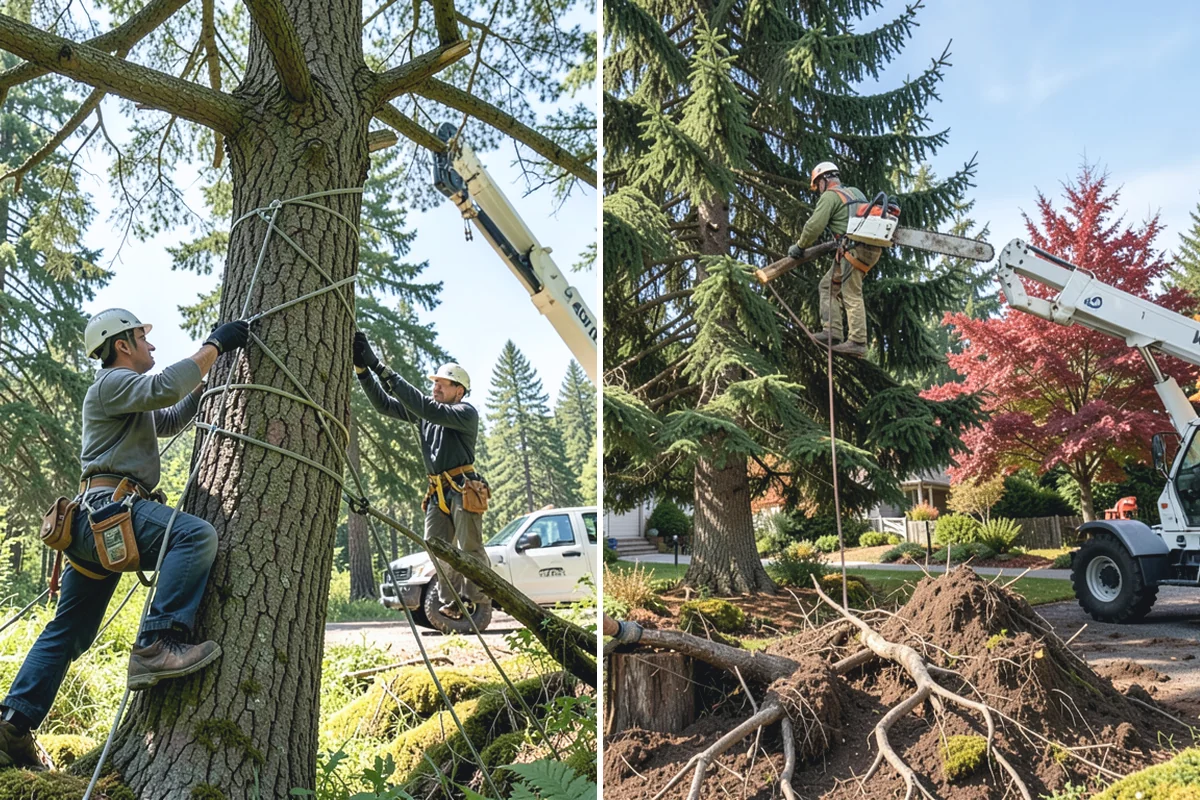
We use professional chainsaws and climbing gear to navigate difficult branches safely while removing dead trees from various heights. Depending on the size of the job or access limitations, our crews may bring in aerial lifts or cranes to assist with heavy lifting. All tools are paired with ground protection measures to keep your landscaping safe during the workday.
Woodinville Dead Tree Removal Safety & Best Practices
Before any climbing begins, we inspect for hidden decay and structural defects that could cause an unexpected fall. We maintain clear drop zones and controlled paths so no one is in harm’s way when limbs or trunks come down. Our team also communicates constantly between climbers on the ground to ensure every step of the removal stays safe for everyone involved.
Signs You Need Dead Tree Removal in Woodinville
You likely need this service if you notice a tree that has become brittle, cracked, or shows signs it has completely died. These conditions create immediate falling hazards and often attract pests looking for easy food sources near your home. Identifying these issues early helps prevent damage to structures, utilities, and the rest of your garden before they spread further.
What Affects the Cost of Dead Tree Removal in Woodinville
The price depends on factors like how large the tree is and whether it sits close to power lines or buildings that limit our access. Hidden internal decay can add complexity to the job, requiring more careful planning than a straightforward removal would need. Additionally, requirements for wood disposal will influence the final cost based on what needs to be hauled away from your site.
Best Time of Year for Woodinville Dead Tree Removal
In our local climate, dead tree removal is possible year-round since we do not wait for specific seasons to begin work. However, many homeowners prefer scheduling this during drier periods when frozen ground conditions improve stability for equipment operating on slopes or uneven terrain. We can arrange a time that fits your schedule while ensuring the best working conditions for both our crew and your property.
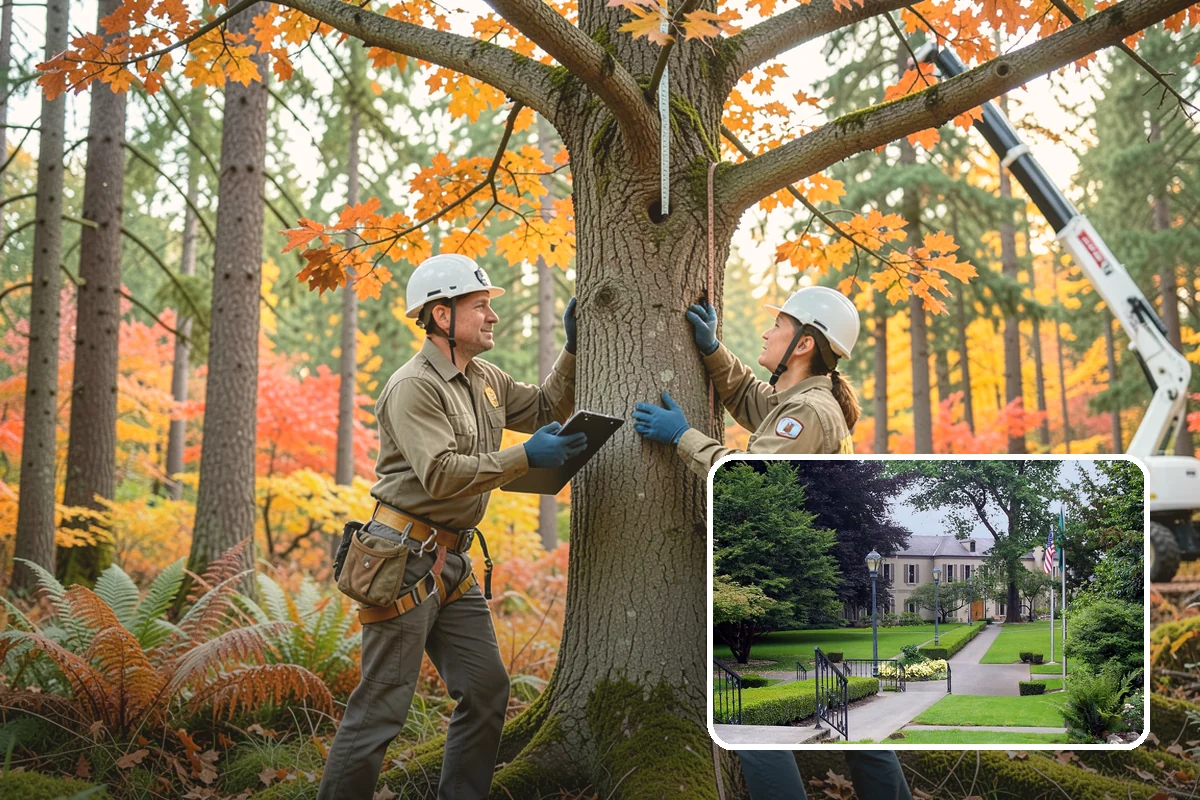
Dead tree removal options for Woodinville properties
Not every dead or dying tree needs the same approach. The right choice depends on where the tree stands, how much of it is still sound, and what is underneath it.
Your main options
- Full removal in sections. A climber takes the tree down in pieces and lowers them. This suits trees close to buildings, lines or fences, where a drop zone is not available.
- Straight felling. The whole tree is cut at the base and laid down in a planned direction. It only works where there is open ground longer than the tree is tall.
- Partial removal. The dead top or limbs are cut out and a sound trunk is left, sometimes as a wildlife snag. This fits a tree far from any target, and only when the remaining wood is stable.
- Keep and monitor. Some trees with partial dieback are stressed, not dead. An arborist inspection can tell the difference before anyone cuts.
What local conditions point toward
A federal aerial survey of forest within 10 km of Woodinville (USDA Forest Service and WA DNR, 2021-2025) mapped 819 acres of western redcedar in decline with no single cause identified. That is forest land, not yard trees, so it says nothing about a specific tree on your lot. It does match a state report linking redcedar dieback to cumulative stress from warmer, drier late spring and early summer conditions. If a redcedar is thinning or browning, it is worth having someone confirm whether it is dead or stressed before you choose removal.
The same survey mapped smaller areas of Douglas-fir damage from the Douglas-fir engraver (36 acres) and the Douglas-fir beetle (19 acres). For a Douglas-fir with fading needles, the cause matters because it affects how soon the tree should come down.
Satellite data (USFS/NLCD 2025) puts Woodinville among the most heavily treed Puget Sound cities we compared. In practice, many lots have other trees nearby, which can limit where a trunk can fall and favor sectional removal.
The published city rules we found don't clearly say which removals need approval. We check with the city before work starts, so you don't have to guess. Call or text 425-484-4442 for a free estimate.
Woodinville tree conditions at a glance
| USDA hardiness zone | 8b (8b to 9a across the city) |
|---|---|
| Tree canopy | Among the most heavily treed Puget Sound cities (satellite data) |
| Slopes | Some steep slopes |
| Soils | 55% of land has hardpan or another restrictive layer within 40 in; most common series Alderwood |
| High and strong wind episodes, 2005-2025 | 33 in the forecast zone |
| Electric utility | Puget Sound Energy (PSE) |
Tree removal rules in Woodinville
Woodinville’s published rules don’t spell out clearly which removals need city approval. We check with the city before work starts.
Trees near the power line to your house
Puget Sound Energy (PSE): Service line (wire from PSE pole to home or meter pole): PSE does not trim it; homeowner/private arborist trims.
PSE performs a safety disconnection so the homeowner or private tree trimmer/arborist can work; Call at least 5 business days ahead to check crew availability and potential charges.
Safety disconnect: 1-888-321-7779 (5+ business days ahead). Utility page.
Any fee for a disconnect is set by the utility.
Strongest wind events near Woodinville
- Dec 17, 2010: gusts to 72 mph
- Feb 7, 2012: gusts to 70 mph
- Dec 14, 2006: gusts to 68 mph
NOAA Storm Events, forecast zone that includes Woodinville, 2005-2025.
Sources: Daymet daily weather (NASA/ORNL), NOAA Storm Events, USDA plant hardiness map 2023, NRCS soil survey, USGS elevation, WA DNR landslide inventory, USDA Forest Service aerial survey, WSDA, city tree assessments and street-tree inventories, SILVIS Lab, Arbor Day Foundation, and official city and utility pages.
Dead Tree Removal Serving Woodinville
Woodinville

Also serving Woodinville
- Native Plant Landscaping in Woodinvilleat Washington Landscaping
- Tree Inventory in Woodinvilleat Washington City Services
- Customer Tree Processing in Woodinvilleat Washington Firewood