Where Safety Meets Expert Tree Service.

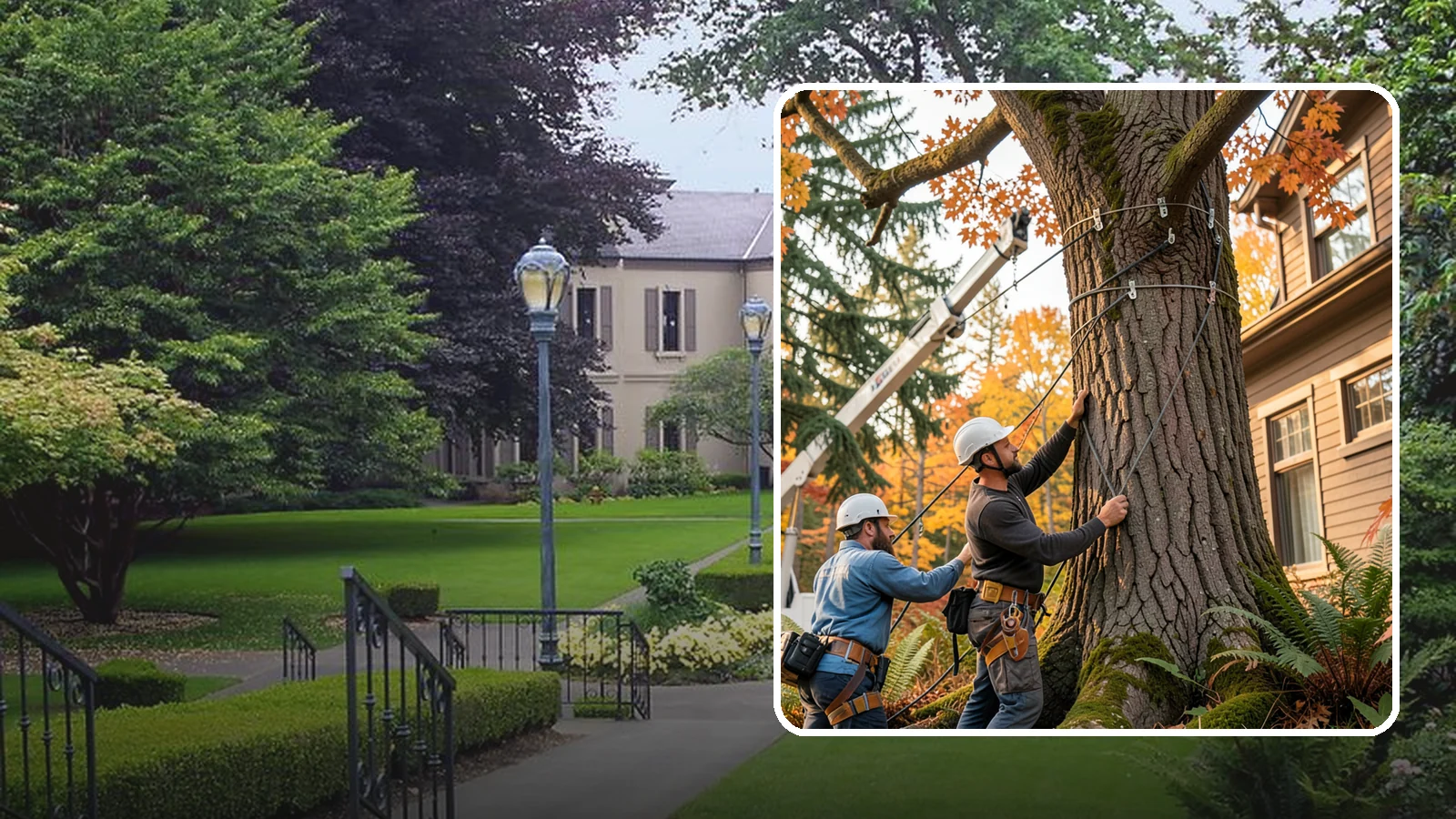
Woodinville Cable Inspections
The periodic inspection of installed support systems.
The forecast zone that includes Woodinville logged 33 high and strong wind episodes between 2005 and 2025. Any tree with a cable in its crown has been loaded by wind many times over a span like that, so a yearly look at the hardware is a sensible habit.
A cable inspection checks the steel or synthetic support systems that were installed to limit movement in a weak union or heavy limb. You can start by noting which trees have cables, when they were installed if you know, and whether anything looks different since the last storm.
About Cable Inspections in Woodinville
We offer periodic inspections of your installed tree support systems to ensure they remain sound and effective over time. This helpful check is designed for homeowners who want to confirm that their cabling continues to protect significant trees safely. Our trained crews follow recognized standards while matching our methods to the specific needs of each property.
What Woodinville Cable Inspections Includes
Cable inspections focus on confirming that hardware stays in good condition without interference from foliage or other obstacles. We assess structural defects and load paths to verify that weak unions, heavy limbs, and aging systems are still functioning correctly. This service helps preserve valued trees by supporting them where they need the most stability during storms or high winds.
Woodinville Cable Inspections Process
Our team begins by evaluating your tree’s unique species and site conditions before selecting an appropriate support system for review. We carefully inspect installed hardware to ensure it is positioned at correct locations and remains free from damage over time. After documenting our findings, we will set a clear inspection schedule so you know when the next check should occur.
Equipment We Use for Woodinville Cable Inspections
To perform these inspections safely and accurately, we utilize climbing gear, rigging tools, and aerial lifts as needed for access to high branches. We also bring correctly rated hardware for any necessary adjustments or replacements during the evaluation process. All crew members wear personal protective equipment while working around your trees with care.
Woodinville Cable Inspections Safety & Best Practices
Our crews install support only where it is truly appropriate and effective for preventing limb or stem failure. During every inspection, we use properly rated materials to recognize when removal might be a safer option than keeping old hardware in place. We prioritize the long-term health of your tree by ensuring all systems meet recognized arboricultural standards before leaving the site.
Signs You Need Cable Inspections in Woodinville
You may need this service if you notice cracks and cavities, overextended limbs, or included-bark unions that require monitoring for structural integrity. Aging hardware often shows signs of wear that a professional inspection can identify early to prevent unexpected failures later on. This check is especially important when dealing with codominant stems that have previously required support systems.
What Affects the Cost of Cable Inspections in Woodinville
The price varies based on the specific tree species and how difficult it is to access different parts of your property for assessment. Factors like complex structural defects in weak unions or heavy limbs will also influence the overall cost of the inspection work. Site conditions play a major role, as working around obstacles can require additional time and specialized approaches from our crew.
Best Time of Year for Woodinville Cable Inspections
Inspections are best performed during dormant seasons when leafless branches allow for clear visibility of hardware integrity without interference from foliage. Waiting until trees have lost their leaves ensures we can see every bolt, cable, or brace clearly to confirm it remains effective over time. This timing helps us provide the most accurate assessment possible before new growth returns in spring.
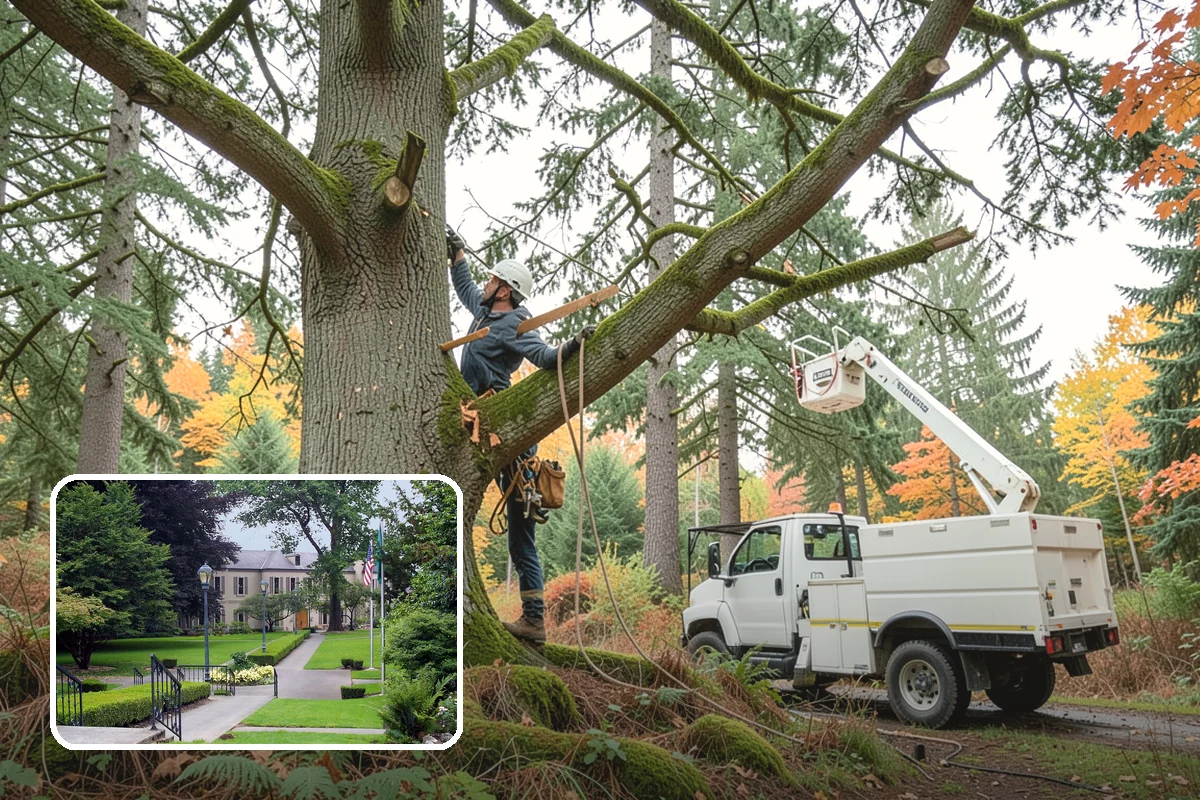
How cable inspections work for Woodinville trees
A cable is installed to share load between limbs, not to make a weak tree strong. Hardware wears, and the tree keeps growing around it. That is why it needs periodic checking. Here is how an inspection usually goes.
- Look at the whole tree from the ground, noting the crown shape, the union being supported and any dead or cracked wood.
- Climb or use a lift to reach each cable, brace rod and anchor point.
- Check for frayed strands, loose hardware, and anchors that have pulled or been overgrown by bark.
- Look at the union itself for new cracks, decay or included bark.
- Report what was found and whether to adjust, replace or leave the system alone.
Why wind history matters here
The 33 high and strong wind episodes come from records for the forecast zone that includes Woodinville, not from this property. They still show the kind of repeated loading a supported limb can face. After a strong windstorm, it makes sense to ask for a check rather than wait for the next scheduled one.
Ice and the growing season
The same zone recorded 2 ice storm episodes in that period. Ice adds weight to limbs fast, and cables can take a sudden load. If a tree with a cable has carried ice, have the hardware and the supported union checked.
The USDA lists Woodinville in plant hardiness zone 8b, with parts of the city ranging from 8b to 9a (USDA map, 2023). In practice that means trees can add growth over many seasons, so bark may close around anchors and the cable may need adjusting over time.
If an inspection shows a cracked union or a failing anchor, pruning or replacing the system may be the answer. We check with the city before any work that could involve a tree rule. Our ISA Certified Arborist can walk through what the inspection finds, and estimates are free. Call or text 425-484-4442.
Woodinville tree conditions at a glance
| High and strong wind episodes, 2005-2025 | 33 in the forecast zone |
|---|---|
| Ice storm episodes, 2005-2025 | 2 in the forecast zone |
| Average snowfall | 8.8 in a season |
| Soils | 55% of land has hardpan or another restrictive layer within 40 in; most common series Alderwood |
| Slopes | Some steep slopes |
Strongest wind events near Woodinville
- Dec 17, 2010: gusts to 72 mph
- Feb 7, 2012: gusts to 70 mph
- Dec 14, 2006: gusts to 68 mph
NOAA Storm Events, forecast zone that includes Woodinville, 2005-2025.
Sources: Daymet daily weather (NASA/ORNL), NOAA Storm Events, USDA plant hardiness map 2023, NRCS soil survey, USGS elevation, WA DNR landslide inventory, USDA Forest Service aerial survey, WSDA, city tree assessments and street-tree inventories, SILVIS Lab, Arbor Day Foundation, and official city and utility pages.
Cable Inspections Serving Woodinville
Woodinville

