Where Safety Meets Expert Tree Service.

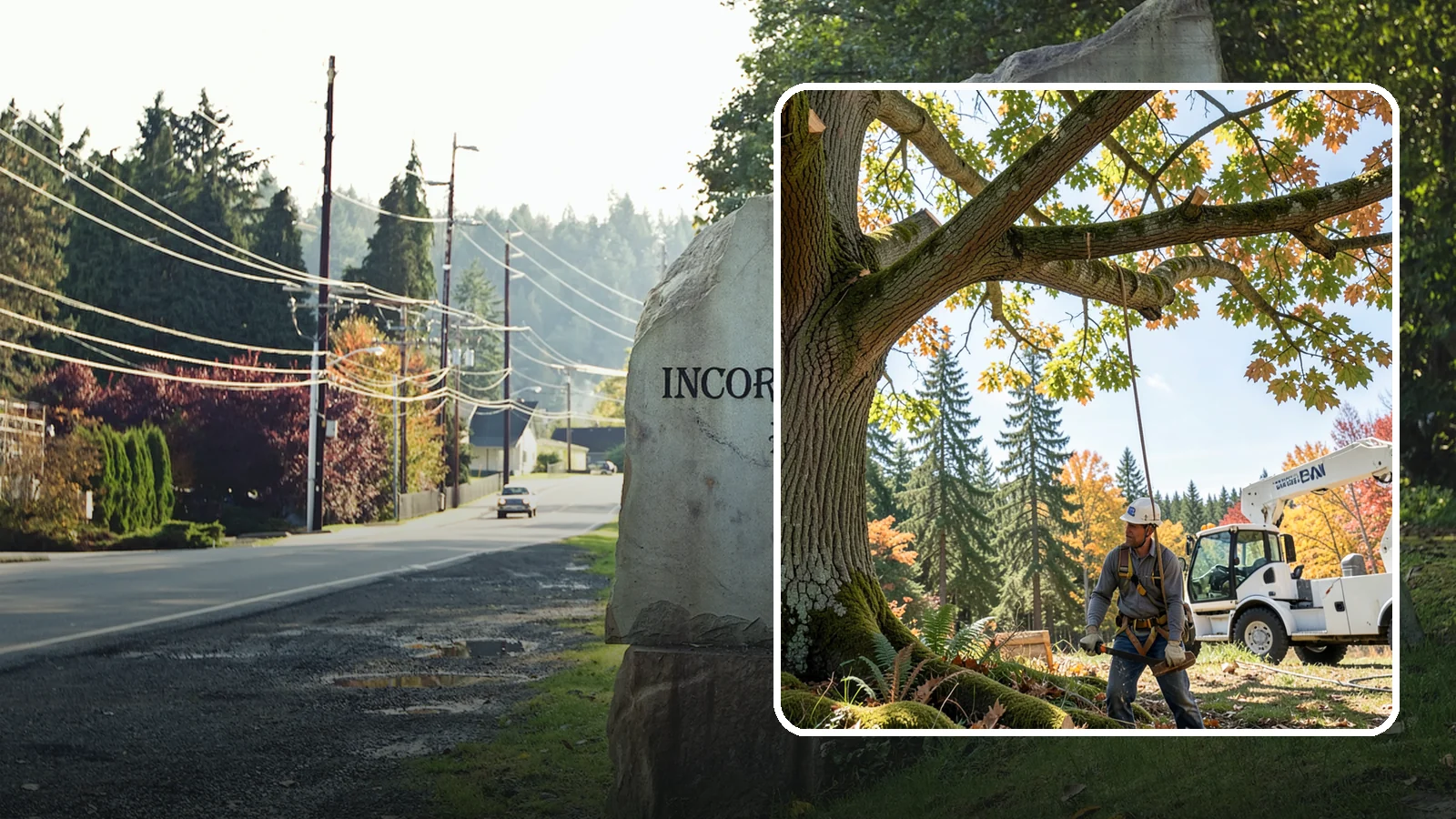
Wilkeson Deadwood Removal
The removal of dead branches from the canopy.
You may notice branches with no leaves in midsummer, bark peeling away from a limb, or twigs that snap clean instead of bending. Those are signs of deadwood, and a dead limb can drop without warning, so it is worth a closer look from the ground.
Deadwood removal means cutting out dead, dying or broken branches while leaving the living crown in place. Below, we explain why branches die, which local conditions in Wilkeson are worth knowing about, and how the work is done.
About Deadwood Removal in Wilkeson
We help homeowners keep their trees safe and looking great by removing dead branches from the canopy. This friendly approach ensures your property stays hazard-free while enhancing its natural beauty. Whether you have a single tree or a large grove, our trained crews are ready to assist with this essential care.
What Wilkeson Deadwood Removal Includes
Deadwood removal focuses on taking out lifeless limbs that pose risks of falling unexpectedly. Beyond safety, the process also improves how your trees look and supports their long-term health by removing weak unions. We match every method to the specific tree species and site conditions for a tailored result.
Wilkeson Deadwood Removal Process
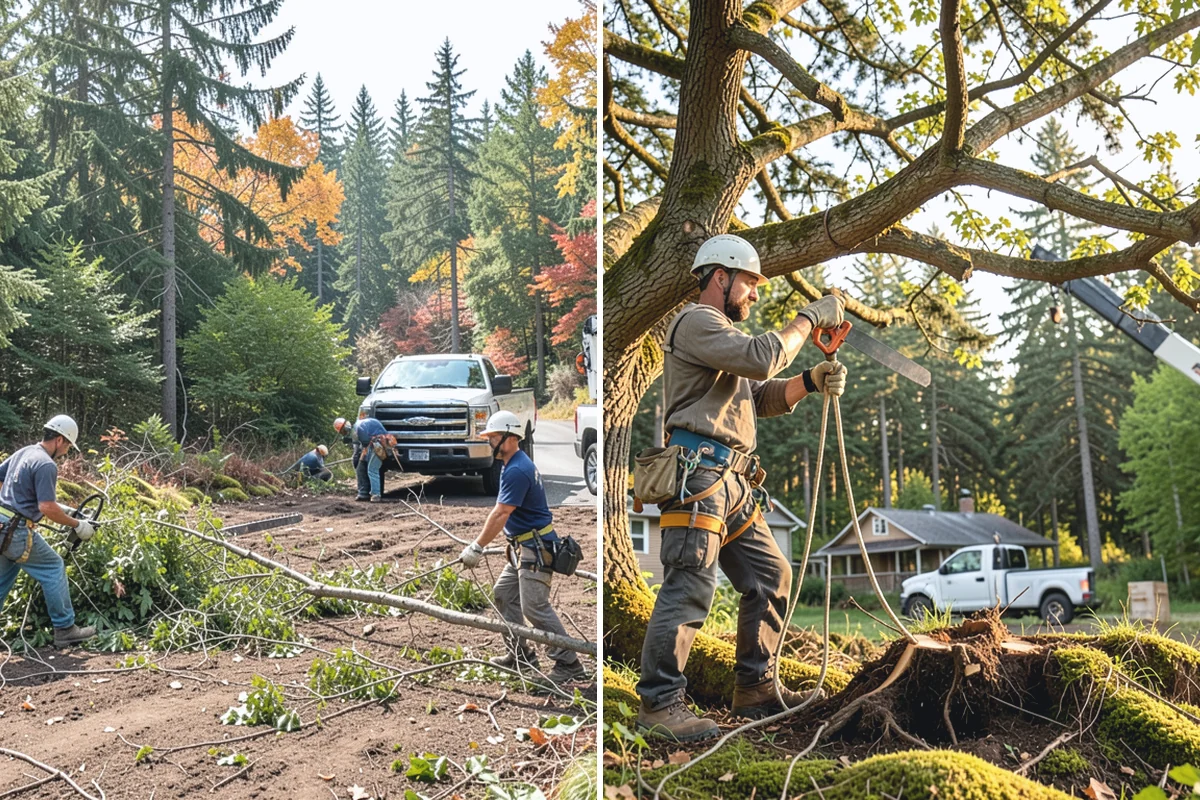
Our work begins with an assessment of the canopy condition and clear pruning objectives for each tree. Crews select precise cuts that fit the season and species, ensuring we never over-prune or cause unnecessary stress. After making clean incisions at proper points, we carefully lower branches and process them before cleaning up your entire work area.
Equipment We Use for Wilkeson Deadwood Removal
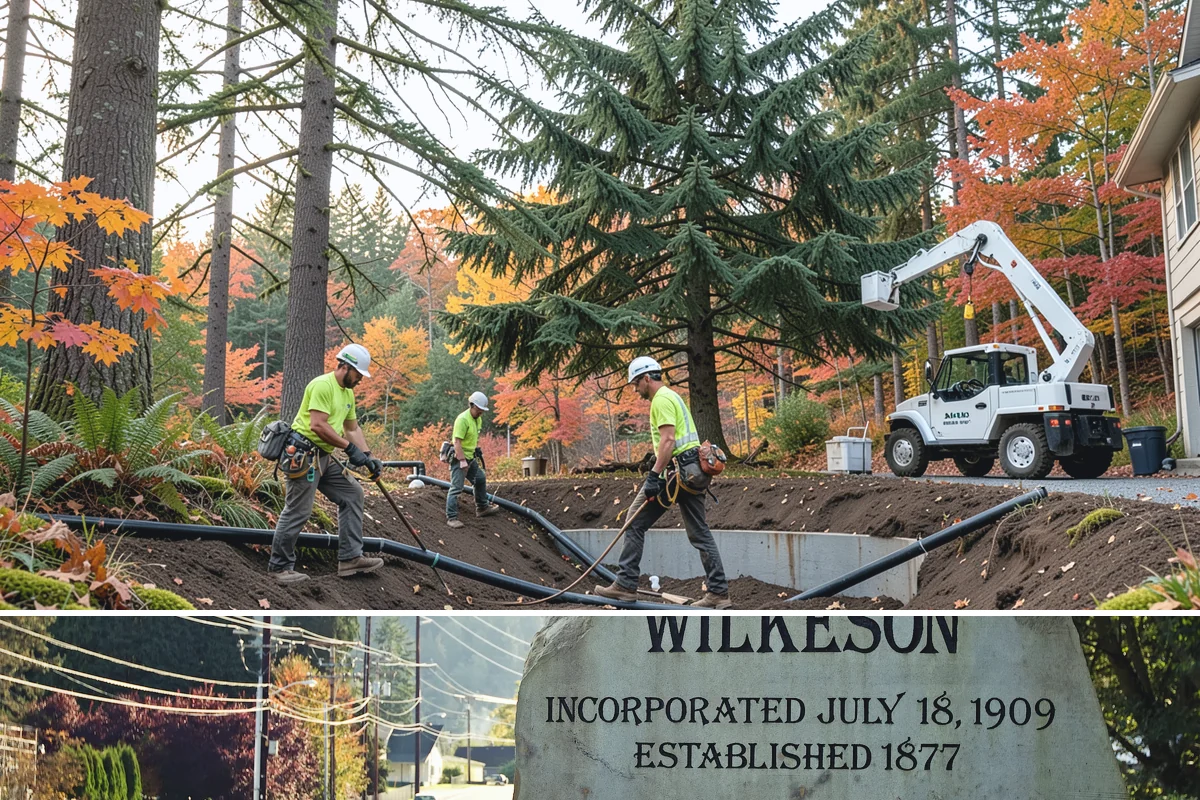
To handle this job safely, our teams use hand saws, pole saws, chainsaws, and various climbing gear as needed. Depending on the tree’s height and location, an aerial lift may be utilized to reach difficult spots without risk. We also bring a wood chipper for efficient material processing along with full personal protective equipment for everyone involved.
Wilkeson Deadwood Removal Safety & Best Practices
Our crews strictly follow recognized pruning standards to avoid making cuts that could harm your trees or invite disease. We carefully watch for overhead power lines and unstable limbs before starting any work aloft. Fall protection is always used when working from heights, ensuring a secure environment throughout the project.
Signs You Need Deadwood Removal in Wilkeson
You might need this service if you see dead branches hanging loosely in your canopy or notice weak unions that could fail during wind events. Over-pruning by others or interference with nearby structures and lines are also common reasons to call for professional help. These issues can cause stress to healthy tissue, so addressing them early supports the tree’s overall vigor.
What Affects the Cost of Deadwood Removal in Wilkeson
The final cost is influenced by how large your canopy is and whether site access conditions make the job more complex. Tree species complexity plays a role in pricing, as does the volume of material that needs to be removed and disposed of properly. We evaluate all these factors together to provide an accurate estimate for your specific situation.
Best Time of Year for Wilkeson Deadwood Removal
In our Puget Sound climate, this work can generally be performed year-round without major restrictions. However, we consider species-specific timing considerations to avoid stressing the tree or creating entry points for disease during certain seasons. Our experts will guide you on the best time to schedule based on your particular trees and local conditions.

Deadwood removal in Wilkeson: causes, local risks and the work
Branches die for several reasons. Shade from taller growth, root damage, drought, insects, disease and storm breakage are the common ones. A single dead limb may be a minor issue. Deadwood spread through the crown can point to a problem with the whole tree, and that is worth sorting out before any cutting starts.
Two local details bear on this. First, a forecast zone that includes Wilkeson recorded 40 high and strong wind episodes between 2005 and 2025. That figure covers the whole zone, not one yard. Still, repeated wind is what loosens dead wood, so branches that have been dead a while are the ones most likely to come down. Second, a 2021-2025 aerial survey by the USDA Forest Service and WA DNR mapped damage in forest within 10 km of Wilkeson. It covers forest land, not yard trees. It found bears damage on 6,697 acres of Douglas-fir, Douglas-fir engraver beetle damage on 894 acres, and 907 acres of western redcedar in decline with no cause identified. That last label means dieback where no single cause was found. If you have Douglas-fir or western redcedar with dead tops or thinning crowns, these results are a reason to have the tree looked at, not proof of what is wrong with yours.
Look at the ground as well as the branches. WSU Extension's Pacific Northwest Gardener's Handbook lists cracking, heaving or movement of soil near a tree as a warning sign. If you see that, deadwood removal alone may not be the right answer, because the problem could be at the roots. In that case the tree needs a fuller assessment first.
When the job is deadwood removal, the work follows standard practice. The arborist cuts dead branches back to the branch collar, the swelling where the limb joins its parent, and avoids flush cuts or leaving long stubs. Live wood is kept, since removing too much of the crown stresses a tree. Larger limbs are lowered in sections where they could hit a roof, fence or wires. We also check each tree for cracks, decay and weak unions while we are up there, and tell you what we find. Call or text 425-484-4442 for a free estimate.
Wilkeson tree conditions at a glance
| USDA hardiness zone | 8b |
|---|---|
| Tree canopy | Among the most heavily treed Puget Sound cities (satellite data) |
| Slopes | More steep ground than most Puget Sound cities |
| Soils | 37% of land has hardpan or another restrictive layer within 40 in; most common series Indianola; 61% well drained |
| High and strong wind episodes, 2005-2025 | 40 in the forecast zone |
| Electric utility | Puget Sound Energy (PSE) |
Tree removal rules in Wilkeson
Wilkeson’s published rules don’t spell out clearly which removals need city approval. We check with the city before work starts.
Trees near the power line to your house
Puget Sound Energy (PSE): Service line (wire from PSE pole to home or meter pole): PSE does not trim it; homeowner/private arborist trims.
PSE performs a safety disconnection so the homeowner or private tree trimmer/arborist can work; Call at least 5 business days ahead to check crew availability and potential charges.
Safety disconnect: 1-888-321-7779 (5+ business days ahead). Utility page.
Any fee for a disconnect is set by the utility.
Strongest wind events near Wilkeson
- Dec 17, 2010: gusts to 72 mph
- Feb 1, 2017: gusts to 70 mph
- Feb 7, 2012: gusts to 70 mph
NOAA Storm Events, forecast zone that includes Wilkeson, 2005-2025.
Sources: Daymet daily weather (NASA/ORNL), NOAA Storm Events, USDA plant hardiness map 2023, NRCS soil survey, USGS elevation, WA DNR landslide inventory, USDA Forest Service aerial survey, WSDA, city tree assessments and street-tree inventories, SILVIS Lab, Arbor Day Foundation, and official city and utility pages.
Deadwood Removal Serving Wilkeson
Wilkeson
Deadwood removal in nearby areas
Also serving Wilkeson
- Fruit Tree Pruning in Wilkesonat Washington Landscaping
- Roof Algae Treatment in Wilkesonat Washington Roofing
- Tree Risk Assessments in Wilkesonat Washington City Services