Where Safety Meets Expert Tree Service.

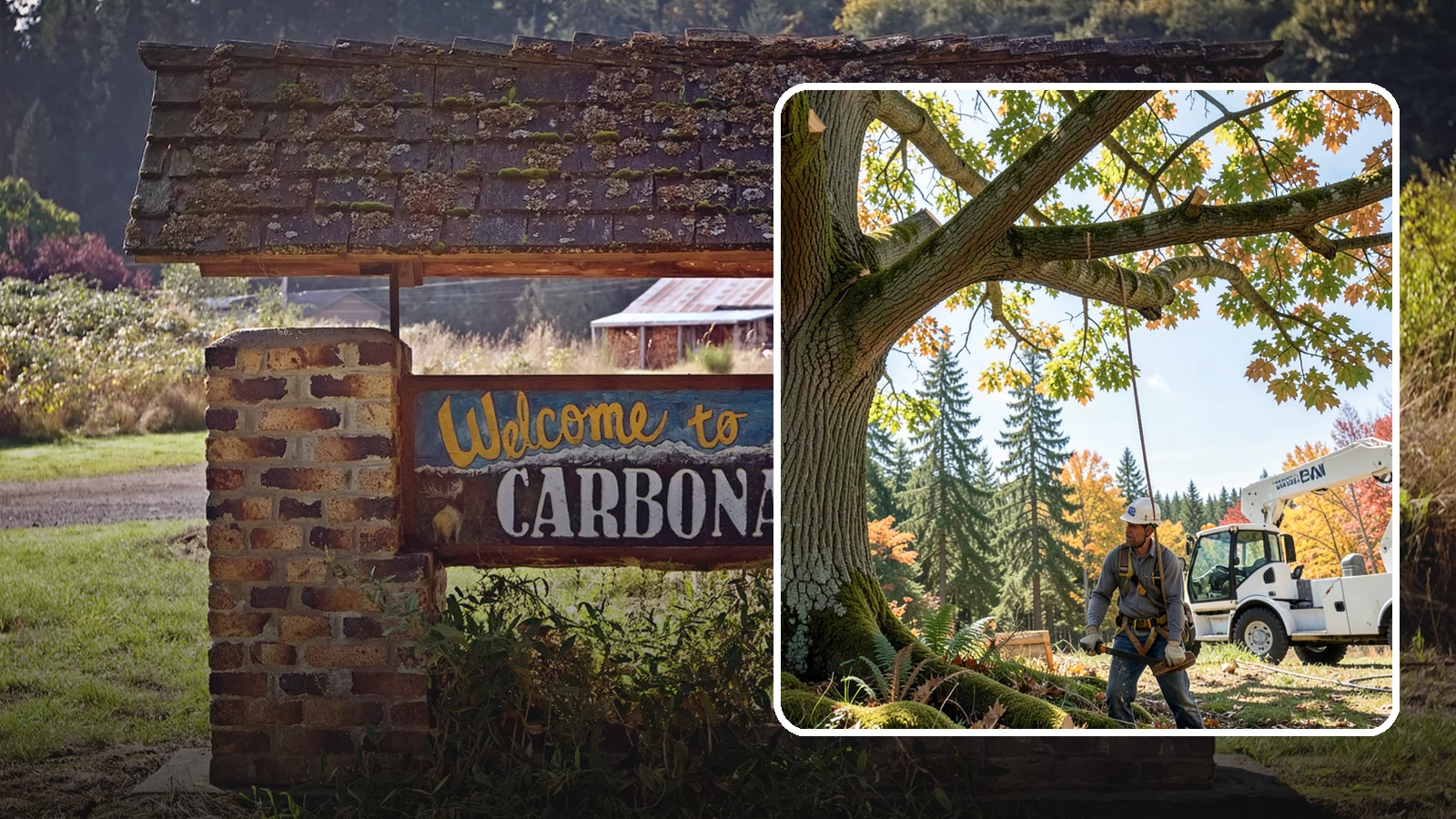
Carbonado Deadwood Removal
The removal of dead branches from the canopy.
Deadwood can come out in any season, but late summer into early fall is a practical time to look. Leaves are still on, so dead limbs stand out against green foliage. Dry ground also makes access easier. Walk the yard before the first fall windstorm and mark what you see.
Dead branches have no live tissue to hold them, and they can drop without warning. Carbonado sits in a forecast zone that logged 40 high and strong wind episodes from 2005 to 2025, so a limb that is hanging on today may not hang on through next winter.
About Deadwood Removal in Carbonado
We help homeowners keep their trees safe and looking great by removing dead branches from the canopy. This friendly approach ensures your property stays hazard-free while enhancing its natural beauty. Whether you have a single tree or a large grove, our trained crews are ready to assist with this essential care.
What Carbonado Deadwood Removal Includes
Deadwood removal focuses on taking out lifeless limbs that pose risks of falling unexpectedly. Beyond safety, the process also improves how your trees look and supports their long-term health by removing weak unions. We match every method to the specific tree species and site conditions for a tailored result.
Carbonado Deadwood Removal Process
Our work begins with an assessment of the canopy condition and clear pruning objectives for each tree. Crews select precise cuts that fit the season and species, ensuring we never over-prune or cause unnecessary stress. After making clean incisions at proper points, we carefully lower branches and process them before cleaning up your entire work area.
Equipment We Use for Carbonado Deadwood Removal
To handle this job safely, our teams use hand saws, pole saws, chainsaws, and various climbing gear as needed. Depending on the tree’s height and location, an aerial lift may be utilized to reach difficult spots without risk. We also bring a wood chipper for efficient material processing along with full personal protective equipment for everyone involved.
Carbonado Deadwood Removal Safety & Best Practices
Our crews strictly follow recognized pruning standards to avoid making cuts that could harm your trees or invite disease. We carefully watch for overhead power lines and unstable limbs before starting any work aloft. Fall protection is always used when working from heights, ensuring a secure environment throughout the project.
Signs You Need Deadwood Removal in Carbonado
You might need this service if you see dead branches hanging loosely in your canopy or notice weak unions that could fail during wind events. Over-pruning by others or interference with nearby structures and lines are also common reasons to call for professional help. These issues can cause stress to healthy tissue, so addressing them early supports the tree’s overall vigor.
What Affects the Cost of Deadwood Removal in Carbonado
The final cost is influenced by how large your canopy is and whether site access conditions make the job more complex. Tree species complexity plays a role in pricing, as does the volume of material that needs to be removed and disposed of properly. We evaluate all these factors together to provide an accurate estimate for your specific situation.
Best Time of Year for Carbonado Deadwood Removal
In our Puget Sound climate, this work can generally be performed year-round without major restrictions. However, we consider species-specific timing considerations to avoid stressing the tree or creating entry points for disease during certain seasons. Our experts will guide you on the best time to schedule based on your particular trees and local conditions.
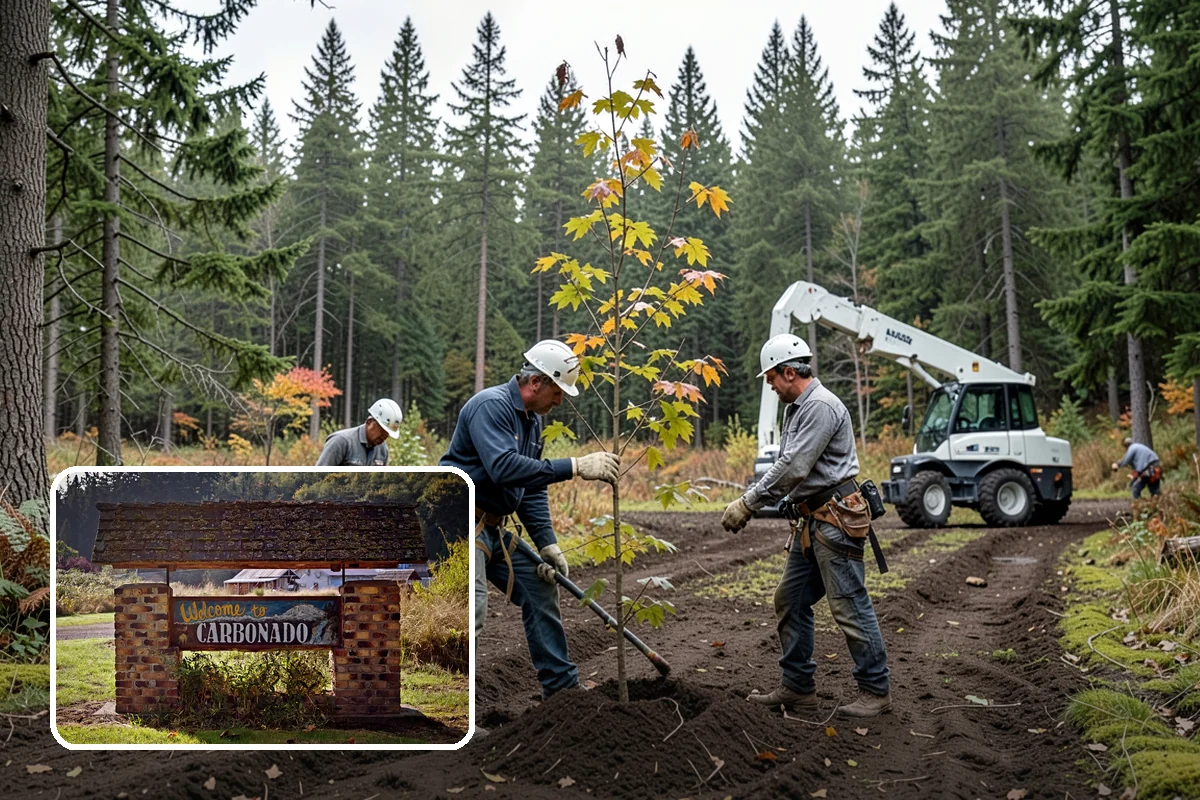
Planning deadwood removal in Carbonado, Pierce County
Start by deciding what counts as deadwood. Dead branches are usually brittle, bark may be loose or missing, and there are no buds or leaves in season. A branch that is bare in summer while the rest of the crown is green is a strong candidate. Take photos from several angles so the work can be planned from the ground first.
What affects the scope
Size and height matter most. A small dead twig low in the crown is a different job from a large limb over a roof, driveway or play area. The number of trees, the access to each one and what sits underneath also shape the work. Widespread dieback in the crown is a separate question from a few dead limbs, and it may point to a problem with the whole tree.
For context, a 2021-2025 aerial forest health survey by the USDA Forest Service and WA DNR mapped damage in forest within 10 km of Carbonado. This is forest land, not yard trees. The main damage was bears at 8076 acres in Douglas-fir, root disease or bears at 1139 acres, and Douglas-fir engraver at 878 acres. If you have Douglas-fir on your lot, dead tops or thinning crowns are worth having looked at. We cannot say from the survey what is happening in any one yard tree.
What to expect on the day
The crew starts by walking the site and confirming which limbs are dead. Dead wood is removed back to the branch collar or to a live lateral branch, following standard pruning practice. We do not remove live wood beyond what is needed, and we do not top trees. WA DNR notes that topping, lion's-tailing and wind-sailing create defects that predispose trees to storm damage. Debris is lowered or dropped into a cleared area, then cleaned up.
If a tree has a lot of dead wood, the arborist may suggest a different plan, such as a closer inspection or removal. Where a city rule could apply, we check with the city before work starts.
Practical tip: tie bright flagging tape on each dead limb you want assessed. It saves time and keeps everyone looking at the same branches.
Carbonado tree conditions at a glance
| USDA hardiness zone | 8b |
|---|---|
| Tree canopy | Among the most heavily treed Puget Sound cities (satellite data) |
| Slopes | Some steep slopes |
| Soils | 0% of land has hardpan or another restrictive layer within 40 in; most common series Barneston; 100% well drained |
| High and strong wind episodes, 2005-2025 | 40 in the forecast zone |
| Electric utility | Puget Sound Energy (PSE) |
Tree removal rules in Carbonado
Carbonado’s published rules don’t spell out clearly which removals need city approval. We check with the city before work starts.
Trees near the power line to your house
Puget Sound Energy (PSE): Service line (wire from PSE pole to home or meter pole): PSE does not trim it; homeowner/private arborist trims.
PSE performs a safety disconnection so the homeowner or private tree trimmer/arborist can work; Call at least 5 business days ahead to check crew availability and potential charges.
Safety disconnect: 1-888-321-7779 (5+ business days ahead). Utility page.
Any fee for a disconnect is set by the utility.
Strongest wind events near Carbonado
- Dec 17, 2010: gusts to 72 mph
- Feb 1, 2017: gusts to 70 mph
- Feb 7, 2012: gusts to 70 mph
NOAA Storm Events, forecast zone that includes Carbonado, 2005-2025.
Sources: Daymet daily weather (NASA/ORNL), NOAA Storm Events, USDA plant hardiness map 2023, NRCS soil survey, USGS elevation, WA DNR landslide inventory, USDA Forest Service aerial survey, WSDA, city tree assessments and street-tree inventories, SILVIS Lab, Arbor Day Foundation, and official city and utility pages.
Deadwood Removal Serving Carbonado
Carbonado


Deadwood removal in nearby areas
Also serving Carbonado
- Spruce Pruning in Carbonadoat Washington Landscaping
- Roof Algae Treatment in Carbonadoat Washington Roofing
- Stump Grinding in Carbonadoat Washington City Services