Where Safety Meets Expert Tree Service.

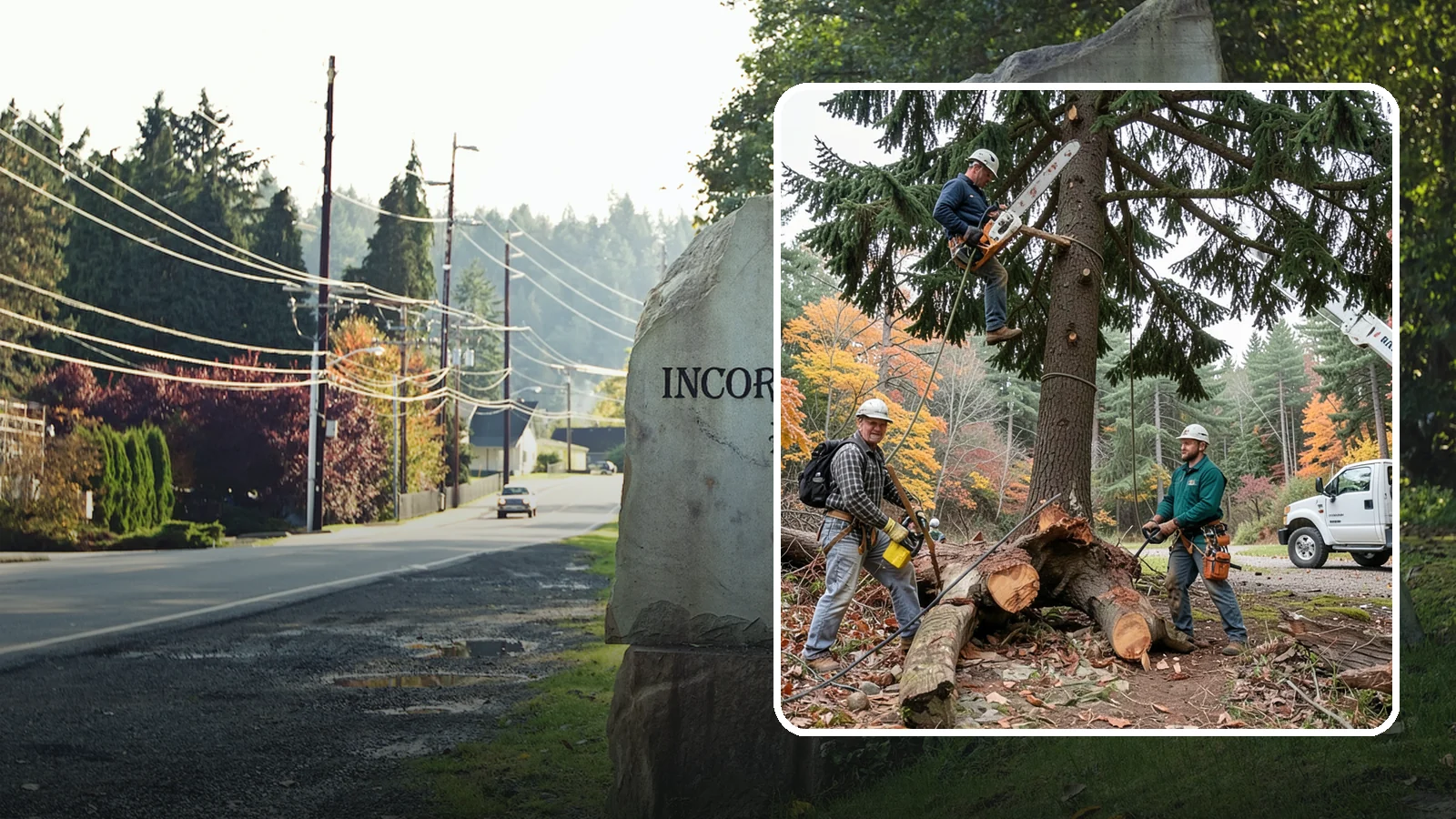
Wilkeson Dead Tree Removal
The removal of dead trees that no longer have living tissue.
How do you know if a tree in your Wilkeson yard is dead or just stressed? Scratch a small twig. If the layer under the bark is brown and dry instead of green and moist, that branch is dead. If most twigs fail the test, brittle limbs, peeling bark and no leaves or fresh needles in the growing season point the same way.
A dead tree gets weaker each year. Limbs drop first, and the whole tree can follow. Knowing what you have, and where it could land, tells you how soon to act.
About Dead Tree Removal in Wilkeson
If a tree on your property has lost all living tissue, our team is here to handle its safe removal for you. We understand that dealing with dead wood can feel overwhelming, so we are ready to help protect your home and landscape from falling hazards. Our goal is to clear the danger while respecting your space and peace of mind.
What Wilkeson Dead Tree Removal Includes
This service focuses specifically on removing trees that no longer have living tissue inside them. It includes carefully taking down brittle branches or entire stems that pose a risk, as well as clearing away any debris left behind. We also work hard to stop pests from using the dead wood before they can spread disease to nearby healthy plants.
Wilkeson Dead Tree Removal Process
Our trained crews start with an on-site assessment to evaluate risks and establish safe drop zones around your property. Using recognized arboricultural standards, we rig limbs or fell the stem in a controlled sequence that matches the tree species and site conditions. Afterward, we process the wood, haul away debris, and perform final cleanup so your yard is left clear and tidy.
Equipment We Use for Wilkeson Dead Tree Removal
We use professional chainsaws and climbing gear to navigate difficult branches safely while removing dead trees from various heights. Depending on the size of the job or access limitations, our crews may bring in aerial lifts or cranes to assist with heavy lifting. All tools are paired with ground protection measures to keep your landscaping safe during the workday.
Wilkeson Dead Tree Removal Safety & Best Practices
Before any climbing begins, we inspect for hidden decay and structural defects that could cause an unexpected fall. We maintain clear drop zones and controlled paths so no one is in harm’s way when limbs or trunks come down. Our team also communicates constantly between climbers on the ground to ensure every step of the removal stays safe for everyone involved.
Signs You Need Dead Tree Removal in Wilkeson
You likely need this service if you notice a tree that has become brittle, cracked, or shows signs it has completely died. These conditions create immediate falling hazards and often attract pests looking for easy food sources near your home. Identifying these issues early helps prevent damage to structures, utilities, and the rest of your garden before they spread further.
What Affects the Cost of Dead Tree Removal in Wilkeson
The price depends on factors like how large the tree is and whether it sits close to power lines or buildings that limit our access. Hidden internal decay can add complexity to the job, requiring more careful planning than a straightforward removal would need. Additionally, requirements for wood disposal will influence the final cost based on what needs to be hauled away from your site.
Best Time of Year for Wilkeson Dead Tree Removal
In our local climate, dead tree removal is possible year-round since we do not wait for specific seasons to begin work. However, many homeowners prefer scheduling this during drier periods when frozen ground conditions improve stability for equipment operating on slopes or uneven terrain. We can arrange a time that fits your schedule while ensuring the best working conditions for both our crew and your property.
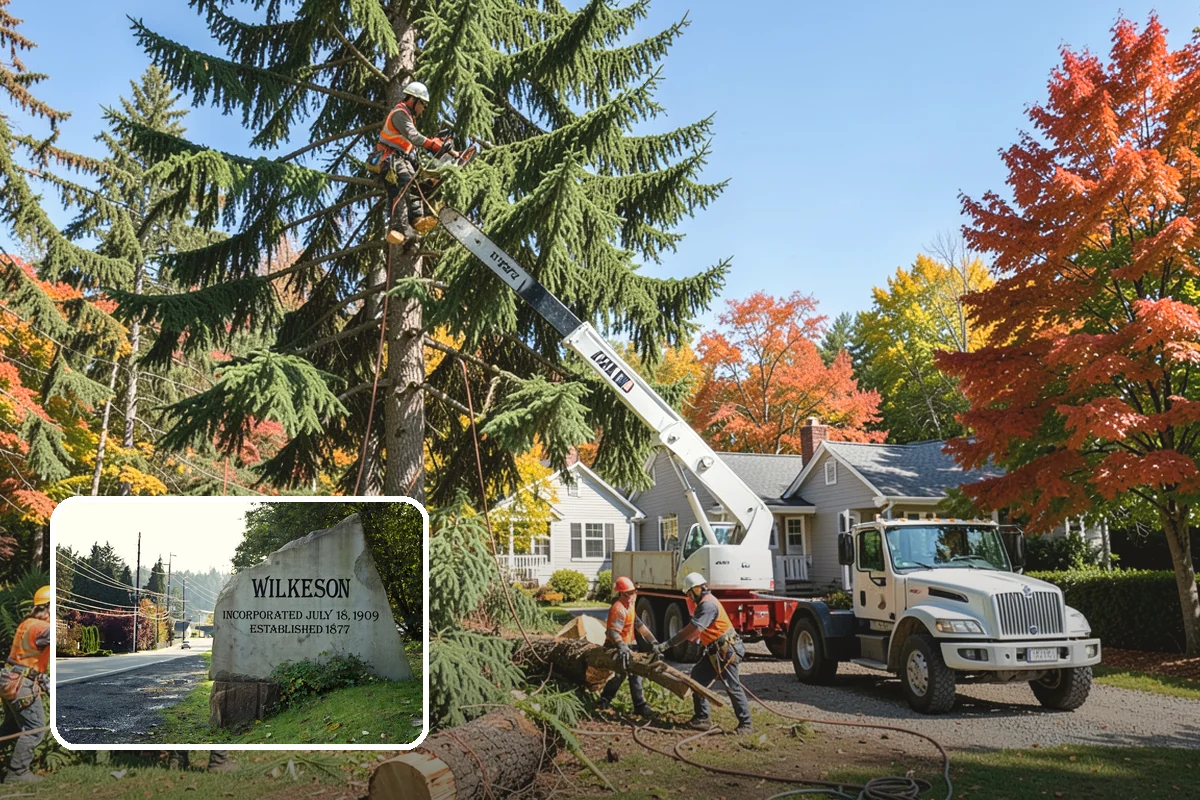
Dead tree removal in Wilkeson: what to know before work starts
Why dieback shows up in the surrounding forest
An aerial forest health survey by the USDA Forest Service and WA DNR (2021-2025) covered forest within 10 km of Wilkeson. That is forest land, not yard trees, so it does not tell us what is wrong with any tree on your property. It does show what is happening nearby. The main damage mapped was bears, at 6697 acres of Douglas-fir. Douglas-fir engraver beetles affected another 894 acres of Douglas-fir. If you have a Douglas-fir with thinning, off-color needles, check it soon, since it may be worth having looked at.
The survey also mapped 907 acres of western redcedar in decline with the cause not identified. That label means dieback with no single cause found. A struggling redcedar may need a closer look before anyone decides it is dead.
Drought stress and hemlock
Western hemlock has poor drought tolerance, and a WSU North Puget Sound Extension Forestry Newsletter from July 2018 notes that mortality has been rising with cumulative drought stress. If you have a hemlock that browned after a dry summer, it may not recover. Wait too long, and a weakened tree can be harder to take down safely.
Permits and what we check first
The published rules we found for Wilkeson don't spell out clearly which removals need city approval. So we check with the city before work starts. You don't need to sort that out alone.
Satellite tree-canopy data (USFS/NLCD 2025) puts Wilkeson among the most heavily treed Puget Sound cities we compared. With that many trees, a falling one is more likely to reach a house, line or neighbor.
- Note which way the tree leans and what stands within its reach.
- Photograph any cracks, fungus or peeling bark.
- Keep people and vehicles clear of the fall zone until it is assessed.
Call or text 425-484-4442 for a free estimate. Our ISA Certified Arborist can assess the tree and explain how the removal would be done.
Wilkeson tree conditions at a glance
| USDA hardiness zone | 8b |
|---|---|
| Tree canopy | Among the most heavily treed Puget Sound cities (satellite data) |
| Slopes | More steep ground than most Puget Sound cities |
| Soils | 37% of land has hardpan or another restrictive layer within 40 in; most common series Indianola; 61% well drained |
| High and strong wind episodes, 2005-2025 | 40 in the forecast zone |
| Electric utility | Puget Sound Energy (PSE) |
Tree removal rules in Wilkeson
Wilkeson’s published rules don’t spell out clearly which removals need city approval. We check with the city before work starts.
Trees near the power line to your house
Puget Sound Energy (PSE): Service line (wire from PSE pole to home or meter pole): PSE does not trim it; homeowner/private arborist trims.
PSE performs a safety disconnection so the homeowner or private tree trimmer/arborist can work; Call at least 5 business days ahead to check crew availability and potential charges.
Safety disconnect: 1-888-321-7779 (5+ business days ahead). Utility page.
Any fee for a disconnect is set by the utility.
Strongest wind events near Wilkeson
- Dec 17, 2010: gusts to 72 mph
- Feb 1, 2017: gusts to 70 mph
- Feb 7, 2012: gusts to 70 mph
NOAA Storm Events, forecast zone that includes Wilkeson, 2005-2025.
Sources: Daymet daily weather (NASA/ORNL), NOAA Storm Events, USDA plant hardiness map 2023, NRCS soil survey, USGS elevation, WA DNR landslide inventory, USDA Forest Service aerial survey, WSDA, city tree assessments and street-tree inventories, SILVIS Lab, Arbor Day Foundation, and official city and utility pages.
Dead Tree Removal Serving Wilkeson
Wilkeson
Dead tree removal in nearby areas
Also serving Wilkeson
- Bulb Planting in Wilkesonat Washington Landscaping
- Tree Risk Assessments in Wilkesonat Washington City Services
- Log Splitting in Wilkesonat Washington Firewood