Where Safety Meets Expert Tree Service.

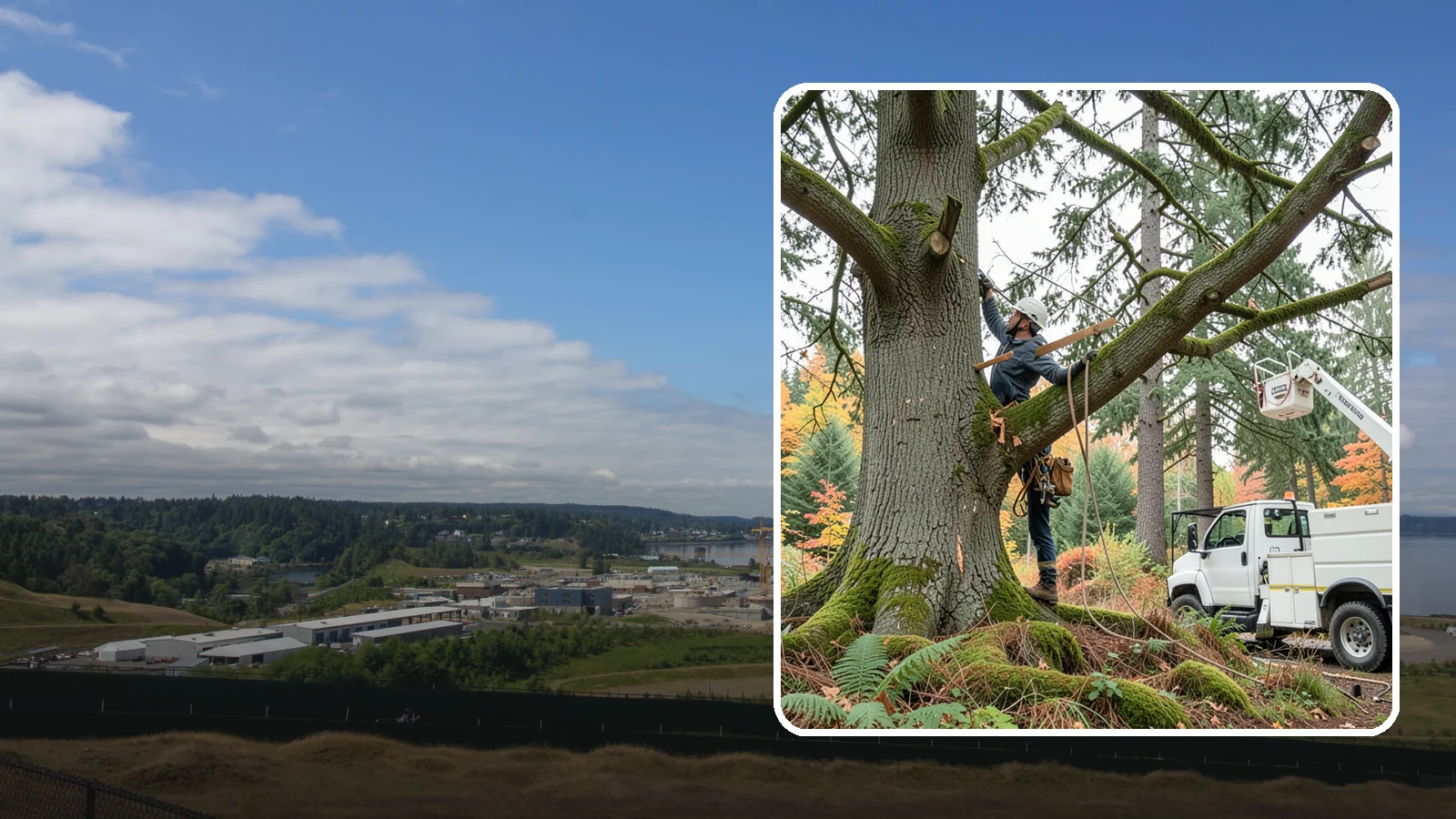
University Place Weight Reduction Pruning
The reduction of weight on long or heavy limbs.
Weight reduction pruning is for owners of mature trees with long, heavy limbs that reach over a roof, driveway, play area or fence line. It also suits trees with dense crowns that catch wind and wet snow. If a limb looks like it carries more than its share of the load, this is the work to ask about.
The goal is to lighten the ends of branches and thin selected growth so the tree keeps its natural shape. It is different from topping, which we do not recommend. Below, we compare the main approaches and which local conditions favor each.
About Weight Reduction Pruning in University Place
Weight reduction pruning helps homeowners manage trees that have long or heavy limbs at risk of failure. Our trained crews work alongside your property to relieve stress on these branches while improving the overall health and appearance of your landscape. This service is designed for any home where tree structure needs careful attention to ensure safety and stability.
What University Place Weight Reduction Pruning Includes
This pruning method focuses specifically on reducing weight from heavy limbs that might otherwise break under their own mass or during storms. We match our techniques to the specific species of your trees, site conditions, and access points around your property. The goal is always to maintain a strong structure without over-pruning healthy tissue.
University Place Weight Reduction Pruning Process
Our team begins by assessing the canopy condition and defining clear pruning objectives for each tree on your lot. Selecting the correct cuts based on seasonal needs ensures clean removals that do not harm the tree’s natural growth patterns. After making these precise cuts, we lower the material carefully and process it before cleaning up the entire work area.
Equipment We Use for University Place Weight Reduction Pruning
We utilize a range of tools including hand saws, pole saws, chainsaws, and wood chippers to handle branches of various sizes. For trees that are difficult to reach or located in tight spaces, our crews bring climbing gear, rigging equipment, or an aerial lift as needed. All personnel wear personal protective equipment throughout the job to ensure a safe environment for everyone involved.
University Place Weight Reduction Pruning Safety & Best Practices
We strictly follow recognized pruning standards to avoid making harmful cuts that could stress your trees further. Our crew watches closely for overhead power lines and unstable limbs before beginning any work on tall branches. When working aloft, every team member uses proper fall protection measures to prevent accidents during the removal process.
Signs You Need Weight Reduction Pruning in University Place
You may need this service if you notice deadwood or weak unions that could lead to dangerous branch failure in your yard. Overhanging limbs interfering with structures or blocking sightlines are also strong indicators that weight reduction is necessary. Additionally, species-specific timing sensitivities suggest consulting a professional before attempting DIY cuts on sensitive trees.
What Affects the Cost of Weight Reduction Pruning in University Place
The final price depends heavily on the length and total weight of the limbs being removed from your property. Site access requirements play a major role, especially if we need to use an aerial lift or navigate difficult terrain around your home. We also consider the volume of material that must be processed through chipping or hauled away after completion.
Best Time of Year for University Place Weight Reduction Pruning
Scheduling work during dormant seasons helps avoid interfering with local flowering and fruiting cycles specific to Washington state tree species. It is equally important to wait until conditions are dry, as wet weather increases safety risks when handling heavy limbs near your home. Planning ahead ensures the best results for both the health of your trees and the safety of our crew.

Choosing a pruning approach for University Place trees
Weight reduction can be done in a few ways. The right one depends on the tree's species, structure and what sits beneath it.
- End-weight reduction: selected branch tips are cut back to a suitable lateral branch, which shortens a long limb and lowers the leverage on its attachment point.
- Crown thinning: a limited number of interior branches are removed to open the canopy and let wind pass through more easily.
- Targeted limb removal: a single overextended or poorly attached limb is taken out at the branch collar.
- Cabling or monitoring: for some structural defects, a certified arborist may suggest support hardware or a re-check instead of heavy cutting.
What local conditions favor
Wind is the first consideration. The strongest gust recorded since 2005 in the forecast zone that includes University Place was 62 mph, on October 18, 2007. That is one reading for a whole zone, not a measurement at your tree. It does show that a long, sail-like limb can face a real load, which favors end-weight reduction and thinning on trees with wide crowns.
Ice and snow matter too. The forecast zone had 2 ice storm episodes from 2005 to 2025, and University Place averages 5.4 inches of snow per season. Snow is modest here, but ice and wet snow add weight to branch tips. Trees with dense, horizontal limbs over structures are the better candidates for reduction before winter.
What to expect
Standard practice under ANSI A300 limits how much live crown is removed in one visit, and cuts are made to preserve the tree's form. We do not promise a tree will never lose a limb. Pruning lowers risk but cannot remove it.
If you are unsure which approach fits, send us photos or ask for a free estimate at 425-484-4442. Our ISA Certified Arborist can look at the structure first. If a tree falls under a city rule, we check with the city before work starts.
University Place tree conditions at a glance
| USDA hardiness zone | 8b (8b to 9a across the city) |
|---|---|
| Rain and snow falling October to April | 83% of the year’s total |
| Days that freeze at night and thaw by day | 36 a year |
| Tree City USA | 26 years |
| Electric utility | Tacoma Power |
Trees near the power line to your house
Tacoma Power: Customer Service Policies (eff. Apr 1 2026): "The Customer will be responsible for trimming and removing trees and other vegetation away from the Overhead Service wire(s) on the Customer's property." FAQ: "We will not trim trees on private property that are between the utility pole and the home.".
Tacoma Power coordinates a disconnect for tree trimming; call at least ten business days in advance.
Tree Trimming & Removal line / tree-trimming disconnects: 253-502-8729. Utility page.
Any fee for a disconnect is set by the utility.
Sources: Daymet daily weather (NASA/ORNL), NOAA Storm Events, USDA plant hardiness map 2023, NRCS soil survey, USGS elevation, WA DNR landslide inventory, USDA Forest Service aerial survey, WSDA, city tree assessments and street-tree inventories, SILVIS Lab, Arbor Day Foundation, and official city and utility pages.
Weight Reduction Pruning Serving University Place
University Place
Weight reduction pruning in nearby areas
Also serving University Place
- Spruce Pruning in University Placeat Washington Landscaping
- Roof Disinfecting in University Placeat Washington Roofing
- Stump Grinding in University Placeat Washington City Services