Where Safety Meets Expert Tree Service.

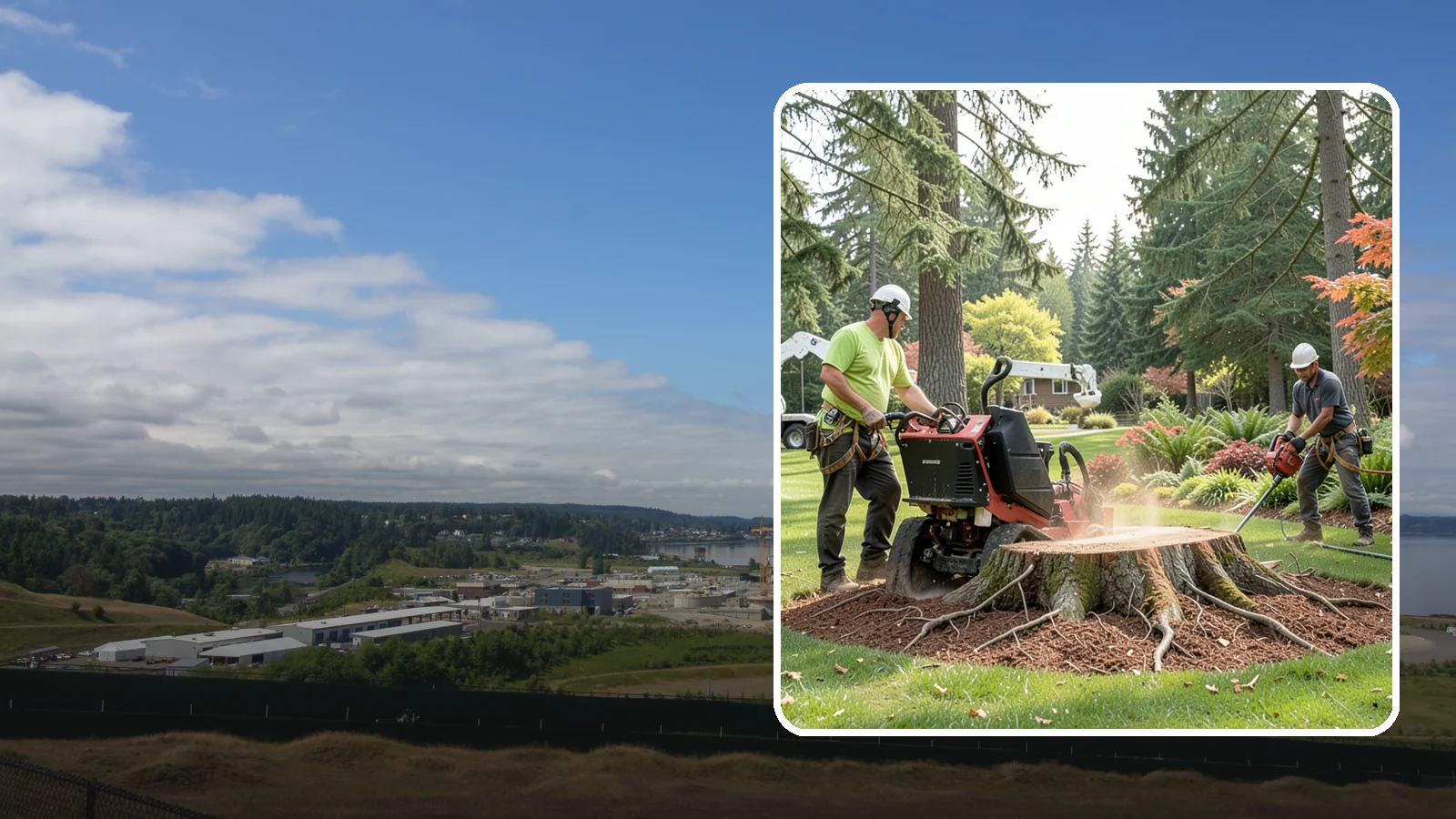
University Place Stump Grinding
The mechanical grinding of a stump below grade.
Stump grinding is for owners who have already had a tree cut down and want the stump gone. It suits a lawn you want to mow across, a spot where you plan to replant, or a stump near a walkway, fence or patio that keeps catching feet.
The main choice is how far to grind and what to do afterward. That depends on what goes in the spot next, and on the ground in University Place, which can limit how roots and new plantings behave.
About Stump Grinding in University Place
Stump grinding is a helpful way to clear out old tree stumps that might trip you or block your yard from being used again. This service restores the ground so you can replant new trees or simply enjoy open space without obstructions. It works well for homeowners who want their property looking neat and safe after removing a large tree.
What University Place Stump Grinding Includes
Our crews use mechanical grinding to remove stumps below grade, leaving only small surface roots behind. This process matches the specific needs of your site conditions and helps prevent pests or unwanted regrowth from taking hold in that spot. Once finished, the area is ready for replanting or other surface projects you have planned.
University Place Stump Grinding Process
We start by locating underground utilities to keep everyone safe before we begin any digging work. After clearing debris around the stump, our trained team grinds it down and processes the material into mulch or chips. Finally, we backfill and grade the soil as needed so your yard looks smooth and level again.
Equipment We Use for University Place Stump Grinding
The job relies on a powerful stump grinder to cut through wood efficiently while excavation tools handle any remaining roots. We also use wheelbarrows and rakes to manage the grindings and ensure the site is clean after work is done. All crew members wear necessary personal protective equipment, including eye and hearing protection, throughout the project.
University Place Stump Grinding Safety & Best Practices
Safety starts with confirming that all underground utilities are marked before we lower our machinery near your home or garden. We keep bystanders away from the area to avoid flying debris while grinding and stay alert for hidden rocks in the soil. Our team also takes extra care when working around buried obstructions to prevent accidental damage during excavation.
Signs You Need Stump Grinding in University Place
You may need this service if you notice a stump acting as a tripping hazard or stopping people from using part of your yard freely. If pests are attracted to old roots or new shoots keep growing where the tree used to stand, grinding can stop that cycle. It is also useful when you want to prepare an area for planting something new but cannot get rid of the visible stump first.
What Affects the Cost of Stump Grinding in University Place
The price will change based on how big the stump is and whether your soil contains rocks or other hard debris. Sites with limited access, such as narrow spaces where large equipment cannot fit easily, may also affect the final cost. These factors help us determine a fair rate that fits the specific challenges of your property without guessing at numbers you haven’t asked for yet.
Best Time of Year for University Place Stump Grinding
You can schedule this work anytime during the year since Washington State weather usually allows it to proceed smoothly. However, we take special precautions when heavy rain is forecasted because muddy sites make excavation more difficult and slower. Planning ahead helps us manage these conditions so your project stays on track regardless of seasonal changes.
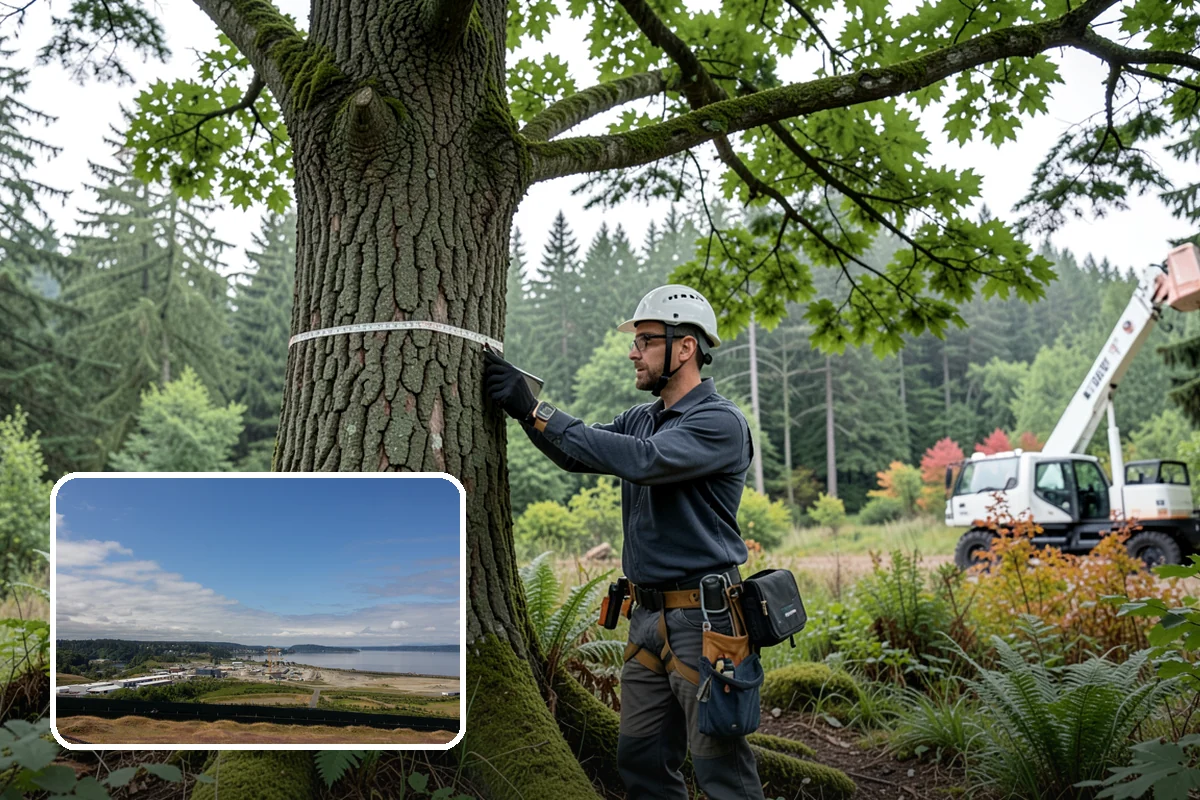
Stump grinding options for University Place yards
A grinder shaves the stump into chips, working down below the soil line. You can choose between a few approaches, and local conditions favor some over others.
Grind and fill with topsoil
This is the usual choice for a lawn. The stump is ground several inches below grade, the chips are raked out or mixed in, and the hole is topped with soil and seed or sod. It works well if you only want turf back.
Grind deeper and replant
If you want a new tree near the old one, deeper grinding and removing most of the chips gives the new roots cleaner soil. This matters here. According to the NRCS soil survey, 56% of the land in University Place has a hard or restrictive layer, such as glacial hardpan, within 40 inches of the surface, and Alderwood is the most common soil series. Roots and water can struggle to get through that layer, so loosening the planting area and choosing a tree suited to shallow, compacted ground is worth the effort. USDA places the city in hardiness zone 8b, with parts of it ranging from 8b to 9a, so that is the range to match when choosing a replacement.
Leave it to rot
Some owners let the stump decay. It is cheapest in effort, but it can take years, may attract insects, and stays a trip hazard the whole time.
Check the city rule before you replant
The city tree code requires a Tree Replacement Plan under UPMC 19.65.310 when retention standards in 19.65.270 and 19.65.275 are not met. That rule is about replacement trees after removal, not about grinding the stump. If your tree came out under a project that triggered it, plan your grinding depth and planting spot with that plan in mind. If it is unclear whether it applies, we check with the city before work starts.
- Lawn only: grind below grade, fill, seed.
- New tree nearby: grind deeper, clear chips, loosen soil.
- Not sure about city requirements: ask before work starts.
Call or text 425-484-4442 for a free estimate. Our ISA Certified Arborist can help you pick the approach.
University Place tree conditions at a glance
| Soils | 56% of land has hardpan or another restrictive layer within 40 in; most common series Alderwood |
|---|---|
| Rain and snow falling October to April | 83% of the year’s total |
| Days that freeze at night and thaw by day | 36 a year |
Tree removal rules in University Place
Tree Removal Permit required to cut or remove six or more trees in any consecutive 36-month period; 'limited tree removal' (five trees or less in 36 consecutive months) is exempt with City notification, except in landslide/erosion hazard areas, fish & wildlife habitat areas or buffers, and wetlands/buffers. Permit application submitted with building/development/land-use permit.
Regulated size: 'Tree' = 6 inches DBH or more (measured 4.5 ft above ground).
Official city source. Rules change; we confirm with the city before work starts.
Sources: Daymet daily weather (NASA/ORNL), NOAA Storm Events, USDA plant hardiness map 2023, NRCS soil survey, USGS elevation, WA DNR landslide inventory, USDA Forest Service aerial survey, WSDA, city tree assessments and street-tree inventories, SILVIS Lab, Arbor Day Foundation, and official city and utility pages.
Stump Grinding Serving University Place
University Place
Stump grinding in nearby areas
Also serving University Place
- Lawn Renovation in University Placeat Washington Landscaping
- Emergency Tree Response in University Placeat Washington City Services