Where Safety Meets Expert Tree Service.

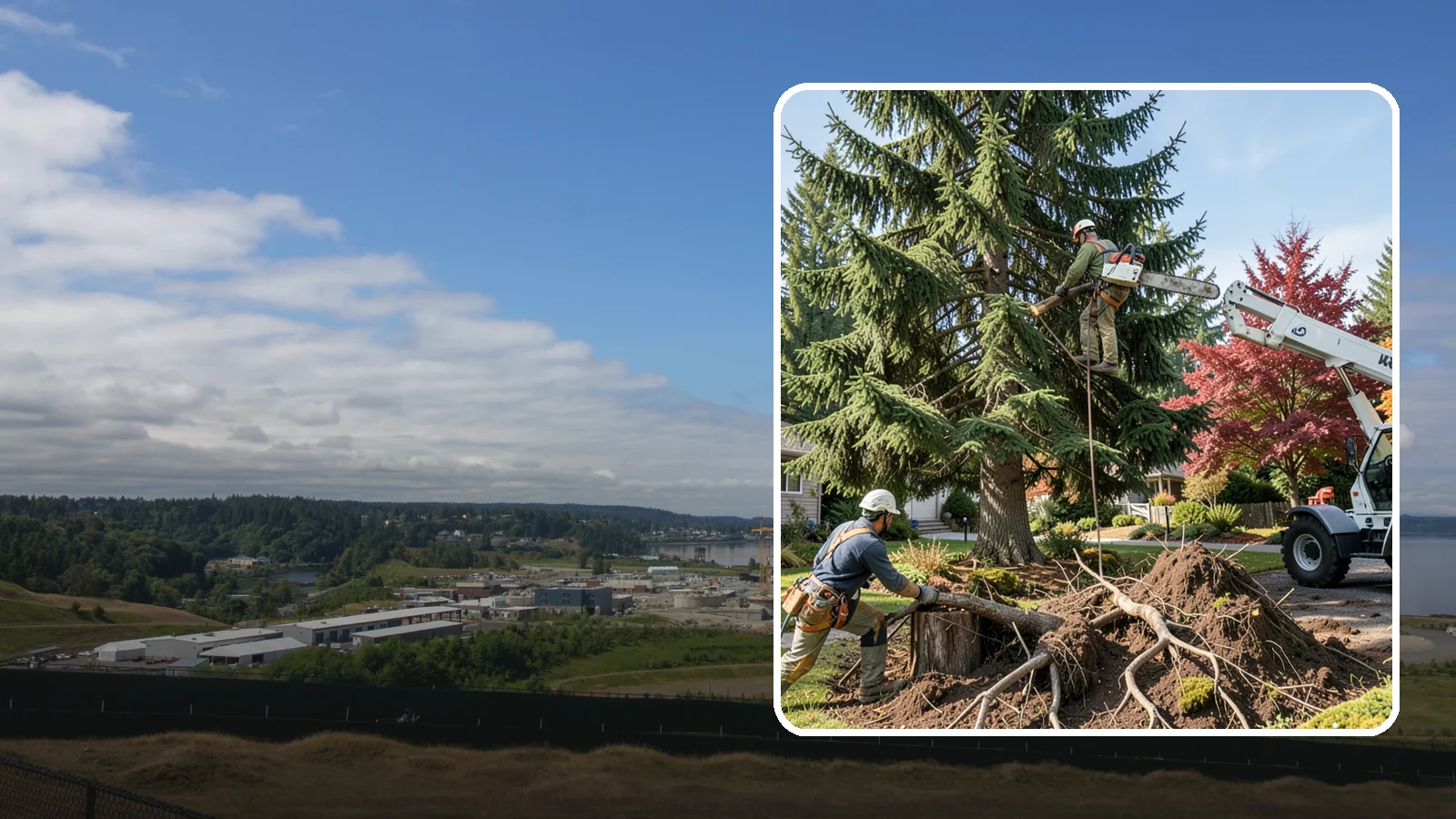
University Place Root Removal
The removal of roots remaining after tree or stump work.
If a tree has come out of your University Place yard and you want its roots gone, start by asking how deep they actually go. The NRCS soil survey says 56% of the city's land has a hard or restrictive layer, such as glacial hardpan, within 40 inches of the surface. Roots that meet that layer often spread sideways instead of down.
That matters for root removal. Shallow, wide roots can reach lawns, walkways, and pipes, and they are easier to find than you might expect. Before you dig, mark what you want to protect and note where roots are showing.
About Root Removal in University Place
If you have recently had a tree or stump removed but roots remain in your yard, our root removal service can help clear the space for new projects. This work is ideal for homeowners who want to reclaim usable ground or prepare an area for construction and replanting. We are here to ensure your property is left safe and ready for its next use.
What University Place Root Removal Includes
Root removal focuses on taking out the remaining roots that stay behind after tree or stump work has been completed. This process clears obstructions that could cause tripping hazards while also discouraging pests and unwanted regrowth in the area. By removing these underground remnants, we help you fully utilize your landscape for hardscape installation or new planting efforts.
University Place Root Removal Process
Our trained crews begin by locating and marking any nearby utilities before starting work to ensure everyone stays safe. We clear the immediate area around the stump and then grind or extract it along with surface roots using appropriate methods. Once removed, we process the resulting debris and backfill the site as needed to restore proper grading for your lawn.
Equipment We Use for University Place Root Removal
To complete this job effectively, our teams utilize a variety of tools including stump grinders and excavation equipment. We also bring utility locating support systems along with wheelbarrows, rakes, and necessary personal protective gear. These resources allow us to match our methods specifically to the tree species present and the unique conditions of your site.
University Place Root Removal Safety & Best Practices
Before any grinding begins, we confirm that all underground utilities have been properly located to prevent damage or injury. During work, bystanders are kept clear of ejected debris while crew members wear eye and hearing protection at all times. We also remain vigilant for buried obstructions like rocks or other hazards that could affect the safety of our team or your property.
Signs You Need Root Removal in University Place
You may need this service if you notice tripping hazards near a stump site or find yourself dealing with pests attracted to remaining roots. If you plan on building hardscape, adding new plants, or simply wanting open space for play and recreation, root removal is the next logical step. Extensive root systems that limit access or cause ground instability are also clear indicators that this work is required.
What Affects the Cost of Root Removal in University Place
The final cost depends largely on the size of your root system and whether soil conditions contain rock or debris that complicate excavation. Site access limitations for our equipment can influence pricing, as well as any specific requirements to locate underground utilities before we begin. These factors ensure we provide an accurate estimate tailored to the unique challenges of your property.
Best Time of Year for University Place Root Removal
In our local Puget Sound climate, root removal work can generally proceed throughout all seasons of the year. However, heavy rainfall may temporarily delay projects when it creates muddy ground that is unsuitable for excavation tools and equipment. We monitor weather conditions closely to ensure we only start digging when the site is stable enough for safe operation.

How root removal works in University Place yards
Root removal is the work of taking out the roots left after a tree comes down, or cutting back roots that are causing damage. The steps are fairly simple, though the details depend on the site.
Step by step
- Locate utilities and mark them before any digging starts.
- Expose the main roots by hand or with a machine, depending on how close they sit to pipes, paving, and foundations.
- Cut the roots cleanly and lift out what can be removed.
- Grind the stump if one remains, then fill and grade the hole.
Why the soil matters
The most common soil series here is Alderwood, and the NRCS survey notes the hard layer under much of the city. That is a survey of soils, not a reading of your lot. Still, it suggests that a tree's roots may run wide and close to the surface. Wide roots can mean more digging across the yard rather than one deep hole. They can also mean more chances of meeting a sprinkler line or a driveway edge.
If the tree is still alive and you only want to cut a few roots, be careful. Cutting large structural roots can weaken the tree or leave it unstable. An ISA-certified arborist can look at which roots are safe to cut. Standard practice under ANSI A300 is to avoid cutting large roots close to the trunk unless the tree is coming out.
Replanting afterward
University Place falls in USDA hardiness zone 8b, with parts of the city running 8b to 9a, according to the 2023 USDA map. That range is mild enough for many trees and shrubs. If you plan to replant in the same spot, ask about leaving some distance from the old root zone. Leftover root pieces will rot slowly, and the ground may settle.
Roughly 54% of housing in the city is single-family detached, per the Census ACS 2020-2024, so many lots have a house, a lawn, and a fence close together. On a tight lot, tell us where the sewer line and foundation run. We also check with the city before work starts if the removal could involve a rule. For a free estimate, call or text 425-484-4442.
University Place tree conditions at a glance
| Soils | 56% of land has hardpan or another restrictive layer within 40 in; most common series Alderwood |
|---|---|
| Rain and snow falling October to April | 83% of the year’s total |
| Days that freeze at night and thaw by day | 36 a year |
Tree removal rules in University Place
Tree Removal Permit required to cut or remove six or more trees in any consecutive 36-month period; 'limited tree removal' (five trees or less in 36 consecutive months) is exempt with City notification, except in landslide/erosion hazard areas, fish & wildlife habitat areas or buffers, and wetlands/buffers. Permit application submitted with building/development/land-use permit.
Regulated size: 'Tree' = 6 inches DBH or more (measured 4.5 ft above ground).
Official city source. Rules change; we confirm with the city before work starts.
Sources: Daymet daily weather (NASA/ORNL), NOAA Storm Events, USDA plant hardiness map 2023, NRCS soil survey, USGS elevation, WA DNR landslide inventory, USDA Forest Service aerial survey, WSDA, city tree assessments and street-tree inventories, SILVIS Lab, Arbor Day Foundation, and official city and utility pages.
Root Removal Serving University Place
University Place

Root removal in nearby areas
Also serving University Place
- Sod Installation in University Placeat Washington Landscaping
- Hazard Tree Inspections in University Placeat Washington City Services