Where Safety Meets Expert Tree Service.


SeaTac Tree Dismantling / Sectional Removal
The piece-by-piece dismantling of a tree from the top down.
You may be looking at a tree that has grown too close to the house, a garage roof, or the wire running to your meter. When a trunk can't simply be felled in one piece because there is no clear space to drop it, the tree is taken down in sections instead.
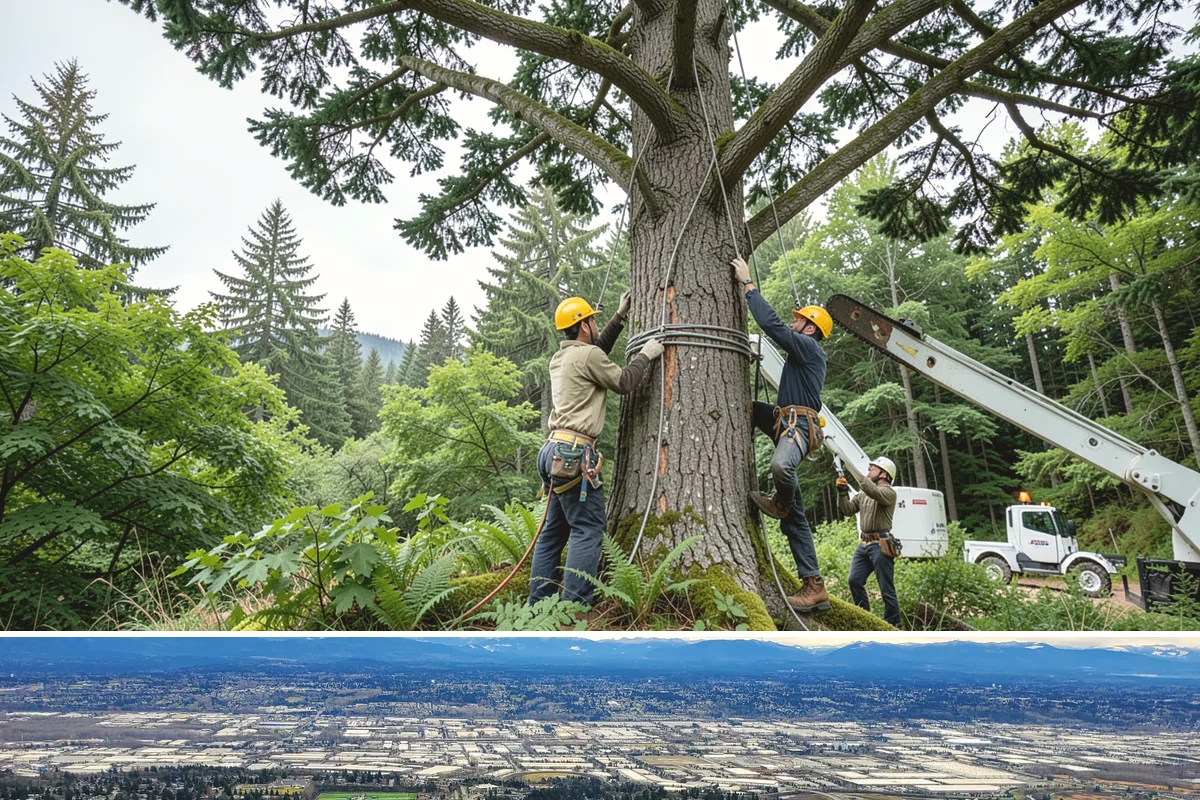
Sectional removal means a climber works from the top down, cutting limbs and then trunk pieces and lowering each one under control with rigging. Below is how that works, and what SeaTac's local details mean for planning it.
About Tree Dismantling / Sectional Removal in SeaTac
When a tree cannot be safely lowered in one piece due to nearby structures or power lines, our sectional removal team can help clear the area without risk. This specialized approach is perfect for homeowners who need precise control over how their property looks after work is complete. We focus on keeping your home and landscape safe while removing unwanted trees from difficult sites.
What SeaTac Tree Dismantling / Sectional Removal Includes
Tree dismantling involves taking apart a tree piece by piece, starting from the top down rather than felling it all at once. Our trained crews follow recognized arboricultural standards to match their methods with the specific species of tree and conditions on your site. This process effectively removes safety hazards, frees up usable space, and helps prevent pests or disease from spreading to healthy neighbors.
SeaTac Tree Dismantling / Sectional Removal Process
We begin every job with an on-site assessment to identify potential dangers and establish clear drop zones around your property. Once safe boundaries are set, our crew will rig the tree to lower limbs carefully before removing the stem in a controlled sequence. After all wood is processed and debris hauled away, we finish by clearing the site so you can enjoy your yard again.
Equipment We Use for SeaTac Tree Dismantling / Sectional Removal
To handle these complex jobs safely, we use chainsaws along with specialized climbing and rigging gear designed for precision work. Depending on access needs at your location, an aerial lift or crane may be brought in to assist with lowering heavy sections. We also utilize wood chippers for processing the timber and ground protection equipment to keep your lawn intact during operations.
SeaTac Tree Dismantling / Sectional Removal Safety & Best Practices
Your safety is our priority, so we always identify overhead utility lines before starting any work on a tree near power infrastructure. Our team maintains strict control over drop zones and fall paths while using personal protective equipment throughout the entire project. We also inspect every tree for hidden decay or structural defects before climbing to ensure no one gets hurt during removal.
Signs You Need Tree Dismantling / Sectional Removal in SeaTac
You likely need this service if you have a large tree leaning unpredictably toward your house, driveway, or favorite seating area. Situations where limited access prevents standard equipment from reaching the trunk often require us to dismantle the tree section by section. If hidden internal decay makes a single fall dangerous for people below, our sectional method provides the necessary caution and control.
What Affects the Cost of Tree Dismantling / Sectional Removal in SeaTac
The final price depends on factors such as the overall size of the tree and how difficult it is to access your property with equipment. Trees located very close to structures will require additional rigging gear, which influences the total cost of the project. Disposal requirements for the wood also play a role in determining what you pay for this essential service.
Best Time of Year for SeaTac Tree Dismantling / Sectional Removal
While we can work year-round given our local climate conditions, extra precautions are taken during wet seasons when hidden decay might be more likely to cause issues. Ice formation on branches is another time that requires us to take additional safety steps before beginning any dismantling work. Planning ahead ensures your team can proceed efficiently while maintaining the highest standards of care for your property.

Sectional tree removal in SeaTac: size, wires and planning
Dismantling is used when a tree is too large or too hemmed in to fall whole. The cause is usually the site, not the tree. A trunk beside a house, a fence, a neighbor's yard or a roofline leaves no safe landing zone. So the crew removes the canopy in pieces, then cuts the trunk in lengths from the top down. Each piece is roped and lowered, or lifted away, rather than dropped.
Size is the first local detail worth knowing. SeaTac's street-tree inventory shows a median trunk diameter of 13.5 in, and 17.3% of the trees in it are 24 in or wider. That inventory covers city street trees, not private yards, so it does not describe your tree. It does show that wide trunks are common enough in the city that you should expect to measure yours. A trunk 24 in or wider means heavier pieces, more rigging and usually more time on site than a slim one.
The second detail is the wire. Puget Sound Energy (PSE) is the electric utility in SeaTac. Its rule for the service line, the wire from the PSE pole to your home or meter pole, is that PSE does not trim it. The homeowner or a private arborist handles trimming. If branches reach that wire, the removal plan has to account for it before anyone climbs. We look at where the line runs and decide the order of cuts and the lowering paths around it. Do not try to move or push branches off the wire yourself.
Climate plays a smaller part. SeaTac is in USDA hardiness zone 9a, according to the 2023 USDA map. That is a mild rating, but it says little about the condition of one tree. Look at the tree itself: dead limbs, cracks, fungus at the base, leaning, or soil heaving near the roots.
Before work starts, we check with the city about whether a permit applies to your tree, since rules differ by tree and location. A free estimate with our ISA Certified Arborist is a good time to walk the site and agree on the plan. Call or text 425-484-4442.
SeaTac tree conditions at a glance
| USDA hardiness zone | 9a |
|---|---|
| Landslides mapped by WA DNR | 2 |
| High and strong wind episodes, 2005-2025 | 38 in the forecast zone |
| Electric utility | Puget Sound Energy (PSE) |
Tree removal rules in SeaTac
SeaTac’s published rules don’t spell out clearly which removals need city approval. We check with the city before work starts.
Trees near the power line to your house
Puget Sound Energy (PSE): Service line (wire from PSE pole to home or meter pole): PSE does not trim it; homeowner/private arborist trims.
PSE performs a safety disconnection so the homeowner or private tree trimmer/arborist can work; Call at least 5 business days ahead to check crew availability and potential charges.
Safety disconnect: 1-888-321-7779 (5+ business days ahead). Utility page.
Any fee for a disconnect is set by the utility.
Strongest wind events near SeaTac
- Dec 14, 2006: gusts to 74 mph
- Feb 3, 2006: gusts to 67 mph
- Jan 12, 2021: gusts to 61 mph
NOAA Storm Events, forecast zone that includes SeaTac, 2005-2025.
Sources: Daymet daily weather (NASA/ORNL), NOAA Storm Events, USDA plant hardiness map 2023, NRCS soil survey, USGS elevation, WA DNR landslide inventory, USDA Forest Service aerial survey, WSDA, city tree assessments and street-tree inventories, SILVIS Lab, Arbor Day Foundation, and official city and utility pages.
Tree Dismantling / Sectional Removal Serving SeaTac
SeaTac
Tree dismantling / sectional removal in nearby areas
Also serving SeaTac
- Pollinator Garden Installation in SeaTacat Washington Landscaping
- Trail Clearing in SeaTacat Washington City Services
- Firewood Hauling in SeaTacat Washington Firewood