Where Safety Meets Expert Tree Service.


Puyallup Vista Pruning
Selective pruning to open or improve a view.
Vista pruning in Puyallup makes the most sense in the dry months or in late winter, before buds open. About 81% of the city's yearly rain and snow falls from October to April (Daymet, 2005-2025), so the wet season means soft ground and slick branches. Planning the work for a drier stretch makes access easier and safer.
Vista pruning means selectively thinning and shortening branches so you can see past or through a tree, such as toward a view or a open sky. It is not the same as cutting a tree down to size. The goal is a clear line of sight while the tree keeps its natural shape.
About Vista Pruning in Puyallup
Vista pruning is a specialized tree care approach designed to open up or improve your view without harming the long-term health of your trees. This selective method helps homeowners who want clearer sightlines while ensuring their landscape remains safe and vigorous for years to come. We work with you to balance aesthetic goals with proper arboricultural standards so your property looks its best from any angle.
What Puyallup Vista Pruning Includes
Vista pruning involves carefully selecting specific cuts that enhance sightlines while protecting the structural integrity of each tree. Our crews match these methods to your unique site conditions and the natural characteristics of your local species, ensuring a tailored approach for every job. The process focuses on improving clearance around structures or pathways without over-pruning or stressing the canopy beyond its recovery ability.
Puyallup Vista Pruning Process
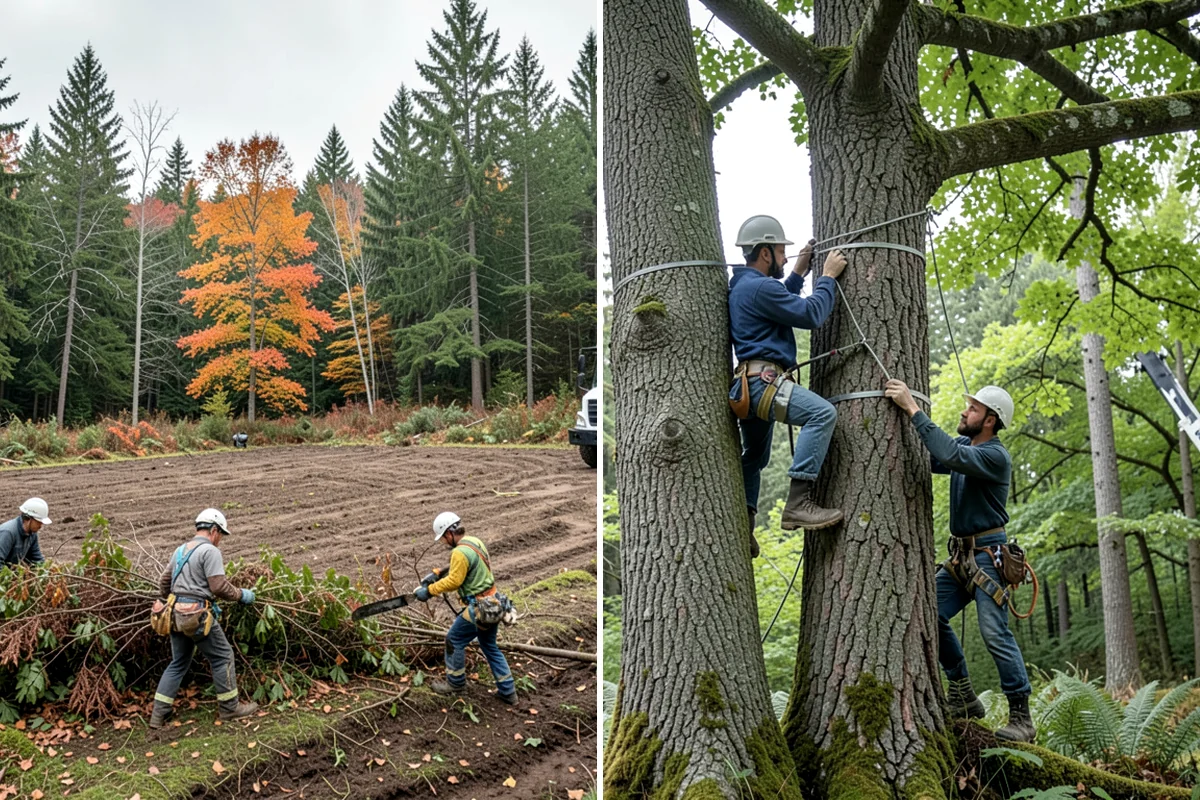
We begin by assessing the current condition of the canopy and defining exactly what pruning objectives are needed to improve your view. Trained professionals then select the correct cuts based on the species, season, and access points available at your location. After making clean cuts at proper locations, our team lowers branches safely, processes the material efficiently, and cleans up the work area completely.
Equipment We Use for Puyallup Vista Pruning
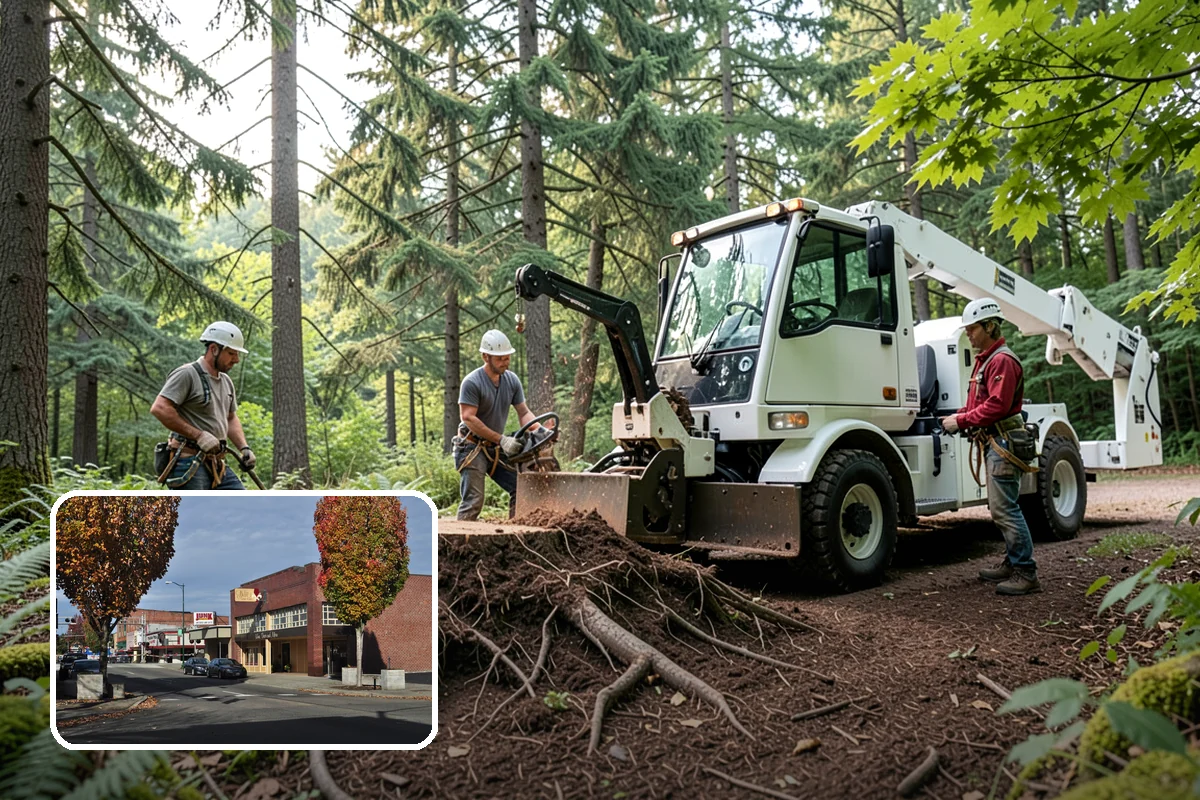
Our crews utilize a variety of tools including hand saws, pole saws, chainsaws, and climbing gear to reach different heights on your trees. Depending on the specific site conditions and tree size, we may also use aerial lifts or rigging equipment to ensure safe access and efficient removal. A wood chipper is used to process cut material right at the job site, keeping debris managed throughout the project.
Puyallup Vista Pruning Safety & Best Practices
We follow recognized pruning standards that avoid harmful cuts which can cause unnecessary stress or disease entry into your trees. Our team takes extra care when working near overhead power lines and unstable limbs, using appropriate fall protection whenever we are aloft. By limiting removal to healthy amounts of live tissue, we minimize the risk of branch failure while maintaining a safe environment for everyone involved.
Signs You Need Vista Pruning in Puyallup
You may need vista pruning if you notice deadwood or weak unions interfering with your desired view or blocking important sightlines. Over-pruning from previous work or improper cuts that have caused stress to specific branches are also signs that this service is appropriate. Additionally, if tree growth has encroached on structures or utility lines in a way that impacts visibility or safety, we can help restore balance and clarity.
What Affects the Cost of Vista Pruning in Puyallup
The cost of vista pruning depends heavily on the current condition of your canopy and how many specific objectives need to be met for sightlines. Factors such as species-specific cut selection, proper disposal of processed material, and necessary site access needs will influence the overall price. We provide transparent discussions about these variables so you understand exactly what drives the investment in this specialized service.
Best Time of Year for Puyallup Vista Pruning
Work timing is carefully planned according to recognized arboricultural standards that match specific tree species found in our region. Seasonal conditions are considered closely to ensure cuts heal properly and do not stress your trees during vulnerable periods of growth or dormancy. Our crews schedule projects when the weather and biological cycles align best for both safety and the long-term vigor of your landscape.
Planning vista pruning in Puyallup
Start by deciding exactly what you want to see. Stand where you usually sit or look out, and note which branches block the view. Mark the line of sight if you can. A clear target helps keep cuts to a minimum.
What affects the scope
Species, tree size, and how much of the crown blocks the view all matter. Some views can be opened by removing a few lower limbs. Others need thinning through the crown so light and sightlines pass through. Trees on a slope, near wires, or close to a house take more care and more time.
One point matters for deciduous trees especially. According to the WSU Extension Pacific Northwest Gardener's Handbook (Chapter 23: Pruning Woody Landscape Plants), topped deciduous trees respond with heavy growth of poorly attached water sprouts. That is why we do not recommend topping to get a view. Cutting back to a side branch or a main stem, and thinning selectively, is the standard approach under ISA and ANSI A300 practice. It leaves a more natural look and avoids the fast, weak regrowth that closes the view again.
Puyallup is in USDA hardiness zone 8b (USDA map, 2023), so many ornamental and shade trees here grow vigorously. Expect some regrowth over the following seasons, and plan for light follow-up pruning instead of one big cut.
What to expect on the day
An ISA Certified Arborist can walk the property with you first and confirm which branches come out. The crew then sets up, protects the area below, and makes the cuts in stages, removing smaller limbs before larger ones. Debris is chipped or hauled according to what you agreed on. If a tree is covered by a city rule, we check with the city before work starts.
Practical tip: take a photo from your viewing spot before the visit, then draw on it where you want the view opened. It makes the conversation faster and the result closer to what you pictured.
Puyallup tree conditions at a glance
| USDA hardiness zone | 8b |
|---|---|
| Rain and snow falling October to April | 81% of the year’s total |
| Days that freeze at night and thaw by day | 29 a year |
| Tree City USA | 8 years |
| Electric utility | unconfirmed |
Most common street trees in Puyallup
- Flowering Pear14.6%
- Hornbeam9.4%
- Crabapple8.9%
- Linden7.3%
- Ash6.9%
- Green ash5.9%
Share of 812 trees in the city’s street-tree inventory; median trunk diameter 9.5 in, 0.0% at 24 in or wider.
Sources: Daymet daily weather (NASA/ORNL), NOAA Storm Events, USDA plant hardiness map 2023, NRCS soil survey, USGS elevation, WA DNR landslide inventory, USDA Forest Service aerial survey, WSDA, city tree assessments and street-tree inventories, SILVIS Lab, Arbor Day Foundation, and official city and utility pages.
Vista Pruning Serving Puyallup
Puyallup
Also serving Puyallup
- Magnolia Pruning in Puyallupat Washington Landscaping
- Roof Maintenance in Puyallupat Washington Roofing
- Root Pruning in Puyallupat Washington City Services