Where Safety Meets Expert Tree Service.

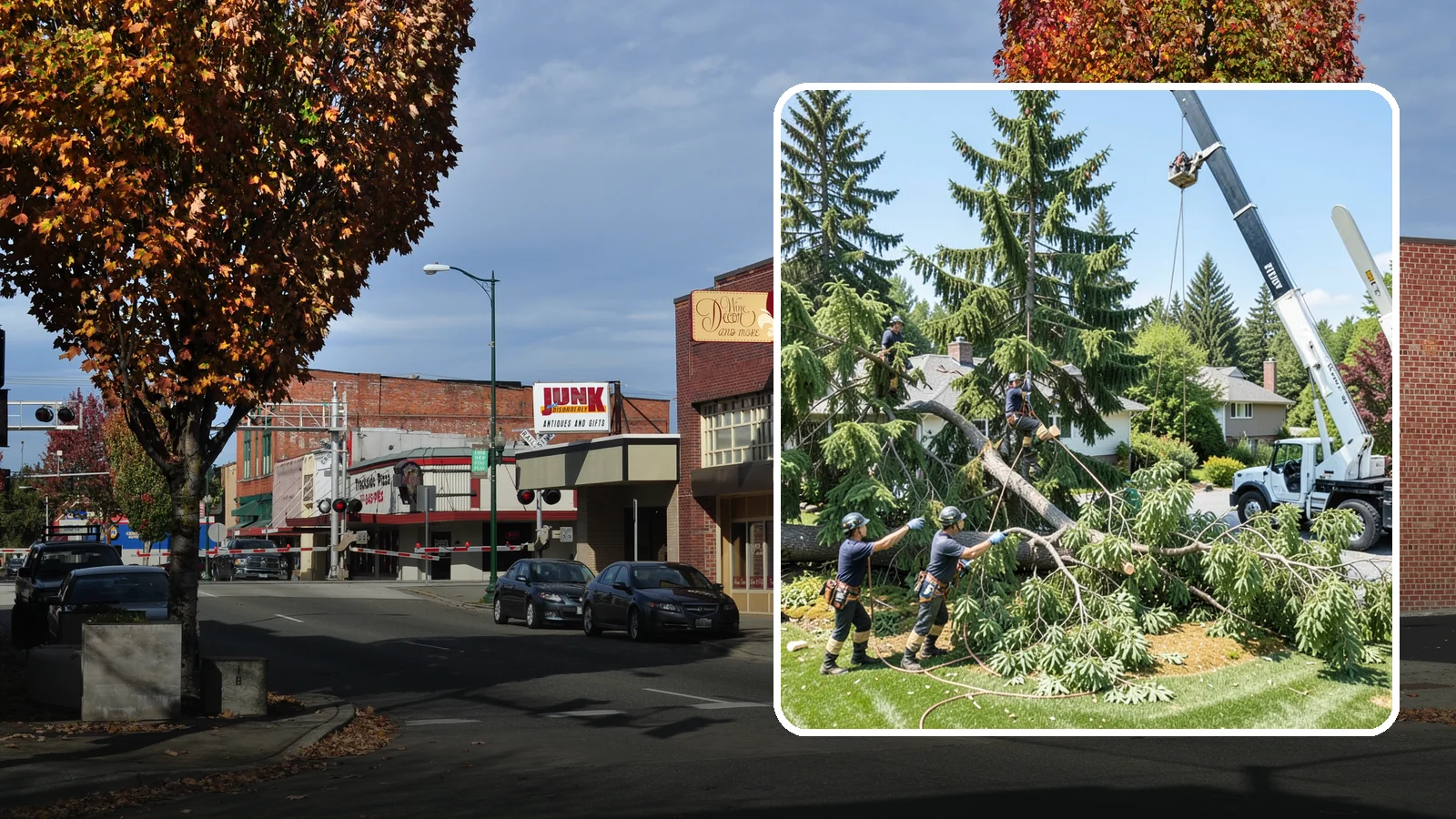
Puyallup Tree Removal
Safe and complete removal of unwanted, dead, or hazardous trees.
This page is for Puyallup owners of single-family, duplex, triplex or small multifamily lots who are weighing whether a tree needs to come down. That includes trees that are dead, leaning, split, or crowding a roof, driveway or foundation.
Removal is not always the only answer. Sometimes pruning solves the problem, and sometimes the tree has to go. Below we compare the options and explain what to check first, including a city rule that depends on the type of lot and where the tree stands.
About Tree Removal in Puyallup
We handle the safe removal of unwanted or hazardous trees so you can feel secure on your property again. Whether a tree has fallen in a storm or is simply blocking access to part of your yard, our team is ready to help. This service brings peace of mind by eliminating risks and restoring order to your landscape.
What Puyallup Tree Removal Includes
Tree removal involves cutting down the entire structure from top to bottom and clearing it from your site completely. We manage every step of this process to ensure no damage occurs to nearby buildings, fences, or other vegetation. The work includes taking away all limbs and trunk sections once they are safely lowered to the ground.
Puyallup Tree Removal Process
Our team begins with a careful assessment to plan how each tree will be taken down without causing harm. We establish clear drop zones and safety perimeters before starting any cutting from top-down sectioning or full felling. After removing the main structure, we handle limb extraction and optional stump grinding followed by thorough debris cleanup.
Equipment We Use for Puyallup Tree Removal
Professional work relies on chainsaws for precise cuts and heavy-duty rigging gear to control how trees fall safely. We utilize wood chippers to process branches efficiently and stump grinders to address remaining roots at ground level. For taller jobs or tight spaces, we bring bucket trucks or cranes to reach high clearance areas without risk.
Puyallup Tree Removal Safety & Best Practices
Maintaining clear drop zones is essential so that falling limbs do not strike people or property unexpectedly. We always watch closely for overhead power lines and never work alone when removing large trees from a site. Checking for hidden structural rot before climbing ensures our team stays safe while working at height on your job.
Signs You Need Tree Removal in Puyallup
You may need this service if a tree has died, become diseased, or is leaning dangerously toward your home. Storm damage that leaves branches hanging precariously or roots damaging foundations are clear indicators it is time to act. If you plan new construction and the existing trees interfere with building plans, removal might be necessary for progress.
What Affects the Cost of Tree Removal in Puyallup
The final price depends heavily on the size of the tree and how dense its branch structure becomes during cutting. Access requirements play a major role, such as needing a bucket truck when working around high clearance obstacles or limited space. Whether stump grinding and debris haul-away are included in your project scope will also influence the total investment required.
Best Time of Year for Puyallup Tree Removal
While we can perform removal year-round here in Washington State, many homeowners prefer scheduling during drier months for better ground conditions. Waiting until the soil is firm prevents heavy machinery from sinking into soft earth while ensuring a stable base for our equipment. This approach allows us to complete your project efficiently regardless of when you decide it needs attention.
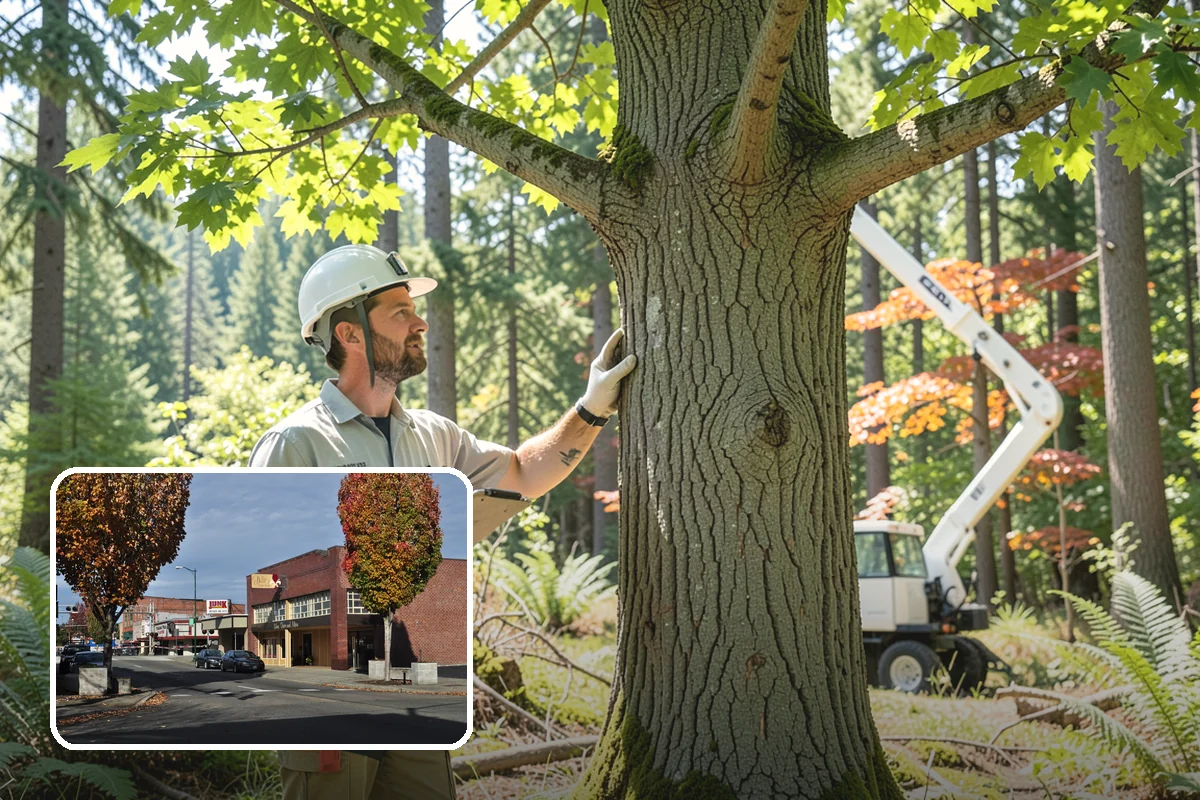
Removal choices for Puyallup lots and what to check first
Most owners end up choosing between three approaches. Which one fits depends on the tree's condition, its location and what the city requires.
- Keep and prune: Suits a sound tree with deadwood, heavy limbs or crowded branches. Pruning follows ISA/ANSI A300 practice, which means removing selected branches rather than cutting the tree back hard. We do not recommend topping.
- Remove in sections: Suits a tree near a house, fence or other targets, where the trunk and limbs are lowered piece by piece.
- Remove whole or fell: Suits a tree with open space around it and enough room to drop it safely, once the trunk and surroundings have been checked.
The city rule changes the first step
Puyallup's published rule on significant trees says those protections do not apply to lots with single-family, duplex, triplex or up to four-unit residential development, unless the tree is in a critical area. On such a lot, a permit is required only if the tree is on the City's Heritage Tree register, or is within or associated with a critical area. The regulated size is a healthy, living tree greater than 15 inches DBH. Black cottonwood and red alder are not typically regulated unless they are in a critical area.
That rule covers removal only. It says nothing about pruning, so we would not assume it applies to other work. If your lot is near a stream, wetland or slope, or you are unsure whether the tree is on the register, we check with the city before any work starts.
What size means for the choice
In the city's street-tree inventory, the median trunk diameter is 9.5 inches, and none of the inventoried trees are 24 inches or wider. That inventory covers street trees, not yard trees, so it says nothing about the tree on your property. Still, a trunk that measures well past 15 inches is worth measuring carefully, because that is where the city's size threshold applies.
An ISA Certified Arborist can look at the tree, measure it and explain which option fits. Estimates are free. Call or text 425-484-4442.
Puyallup tree conditions at a glance
| USDA hardiness zone | 8b |
|---|---|
| Soils | 13% of land has hardpan or another restrictive layer within 40 in; most common series Puyallup; 47% well drained |
| High and strong wind episodes, 2005-2025 | 25 in the forecast zone |
| Electric utility | unconfirmed |
Tree removal rules in Puyallup
Significant tree protections do not apply to lots containing single-family, duplex, triplex or up to four-unit residential development unless the tree is in a critical area. A permit is required on such lots only if the tree is on the City's Heritage Tree register, or is within or associated with a critical area (wetland/buffer, steep slope, stream buffer, habitat area/greenbelt). Significant trees are regulated on commercial, industrial, institutional and multifamily (5+ units) property.
Regulated size: Healthy, living tree greater than 15 in DBH (black cottonwood and red alder not typically regulated unless in a critical area).
Official city source. Rules change; we confirm with the city before work starts.
Strongest wind events near Puyallup
- Oct 18, 2007: gusts to 62 mph
- Jan 6, 2019: gusts to 61 mph
- Feb 25, 2025: gusts to 60 mph
NOAA Storm Events, forecast zone that includes Puyallup, 2005-2025.
Most common street trees in Puyallup
- Flowering Pear14.6%
- Hornbeam9.4%
- Crabapple8.9%
- Linden7.3%
- Ash6.9%
- Green ash5.9%
Share of 812 trees in the city’s street-tree inventory; median trunk diameter 9.5 in, 0.0% at 24 in or wider.
Sources: Daymet daily weather (NASA/ORNL), NOAA Storm Events, USDA plant hardiness map 2023, NRCS soil survey, USGS elevation, WA DNR landslide inventory, USDA Forest Service aerial survey, WSDA, city tree assessments and street-tree inventories, SILVIS Lab, Arbor Day Foundation, and official city and utility pages.
Tree Removal Serving Puyallup
Puyallup
Also serving Puyallup
- Shade Tree Planting in Puyallupat Washington Landscaping
- Stump Grinding in Puyallupat Washington City Services
- Firewood Processing in Puyallupat Washington Firewood