Where Safety Meets Expert Tree Service.

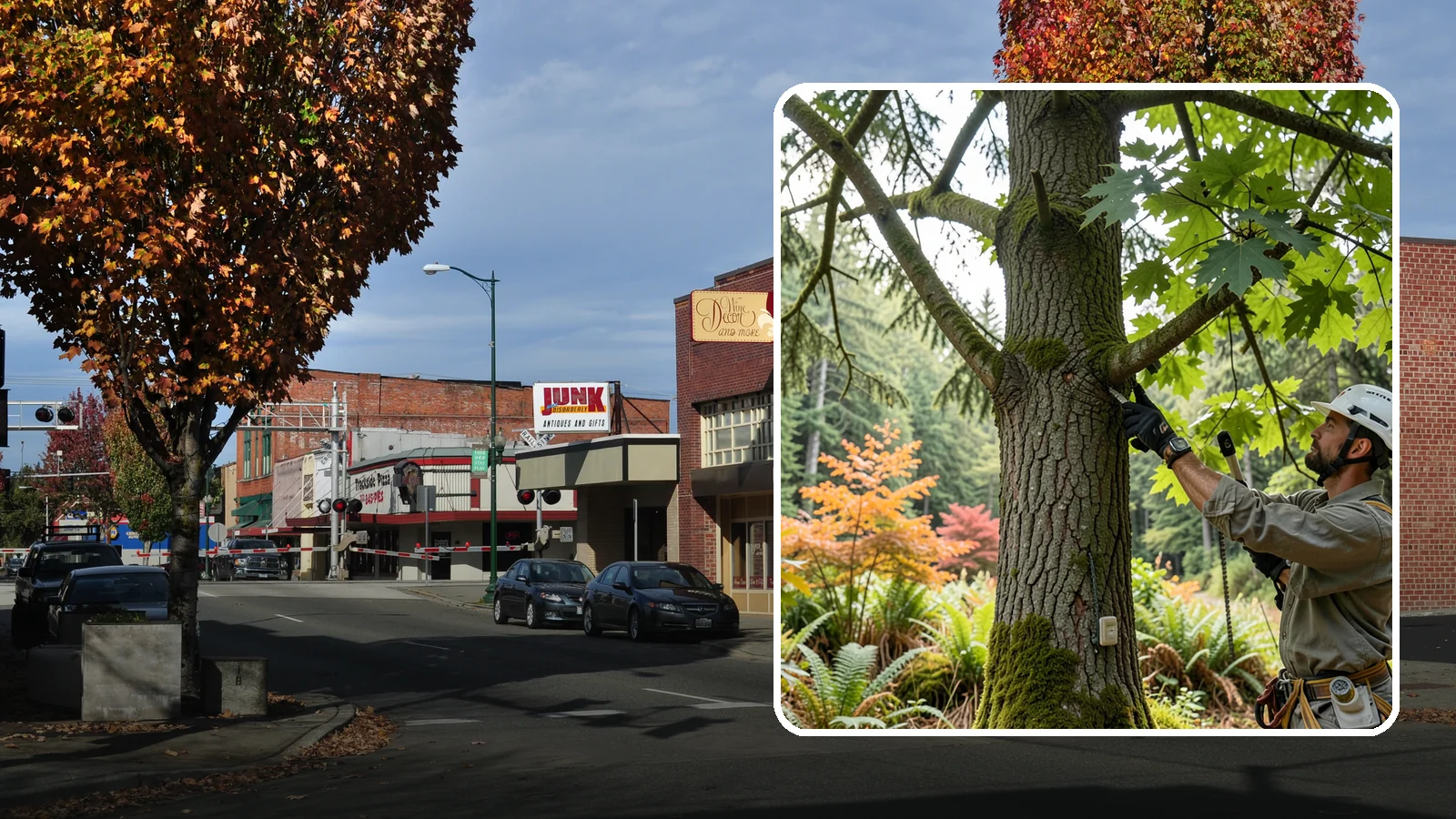
Puyallup Tree Health Inspection
A professional evaluation of a tree’s overall condition.
The best time to look over your trees is when you can still see them clearly: late winter before buds open, or early summer once the leaves are fully out. In winter you can read the branch structure and spot dead wood. In early summer, thin crowns, small leaves and early leaf drop stand out against healthy neighbors.
A tree health inspection is a close look at the roots, trunk, branches and crown to find problems while they can still be managed. It suits any Puyallup tree that looks off, has been damaged, or leans over a house, driveway or play area.
About Tree Health Inspection in Puyallup
A tree health inspection offers a professional look at your trees’ overall condition to help keep them safe and strong for years to come. This valuable check-up is designed specifically for homeowners who want to catch potential issues before they become serious problems. It serves as the first step in creating a customized care plan that supports long-term stability and life extension for valued specimens.
What Puyallup Tree Health Inspection Includes
Tree health inspection provides an expert evaluation of your trees’ current status, focusing on identifying early warning signs of trouble. Our trained crews follow recognized arboricultural standards to assess soil quality, root structure, pest presence, and disease indicators while matching methods to each tree’s specific species and site conditions. The goal is to clearly identify contributing factors like compacted soils or girdling roots so you can guide an effective care plan forward.
Puyallup Tree Health Inspection Process
Our team begins by carefully inspecting the tree within its surrounding environment to understand how soil, pests, or past construction might be affecting it. Once we have identified these issues, we recommend and apply appropriate treatments while documenting our findings for your records. We ensure that follow-up care is planned based on accurate documentation of conditions found during the initial visit.
Equipment We Use for Puyallup Tree Health Inspection
To get a complete picture, we utilize diagnostic tools along with soil probes and sampling kits to examine what lies beneath the surface. Depending on access needs or wet season conditions, our crews may bring air excavation tools to gently assess root zones without causing damage. We also use specialized injection equipment for treatments while wearing necessary personal protective gear throughout the workday.
Puyallup Tree Health Inspection Safety & Best Practices
During any inspection involving products, we strictly follow label instructions and application guidelines to ensure everyone remains safe. Our methods are designed to protect your soil and surrounding plantings while avoiding accidental damage to roots or trunks during our visit. We take great care to document all conditions accurately so that future treatments remain effective without risking the tree’s health.
Signs You Need Tree Health Inspection in Puyallup
You may need this service if you notice signs of decline caused by poor soils, pests, disease, or changes in ground grade from past construction. Girdling roots and other hidden issues often go unnoticed until a professional evaluation reveals them early enough to prevent escalation. If your trees have experienced stress from environmental shifts or nearby development, an inspection can help determine the best path forward for their recovery.
What Affects the Cost of Tree Health Inspection in Puyallup
The investment for this service varies based on several factors including the specific species of tree being evaluated and the complexity of diagnosing soil issues. Site conditions such as difficult access requirements will also influence how much time and resources are needed to complete a thorough assessment. Additionally, identifying pests or diseases requires specialized attention that impacts the overall cost structure of your care plan.
Best Time of Year for Puyallup Tree Health Inspection
In our Puget Sound climate, you can schedule this inspection at any point throughout the year since trees remain active in most seasons. However, during wetter periods, we may need to use air excavation tools specifically to effectively assess root zones without getting bogged down by mud or water. Planning your visit allows us to choose the right timing and equipment for clear results regardless of current weather patterns.
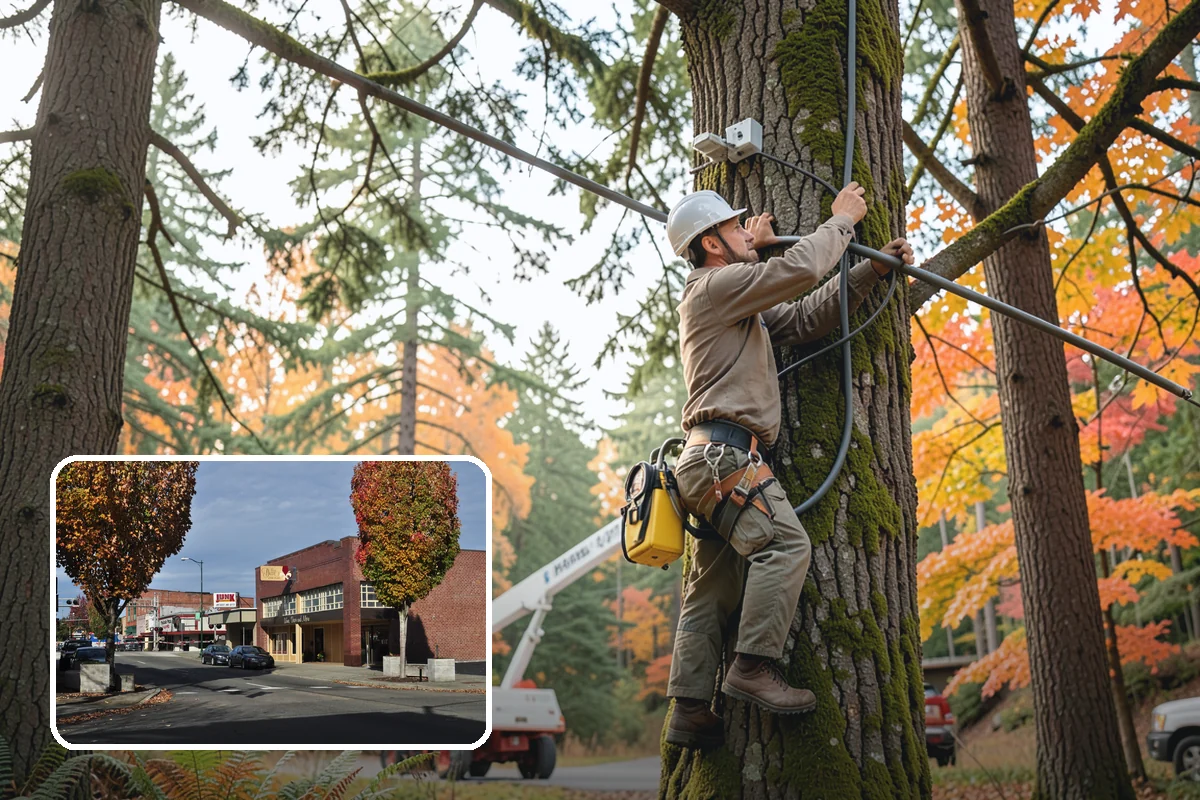
Planning a tree health inspection in Puyallup
Start by walking the property and noting what worries you. Mushrooms at the base, cracks, oozing sap, dead tips, bark missing from the trunk, or a new lean are all worth pointing out. Photos taken over a few weeks help show whether something is changing.
What affects the scope
The number of trees matters most, along with their size and how close they stand to buildings, lines and walkways. A single large conifer takes longer than several small ornamentals. Access also counts, since a tree behind a fence or on a slope is harder to examine from every side.
Local data gives some context, though not about your trees. Puyallup's street-tree inventory rates 45% of trees Good, 33% Fair and 11% Poor. That is a city-managed sample, not yard trees, but it shows that a sizable share of trees have visible condition problems. Separately, a 2021-2025 aerial survey by the USDA Forest Service and WA DNR mapped forest within 10 km of Puyallup. It is forest land, not yard trees. It recorded 273 acres of Douglas-fir engraver damage and 1,101 acres of decline with no single cause found. Both are reasons to check Douglas-fir and western redcedar closely rather than assume a thinning crown is harmless.
Root disease is a good example. WSU HortSense notes that Armillaria-infected trees have damaged roots and are more likely to fall in high winds. That is why the base and root flare get attention, not just the canopy.
What to expect on the day
The arborist walks around each tree, checks the crown from the ground, and examines the trunk, root flare and soil surface. They may probe for decay or look for fungal growth. You will get a plain explanation of what was found and which trees, if any, need pruning, monitoring or removal. If a city permit could apply to removal, we check with Puyallup before any work starts.
Practical tip: mark any tree you are unsure about with ribbon before the visit, and have your photos ready. It saves time and keeps the walk-through focused.
Puyallup tree conditions at a glance
| USDA hardiness zone | 8b |
|---|---|
| Soils | 13% of land has hardpan or another restrictive layer within 40 in; most common series Puyallup; 47% well drained |
| Rain and snow falling October to April | 81% of the year’s total |
| Days with 0.1 in or more of rain | 108 a year |
| Days that freeze at night and thaw by day | 29 a year |
Most common street trees in Puyallup
- Flowering Pear14.6%
- Hornbeam9.4%
- Crabapple8.9%
- Linden7.3%
- Ash6.9%
- Green ash5.9%
Share of 812 trees in the city’s street-tree inventory; median trunk diameter 9.5 in, 0.0% at 24 in or wider.
Tree health near Puyallup
Spongy moth (WSDA 2017): WSDA trap detection(s): 27 moth(s) in 13 trap catch record(s).
Spongy moth (WSDA 2012): WSDA eradication treatment (Btk).
- Decline, cause not identified1,101 ac
- Douglas-fir engraver273 ac
- Bears100 ac
Forest damage mapped from the air within 10 km of Puyallup, 2021-2025 (USDA Forest Service and WA DNR). This covers forest land, not street or yard trees. “Decline, cause not identified” is dieback with no single cause found.
Sources: Daymet daily weather (NASA/ORNL), NOAA Storm Events, USDA plant hardiness map 2023, NRCS soil survey, USGS elevation, WA DNR landslide inventory, USDA Forest Service aerial survey, WSDA, city tree assessments and street-tree inventories, SILVIS Lab, Arbor Day Foundation, and official city and utility pages.
Tree Health Inspection Serving Puyallup
Puyallup


Also serving Puyallup
- Tree Watering Service in Puyallupat Washington Landscaping
- Irrigation Repair in Puyallupat Washington City Services