Where Safety Meets Expert Tree Service.

Puyallup Tree Appraisals
The valuation of trees as property assets.
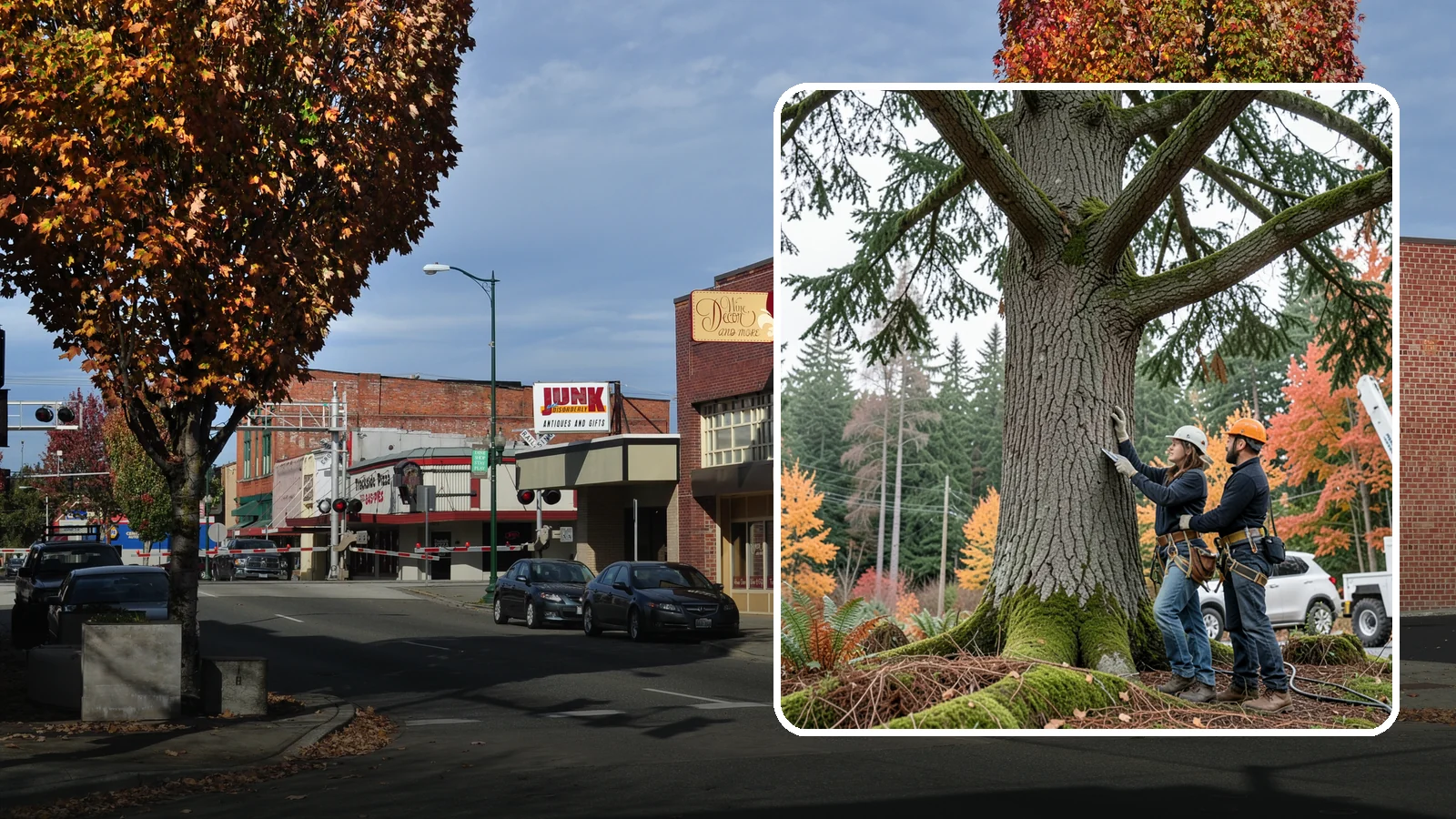
The best time to order a tree appraisal is before something forces the question: before a removal is scheduled, before a sale or insurance claim, or before a storm leaves damage you need to document. A value on paper is easiest to produce while the tree is standing, in leaf, and fully visible.
An appraisal puts a written value on a tree and records its condition. In Puyallup, it can also help you plan around replacement requirements if a removal is ever approved. Here is how to prepare and what shapes the result.
About Tree Appraisals in Puyallup
Tree appraisals help homeowners understand their trees as valuable property assets rather than just landscape features. This expert guidance supports informed decisions for insurance claims, legal matters, or future planning needs. Whether you are preparing documentation or simply want to prioritize care effectively, our team is here to assist.
What Puyallup Tree Appraisals Includes
Our service provides an objective valuation of your specific trees based on recognized arboricultural standards. We match our methods carefully to the unique species present and current site conditions while considering access limitations. The result is clear documentation that can be used for permits or insurance purposes without guesswork.
Puyallup Tree Appraisals Process
Work begins by gathering detailed information about your property history and inspecting each tree’s condition thoroughly. Our trained crews analyze these findings against established objectives before preparing a report with specific recommendations. We conclude the process by reviewing our conclusions directly with you to ensure complete understanding of the results.
Equipment We Use for Puyallup Tree Appraisals
To gather accurate data, we utilize specialized diagnostic tools for measurement along with mapping and imaging equipment when necessary. Documentation software ensures all observations are recorded precisely while personal protective gear keeps everyone safe during inspections. These resources allow us to produce reliable reports that stand up to scrutiny from insurers or legal professionals.
Puyallup Tree Appraisals Safety & Best Practices
We base every finding on observed evidence rather than assumptions, ensuring our assessments remain grounded in reality. If any uncertainties exist regarding a specific condition, we will clearly disclose those limitations and recommend follow-up steps if needed. Accurate documentation of current conditions is essential for maintaining safety standards throughout the evaluation process.
Signs You Need Tree Appraisals in Puyallup
You may need an appraisal when dealing with insurance claims or navigating complex legal requirements related to your property trees. Situations involving competing objectives between different stakeholders often require this neutral, expert perspective to move forward fairly. Hidden defects that are not immediately visible can also necessitate a professional assessment before making major decisions.
What Affects the Cost of Tree Appraisals in Puyallup
The final cost is influenced by the specific tree species involved and how difficult access might be at your site location. Regulatory requirements vary by jurisdiction, which can impact the scope of work needed to meet local standards accurately. These factors combine to determine the appropriate level of detail required for your unique valuation needs.
Best Time of Year for Puyallup Tree Appraisals
While we can perform appraisals year-round given our favorable Puget Sound climate, some assessments require specific timing to detect hidden defects effectively. Certain tree species also have particular windows where recognized arboricultural standards dictate when an evaluation should occur for maximum accuracy. We will work with you to schedule the visit that best matches your project timeline and biological needs.
Planning a tree appraisal in Puyallup
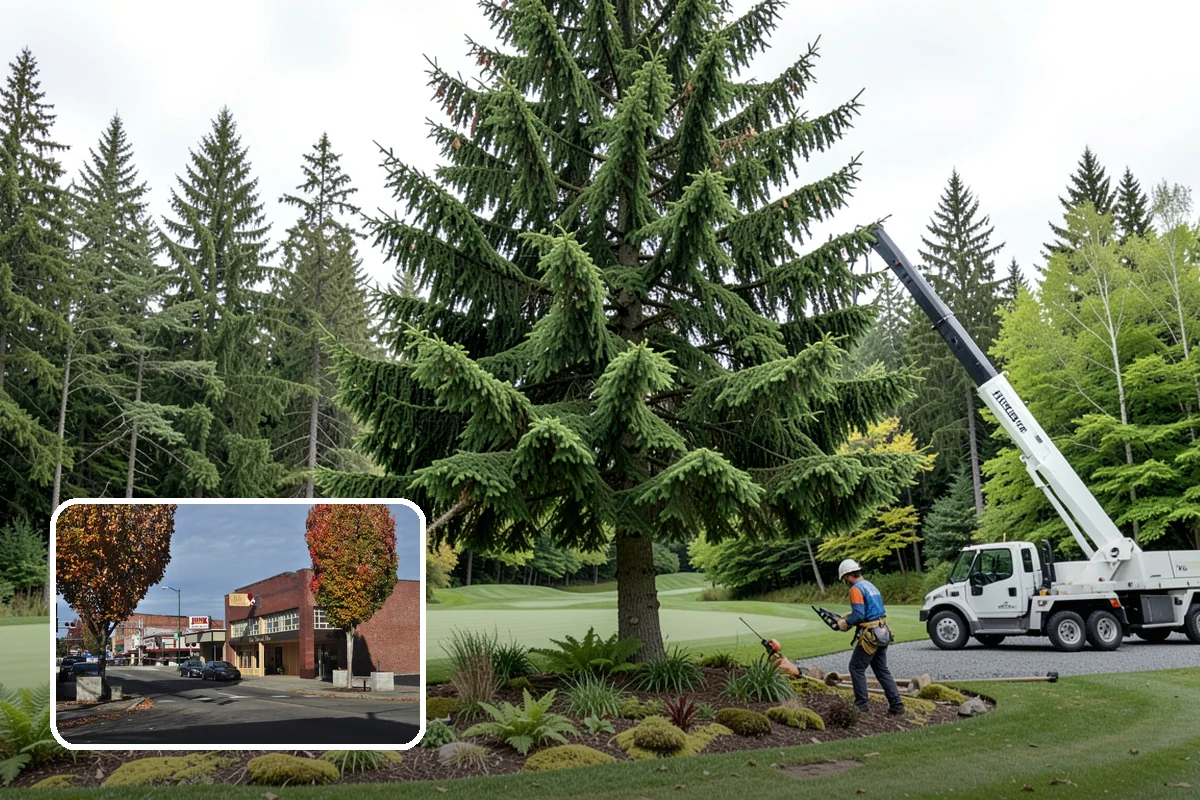
Start by deciding what the appraisal is for. A value for an insurance claim, a property dispute, a casualty loss or a landscape plan may call for different documentation, so tell us the purpose when you call. Gather anything you have on the tree, such as past pruning records, photos from before any damage, and the property survey.
What affects the scope
Species, size, health, structure and location all feed into a value. A tree's site matters too. A healthy tree that shades a house and screens a view is rated differently from one leaning over a shed with decay at the base.
Size is worth a local comparison. In Puyallup's street-tree inventory, the median trunk diameter is 9.5 in, and 0.0% of the trees listed are 24 in or wider. That is city street-tree data, not a count of yard trees, and it says nothing about your tree. But if yours is much larger than that median, it is unusual among the trees the city has recorded, and a careful assessment of its structure and value is worthwhile.
Replacement can also affect your planning. The city's tree code says trees removed in or near a critical area must be replaced with two new trees for each tree removed, and replacement may be required for other approved removals. That rule covers removal only. If a tree you are appraising may come out, we check with the city before work starts so you know what replacement could be expected. An appraisal does not replace that check.
Climate is a smaller factor. Puyallup is in USDA plant hardiness zone 8b (USDA map, 2023), which helps when judging whether a species suits the site and how well it may do over time.
What to expect on the day
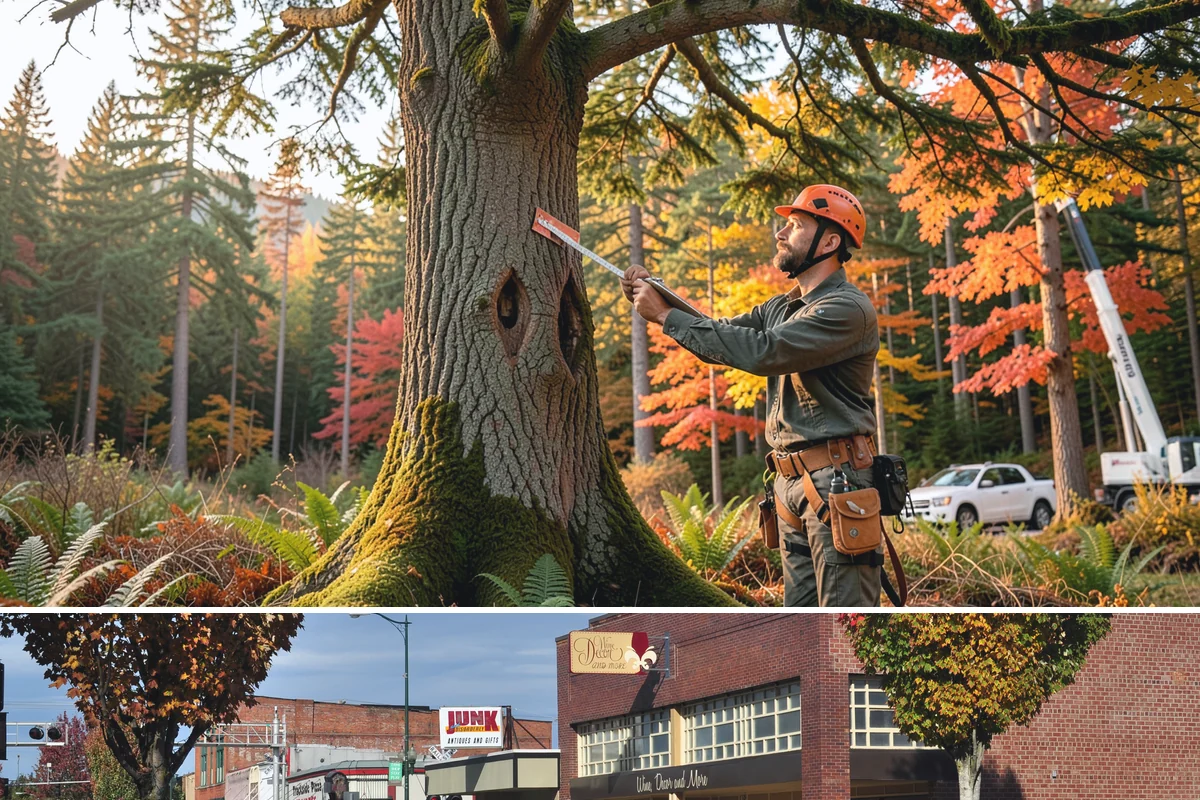
An ISA Certified Arborist walks the tree and looks at the trunk, root flare, canopy and surrounding soil. They measure the trunk diameter, note defects such as cracks, cavities or dead wood, and photograph what they find. Expect questions about the tree's history. The visit is usually a walk-around, with no digging or climbing unless closer inspection is needed. The written report follows.
One practical tip: photograph the tree from several sides now, with something in the frame for scale, and keep the images with your records.
Puyallup tree conditions at a glance
| Soils | 13% of land has hardpan or another restrictive layer within 40 in; most common series Puyallup; 47% well drained |
|---|---|
| High and strong wind episodes, 2005-2025 | 25 in the forecast zone |
| USDA hardiness zone | 8b |
Tree removal rules in Puyallup
Significant tree protections do not apply to lots containing single-family, duplex, triplex or up to four-unit residential development unless the tree is in a critical area. A permit is required on such lots only if the tree is on the City's Heritage Tree register, or is within or associated with a critical area (wetland/buffer, steep slope, stream buffer, habitat area/greenbelt). Significant trees are regulated on commercial, industrial, institutional and multifamily (5+ units) property.
Regulated size: Healthy, living tree greater than 15 in DBH (black cottonwood and red alder not typically regulated unless in a critical area).
Official city source. Rules change; we confirm with the city before work starts.
Sources: Daymet daily weather (NASA/ORNL), NOAA Storm Events, USDA plant hardiness map 2023, NRCS soil survey, USGS elevation, WA DNR landslide inventory, USDA Forest Service aerial survey, WSDA, city tree assessments and street-tree inventories, SILVIS Lab, Arbor Day Foundation, and official city and utility pages.
Tree Appraisals Serving Puyallup
Puyallup

Also serving Puyallup
- Landscape Architecture in Puyallupat Washington Landscaping