Where Safety Meets Expert Tree Service.

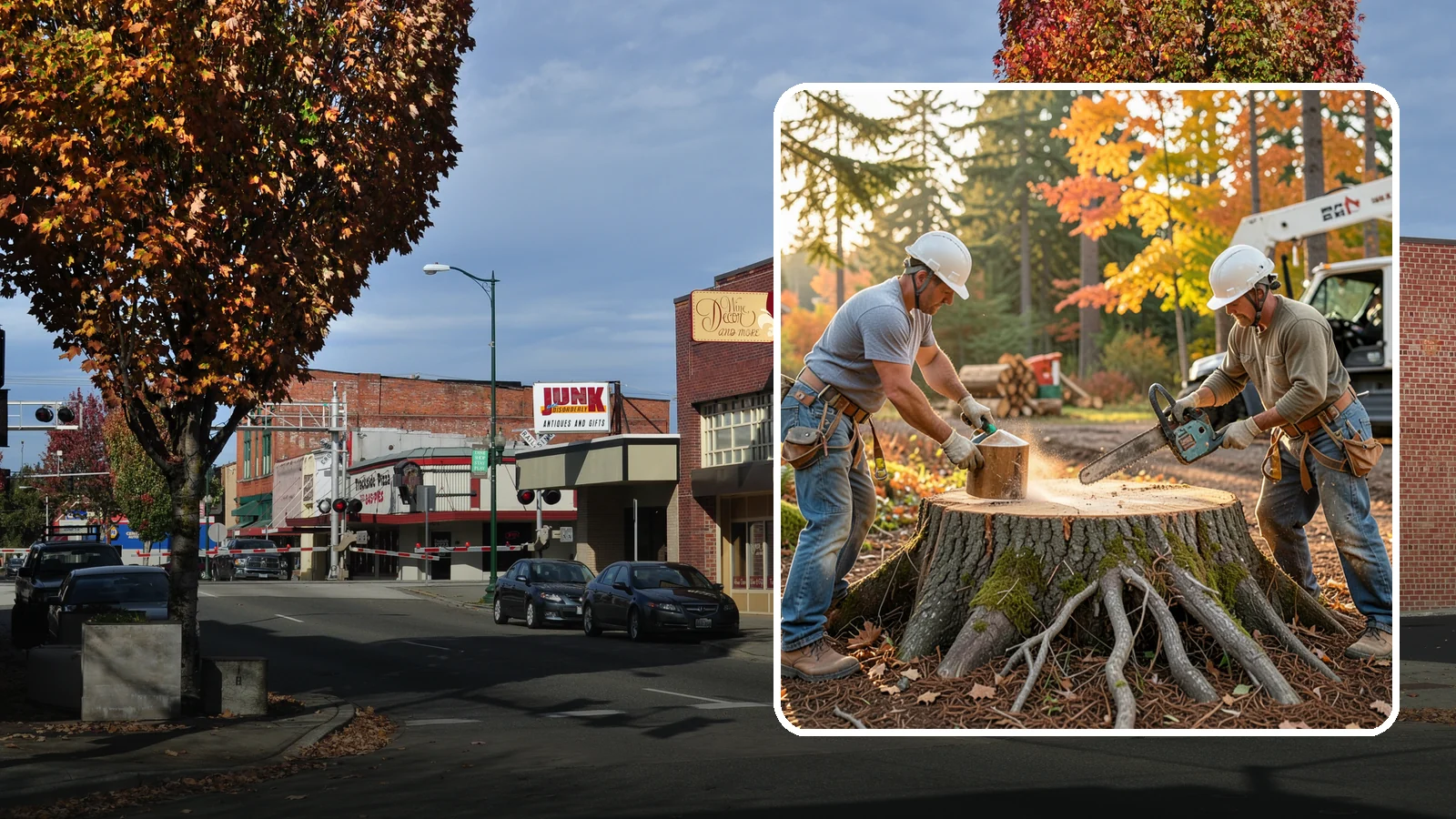
Puyallup Stump Chemical Treatment
The application of approved products to speed stump breakdown or prevent resprouting.
In Puyallup, 81% of the year's rain and snow falls between October and April (Daymet, 2005-2025). That matters for stump treatment, because a chemical product only works if it can soak into fresh wood. A stump that stays wet through the cool months takes treatment differently than one that dries out in summer.
If you have a stump you don't plan to grind, chemical treatment is one way to speed up its decay. Below is how the work goes, what to expect, and how local soil and weather can change the timing and your plans for the spot.
About Stump Chemical Treatment in Puyallup
If you have stubborn stumps that won’t go away or are sprouting new growth after removal, our stump chemical treatment can help clear the space safely. This solution is ideal for homeowners who need to remove tripping hazards without using a grinder on difficult sites. We work with your property’s specific conditions to get your ground ready again.
What Puyallup Stump Chemical Treatment Includes
Our team applies approved products designed to speed up natural breakdown or stop unwanted regrowth from remaining stumps. This approach allows us to reclaim usable land and discourage pests while preparing the area for future planting or surface use. It is a practical choice when grinding simply isn’t possible due to access issues or other site constraints.
Puyallup Stump Chemical Treatment Process
We begin by locating underground utilities and marking them clearly before starting any work in your yard. After clearing debris around the stump, we apply the necessary treatment methods matched to your specific tree species and soil conditions. Once applied, we monitor progress until the chemicals have effectively done their job according to recognized standards.
Equipment We Use for Puyallup Stump Chemical Treatment
Trained crews use specialized application tools along with excavation equipment to manage the site carefully during this process. We also bring wheelbarrows for debris removal and wear full personal protective gear while working near your home. All methods are selected based on how much access we have to reach each stump safely.
Puyallup Stump Chemical Treatment Safety & Best Practices
Before any work begins, our crew confirms that all underground utilities are located to prevent accidental damage during treatment application. We keep bystanders away from the area and ensure everyone wears eye and hearing protection while handling chemicals or equipment. Our team also takes extra care when working near buried obstructions or uneven ground around your property lines.
Signs You Need Stump Chemical Treatment in Puyallup
You may need this service if you have stumps that continue to sprout new shoots despite previous removal attempts. It is especially useful where a grinder cannot reach the stump due to tight spaces, rocks in the soil, or limited yard access. If you want to eliminate tripping hazards and reclaim your lawn without heavy machinery, chemical treatment might be right for you.
What Affects the Cost of Stump Chemical Treatment in Puyallup
The final cost depends on how many stumps need treating and their individual sizes across your property. We also consider the specific chemical products required, whether multiple applications are needed over time, and how long it takes for each stump to fully break down. These factors help us determine a fair price tailored to your unique situation rather than using one-size-fits-all pricing.
Best Time of Year for Puyallup Stump Chemical Treatment
This treatment can generally be performed year-round in our local weather patterns as long as conditions remain dry enough for proper application. To effectively prevent new growth from emerging, we recommend scheduling the service before spring shoots start appearing on nearby trees or shrubs. Planning ahead ensures the chemicals work best without being washed away by heavy rain too soon after treatment.
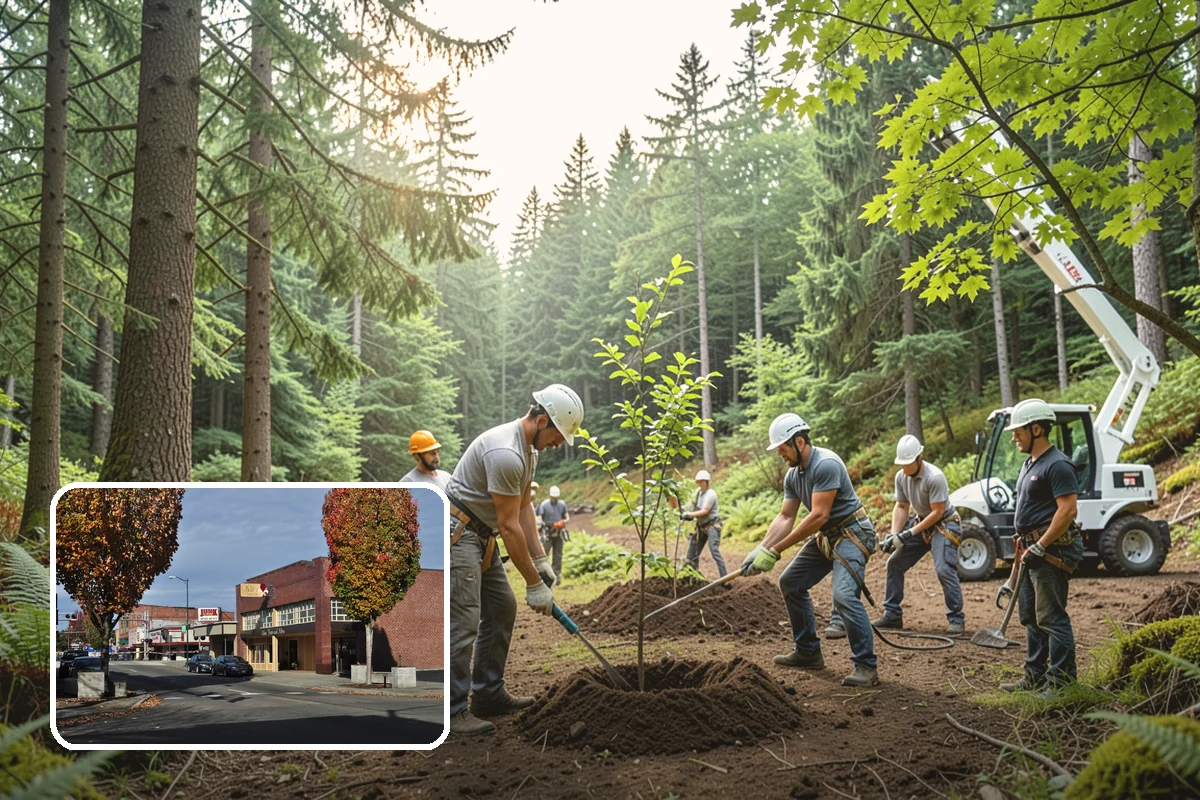
How stump chemical treatment works in Puyallup
Chemical treatment does not remove a stump. It helps the wood break down over time so the stump softens and can be taken apart or left to rot. Expect months, not days.
The basic steps
- Cut the stump as low as practical, with a fresh, flat surface.
- Drill holes into the top and sides of the wood so the product reaches the core.
- Fill the holes with the chosen product and keep people and pets away from the area.
- Wait while the wood softens, then break down or remove what is left.
Why the wet season matters
About 81% of Puyallup's yearly rain and snow falls from October to April, based on Daymet data for 2005-2025. A stump left uncovered through those months can sit saturated, and standing water on top can dilute or wash out product from the holes. Covering the stump with a tarp after treatment is a common way to keep it in place. Drier months are often easier for timing the work, though a stump that is still damp inside can break down well.
Soil and drainage
The NRCS soil survey shows 47% of Puyallup's land is well drained and 11% is poorly drained. Another 13% has a hard or restrictive layer, such as glacial hardpan, within 40 inches of the surface. Those are citywide figures, not a reading of your yard. Still, if your stump sits where water pools, expect it to stay wet and decay on a different schedule than one on drier ground. It also helps to know that a hardpan layer can limit how deep roots and any later digging go.
Planning the spot
Puyallup is in USDA hardiness zone 8b (USDA map, 2023), so a wide range of replacement trees and shrubs can be considered. Wait until the stump has broken down before planting in the same place. Call or text 425-484-4442 for a free estimate, and we can tell you whether treatment or grinding fits your stump better.
Puyallup tree conditions at a glance
| Soils | 13% of land has hardpan or another restrictive layer within 40 in; most common series Puyallup; 47% well drained |
|---|---|
| Rain and snow falling October to April | 81% of the year’s total |
| Days that freeze at night and thaw by day | 29 a year |
Tree removal rules in Puyallup
Significant tree protections do not apply to lots containing single-family, duplex, triplex or up to four-unit residential development unless the tree is in a critical area. A permit is required on such lots only if the tree is on the City's Heritage Tree register, or is within or associated with a critical area (wetland/buffer, steep slope, stream buffer, habitat area/greenbelt). Significant trees are regulated on commercial, industrial, institutional and multifamily (5+ units) property.
Regulated size: Healthy, living tree greater than 15 in DBH (black cottonwood and red alder not typically regulated unless in a critical area).
Official city source. Rules change; we confirm with the city before work starts.
Sources: Daymet daily weather (NASA/ORNL), NOAA Storm Events, USDA plant hardiness map 2023, NRCS soil survey, USGS elevation, WA DNR landslide inventory, USDA Forest Service aerial survey, WSDA, city tree assessments and street-tree inventories, SILVIS Lab, Arbor Day Foundation, and official city and utility pages.
Stump Chemical Treatment Serving Puyallup
Puyallup
Also serving Puyallup
- Sod Replacement in Puyallupat Washington Landscaping
- Root Pruning in Puyallupat Washington City Services