Where Safety Meets Expert Tree Service.

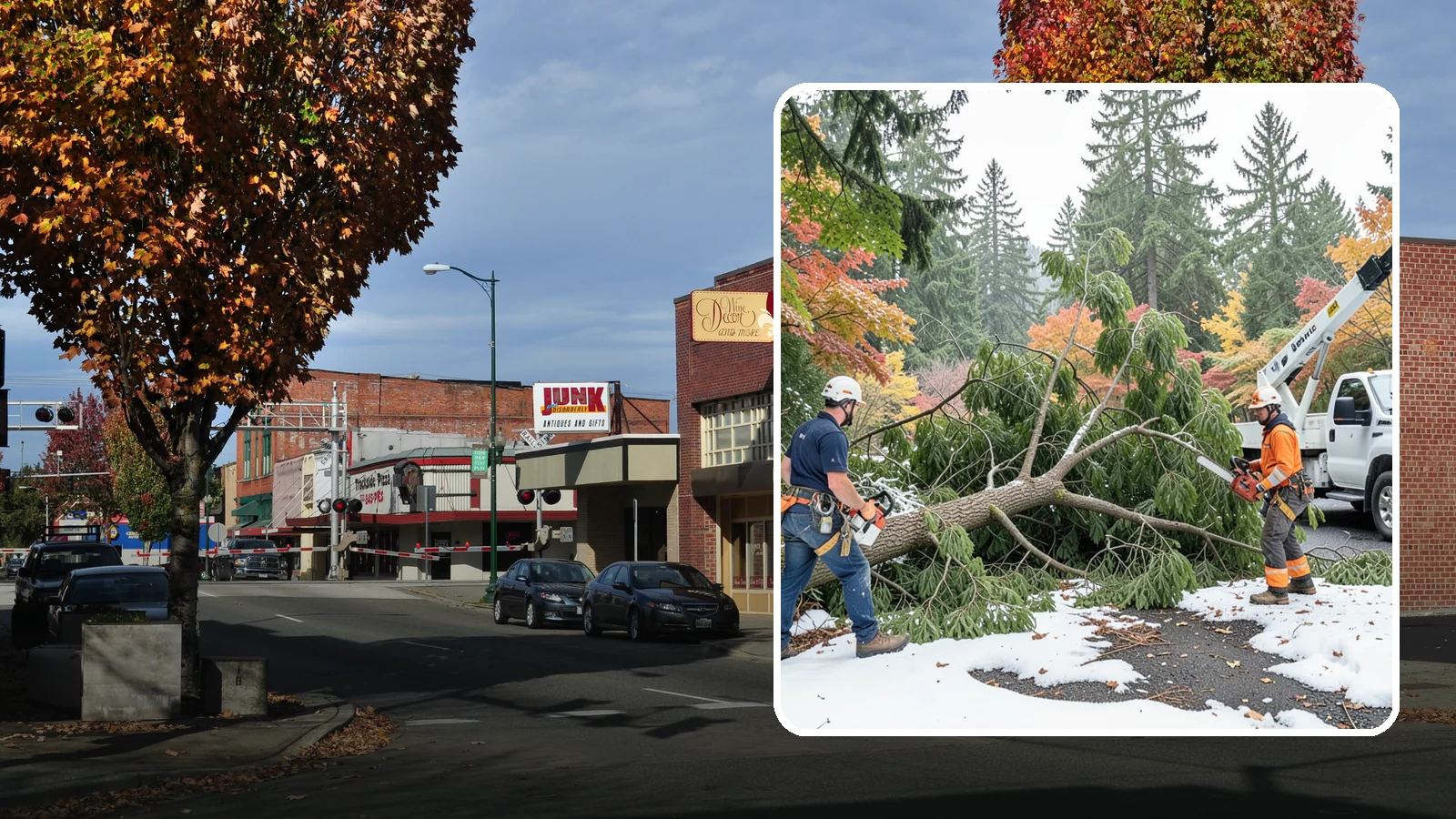
Puyallup Snow And Ice Damage Cleanup
The cleanup of trees damaged by snow and ice loading.
Puyallup averages only 7.8 inches of snow a season, so a heavy snow or ice event can catch a yard unprepared. Trees here don't get much practice carrying that load. After a storm, walk the property from a safe distance and look up before you pick up a single branch.
Note which limbs are bent, split, or hanging, and which trees lean differently than they did before. Photograph the damage and keep people and vehicles clear of anything overhead. Then decide what needs attention now and what can wait.
About Snow And Ice Damage Cleanup in Puyallup
When heavy snow or ice weighs down your trees, our team is ready to help you recover quickly and safely. We specialize in clearing away the damage caused by winter storms so you can regain full access to your property without delay. Our goal is to restore peace of mind while ensuring that any remaining risks are properly managed.
What Puyallup Snow And Ice Damage Cleanup Includes
This service focuses on relieving tension from loaded limbs and removing branches or trees that have failed after a storm. We work carefully to clear debris efficiently, which helps reduce the chance of secondary failures during cleanup operations. Every job is tailored to match your specific tree species, site conditions, and available access points for safe removal.
Puyallup Snow And Ice Damage Cleanup Process
Our trained crews begin by assessing damage and addressing immediate hazards before making your area secure again. Once safety is established, we remove hanging or broken limbs as well as any downed material from the landscape. We then process and haul away all debris, documenting the extent of the damage if needed for insurance purposes later on.
Equipment We Use for Puyallup Snow And Ice Damage Cleanup
To handle these challenging conditions, we use chainsaws along with specialized rigging gear to control heavy loads safely. Depending on your specific site needs, an aerial lift or crane may be brought in to reach difficult branches without causing further harm. We also utilize professional chippers and hauling equipment to manage the volume of debris generated by storm cleanup efforts.
Puyallup Snow And Ice Damage Cleanup Safety & Best Practices
Storm-damaged trees are often unstable and under significant load, so we treat every situation with extra caution during removal. Our crews stay alert for downed or hidden utility lines that could pose a danger if not identified first. We release tension carefully on bent or pinned material while keeping bystanders clear to ensure everyone remains safe throughout the operation.
Signs You Need Snow And Ice Damage Cleanup in Puyallup
You likely need this service when you see trees under stored tension, such as limbs bowing heavily from accumulated snow and ice. Other warning signs include hidden cracks in branches that have partially failed or downed power lines blocking your driveway. If limited access makes it hard to move around safely after a storm, our team can help clear the path for emergency vehicles or daily use.
What Affects the Cost of Snow And Ice Damage Cleanup in Puyallup
The final cost is influenced by factors such as tree species and how difficult the site conditions are following a severe weather event. Access limitations caused by fallen debris or snow accumulation will also impact the time required to complete your cleanup project. Additionally, the total volume of debris that needs processing and hauling plays a major role in determining the overall price for this work.
Best Time of Year for Puyallup Snow And Ice Damage Cleanup
This service is performed during winter months specifically after snow and ice loading events have occurred on your property. We wait until immediate hazards are addressed before we begin relieving tension on limbs to prevent further damage or collapse. Scheduling this cleanup promptly helps you recover from severe weather while minimizing the risks associated with unstable trees in cold conditions.
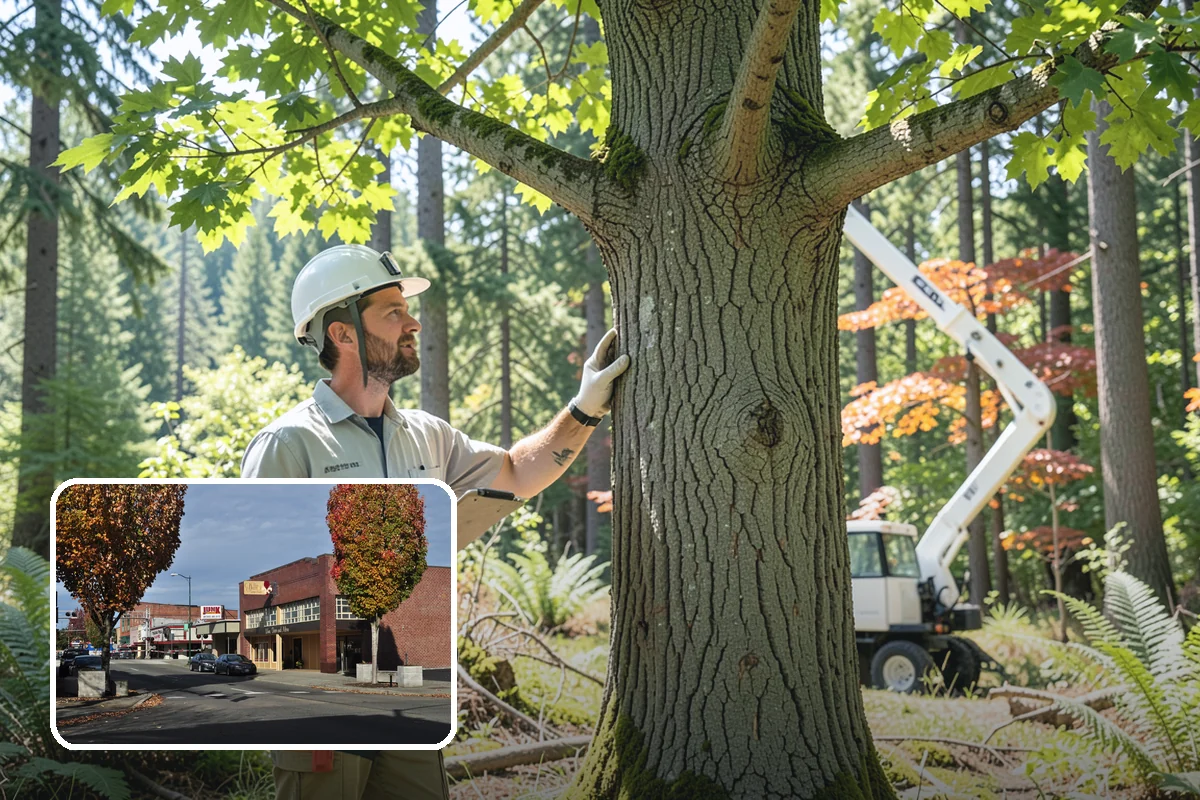
Snow and ice damage cleanup in Puyallup, step by step
Cleanup goes best in a set order. Here is how the work usually runs.
1. Assess from the ground
Before cutting, we look for hazards: broken limbs caught in the crown, cracked trunks, split unions, and uprooted root plates. Branches under tension can spring back when cut. Anything touching or near a power line needs the utility, not a saw.
2. Remove hazards first
Hanging and broken limbs come down before ground debris is cleared. Where a branch has torn away, we make a clean pruning cut just outside the branch collar, in line with standard ISA and ANSI A300 practice. Ragged tears heal poorly, and flush cuts or stubs make it worse. We do not recommend topping a damaged tree. It tends to cause weak regrowth.
3. Clear and sort debris
Once the crown is safe, the fallen wood can be cut, stacked, or hauled off.
Why the local weather matters here
Two details from the data change how you should plan:
- Ice storms are rare but real. The forecast zone that includes Puyallup had 2 ice storm episodes between 2005 and 2025. Since they are infrequent, damage can go unnoticed for a while. Check again a few days after a storm, because weakened limbs may fail later.
- Freeze and thaw cycles. Daymet data shows about 29 days a year in Puyallup that freeze at night and thaw by day. Cracks in bark and wood can open and widen with that repeated cycle, so a small split now can be a bigger problem by spring.
Permits and rules
Cleanup of a tree that has already failed is different from removing a standing tree. If a tree looks like it needs to come out, we check with the city before work starts, so you know what is required.
If you are unsure what is safe to leave, call or text 425-484-4442 for a free estimate. Our ISA Certified Arborist can look at the damage. We are licensed, bonded and insured.
Puyallup tree conditions at a glance
| High and strong wind episodes, 2005-2025 | 25 in the forecast zone |
|---|---|
| Ice storm episodes, 2005-2025 | 2 in the forecast zone |
| Average snowfall | 7.8 in a season |
| Soils | 13% of land has hardpan or another restrictive layer within 40 in; most common series Puyallup; 47% well drained |
| Rain and snow falling October to April | 81% of the year’s total |
| Electric utility | unconfirmed |
Tree removal rules in Puyallup
Significant tree protections do not apply to lots containing single-family, duplex, triplex or up to four-unit residential development unless the tree is in a critical area. A permit is required on such lots only if the tree is on the City's Heritage Tree register, or is within or associated with a critical area (wetland/buffer, steep slope, stream buffer, habitat area/greenbelt). Significant trees are regulated on commercial, industrial, institutional and multifamily (5+ units) property.
Regulated size: Healthy, living tree greater than 15 in DBH (black cottonwood and red alder not typically regulated unless in a critical area).
Official city source. Rules change; we confirm with the city before work starts.
Strongest wind events near Puyallup
- Oct 18, 2007: gusts to 62 mph
- Jan 6, 2019: gusts to 61 mph
- Feb 25, 2025: gusts to 60 mph
NOAA Storm Events, forecast zone that includes Puyallup, 2005-2025.
Sources: Daymet daily weather (NASA/ORNL), NOAA Storm Events, USDA plant hardiness map 2023, NRCS soil survey, USGS elevation, WA DNR landslide inventory, USDA Forest Service aerial survey, WSDA, city tree assessments and street-tree inventories, SILVIS Lab, Arbor Day Foundation, and official city and utility pages.
Snow And Ice Damage Cleanup Serving Puyallup
Puyallup


Also serving Puyallup
- Storm Damage Inspection in Puyallupat Washington Roofing
- Post Replacement in Puyallupat Washington Construction
- Winterization in Puyallupat Washington Landscaping
- Winter Storm Cleanup in Puyallupat Washington Snow Removal